
AIによるインサイトを行動へとつなげる

現在のトレンド
Categories
Airbus Reports Software Fixes on Majority of 6,000 A320 Jets
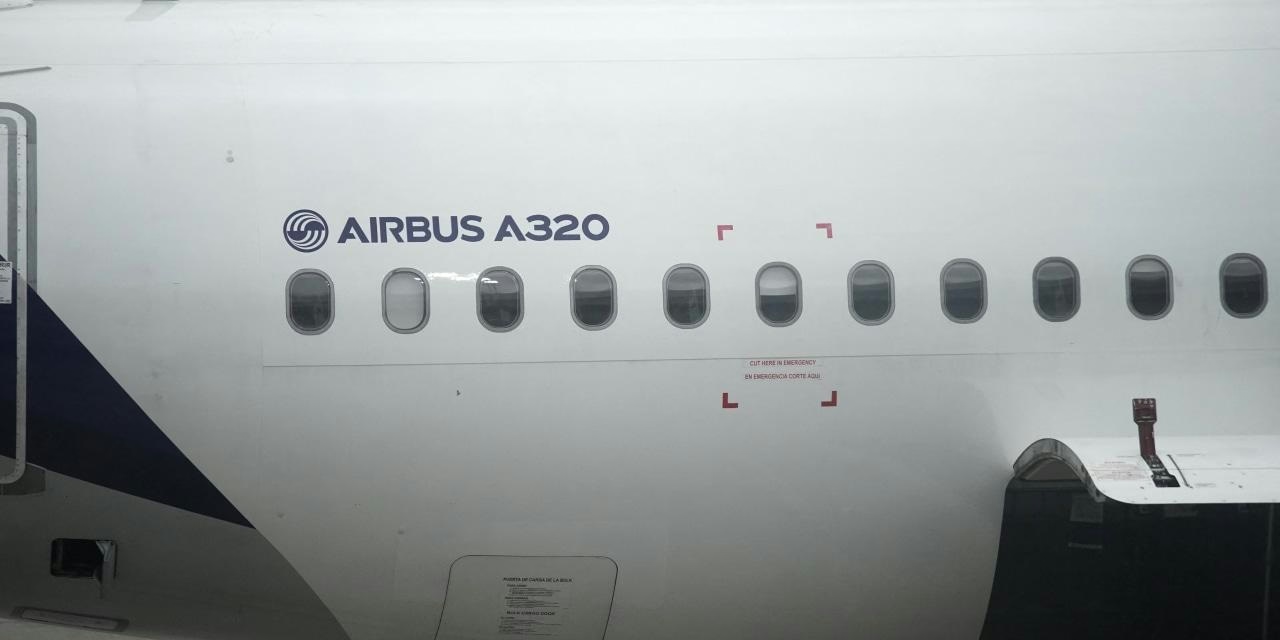
Airbus Resolves Software Issue Affecting Majority of A320 Fleet
Airbus has announced that critical software updates have been completed on the majority of its global A320-family aircraft, following the largest emergency recall in the company’s history. As of December 1, 2025, fewer than 100 planes remain grounded awaiting the necessary fix. The Toulouse-based manufacturer is collaborating closely with airline customers to expedite the return of all affected aircraft to service.
Background and Response to the Recall
The recall impacted over half of the approximately 6,000 A320-family jets worldwide after a software bug linked to solar radiation was discovered. This issue led to widespread travel disruptions as airlines scrambled to comply with emergency directives issued by aviation authorities. Most aircraft were repaired by reverting to a previous software version, a process that typically required around two hours per plane.
Three days before the latest update, Airbus had called for “immediate precautionary action” on its in-service A320 jets, which remain a cornerstone of global short- and medium-haul travel. In a statement released on Monday, Airbus confirmed ongoing efforts to modify the remaining aircraft and expressed regret for the inconvenience caused to passengers and airlines. Chief Executive Guillaume Faury publicly apologised for the logistical challenges and delays, emphasizing that safety remains the company’s paramount concern.
Regulatory and Industry Reactions
Aviation regulators worldwide responded promptly to the issue. The European Union Aviation Safety Agency (EASA) issued an Emergency Airworthiness Directive, which was subsequently adopted by the U.S. Federal Aviation Administration, mandating the software update for all affected Airbus aircraft registered in the United States.
In the Middle East, the UAE’s General Civil Aviation Authority confirmed full compliance among local operators of Airbus A319, A320, and A321 jets, enabling over 100 UAE-registered aircraft to continue safe operations. In Saudi Arabia, flyadeal’s chief executive Steven Greenway reported that more than a quarter of the airline’s fleet was affected. The airline grounded the impacted planes, completed the software updates, and sought to minimize disruption by canceling 28 flights while rebooking most passengers on alternative services.
Industry experts have highlighted the swift and coordinated response as indicative of a broader shift in crisis management within aviation, particularly in contrast to Boeing’s handling of the 737 Max crisis. Usman Tahir, head of aviation at consultancy Roland Berger Middle East, noted that the A320 remains essential for many airlines’ short- and medium-haul operations and praised the industry’s safety-first approach. While acknowledging the short-term operational and financial impacts, Tahir suggested that airlines might reconsider their fleet strategies to reduce dependence on a single aircraft type in the future.
The incident underscores the aviation sector’s commitment to proactive safety measures and transparent communication, even amid significant operational challenges.

Etihad Airways Suspends Airbus A380 Flights on Key Route

Aditya Birla Group Seeks Approval for Aircraft Leasing in GIFT City

Qatar Airways Highlights Innovation and Connectivity at Arabian Travel Market 2026

Hong Kong's Five-Year Plan Includes Andrew Fan's Aircraft Parts Processing Hub Proposal

ACIA Aero Leasing Delivers ATR72-600 to Air Nostrum

RTX Appoints Jill Albertelli as Head of Pratt & Whitney

TAT Technologies Joins Beyond Aero Hydrogen Aircraft Program

AURAK Study Highlights Barriers to Air Taxi Adoption in Emerging Economies

Xiamen Air Selects Altitude for 787 Maintenance at Heathrow

Etihad and Swissport Extend Global Partnership
