
AIによるインサイトを行動へとつなげる

現在のトレンド
Categories
Airbus Surpasses 800 Orders in 2026 Amid Middle East Tensions
Airbus Surpasses 800 Orders in 2026 Amid Middle East Tensions
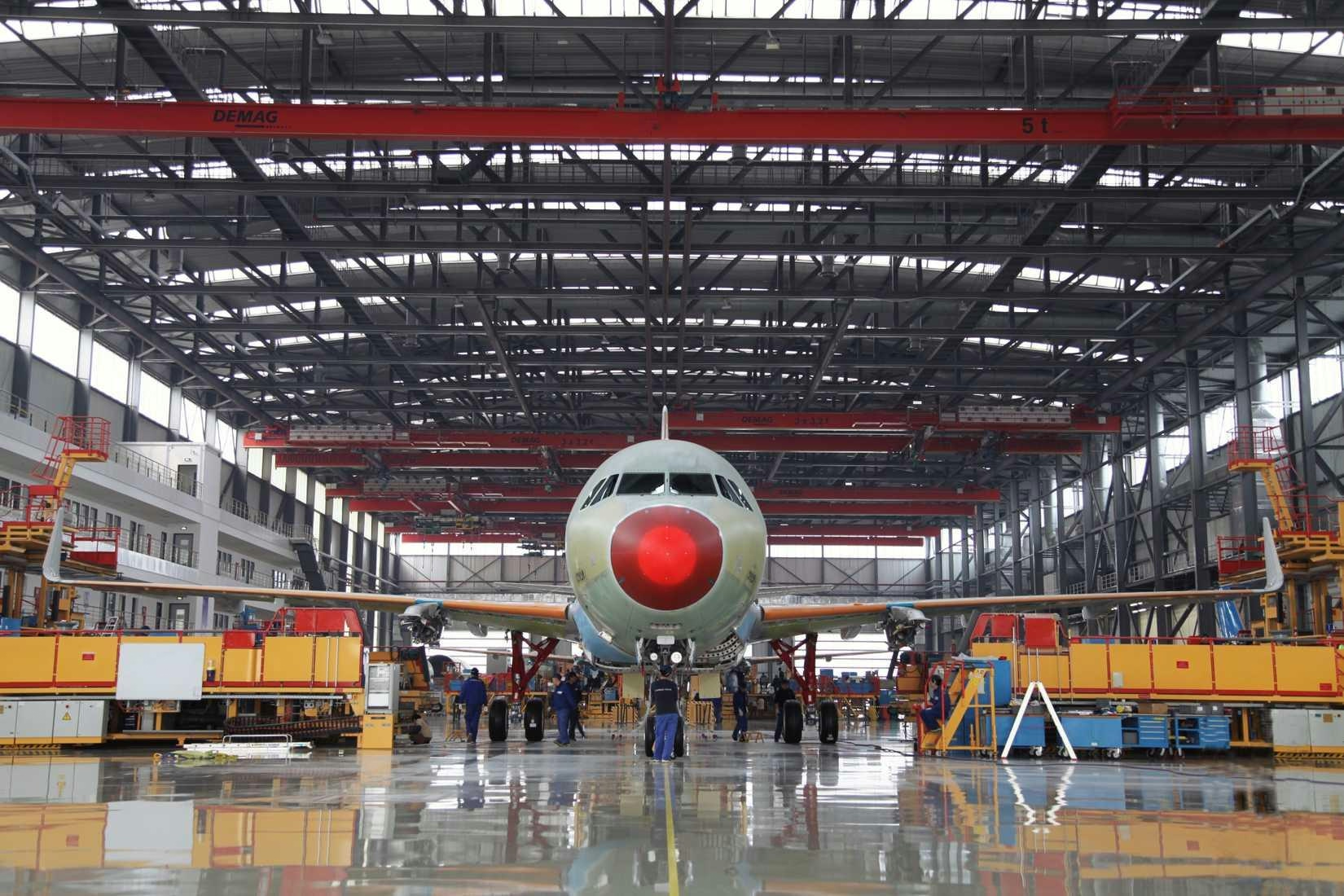
Airbus has achieved a significant milestone in 2026, surpassing 800 aircraft orders despite ongoing geopolitical tensions in the Middle East. The European aerospace giant recorded 379 firm orders in May alone, bringing its total to 815 gross orders for the year. This robust performance stands in stark contrast to Boeing’s 13 orders during the same period, underscoring Airbus’s dominant position in the global market.
Resilient Demand Amid Rising Costs
The surge in orders reflects continued expansion by airlines worldwide, even as the Middle East conflict exerts upward pressure on oil prices and security expenditures. Arturo Barreira, President of Airbus Latin America and the Caribbean, acknowledged the impact of rising fuel costs but emphasized that demand for new aircraft remains strong. He stated, “Yes, the conflict in the Middle East has caused oil prices to increase. Even so, demand remains strong across many market segments. We continue to see airlines wanting to acquire and order more aircraft. We have not seen a global slowdown.”
The conflict has also affected operational capacity, with Middle Eastern carriers reporting a nearly 35% reduction in available seat capacity by May. Nevertheless, Airbus’s substantial order book signals enduring confidence among airlines, which are preparing for sustained growth in passenger traffic over the long term.
Long-Term Growth and Production Challenges
The International Air Transport Association (IATA) projects global passenger traffic to grow at an average annual rate of 3.6% over the next two decades. This expansion will necessitate the delivery of approximately 43,420 new passenger and freighter aircraft by 2044, including 34,250 single-aisle and 9,170 widebody models. The global fleet is expected to nearly double from 24,730 aircraft at the end of 2024 to 49,210 by 2044, with around 18,930 older aircraft slated for retirement.
Barreira noted that Latin America has not experienced operational disruptions related to the Middle East conflict and highlighted a recent easing of oil prices following a provisional ceasefire. Airbus remains committed to its ambitious production target of delivering 870 commercial aircraft in 2026. By the end of May, the company had delivered 262 aircraft, representing 30.1% of its annual goal. To meet this target, Airbus must sustain an average delivery rate of 87 aircraft per month for the remainder of the year.
“As we expected at the beginning of the year, the second half will carry a heavier workload. We had a very good May with 81 aircraft delivered, and if we want to reach 870 deliveries, we will need to maintain that pace,” Barreira explained. Achieving this would surpass Airbus’s pre-pandemic record of 863 deliveries in 2019. Deliveries had declined sharply to 566 in 2020 before rebounding to 793 last year.
Navigating Supply Chain Constraints
Despite ongoing supply chain disruptions, particularly affecting the A320 program, Airbus continues to adapt its production strategy. Earlier this year, CEO Guillaume Faury acknowledged the need to moderate production plans and financial expectations after engine supplier Pratt & Whitney reduced delivery volumes. To mitigate these challenges, Airbus has intensified direct support for its suppliers, providing financial assistance, engineering resources, and enhanced operational oversight. The company has deployed more personnel to supplier facilities than ever before to ensure continuity and efficiency.
In the face of persistent global uncertainties, Airbus’s strong order intake and delivery performance demonstrate its capacity to navigate a complex environment while meeting sustained demand from airlines worldwide.

Etihad and Swissport Extend Global Partnership

Sepehran Airlines B737 Returns to Mashhad After Tyre and Engine Issues

Etihad Deploys Widebody Fleet to Meet Strong Demand

Korean Air Finalizes $36.2 Billion Deal with Boeing

Australia’s RFDS Queensland Section Orders Six King Air 260Cs

Korean Air Finalizes Order for 103 Boeing Jets and Engines
Embraer E195-E2 Features Distinctive Engine Placement Among Regional Jets
What Passengers Can Expect on Boeing’s New 777X Jet

How Ethiopian Airlines Became Africa’s Leading Carrier Amid Gulf Competition
Joby Aviation Extends Autonomous Flight Capabilities with Cross-Country Tour
