
AIによるインサイトを行動へとつなげる

現在のトレンド
Categories
Airlines Retire Nearly New Airbus A320 Jets
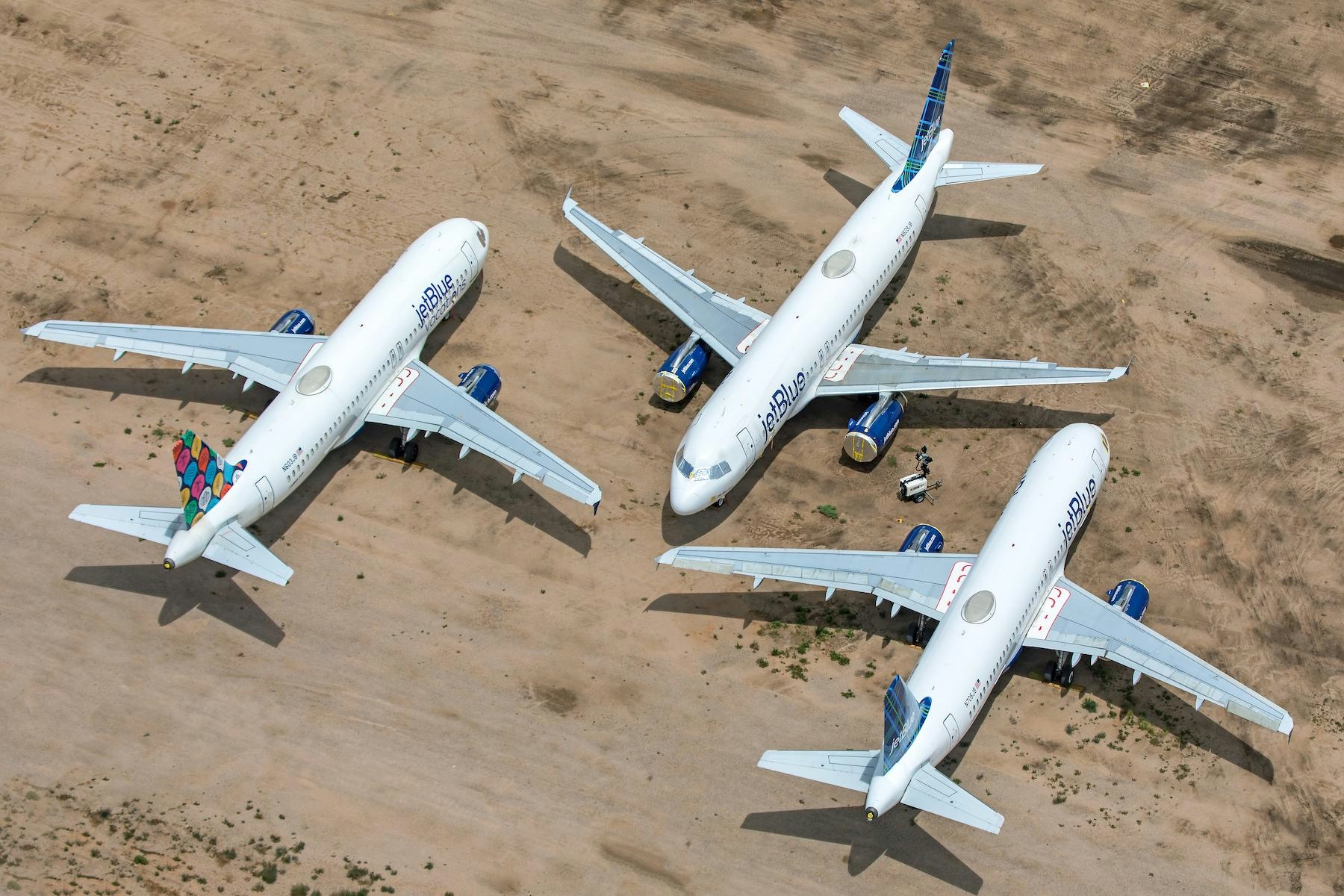
Airlines Retire Nearly New Airbus A320 Jets Amid Engine Crisis and Market Turbulence
Airlines around the world are confronting a perplexing challenge: despite an acute shortage of Airbus A320 and A321 aircraft, an increasing number of nearly new jets—some as young as six years—are being retired and dismantled for parts. This paradox unfolds as carriers urgently seek additional A320-family aircraft, Airbus accelerates production, and leasing companies struggle to maintain operational fleets. The unexpected catalyst behind this trend is the soaring value of Pratt & Whitney’s PW1100G engines, which now often surpasses the worth of the aircraft themselves due to a severe supply chain crisis.
Engine Defect Grounds Fleets
Central to the crisis is a manufacturing defect in Pratt & Whitney’s PW1100G-JM geared turbofan engines, which power a significant portion of the A320neo fleet. The flaw has been traced to contamination in the powdered metal used for high-pressure turbine discs. Microscopic particles from machining tools compromised the structural integrity of thousands of turbine discs produced between late 2015 and 2021, triggering one of the most disruptive reliability crises in modern aviation.
As a consequence, airlines have been compelled to ground large segments of their A320neo fleets. Each affected engine requires removal, disassembly, and detailed inspection—a process that can keep aircraft grounded for up to 300 days due to limited repair capacity and parts shortages. While the engine’s innovative design remains fundamentally sound, the materials issue has exposed critical vulnerabilities in advanced aerospace manufacturing.
Initial estimates identified approximately 1,200 affected engines, but subsequent assessments have raised this figure to nearly 3,000, including some produced as recently as 2023. The “JM” designation refers to engines produced through the International Aero Engines (IAE) partnership, which includes Pratt & Whitney, MTU Aero Engines, and the Japanese Aero Engine Corporation.
Market Reactions and Industry Impact
The engine crisis has sent shockwaves through the aviation market. The value of serviceable PW1100G engines has surged, prompting airlines and lessors to retire relatively new A320neo jets to harvest their engines for use elsewhere. This development coincides with other challenges for Airbus, including a recent software recall affecting approximately 6,000 A320 family jets. Although the recall caused minor operational disruptions and initial market concerns, Airbus has reassured stakeholders that the overall impact is expected to be less severe than initially feared.
Competitors have responded with caution, with some airlines adjusting fleet commitments and delivery schedules amid ongoing uncertainty. Market volatility is evident; for instance, IAG’s share price recently declined amid softness in transatlantic yields and passenger loads. Industry participants continue to monitor both the engine crisis and Airbus’s recall closely as they navigate a turbulent period for commercial aviation.
Echoes of Past Incidents
This crisis echoes earlier reliability issues. In 2021, a legacy IAE V2500 engine—used on older A320 models—experienced a catastrophic turbine disc failure, later attributed to similar material defects. The recurrence of such problems highlights the challenges manufacturers face as they push the boundaries of engine technology.
As airlines, lessors, and manufacturers contend with grounded fleets, supply chain constraints, and shifting market dynamics, the retirement of nearly new A320 jets underscores the far-reaching impact of the PW1100G engine crisis and the broader pressures confronting the aviation industry.

Etihad Airways Suspends Airbus A380 Flights on Key Route

Aditya Birla Group Seeks Approval for Aircraft Leasing in GIFT City

Qatar Airways Highlights Innovation and Connectivity at Arabian Travel Market 2026

Hong Kong's Five-Year Plan Includes Andrew Fan's Aircraft Parts Processing Hub Proposal

ACIA Aero Leasing Delivers ATR72-600 to Air Nostrum

RTX Appoints Jill Albertelli as Head of Pratt & Whitney

TAT Technologies Joins Beyond Aero Hydrogen Aircraft Program

AURAK Study Highlights Barriers to Air Taxi Adoption in Emerging Economies

Xiamen Air Selects Altitude for 787 Maintenance at Heathrow

Etihad and Swissport Extend Global Partnership
