
AIによるインサイトを行動へとつなげる

現在のトレンド
Categories
American Airlines Adds Starlink Wi-Fi, Excluding Older Jets
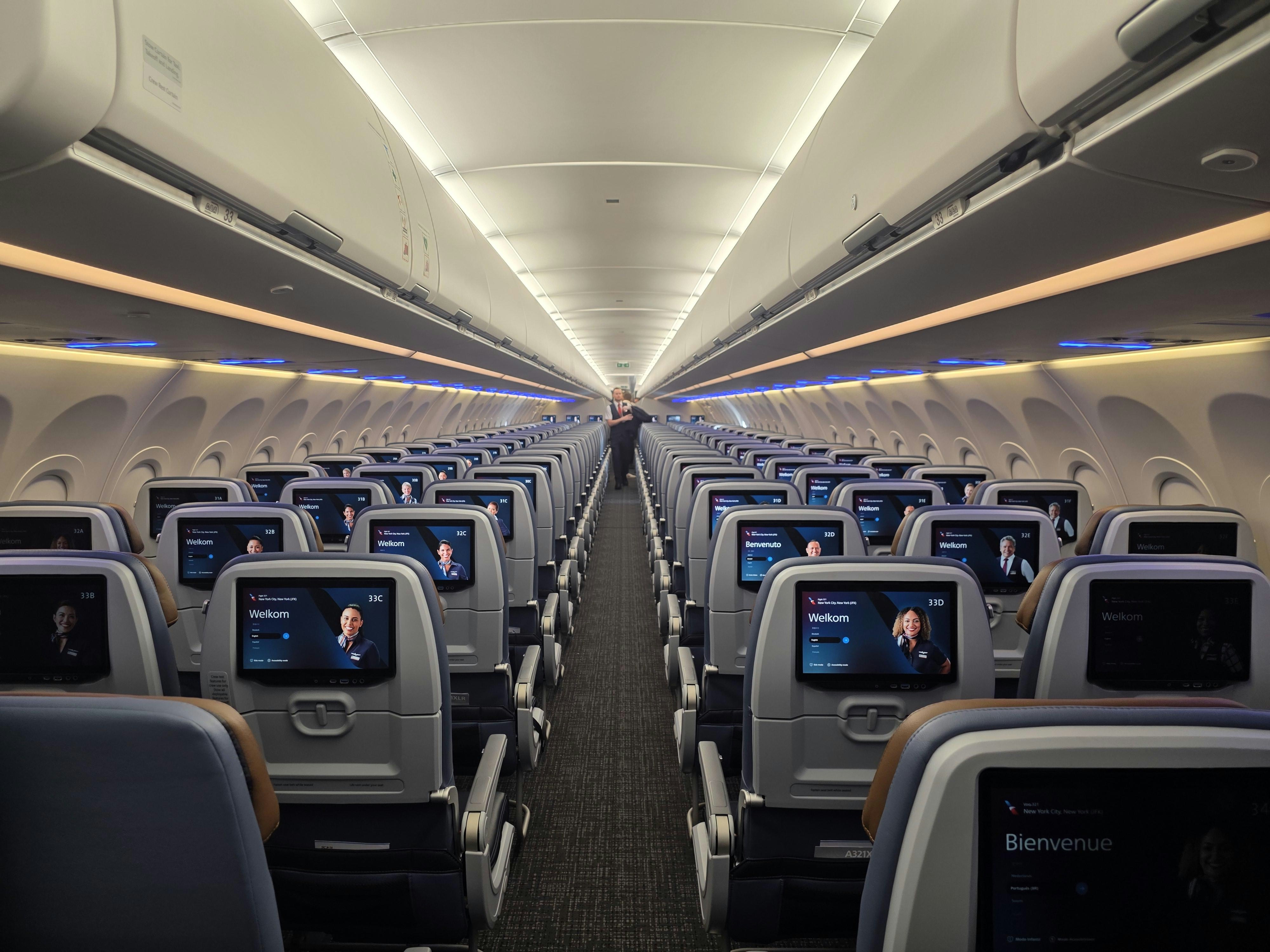
American Airlines to Introduce Starlink Wi-Fi on Airbus Narrowbodies, Excluding Older Jets
American Airlines has announced plans to equip over 500 of its narrowbody Airbus aircraft with Starlink satellite Wi-Fi, aiming to provide passengers with faster and more reliable inflight internet connectivity. The installation is scheduled to begin in the first quarter of 2027 and will include both existing Airbus narrowbody models and new deliveries of the A321XLR and A321neo. Notably, the airline’s older Boeing jets and widebody aircraft, which frequently serve long-haul international routes, will not be part of this initial upgrade.
Enhancing the Passenger Experience with Starlink
Starlink, operated by SpaceX, is recognized for delivering high-speed, low-latency satellite internet capable of supporting bandwidth-intensive activities such as streaming, online gaming, and real-time collaboration. American Airlines has indicated that the new service will be available on domestic and short-haul international flights, promising passengers an inflight Wi-Fi experience comparable to that of home internet.
Heather Garboden, American’s Chief Customer Officer, emphasized the strategic importance of the partnership, stating, “As a premium global airline, we are continuously seeking out world-class partners like Starlink to deliver what our customers need and want. The addition of Starlink solidifies American as a leading airline in keeping passengers connected in flight.”
Limitations and Industry Implications
Despite the positive reception to the announcement, the decision to limit the rollout to Airbus narrowbodies has drawn scrutiny. Many of American’s long-haul international flights, which often experience the most significant connectivity challenges, are operated by widebody aircraft equipped with Panasonic Wi-Fi systems. The absence of Starlink on these planes leaves a notable gap in service quality for passengers on transatlantic and transpacific routes.
This selective implementation may also pose operational and customer service challenges. Passengers could face inconsistent Wi-Fi experiences depending on the aircraft, potentially leading to dissatisfaction as expectations for seamless connectivity continue to rise. Furthermore, integrating Starlink technology into only a portion of the fleet may introduce technical complexities and increase operational costs.
The move is expected to intensify competition within the airline industry as carriers strive to offer superior inflight connectivity. With Starlink setting a new benchmark for speed and reliability, other airlines may accelerate their own technology upgrades or adopt similarly selective strategies, potentially driving up costs across the sector. Market dynamics are likely to reflect growing passenger demand for high-quality Wi-Fi and increased pressure on airlines to provide consistent service across all aircraft types.
While challenges remain, American Airlines’ adoption of Starlink represents a significant advancement in inflight connectivity. By 2027, fast and reliable internet access is anticipated to become standard rather than a premium feature, and American’s investment positions it to meet evolving passenger expectations—at least on its Airbus narrowbody fleet. Passengers traveling on older Boeing and widebody jets, however, may need to wait longer for comparable improvements.

Etihad Airways Suspends Airbus A380 Flights on Key Route

Aditya Birla Group Seeks Approval for Aircraft Leasing in GIFT City

Qatar Airways Highlights Innovation and Connectivity at Arabian Travel Market 2026

Hong Kong's Five-Year Plan Includes Andrew Fan's Aircraft Parts Processing Hub Proposal

ACIA Aero Leasing Delivers ATR72-600 to Air Nostrum

RTX Appoints Jill Albertelli as Head of Pratt & Whitney

TAT Technologies Joins Beyond Aero Hydrogen Aircraft Program

AURAK Study Highlights Barriers to Air Taxi Adoption in Emerging Economies

Xiamen Air Selects Altitude for 787 Maintenance at Heathrow

Etihad and Swissport Extend Global Partnership
