
画像

エアロジニー — あなたのインテリジェントな副操縦士。

何でも尋ねてください。全てを分析してください。即座に行動してください。

現在のトレンド

Categories

American Airlines Cargo Plans Expanded Operations at Heathrow
April 10, 2026By ePlane AI
American Airlines Cargo Plans Expanded Operations at Heathrow
0
0
American Airlines Cargo
Heathrow Airport
Transatlantic Cargo Operations

American Airlines Cargo Expands Operations at Heathrow Amid Industry Challenges

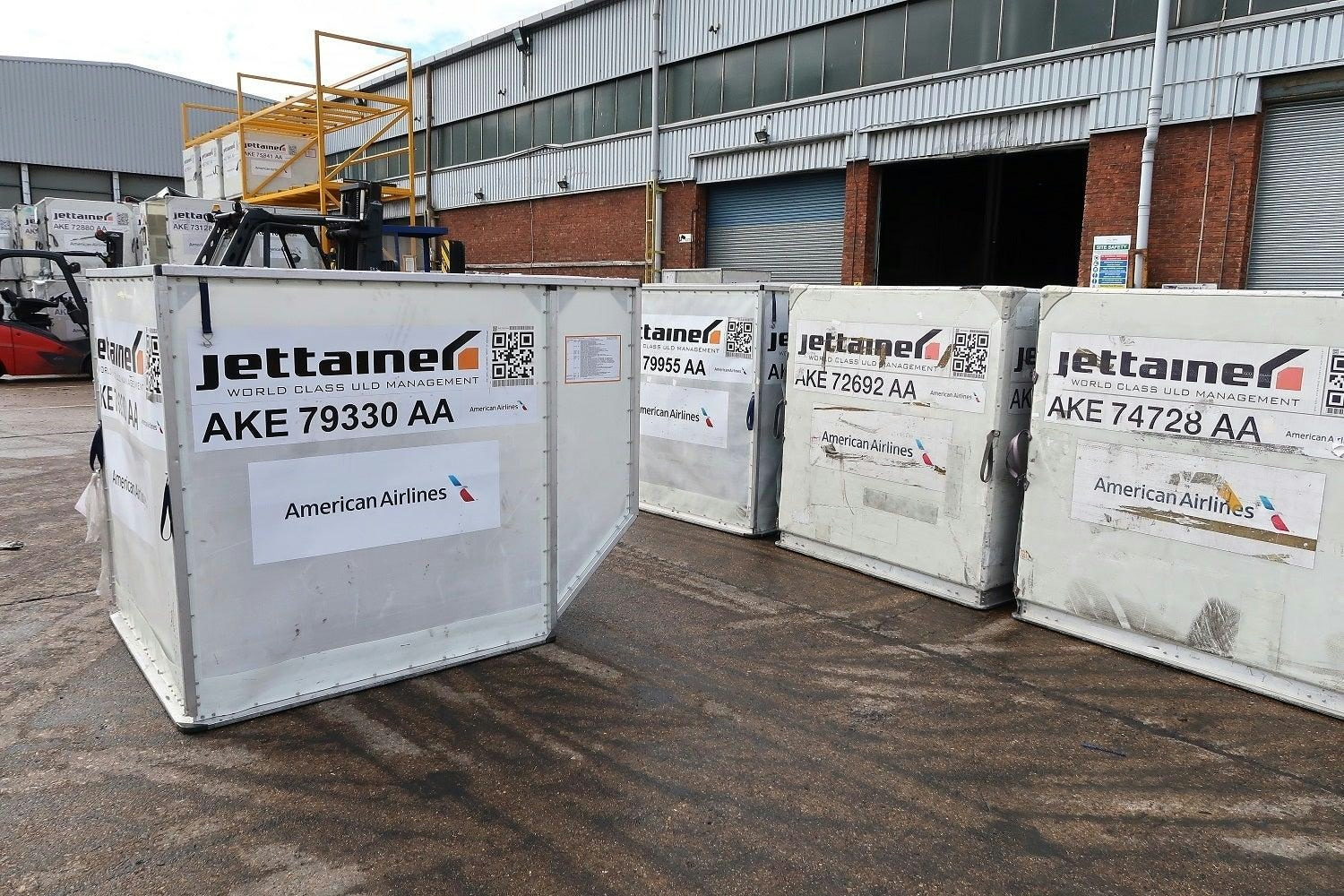
American Airlines Cargo is preparing to significantly increase its presence at London Heathrow Airport this summer, seeking to leverage rising transatlantic demand despite persistent difficulties in the global air cargo sector. The airline intends to operate up to 186 international widebody flights daily, amounting to approximately 4,400 monthly widebody flights between the United States and Europe during June, July, and August. Heathrow will experience the most notable growth, with daily cargo departures rising to 21, enhancing direct connections to major US hubs and expanding cargo capacity.

Expanded Routes and Network Enhancements

The summer schedule introduces new and expanded routes, including services from Athens to Dallas Fort Worth (DFW), Budapest and Prague to Philadelphia, Zurich to DFW, Milan to Miami, and Edinburgh to New York JFK, the latter operated by the new A321XLR aircraft. Additional widebody flights within Germany will strengthen the network, featuring daily service from Frankfurt to both Charlotte and DFW, as well as from Munich to Charlotte, facilitating cargo flows across Central Europe. In Latin America, increased flights from Buenos Aires to DFW are expected to improve cargo access between South America and American’s central US hub.

Domestically, American Airlines will focus its summer operations at DFW, with peak days seeing more than 6,200 total domestic departures. Widebody services from Honolulu and Kahului to DFW will further enhance connectivity between the Pacific region and the US mainland, providing additional options for efficient cargo movement within the carrier’s domestic network.

Navigating a Complex Global Landscape

American Airlines’ expansion occurs amid a challenging global environment. The air cargo industry is contending with fluctuating demand and pricing pressures, driven by a recent slowdown in global trade and reduced e-commerce shipments from China. Geopolitical tensions, including the ongoing conflict involving Iran, have disrupted key cargo hubs, introducing further uncertainty to international operations.

Competitors are also adapting to these shifting market conditions. For instance, the Federal Aviation Administration’s decision to freeze expansion at Chicago O’Hare may affect United Airlines’ cargo operations, potentially prompting the airline to seek alternative routes. Additionally, the aviation sector faces heightened regulatory scrutiny over anti-competitive practices, exemplified by investigations such as the recent probe into MakeMyTrip in India.

Despite these headwinds, American Airlines Cargo remains confident in its strategy. Roger Samways, vice president of commercial at American Airlines Cargo, stated, “With expanded trans-Atlantic flying, new international routes, and strong domestic connectivity, we are well positioned to support global supply chains throughout the summer season.”

As American Airlines advances its ambitious summer schedule, industry observers will closely monitor how the carrier manages the opportunities and challenges shaping the global air cargo market.

More news
UEC-Saturn Develops Method to Prevent Aircraft Engine Damage

UEC-Saturn Develops Method to Prevent Aircraft Engine Damage

UEC-Saturn Develops Method to Prevent Aircraft Engine Damage Innovative Safety Device Targets Turbine Overspeed Engineers at UEC-Saturn, a prominent aerospace enterprise based in Rybinsk, have introduced a novel device designed to safeguard gas turbine engines by cutting off the fuel supply before a hazardous turbine overspeed occurs. This proactive mechanism aims to prevent catastrophic engine failures during emergencies, where rapid intervention is crucial. The newly developed protection system, officially registered in the FIPS database in March 2026, addresses a critical vulnerability in gas turbine engines: shaft breakage. In such scenarios, the compressor loses its power source, causing the turbine to accelerate uncontrollably and potentially destroy the engine within seconds. Unlike conventional safety systems that activate only after overspeed has begun, UEC-Saturn’s device intervenes earlier by detecting displacement of the compressor rotor. Mechanism and Integration The device functions by monitoring the position of the compressor rotor. When displacement occurs, the rotor disk makes contact with an integrated current conductor, breaking the electrical circuit. This action immediately triggers a command to shut off the fuel supply, halting the engine before it enters an emergency mode. Furthermore, the system introduces a mechanical braking effect through increased friction between the displaced rotor and the stator, which helps reduce the turbine’s rotational speed. A significant advantage of this method is its compatibility with existing gas turbine engines. UEC-Saturn highlights that the device can be incorporated without extensive redesigns, offering a practical upgrade path for current engine installations. Challenges and Industry Implications Despite its potential, the widespread adoption of this technology faces several hurdles. Regulatory approval will be essential, as aviation authorities must certify the new safety mechanism. Additionally, integrating the device into established engine maintenance protocols will require careful coordination to ensure reliability and compliance. Industry stakeholders will closely evaluate the device’s effectiveness under real-world operating conditions and its cost-efficiency relative to existing protection methods. Market response is anticipated to be favorable, particularly among airlines seeking to enhance safety while reducing maintenance expenses. The introduction of this technology may also prompt competitors to accelerate the development of similar or improved engine protection systems, thereby intensifying innovation within the sector. Context Within UEC-Saturn’s Portfolio UEC-Saturn operates as a key enterprise within the United Engine Corporation (UEC) and is known for producing the PD-8 aircraft engine, which powers the domestically developed "Superjet." In December 2025, the PD-8 successfully passed rigorous fan blade failure tests, confirming the robustness of its housing and underscoring UEC-Saturn’s commitment to safety and reliability. As the aviation industry continues to emphasize operational safety and cost-effectiveness, UEC-Saturn’s new engine protection method represents a noteworthy advancement. Its ultimate impact will depend on regulatory acceptance, successful integration, and demonstrated performance in operational environments.
US and China Unsuccessful in Replicating Tu-160 Engine

US and China Unsuccessful in Replicating Tu-160 Engine

US and China Unable to Replicate Russian Tu-160 Engine Technology The United States and China have both endeavored to replicate the Russian NK-32 engine, which powers the Tu-160 "White Swan" strategic bomber, but have so far failed to match its advanced capabilities. The NK-32 is widely regarded as a remarkable achievement in global aviation, often described as a "dazzling pearl" within the industry due to its exceptional performance. Challenges in Replicating the NK-32 The NK-32 engine is distinguished by its ability to maintain stable power output under extremely high temperatures and pressures—conditions that have consistently challenged American and Chinese engine manufacturers. While the US initially explored the possibility of copying the NK-32, it ultimately abandoned the effort after recognizing the difficulty of reproducing the engine’s unique performance characteristics. Most American power units continue to struggle with sustaining high thrust in such demanding environments. Russia regards the NK-32 as a strategic asset and has refused to export the engine, even to close partners such as China. This policy has further restricted access to the technology and contributed to the difficulties faced by other nations in developing comparable engines. Although China has made significant progress in enhancing the power and efficiency of its modern engines, they still lag behind Russian models in terms of resistance to high temperatures and overall reliability. Broader Implications for Military Technology Development The inability of the US and China to replicate the NK-32 has wider implications for their military technology development. For the US, this technological gap could lead to delays in key defense programs, such as the T-7A trainer aircraft, which has already encountered testing setbacks and uncertainty regarding production timelines. Maintaining a technological edge may require the US to intensify efforts to secure advanced technologies and strengthen international partnerships. China, meanwhile, faces questions about its status as an emerging leader in military technology. Failures in some of its exported defense systems, including radar and air defense networks, have revealed vulnerabilities during recent military operations. These challenges may prompt China to accelerate its push for indigenous technological development and reduce reliance on foreign components. The NK-32 engines are produced at the ODK-Kuznetsov plant in Russia’s Samara region, with production orders secured through 2027, according to Deputy General Director Oleg Vydumlev. As global competition in military aviation intensifies, the Russian engine’s unmatched performance continues to set a high standard for other nations seeking to advance their strategic capabilities.
Airbus A350 Completes 18-Hour Nonstop Flight in 2026

Airbus A350 Completes 18-Hour Nonstop Flight in 2026

Airbus A350 Achieves Record-Breaking 18-Hour Nonstop Flight in 2026 In a significant milestone for commercial aviation, the Airbus A350 completed an unprecedented 18-hour nonstop flight covering 19,000 kilometers in 2026. This achievement represents a transformative advancement in ultra-long-haul air travel, enabling airlines to operate routes previously deemed unfeasible and enhancing connectivity between distant continents with remarkable efficiency. Engineering Innovations Driving Performance Central to the A350’s success is its cutting-edge engineering. The aircraft features a lightweight carbon-fiber composite fuselage, which reduces structural weight by up to 25 percent compared to conventional aluminum designs. This innovation, combined with next-generation propulsion systems and refined aerodynamic features, allows the A350 to operate at the limits of its performance capabilities. The aircraft’s systems are meticulously optimized for efficiency: engines are calibrated to minimize fuel consumption, avionics continuously monitor atmospheric conditions in real time, and the fly-by-wire control system dynamically adjusts control surfaces to reduce drag and maximize lift. Flight planning for such extended journeys incorporates advanced meteorological data, enabling pilots to harness favorable wind currents and jet streams that significantly shorten travel times. Airlines are also adapting cabin layouts to support longer ranges, often by reducing seat numbers, streamlining galley equipment, and optimizing onboard supplies. Even minor weight savings—such as lighter insulation materials or improved cargo ventilation—contribute to extending the aircraft’s operational range by hundreds of kilometers. Fuel management plays a critical role in sustaining the A350’s endurance. With a fuel capacity of approximately 138,000 liters—equivalent to about half of the aircraft’s maximum takeoff weight—fuel is strategically distributed across multiple tanks to maintain an optimal center of gravity. Engineers have specified the use of high-energy-density aviation fuel to maximize thermal energy output during flight, while every structural element undergoes rigorous evaluation to identify potential weight reductions. Addressing Technical Challenges and Market Impact The A350’s design also addresses the thermal and aerodynamic challenges inherent in ultra-long-haul flights. Its wings and fuselage are engineered to maintain laminar airflow, thereby reducing energy losses caused by turbulence. Meanwhile, cabin pressurization and climate control systems are tailored to ensure passenger comfort throughout prolonged altitude changes and extended flight durations. This breakthrough has intensified competition within the aviation industry. Boeing and other manufacturers are anticipated to respond with their own long-range aircraft models, escalating the race for fuel-efficient, ultra-long-haul solutions. Airlines have demonstrated strong interest in the A350 platform; for instance, Atlas Air Worldwide has committed to acquiring up to 40 A350 freighters, reflecting robust market confidence. Competitors are also enhancing their services, with carriers such as All Nippon Airways planning substantial cabin upgrades to attract long-haul passengers. The A350’s influence is particularly pronounced on expanding China-Europe routes, where Chinese carriers like China Eastern are capitalizing on the aircraft’s extended range and efficiency to offer more direct flights, thereby gaining a competitive advantage. As the Airbus A350 establishes new benchmarks for endurance and operational efficiency, it is reshaping the landscape of global air travel and driving innovation across the aviation sector. For those seeking detailed technical information, the FAA’s official aircraft certification database provides comprehensive specifications.
Joby Aviation’s AI Air Taxi Push Tests Early-Stage Investor Expectations

Joby Aviation’s AI Air Taxi Push Tests Early-Stage Investor Expectations

Joby Aviation’s AI Air Taxi Initiative Challenges Early-Stage Investor Expectations Joby Aviation (NYSE: JOBY) is intensifying its efforts to introduce electric air taxis into the U.S. airspace by collaborating with Air Space Intelligence to incorporate AI-supported airspace management within the National Airspace System. This initiative is bolstered by Joby’s selection for the White House-backed eVTOL Integration Pilot Program, which authorizes early operations across 12 states. This positioning places Joby at the forefront of the rapidly developing electric vertical takeoff and landing (eVTOL) market. Advancing AI-Driven Airspace Management Joby’s strategy centers on providing short-haul, on-demand air taxi services amid ongoing regulatory and industry deliberations about integrating eVTOL aircraft into everyday air travel and urban mobility frameworks. The partnership with Air Space Intelligence aims to merge Joby’s air taxi technology with AI-driven traffic management systems, a crucial advancement as the Federal Aviation Administration (FAA) continues to formulate new safety regulations under its eVTOL Integration Pilot Program. This program spans 26 states and counts Joby as a key participant, underscoring the company’s influential role in shaping the future of urban air mobility. Regulatory and Legal Challenges Despite these promising developments, Joby faces significant challenges. The company is currently conducting flight tests on its first FAA-compliant aircraft as part of the Type Inspection Authorization process, a critical step toward full certification. Concurrently, Joby is embroiled in legal disputes with competitor Archer Aviation, which has accused Joby of fraud and misrepresenting its business relationships with Chinese entities to secure U.S. contracts. Archer alleges that Joby concealed these ties and misrepresented its operations, claims that Joby has sought to dismiss through federal court. Investor Sentiment and Market Performance Investor sentiment remains cautiously optimistic amid these regulatory and legal complexities. Following recent FAA announcements, Joby’s stock has demonstrated resilience, even as the broader market evaluates the risks and potential of early-stage eVTOL ventures. Currently, Joby shares trade at approximately $8.28, about 30% below the consensus analyst target of $11.90. This valuation reflects the balance between the company’s promising technological advancements and the uncertainties surrounding its path to commercial viability. Key factors influencing investor outlook include Joby’s regulatory progress through government-backed pilot programs, which could shape future infrastructure and customer expectations for electric air taxis. Additionally, the competitive landscape, marked by ongoing legal disputes and rising competition from other eVTOL manufacturers such as Archer Aviation, remains a critical consideration. Despite a recent 16% decline in stock value over the past month, investors are closely monitoring Joby’s progress toward certification milestones and potential for sustained growth. The resolution of pilot program outcomes and legal proceedings will be pivotal in determining the pace at which Joby and its competitors can scale operations, validate business models, and influence the evolution of the U.S. electric air taxi market. For now, Joby’s early partnerships and active regulatory engagement maintain its prominence as the industry navigates a complex trajectory toward commercial success.
SR-71 Blackbird Loses Both Engines at 83,000 Feet Over Russia, Crew Faces Near-Death Escape

SR-71 Blackbird Loses Both Engines at 83,000 Feet Over Russia, Crew Faces Near-Death Escape

SR-71 Blackbird Loses Both Engines at 83,000 Feet Over Russia, Crew Faces Near-Death Escape At an altitude of 83,000 feet above Soviet territory, the SR-71 Blackbird experienced a catastrophic failure when both of its engines shut down while flying at Mach 3. This critical malfunction forced the crew into a dire predicament: either eject over hostile airspace or attempt to restart the engines while descending rapidly toward the Barents Sea. First revealed in the May 2013 issue of *Aviation History*, this incident highlights the extraordinary capabilities of the Cold War reconnaissance aircraft as well as the extreme risks faced by its pilots. The SR-71: Engineering for Speed and Survival Conceived in the 1960s by Lockheed’s Skunk Works under the leadership of Kelly Johnson, the SR-71 Blackbird was purpose-built for intelligence gathering over denied airspace, particularly that of the Soviet Union. Entering operational service in 1966, the aircraft was equipped with cutting-edge sensors designed to monitor missile installations and naval bases in near real time. Its primary defense was not stealth technology but unmatched speed and altitude. Capable of cruising at Mach 3.2—exceeding 2,000 miles per hour—and flying above 80,000 feet, the SR-71 could outrun virtually any threat, including surface-to-air missiles. This extraordinary performance, however, came with significant engineering challenges. The aircraft’s titanium airframe endured skin temperatures surpassing 500 degrees Fahrenheit, expanding during flight due to intense heat. The Pratt & Whitney J58 engines operated partially as ramjets at high speeds, demanding flawless functionality from every component. Any failure in this complex system risked catastrophic consequences. The Dangers of High-Altitude Flight Operating at such extreme altitudes and speeds exposed the SR-71 to unique hazards. One of the most perilous technical issues was the “unstart,” a sudden collapse of the supersonic shockwave within the engine intake that instantly disrupted airflow and caused a rapid loss of thrust. In the incident over Russia, both engines failed simultaneously, leaving the crew with only seconds to respond. This emergency underscored the critical importance of advanced ejection systems and rapid response protocols. At such altitudes and velocities, the margin for error was virtually nonexistent. The crew’s successful escape not only demonstrated their exceptional training and composure under pressure but also emphasized the necessity of robust emergency procedures in high-performance military aircraft. Broader Implications and Industry Impact The event also brought attention to the essential role of anti-icing systems and the specific risks associated with high-altitude operations. Engine failures at these heights can be triggered by factors such as ice accumulation or disruptions in engine intake airflow, making reliable anti-icing technology indispensable. Incidents of this nature often prompt increased focus on aircraft safety systems across the aerospace industry. Competitors and manufacturers may accelerate efforts to enhance reliability and emergency capabilities, fostering innovation in both military and civilian aviation sectors. Legacy of the Blackbird Despite the inherent dangers and technical challenges, the SR-71’s operational record remains unparalleled. Throughout decades of service, not a single aircraft was ever shot down. Nevertheless, episodes like the engine failure over Soviet airspace serve as stark reminders that even the most advanced machines are vulnerable. The safety of their crews depends on a delicate balance of cutting-edge technology, rigorous training, and split-second decision-making under extreme conditions.
Airbus Orders and Deliveries for March 2026

Airbus Orders and Deliveries for March 2026

Airbus Orders and Deliveries for March 2026 Airbus has published its Orders and Deliveries report for March 2026, revealing a month marked by strong demand alongside persistent production challenges. During March, the company delivered 60 aircraft to 38 customers, while its order backlog expanded by 261 units, closing the month with 9,037 jets awaiting delivery. The total orders for the month reached 331 aircraft, offset by 10 cancellations and the 60 deliveries, resulting in continued growth of the backlog. Delivery Breakdown and Quarterly Performance The March deliveries comprised eight A220s, 41 aircraft from the A320neo family, three A330neos, and eight A350s. Despite the robust order intake, Airbus experienced a decline in A320neo deliveries during the month. Over the first quarter of 2026, the manufacturer delivered 114 aircraft, a decrease from 136 in the same period last year. Nevertheless, Airbus secured significant orders, including 100 A320neo-family jets for AerCap, 101 for China Eastern Airlines, and 25 for Juneyao Air. Net orders for the quarter totaled 398 jets, underscoring sustained airline confidence in Airbus’s product lineup. Backlog and Market Context Airbus’s backlog now stands at 9,037 aircraft, which, at the projected 2026 production rate of approximately 870 aircraft per year, would require around 10.4 years to fulfill. This persistent backlog growth occurs despite global challenges such as the ongoing conflict in Iran and elevated fuel prices. Airbus’s book-to-bill ratio for 2026 remains strong, reflecting continued demand, particularly for the versatile A321neo family. In February 2026, Airbus reported solid delivery figures, while its main competitor, Boeing, achieved a nine-year high in monthly deliveries, intensifying competition in the commercial aircraft sector. However, Airbus maintains a production lead over Boeing, whose output remains constrained by ongoing FAA oversight and is expected to see only modest increases in the near term. Production Challenges and Outlook Despite multiple supply chain disruptions and missed production targets over the past four years, Airbus’s order book continues to expand. The primary challenge for senior management remains increasing production rates, especially reaching the long-anticipated target of 75 aircraft per month for the A320neo family. This goal, delayed since the global pandemic, now appears unlikely to be achieved before 2028. As Airbus contends with supply chain complexities and strives to enhance output, its strong order momentum and substantial backlog position the company to sustain its leadership in the global aerospace market.
Airbus Posts Strong Q1 Orders Despite Decline in A320neo Deliveries

Airbus Posts Strong Q1 Orders Despite Decline in A320neo Deliveries

Airbus Posts Strong Q1 Orders Despite Decline in A320neo Deliveries Airbus reported a robust first quarter in 2024, securing net orders for 398 aircraft despite a noticeable decline in deliveries of its A320neo-family jets. The European aerospace leader delivered 114 aircraft during the period, down from 136 in the same quarter last year. This reduction was largely driven by a slowdown in single-aisle jet deliveries, with only 81 A320neo-family aircraft handed over compared to 106 in the first quarter of 2023. Supply Chain Challenges and Delivery Impact The decline in deliveries follows Airbus’s mid-February warning regarding a shortage of Pratt & Whitney PW1100G engines, which has disrupted the company’s production ramp-up plans. These supply chain constraints have constrained Airbus’s ability to meet delivery targets, particularly for its popular single-aisle models. Despite these challenges, Airbus demonstrated resilience by securing significant new orders throughout the quarter. Strong Order Book and Key Contracts Among the notable deals, AerCap placed an order for 100 A320neo-family jets, which has been allocated to its US entity, NAS Aviation Services. China Eastern Airlines committed to 101 aircraft from the same family, while Juneyao Air of China ordered 25 jets in March. Airbus also recorded substantial twin-aisle aircraft agreements, including Delta Air Lines’ purchase of 16 A330-900s and 15 A350-900s, alongside 34 A321neos. Additionally, Atlas Air confirmed an order for 20 A350 freighters. Airbus further assigned 20 A220-300 aircraft to undisclosed customers through two separate orders of 10 jets each. However, a longstanding order for 10 A220-100s, originally placed by start-up Odyssey Airlines in 2011 when the program was known as the Bombardier CS100, was cancelled. Market Implications and Competitive Landscape The strong order intake has reinforced market confidence in Airbus’s long-term prospects, even as the company contends with ongoing supply chain issues. Industry analysts suggest that the surge in orders may bolster investor optimism regarding Airbus’s ability to sustain a healthy backlog. Meanwhile, competitors such as Boeing, which reported a nine-year high in deliveries in February, could potentially strengthen their market position in light of Airbus’s delivery setbacks. This dynamic may prompt rival manufacturers to intensify marketing efforts to capitalize on Airbus’s temporary production challenges. Despite the delivery slowdown, Airbus’s success in attracting substantial new orders highlights continued demand for its aircraft and positions the company for future growth as supply chain disruptions are gradually resolved.
United Airlines 787 Engine Fire Last Month Challenged Firefighting Efforts

United Airlines 787 Engine Fire Last Month Challenged Firefighting Efforts

United Airlines 787 Engine Fire Exposes Challenges in Firefighting and Raises Industry Concerns A persistent engine fire aboard a United Airlines Boeing 787-9 last month highlighted significant challenges in extinguishing in-flight blazes, causing extensive damage to critical engine components and prompting scrutiny of engine reliability and firefighting protocols within the aviation sector. Incident Overview and Immediate Response On 2 March, United flight 2127, departing Los Angeles International Airport for Newark Liberty, encountered a serious engine malfunction at approximately 17,000 feet. The aircraft, equipped with twin GE Aerospace GEnx-1B76A engines, experienced strong vibrations accompanied by a drop in the left engine’s N2 speed. Shortly thereafter, the flight crew received a “L ENGINE FIRE” warning via the engine indicating and crew alerting system (EICAS), initiating the engine fire checklist. Despite deploying the first fire extinguisher bottle, the warning briefly ceased but reappeared within 30 seconds. A second fire bottle was discharged, yet the fire warnings persisted. The crew declared an emergency and returned to Los Angeles, ultimately landing safely on a single engine. Following the landing, an evacuation was conducted on the runway using emergency slides. All passengers and crew evacuated without injury. Damage Assessment and Ongoing Investigation Subsequent inspections revealed extensive sooting and thermal damage concentrated around the external surfaces of the engine core module, extending toward the pylon connection. Borescope examinations identified damage within the high-pressure turbine, although the thrust reverser halves on both sides showed minimal thermal impact. A flight attendant reported observing flames emanating from the left engine after landing. The National Transportation Safety Board (NTSB) released a preliminary report detailing these findings but has yet to determine the root cause of the engine failure. The investigation remains active, with Boeing, GE Aerospace, and United Airlines yet to provide official comments. Industry Implications and Market Reactions The difficulties encountered in extinguishing the fire have intensified concerns regarding the reliability of the GEnx engine and the adequacy of current firefighting measures. Industry analysts suggest that this incident may prompt airlines and manufacturers to reassess safety protocols and engine design standards. Market responses could include increased scrutiny of fleets powered by GEnx engines and potential revisions to operational procedures at United Airlines and other carriers. In response to growing safety considerations, some competitors have adjusted their fleet strategies. For instance, All Nippon Airways (ANA) has reportedly converted certain 787-10 orders to the 787-9 variant, reflecting a broader reevaluation of aircraft procurement decisions. Concurrently, United Airlines has recently reduced its capacity by 5% to mitigate rising fuel costs, a development that may further influence market dynamics as the industry balances operational efficiency with safety imperatives. The NTSB’s investigation continues as the aviation community closely monitors the situation, anticipating potential impacts on engine safety standards and firefighting protocols worldwide.
Jiatai Aims to Ensure Linefit Compatibility for Premium Economy Seats

Jiatai Aims to Ensure Linefit Compatibility for Premium Economy Seats

Jiatai Advances Linefit Certification for Premium Economy Seats Amid Growing Market Competition Jiatai, the Xiangyang-based aircraft seat manufacturer, is intensifying efforts to secure linefit offerability with leading airframers for its premium economy seating platforms tailored to widebody aircraft. This strategic move aims to strengthen the company’s foothold in the increasingly competitive aircraft interiors sector. Jiatai, a trusted supplier to China’s COMAC, already holds linefit certifications from Boeing and Airbus for its single-aisle economy and business class seats, as well as for twin-aisle economy class products. Collaboration and Certification Progress In late 2024, Jiatai formalized a cooperation agreement with Airbus to optimize its economy seats for the manufacturer’s 10-abreast configuration on the Airbus A350 New Production Standard (NPS). Building on this partnership, Jiatai recently disclosed that applications for linefit certification of its twin-aisle premium economy seats are currently underway. The new premium economy design draws heavily on Jiatai’s business class recliners for single-aisle aircraft, reflecting a broader industry trend toward enhanced comfort and privacy in premium cabins. Market Challenges and Competitive Landscape Securing linefit compatibility for premium economy seats presents significant challenges. The standardized linefit segment is characterized by intense cost pressures, compelling manufacturers to continuously refine mechanical systems to reduce weight and enhance reliability. Concurrently, airlines are increasingly seeking customized, brand-specific solutions, particularly for widebody and VIP completions. This dynamic requires seatmakers to strike a delicate balance between innovation and scalable, efficient production. Competitors are responding by integrating advanced materials and predictive maintenance technologies to improve system power consumption and reliability, thereby raising the bar for both new entrants and established players. The market is witnessing a marked shift toward premium cabin products, with carriers such as United Airlines expanding their premium offerings, sometimes at the expense of traditional economy seating. Product Portfolio and Strategic Partnerships Jiatai’s product range reflects these evolving market demands. For single-aisle aircraft, the company offers three business class configurations: a mechanical JT220B, an electric JT220B, and an upgraded JT220B featuring winged privacy, a feature gaining traction globally. In economy class, Jiatai provides the fully featured JT1122E for long-haul operations and the JT22E for medium- to long-haul flights. The company’s collaboration with UK-based design firm Factorydesign has further enhanced its product offerings. Factorydesign has contributed to three narrowbody economy products, including the JT1122E, which was developed comprehensively to align with current seat design trends. This platform is already in service with Hainan Airlines and China Southern Airlines, with Factorydesign continuing to support Jiatai’s global expansion strategy. While Jiatai has yet to develop a lie-flat business class platform, its sister company within the AVIC group, Thompson Aero Seating, is recognized as a leading provider of premium lie-flat seats. Jiatai’s reputation for delivering professional technical solutions, efficient production timelines, and comprehensive after-sales support has earned it growing recognition among international customers. As the premium cabin market continues to expand, industry observers will closely monitor Jiatai’s forthcoming developments, particularly in anticipation of announcements at future events such as the Aircraft Interiors Expo 2026.
DoorDash Launches Drone Delivery Service in Atlanta

DoorDash Launches Drone Delivery Service in Atlanta

DoorDash Introduces Drone Delivery Service in Atlanta DoorDash has unveiled its drone delivery service in metropolitan Atlanta, marked by the appearance of a new drone-shaped icon within the DoorDash app for select users. This launch is the result of a partnership with Wing, the drone delivery subsidiary of Alphabet, Google's parent company. Customers who tap the icon gain access to a curated selection of restaurants located at Tanger Outlets Locust Grove near McDonough. Orders placed through this service are delivered by drone to customers within a six-mile radius, often arriving in as little as 20 minutes. Expansion of Wing’s Drone Delivery Network Wing began its Atlanta operations in December in collaboration with Walmart and is rapidly expanding its reach, with plans to serve 270 Walmart stores across multiple states by 2027. The company reports average flight times of five minutes or less for deliveries in Atlanta. Wing and Walmart have already established drone delivery services in Dallas-Fort Worth since 2022 and have recently extended operations to Houston and Charlotte, North Carolina. Additional markets slated for future expansion include Los Angeles, Miami, St. Louis, Cincinnati, Orlando, and Tampa, with service in the San Francisco Bay Area announced for later this year. DoorDash customers in Dallas-Fort Worth and Charlotte also have access to Wing’s drone delivery, following the partners’ initial U.S. pilot program in Virginia earlier this year. Beyond Wing, DoorDash is exploring further drone delivery partnerships with Israel’s Flytrex and Ireland’s Manna. Competitors such as Uber Eats and Grubhub are similarly investing in drone technology; Uber Eats collaborates with Flytrex and Manna, while Grubhub recently launched drone deliveries in New Jersey in partnership with Dexa. Walmart, in addition to its work with Wing, is also partnering with Flytrex and Zipline. Challenges and Technological Innovations Despite the promising momentum, DoorDash’s drone delivery initiative faces significant challenges, including regulatory hurdles, public acceptance, and intense competition from other delivery platforms. While consumer interest has been notable, widespread adoption will depend on overcoming operational complexities and the substantial investments required for technology and infrastructure development. DoorDash’s broader autonomous delivery strategy includes its proprietary delivery robot, “Dot,” reflecting the company’s commitment to innovation, though these efforts may encounter logistical and regulatory obstacles. Harrison Shih, head of DoorDash’s drone delivery program, emphasized the importance of autonomous delivery in enhancing local commerce, describing it as a means to make services faster, more enjoyable, and more sustainable. Heather Rivera, Wing’s chief business officer, highlighted that the company completes thousands of drone deliveries daily. In January, Wing reported that its top 25% of customers in Dallas-Fort Worth and Atlanta order by drone approximately three times per week, with overall deliveries tripling between the first and last six months of 2025. Service Details and Operational Capabilities Atlanta residents can verify their eligibility for DoorDash’s drone delivery service on Wing’s website and join a waitlist if necessary. Currently, the service is limited to a six-mile radius from Tanger Outlets Locust Grove, with plans for future expansion. Wing’s flagship drones employ vertical lift and cruise motors capable of carrying up to five pounds of cargo at speeds reaching 60 miles per hour and altitudes around 150 feet. These drones operate effectively in light wind and rain conditions. Packages are lowered to precise locations via tether, and customers can track their deliveries in real time through the DoorDash app. Most aspects of drone operations, including flight planning and traffic management, are highly automated. Store associates prepare orders curbside for Wing’s Autoloader mechanism, streamlining the delivery process from restaurant to doorstep.
line
American Airlines Cargo Plans Expanded Operations at Heathrow









