
AIによるインサイトを行動へとつなげる

現在のトレンド
Categories
American Airlines Explores AI to Reduce Contrail Formation
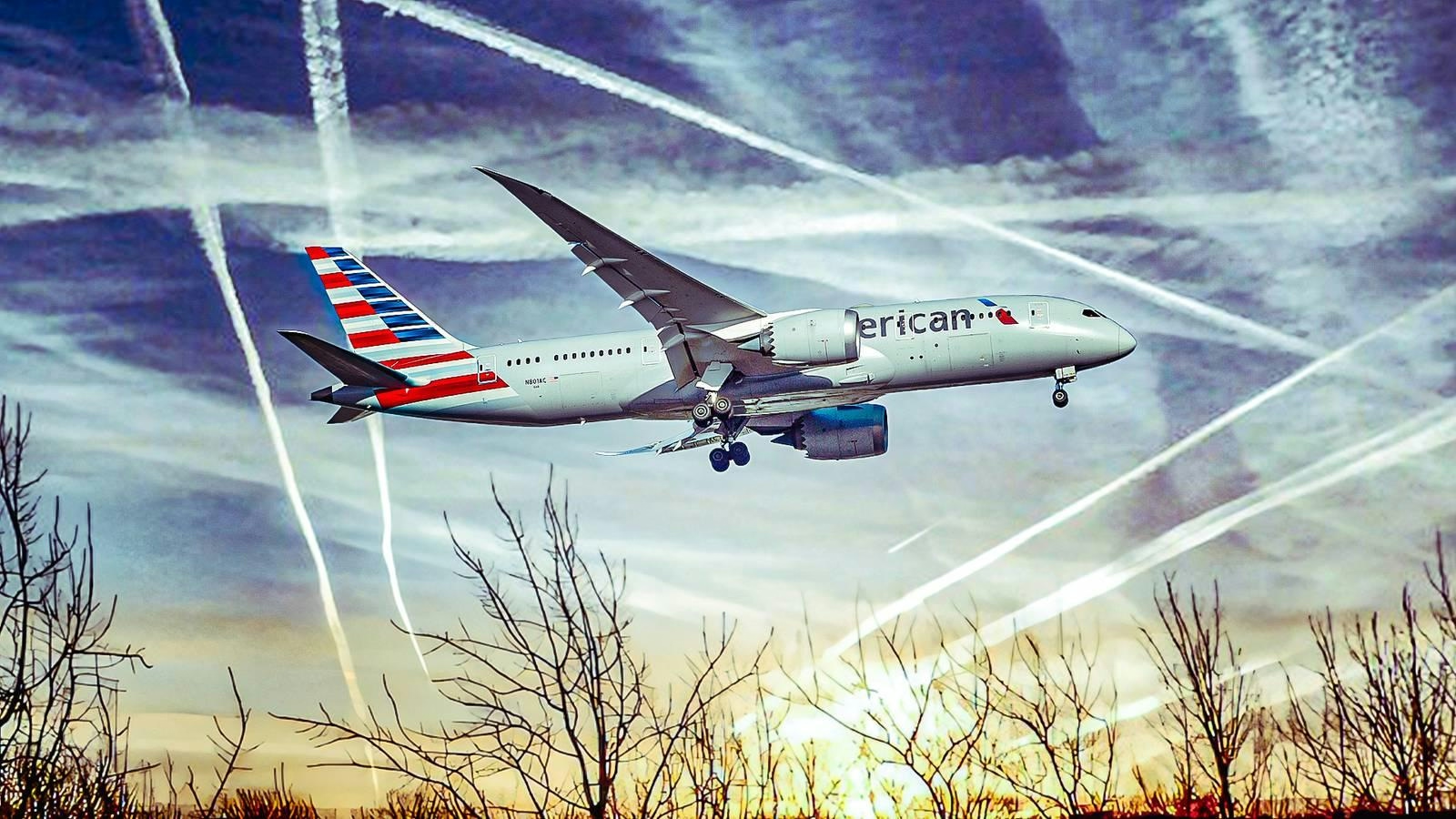
American Airlines Partners with Google to Combat Contrail Pollution Using AI
American Airlines, the United States’ second-largest carrier, has embarked on a pioneering collaboration with Google to employ artificial intelligence in reducing contrail formation—a significant yet often underestimated contributor to aviation’s environmental footprint. Contrails, the elongated cloud-like trails that appear behind aircraft at cruising altitudes, form when hot, humid exhaust from jet engines interacts with the cold, thin air at high elevations. Although these vapor trails do not contain harmful chemicals, they trap heat in the atmosphere, thereby exacerbating climate change. Persistent and spreading contrails are recognized as one of the aviation industry’s most substantial sources of non-CO₂ climate impact.
AI-Driven Forecasting to Minimize Contrails
In an effort to mitigate this environmental challenge, American Airlines is testing AI-powered forecasting tools developed in partnership with Google. These advanced systems analyze atmospheric conditions to predict where contrails are most likely to form, enabling flight planners to adjust routes and altitudes accordingly to avoid such regions. Initial results have been encouraging: flights adhering to AI-recommended routes have experienced a 62% reduction in contrail formation, while an overall 11.6% decrease has been observed across all participating flights. Notably, these improvements have been achieved without a significant increase in fuel consumption, underscoring the efficiency of the approach.
This initiative builds upon a 2023 study led by Google Research and Breakthrough Energy, which demonstrated that practical and scalable interventions could enable airlines to avoid generating contrails. Subsequent research conducted in 2024 and 2025 has focused on refining these strategies and integrating them into flight planning systems, with the ultimate goal of industry-wide adoption.
Challenges and Industry Implications
Despite its promise, the implementation of AI-driven contrail avoidance faces several challenges. The approach demands extensive data collection and continuous algorithmic refinement to maintain accuracy. Ensuring the safety and operational feasibility of altered flight paths remains paramount, and there may be resistance from pilots and air traffic controllers who must adapt to new routing procedures. Nevertheless, the technology’s scalable design makes it accessible for adoption by other airlines.
Market response to American Airlines’ efforts has been largely positive, reflecting growing consumer interest in sustainable travel options. This initiative is expected to enhance the airline’s brand image and may prompt competitors to invest in similar AI technologies, thereby intensifying the aviation industry’s commitment to environmental responsibility.
As the sector confronts mounting pressure to reduce its climate impact, American Airlines’ collaboration with Google stands as one of the most ambitious attempts to address contrail pollution. By leveraging artificial intelligence, the airline seeks not only to diminish its own environmental footprint but also to establish a new benchmark for sustainable aviation globally.

Etihad Airways Suspends Airbus A380 Flights on Key Route

Aditya Birla Group Seeks Approval for Aircraft Leasing in GIFT City

Qatar Airways Highlights Innovation and Connectivity at Arabian Travel Market 2026

Hong Kong's Five-Year Plan Includes Andrew Fan's Aircraft Parts Processing Hub Proposal

ACIA Aero Leasing Delivers ATR72-600 to Air Nostrum

RTX Appoints Jill Albertelli as Head of Pratt & Whitney

TAT Technologies Joins Beyond Aero Hydrogen Aircraft Program

AURAK Study Highlights Barriers to Air Taxi Adoption in Emerging Economies

Xiamen Air Selects Altitude for 787 Maintenance at Heathrow

Etihad and Swissport Extend Global Partnership
