
画像

AIによるインサイトを行動へとつなげる

今すぐAeroGenieのウェイティングリストに登録しよう!

現在のトレンド

Categories

Ask Paul: Consequences of Skipping Due Diligence
December 3, 2025By ePlane AI
Ask Paul: Consequences of Skipping Due Diligence
0
0
Pre-Buy Inspection
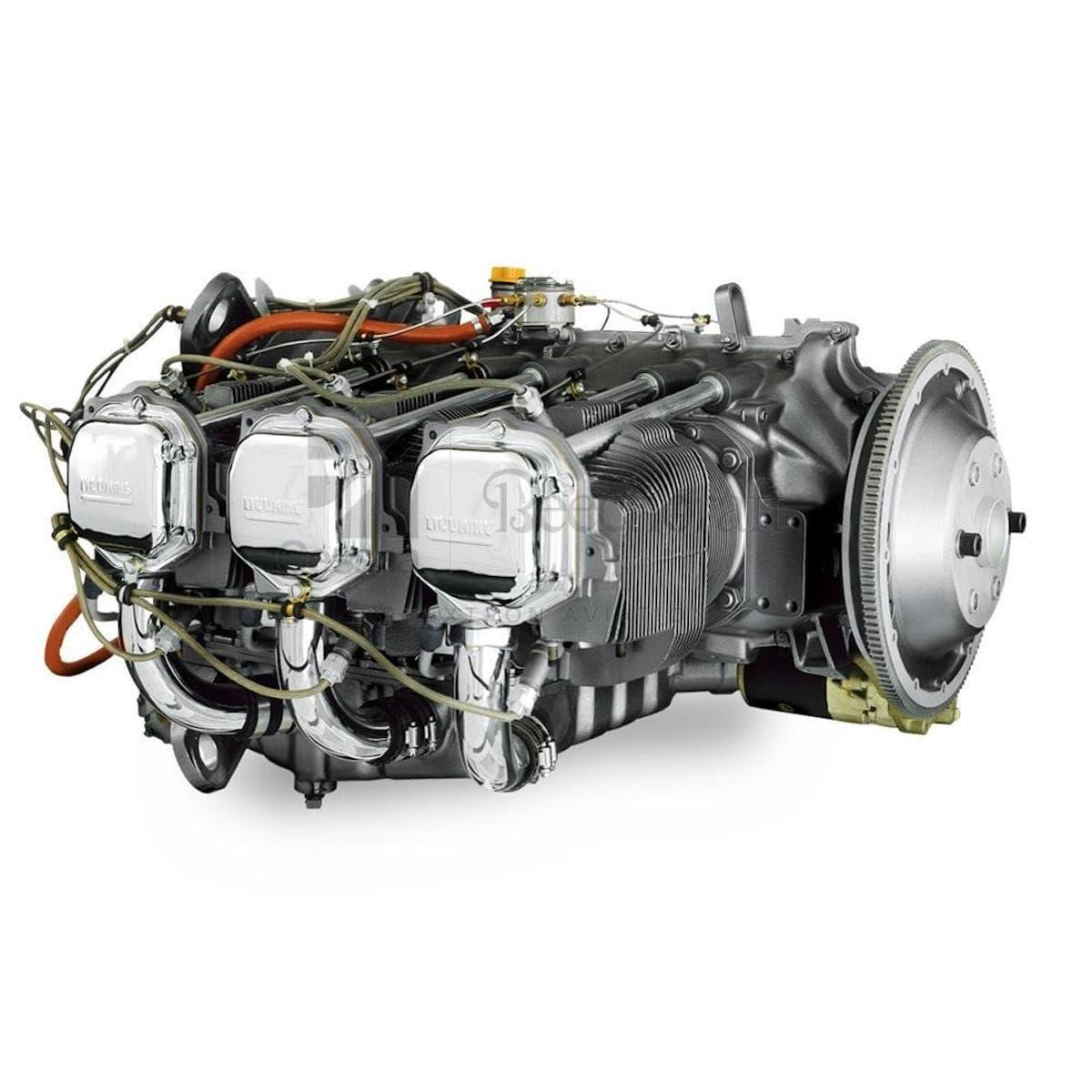
Lycoming O-540 Engine
Aircraft Maintenance

Ask Paul: The Consequences of Skipping Due Diligence in Aircraft Purchases

A Costly Oversight in General Aviation

Marty Taubert, a seasoned marine professional who recently ventured into general aviation, is confronting the repercussions of bypassing a critical step in his aircraft purchase. Approximately 18 months ago, Taubert acquired a 1971 PA-32 Cherokee 260 but neglected to conduct a comprehensive pre-buy inspection. Despite his extensive experience in the marine industry, he underestimated the distinct risks associated with aircraft engines—risks that have now manifested with significant financial implications.

After accumulating 120 additional flight hours on an engine that had only 300 hours since its 2012 rebuild, Taubert’s annual inspection revealed alarming issues. Compression readings for the #1 and #2 cylinders were recorded at 10/80 due to exhaust valve problems. An oil analysis detected elevated nickel levels, and a borescope inspection uncovered excessive cam wear alongside surface rust on visible components. The aircraft, which had been stored intermittently in a New Jersey hangar, now faces a difficult choice: to remanufacture or replace the engine.

Supply Chain Challenges and Financial Decisions

Complicating the situation further are ongoing supply chain delays. Lycoming, the engine manufacturer, has quoted a waiting period of one to two years for a new engine. Taubert is currently deliberating whether to invest an additional $6,000 to $10,000 in a wide deck engine, which is newer and benefits from better support, or to rebuild the now-obsolete narrow deck model. He is also concerned about the potential impact on the aircraft’s value, especially since two of his four sons, both active pilots, frequently use the plane for recreational flying.

Paul McBride, an engines expert at General Aviation News, responded to Taubert’s predicament with candor. He acknowledged the oversight, stating, “I could begin by saying shame on you for not doing your due diligence in a pre-buy inspection. However, I’m sure that would be just adding insult to injury, and you’ve probably already beat yourself up over that decision enough.”

Broader Implications of Skipping Due Diligence

Taubert’s experience serves as a cautionary example that extends beyond aviation. Neglecting due diligence—whether in aircraft acquisitions, real estate transactions, or business ventures—can expose individuals and organizations to substantial financial risks, supply chain complications, and regulatory challenges. In the current market environment, investors and consumers are increasingly vigilant, often penalizing those who fail to conduct thorough evaluations. This can lead to elevated costs, reputational harm, and lost opportunities, while competitors who emphasize diligence may gain a strategic advantage.

The real estate sector illustrates a similar dynamic, with buyers more frequently withdrawing from deals after uncovering hidden defects during due diligence periods. This trend underscores the essential role that careful scrutiny plays in safeguarding investments.

For Taubert, the immediate challenge remains whether to rebuild or replace his Lycoming engine. Yet, the broader lesson is unmistakable: the enduring importance of due diligence. As McBride observes, Taubert is far from alone in learning this lesson the hard way, a reminder that in aviation and beyond, skipping essential inspections can have lasting and costly consequences.

More news
VSE Corporation Acquires Atech Turbine Components

VSE Corporation Acquires Atech Turbine Components

VSE Corporation Expands Engine Aftermarket Capabilities with Acquisition of Atech Turbine Components VSE Corporation has announced the acquisition of Atech Turbine Components, a Massachusetts-based maintenance, repair, and overhaul (MRO) provider specializing in complex hot-section components for aircraft turbine engines. Established in 1990, Atech is renowned for its proprietary engine component repairs, primarily servicing Pratt & Whitney Canada platforms. The company holds approvals for over 300 part numbers and serves as the sole-source provider for numerous flight-critical repairs across several engine families, including the PW901 auxiliary power unit. Enhancing Technical Expertise and Market Reach Atech’s workforce of approximately 40 employees delivers highly technical repairs for hot-section and structural engine components, supporting a diverse range of sectors including business, commercial, military, rotorcraft, and special-mission aviation. This acquisition integrates more than 300 specialized, proprietary, and OEM-approved repairs into VSE Aviation’s aftermarket platform, significantly broadening its capabilities beyond parts distribution and accessory MRO to include advanced engine component repair. The transaction also reinforces VSE’s longstanding partnership with Pratt & Whitney Canada, enhancing alignment with a key original equipment manufacturer (OEM) and expanding aftermarket support across critical engine platforms. VSE has announced plans to invest in expanding Atech’s operational capacity, accelerating the development of new proprietary repairs, and fostering future organic growth. John Cuomo, President and CEO of VSE Corporation, emphasized the strategic importance of the acquisition, stating, “Atech brings a differentiated portfolio of proprietary repairs, highly technical capabilities, and a deep relationship with Pratt & Whitney Canada across some of the most important engine platforms in the aviation aftermarket. By adding Atech to VSE, we are expanding the breadth of solutions we provide to our OEM partners and customers while creating another attractive platform for long-term organic growth.” Strategic Outlook and Industry Implications Rita Kapur, President of Atech Turbine Components, reflected on the company’s legacy and future prospects, noting, “Our people, our reputation, and the trust we have earned from our customers are what defines us. This partnership with VSE Aviation allows us to build on that foundation while creating even greater opportunities for growth. VSE shares our commitment to technical excellence, exceptional customer service, and investment in our people. Together, we will have greater resources and capabilities to expand our specialized repair portfolio, deepen our customer relationships, and continue delivering the quality and service that have defined Atech Turbine Components for decades.” Market response to the acquisition has been largely positive, signaling confidence in VSE’s strategic expansion within the aerospace sector. However, industry analysts caution that VSE must effectively manage workforce integration and address challenges related to attracting and retaining skilled employees to fully capitalize on the deal’s benefits. Additionally, the company faces the ongoing task of ensuring that the strategic advantages of the acquisition are realized amid a competitive landscape, where responses from rivals remain uncertain. This acquisition represents a significant milestone for VSE Corporation as it seeks to strengthen its position in the aviation aftermarket by leveraging Atech’s technical expertise and established industry relationships to drive sustained growth.
Comlux Aviation Expands Fleet with Second Global 8000

Comlux Aviation Expands Fleet with Second Global 8000

Comlux Aviation Expands Fleet with Second Global 8000 Comlux Aviation has reinforced its managed fleet with the acquisition of a second Bombardier Global 8000, arriving just five months after the introduction of its first aircraft of this model in April 2026. Both jets, including their engines, are enrolled in manufacturer maintenance programs, ensuring comprehensive technical support and operational reliability. Growing Demand for Ultra-Long-Range Business Jets The rapid addition of a second Global 8000 underscores the rising demand for management services tailored to next-generation ultra-long-range business jets. Andrea Zanetto, CEO of Comlux Aviation, remarked that securing another owner to entrust their Global 8000 to Comlux so soon after the initial acquisition is a significant endorsement of the company’s longstanding client relationships and service quality. Based in Switzerland, Comlux offers a broad spectrum of services encompassing aircraft management, charter operations, sales, completions, cabin interiors, and maintenance. Its management and charter subsidiary operates a diverse fleet that includes VIP airliners alongside ultra-long-range business jets, solidifying the company’s position as a prominent player in the luxury aviation sector. Operational Challenges and Market Implications Despite the positive momentum, the expansion presents operational challenges. Ultra-long-range aircraft such as the Global 8000 involve complex operational demands and substantial maintenance costs, necessitating meticulous oversight to sustain client satisfaction and operational efficiency. As Comlux continues to grow its fleet, balancing these factors will be critical to preserving its reputation for excellence. The announcement has also sparked increased interest among other operators seeking to enhance their offerings with advanced business jets. Competitors including Spot Jet Services and Flexjet may respond by upgrading their fleets to remain competitive in attracting high-net-worth clients. This intensifying competition highlights both Comlux’s strong market position and the strategic imperatives involved in managing an expanding fleet of cutting-edge aircraft. Comlux’s swift acquisition of a second Global 8000 reflects confidence in the aircraft’s performance capabilities and a clear commitment to addressing the evolving expectations of clients in the ultra-long-range business jet segment.
Tata Elxsi and Sarla Aviation Partner to Accelerate Development of Shunya, India's First Indigenous eVTOL Aircraft

Tata Elxsi and Sarla Aviation Partner to Accelerate Development of Shunya, India's First Indigenous eVTOL Aircraft

Tata Elxsi and Sarla Aviation Collaborate to Propel Development of Shunya, India’s First Indigenous eVTOL Aircraft BENGALURU, India, Sept. 1, 2026 — Tata Elxsi, a global leader in design and technology services, and Sarla Aviation, a pioneering advanced air mobility company, have entered into a Memorandum of Understanding (MoU) to accelerate the development of Shunya, India’s first indigenous electric vertical take-off and landing (eVTOL) aircraft. Designed to accommodate six passengers and a pilot, the Shunya platform aims to transform urban air mobility within India by offering a new mode of efficient, sustainable transport. Partnership Framework and Technical Collaboration The alliance combines Sarla Aviation’s vision for next-generation air transport with Tata Elxsi’s extensive expertise in aerospace engineering, flight-critical systems, and digital engineering. Under the terms of the agreement, Tata Elxsi will deliver comprehensive engineering support encompassing avionics, flight control systems, software integration, testing, verification, validation, and certification processes. Sarla Aviation will retain leadership over the overall design, development, and type certification of the Shunya aircraft. The MoU was formalized at Sarla Aviation’s newly inaugurated headquarters in Bengaluru, in the presence of key executives including Manoj Raghavan, CEO and Managing Director of Tata Elxsi; Adrian Schmidt, Co-Founder and CEO of Sarla Aviation; Rakesh Gaonkar, Co-Founder and CTO of Sarla Aviation; alongside engineering teams from both organizations. Shunya’s Design and Market Potential Shunya is engineered to achieve a range exceeding 300 kilometers, integrating vertical take-off and landing capabilities with fixed-wing cruise efficiency. This hybrid design enables operations independent of runways while enhancing propulsion efficiency, positioning the aircraft as a viable solution to urban congestion and regional connectivity challenges. The project targets a first flight within 18 to 24 months, followed by rigorous certification activities. Despite its promise, the collaboration faces considerable challenges, particularly in navigating the complex regulatory and safety certification landscape for powered-lift aircraft—a relatively new category in aviation. Securing airworthiness and type certification will necessitate close coordination with regulatory authorities, as India and other nations continue to develop frameworks for emerging advanced air mobility technologies. Context within the Global Urban Air Mobility Landscape The announcement has intensified interest in India’s ambitions for urban air mobility, especially as the country aims for the commercial launch of air taxis by 2028. This partnership highlights the expanding role of Indian aerospace firms in shaping advanced air mobility platforms amid growing global competition. International companies such as Joby Aviation and Archer Aviation are advancing metropolitan intra-city travel and airport access solutions, while China’s EHang has already achieved significant milestones in autonomous eVTOL operations. Adrian Schmidt, Co-Founder and CEO of Sarla Aviation, remarked, “Building a new class of aircraft is not simply an engineering challenge. It requires bringing together people and organizations willing to solve problems that have never been solved before in this market. Tata Elxsi’s experience in complex aerospace systems gives us access to capabilities that are critical as we take Shunya from concept to reality. What excites me most about this collaboration is that it brings together two teams that believe advanced air mobility can move from ambition to everyday infrastructure much sooner than many think.” As the global race for eVTOL leadership intensifies, the Tata Elxsi–Sarla Aviation partnership represents a significant milestone for India’s aerospace sector, aiming to position the country at the forefront of urban air mobility innovation.
IndiGo Flight from Goa to Delhi Returns After Engine Failure, Lands Safely

IndiGo Flight from Goa to Delhi Returns After Engine Failure, Lands Safely

IndiGo Flight from Goa to Delhi Returns Safely Following Engine Failure An IndiGo flight traveling from Goa to Delhi was compelled to return to Goa airport on Tuesday morning after experiencing an engine failure mid-flight. Air Traffic Control (ATC) promptly declared a full emergency in response to the incident, according to sources familiar with the situation. Incident Details and Response IndiGo flight 6E 2102 departed Goa at 9:16 am, destined for Delhi. Shortly after takeoff, while cruising at approximately 14,000 feet over the southern coast of Maharashtra, the flight crew reported a malfunction in one of the aircraft’s engines. Aviation tracking data from Flightradar24 indicated that the aircraft immediately turned back toward Goa as a precautionary measure. ATC declared a full emergency at around 9:30 am as the plane commenced its return. The aircraft safely landed on Runway 28 at 9:51 am and was subsequently parked at Stand 6. The emergency status was officially lifted at 10:03 am. All passengers disembarked without injury and were accommodated in the airport’s boarding area. The continuation of the flight to Delhi has been rescheduled for 3:30 pm, subject to aircraft clearance and operational requirements. The airline has not yet disclosed specific details regarding the engine malfunction. Broader Implications for Aviation Safety This incident occurs amid increased scrutiny of aviation safety standards in India, where technical issues have led to a rise in precautionary returns to departure airports. For IndiGo, the nation’s largest airline, the event poses immediate challenges in maintaining passenger confidence, managing operational disruptions, and addressing potential regulatory investigations. Market analysts observe that such events can cause short-term volatility in airline stock prices as investors reassess operational reliability. Competitors may also leverage the situation to highlight their own safety records and operational efficiencies. The episode has reignited discussions about the future of regional air mobility and the resilience of safety protocols within India’s rapidly growing aviation sector. As investigations continue, industry stakeholders and passengers alike await further updates and assurances regarding safety standards and transparency.
Simnest Group and AviatePro Expand AI-Assisted Simulation Collaboration

Simnest Group and AviatePro Expand AI-Assisted Simulation Collaboration

Simnest Group and AviatePro Expand AI-Assisted Simulation Collaboration Advancing AI-Driven Pilot Training Technology Simnest Group, encompassing Simnest Aviation and Simnest Pilot Academy, has formalized an expanded strategic partnership with AviatePro Services Ltd. to further develop Simvidence Powered by Simnest, an AI-assisted, multimodal training-review platform designed for professional flight training and broader commercial applications. This collaboration builds upon prior technical achievements and operational experience, extending to wider deployment, deeper technical integration, and ongoing joint development of the co-branded platform. Simvidence integrates synchronized simulator video, multichannel audio, speech recognition, session events, and human-performance signals, all precisely timestamped and source-traceable. This comprehensive data fusion provides instructors and pilots with robust evidence to enhance debriefing and self-assessment processes. By analyzing visual, vocal, communication, and contextual information, the system identifies critical reviewable moments while maintaining their original context, enabling targeted and meaningful feedback. Importantly, the platform is designed to complement rather than replace instructor judgment, offering an additional layer of evidence to support more focused and consistent debriefings. Current development and validation efforts are underway using Simnest Aviation simulators within the real-world training environment of Simnest Pilot Academy, incorporating feedback from experienced instructors. This partnership effectively combines Simnest’s simulator technology and training expertise with AviatePro’s AI-driven human factors and debriefing solutions. Technical Integration and Industry Challenges The collaboration also explores secure integration of simulator telemetry, aircraft-state data, event logs, and other operational information—preferably on a read-only basis—to enrich analysis and contextual understanding. The underlying infrastructure is expected to support future training enhancements, including self-study modules, automated electronic journey logs, and additional digital training services. Despite these advancements, the partnership faces several industry-wide challenges. Budgetary constraints, protracted procurement cycles, cybersecurity concerns, and the complexities of integrating new AI platforms with legacy systems present significant hurdles. These challenges occur amid rapid transformation in the aviation sector, characterized by a post-pandemic pilot shortage, the introduction of mandatory upset-recovery and multi-crew pilot licensing (MPL) curricula, fleet modernization toward composite and electric-propulsion aircraft, and evolving defense training requirements such as Live-Virtual-Constructive environments. Furthermore, emerging eVTOL type-rating regulations are reshaping training demands. Market dynamics are further influenced by the aerospace industry’s ongoing pressure to contain costs. Competitors are responding by investing in advanced AI-driven behavioral modeling, cloud-based simulators, and multi-screen 3D visualization technologies to enhance realism and scalability. Perspectives from Leadership and Upcoming Presentation Captain Gyula Kühtreiber, CEO of Simnest Group, emphasized the platform’s role in augmenting instructor capabilities rather than replacing them. He stated, “The real value of AI in pilot training is not to replace the instructor, but to help make important moments more visible and easier to review and understand. By combining AviatePro’s technology with Simnest’s simulator and training expertise, we aim to create a practical tool that supports better debriefing and more evidence-informed training.” Krisztian Makai, Founder and CEO of AviatePro Services Ltd., highlighted the practical benefits of the collaboration, noting, “Simvidence Powered by Simnest is designed to add a reviewable evidence layer to the professional observations instructors already make during simulator training. Working with Simnest gives us the real-world training use, instructor feedback, and simulator integration expertise needed to develop the technology further and make it practical at scale.” Makai is scheduled to present early findings and practical examples at the APATS 2026 conference session titled “From Hunches to Evidence: How AI Can Make Human Factors More Visible in Pilot Training?” on 2 September 2026. The session will explore how non-intrusive, AI-supported analysis can enhance the visibility of factors such as workload, resilience, and cockpit dynamics during simulator debriefings, while preserving the central role of instructor judgment. Simnest will be exhibiting at APATS through 2 September at booth 208.
Rob Fyfe Calls Christopher Luxon’s Criticism of Air New Zealand ‘Uncool’

Rob Fyfe Calls Christopher Luxon’s Criticism of Air New Zealand ‘Uncool’

Rob Fyfe Responds to Christopher Luxon’s Criticism of Air New Zealand’s Losses Former Air New Zealand chief executive Rob Fyfe has publicly challenged Prime Minister Christopher Luxon’s recent critique of the airline’s $242 million loss, describing the remarks as “uncool” and urging caution against attributing the airline’s difficulties solely to current management. Fyfe emphasized the long-standing nature of the issues, noting that decisions made during his and Luxon’s respective tenures contributed to the challenges faced today. “If I’m brutally honest, I suspect the engines that have been causing Air New Zealand so much grief are engines that ... either it was Christopher or me that made the decision to buy them,” Fyfe stated. Having led the airline from 2005 to 2012, Fyfe was succeeded by Luxon, who served as CEO from 2013 to 2019. Underlying Causes of Air New Zealand’s Financial Loss Air New Zealand’s latest annual report, released on Friday, attributed the substantial loss to a combination of factors including elevated jet fuel prices, persistent engine availability problems, lifecycle maintenance expenses, additional maintenance on leased engines, and broader systemic costs within the aviation sector. Notably, multi-year engine issues alone accounted for $190 million of the pre-tax loss. Prime Minister Luxon described the financial outcome as a “pretty poor performance,” calling on the airline to provide clarity on the loss and to outline measures for improvement. Despite his criticism, Luxon commended the airline’s current CEO, Nikhil Ravishankar, who assumed leadership in October. A spokesperson for the Prime Minister’s office clarified that Luxon’s comments were made in his capacity as a representative of taxpayers, who are the airline’s majority shareholders, and that his remarks reflected their interests. Historical Context of Engine Problems The engine troubles plaguing Air New Zealand have roots extending over a decade. In 2015, under Luxon’s leadership, the airline selected Pratt & Whitney PurePower PW1100G-JM engines for its Airbus narrowbody fleet. Earlier, during Fyfe’s tenure, Air New Zealand opted for Rolls-Royce Trent 1000 engines for its Boeing 787 Dreamliners—a decision initially made in 2004 and reaffirmed in 2009. At the time, the alternative was the General Electric GEnx-1B engine. Luxon’s successor, Greg Foran, later expressed relief that the airline had chosen General Electric engines for its newer Dreamliners, given the ongoing difficulties with the Trent 1000s. Rolls-Royce has since prioritized addressing these issues, establishing a dedicated task force to expedite solutions. Public and Political Reactions Public relations expert Trish Sherson commented that Luxon’s remarks appeared to be “punching down on Air New Zealand,” highlighting that Fyfe had acknowledged responsibility for some of the airline’s challenges. Former Labour Party leader Phil Goff also criticized Luxon’s statements as unfair, remarking, “People who live in glass houses shouldn’t throw stones. He shouldn’t be talking his organisation down.” Fyfe’s response underscores the delicate position former leaders occupy in public debates, particularly when reputational risks and market perceptions are involved. The controversy arises amid increased scrutiny of Air New Zealand by stakeholders and potential competitive pressures, as rival airlines may seek to exploit the company’s difficulties. Meanwhile, Luxon’s own leadership is facing challenges, with a recent confidence vote raising questions about his capacity to concentrate on broader policy initiatives, including his proposed social media ban for children under 16. Air New Zealand’s Ongoing Efforts Air New Zealand has stated that it is collaborating closely with Rolls-Royce and Pratt & Whitney to accelerate engine recovery efforts. The airline now anticipates that no more than one widebody and up to two narrowbody aircraft will remain grounded due to ongoing engine issues.
US Treasury Simplifies Reporting Requirements for Aircraft Ownership Entities

US Treasury Simplifies Reporting Requirements for Aircraft Ownership Entities

US Treasury Simplifies Reporting Requirements for Aircraft Ownership Entities Regulatory Changes and Their Scope The U.S. Treasury Department’s Financial Crimes Enforcement Network (FinCEN) has finalized a rule that exempts limited liability companies (LLCs) and other entities commonly used in aircraft ownership from reporting beneficial ownership information. This change, effective August 14, 2026, represents a significant modification to the compliance framework established under the 2021 Corporate Transparency Act (CTA). The original legislation mandated that covered entities disclose detailed information about their beneficial owners—including names, dates of birth, and addresses—to FinCEN, with the aim of combating financial crimes such as money laundering and fraud. Under the new rule, these aircraft ownership entities will no longer be required to submit such ownership data, and FinCEN will remove previously reported information from its systems. However, foreign entities registered to conduct business in the United States remain obligated to report beneficial ownership details concerning their foreign owners. This distinction maintains a level of transparency for foreign-registered businesses while easing requirements for domestic aircraft ownership structures. Industry Response and Privacy Considerations The National Business Aviation Association (NBAA) had previously expressed concerns regarding the privacy implications of the CTA’s reporting requirements, particularly the potential exposure of sensitive information related to business aircraft owners and their ownership arrangements. The revised rule addresses some of these privacy concerns, providing relief to sectors that have long advocated for reduced regulatory burdens and greater confidentiality. Concerns Over Financial Crime Risks Despite the privacy benefits, the relaxation of reporting obligations has generated debate over possible unintended consequences. Critics argue that eliminating beneficial ownership disclosures could hinder authorities’ ability to trace illicit activities through complex ownership structures, thereby increasing the risk of financial crime and money laundering. Financial institutions, in particular, may encounter greater difficulties in verifying customer information and ensuring compliance with anti-money laundering regulations, potentially intensifying their operational challenges. Market Implications and Future Outlook Reactions within the market are expected to be mixed. Some businesses and sectors may welcome the deregulation and the associated reduction in compliance costs, while others—especially within the financial services industry—may face heightened scrutiny and regulatory pressure as they adjust to the new environment. The rule change could create divergent competitive impacts, with some entities benefiting from streamlined operations and others losing clients who prioritize transparency and regulatory compliance. As the August 2026 implementation date approaches, industry stakeholders and regulators will closely monitor the effects of this regulatory shift, balancing the advantages of enhanced privacy and reduced compliance against the potential increase in financial crime risks.
Bangladesh to Purchase 14 Boeing Aircraft, Plans Additional Leases

Bangladesh to Purchase 14 Boeing Aircraft, Plans Additional Leases

Bangladesh to Purchase 14 Boeing Aircraft, Plans Additional Leases Amid Aviation Sector Modernization Bangladesh has announced plans to purchase 14 Boeing aircraft from the United States, alongside intentions to lease additional planes, as part of a comprehensive strategy to modernize its aviation sector. Civil Aviation and Tourism Minister M Rashiduzzaman Millat confirmed the government’s commitment to this procurement during a press briefing following a law-and-order and development coordination meeting in Mymensingh. The minister explained that the decision aligns with a request from the U.S. government for Bangladesh to utilize Boeing aircraft. “The U.S. had requested that Bangladesh use Boeing aircraft, and the government is acting accordingly,” Millat stated. In addition to Boeing, Bangladesh is also considering acquiring new aircraft from Airbus, the European aerospace consortium jointly owned by France, Britain, and Germany, to further enhance the country’s aviation capabilities. This announcement follows an agreement reached in April between Bangladesh and Boeing for the purchase of 14 planes designated for Biman Bangladesh Airlines. Valued at $3.7 billion, this deal represents the largest order in the history of the national carrier. U.S. Special Envoy for South and Central Asia and Ambassador to India, Sergio Gor, highlighted Bangladesh’s significant financial commitment under this new agreement with Washington. Challenges in a Competitive Global Aviation Market Bangladesh’s ambitious fleet expansion occurs within a highly competitive global aviation market dominated by Boeing and Airbus. While China’s COMAC is attempting to challenge this duopoly with its C919 aircraft, the model remains heavily reliant on foreign components and has yet to secure certification from major U.S. and European regulatory bodies. This dependence on external parts and regulatory approval is likely to influence Bangladesh’s procurement strategy, as the government weighs considerations of reliability and certification in its fleet decisions. Furthermore, ongoing global supply chain disruptions, including shortages of critical aircraft components such as windows, may affect the availability and cost of new planes and maintenance parts. These constraints could impact the timeline and financial planning associated with Bangladesh’s fleet expansion. Additionally, regulatory changes in other markets, such as Russia’s tightening of compliance and financial health criteria for airlines seeking international routes, are reshaping global aircraft demand and supply dynamics, potentially influencing Bangladesh’s aviation plans. Domestic Challenges and Government Response Addressing broader national issues, Minister Millat acknowledged the persistent power and gas crisis, describing it as a “mess” inherited from previous administrations. He emphasized that resolving these challenges and developing new infrastructure will require considerable time and sustained effort. “Even after laying the foundation stone of a building, it takes at least two years to complete it. Even if we work rapidly using new technologies, it will still take one-and-a-half to two years,” he remarked. Responding to criticism from opposition lawmakers and Jamaat-e-Islami representatives regarding electricity and gas shortages, Millat asserted that immediate solutions are unrealistic. He called on law enforcement and administrative officials to take firm action against those attempting to foment social or administrative instability, underscoring the government’s commitment to maintaining peace and fostering progress for the people of Bangladesh. “Our only goal is to ensure that people live in peace and get a better Bangladesh,” he concluded.
Arcadis Named Owner’s Representative for Lufthansa Technik’s New Clark Maintenance Facility

Arcadis Named Owner’s Representative for Lufthansa Technik’s New Clark Maintenance Facility

Arcadis Appointed Owner’s Representative for Lufthansa Technik’s New Clark MRO Facility Arcadis, a global leader in sustainable design, engineering, and consultancy, has been appointed as the Owner’s Representative for Lufthansa Technik Philippines’ (LTP) new Maintenance, Repair, and Overhaul (MRO) facility at Clark International Airport. The partnership was formalized through a contract signing on August 11, 2026. Project Scope and Strategic Importance Arcadis Philippines will assume full responsibility for project and construction management, including cost oversight, for the expansive 157,000-square-meter facility. This development forms a critical part of LTP’s long-term strategy to expand its aircraft maintenance capacity within the Asia-Pacific region, complementing its existing operations in Manila. As Owner’s Representative, Arcadis will provide senior oversight, governance, and coordination among stakeholders from the construction phase through to operational readiness. The company’s role encompasses proactive risk management, cost and schedule control, stakeholder engagement, and operational readiness planning. A key challenge will be the integration of specialist aircraft docking systems and the management of their complex interfaces within a compressed delivery timeline. Market Context and Industry Implications The new Clark MRO facility is poised to enhance Lufthansa Technik Philippines’ maintenance capabilities and solidify its competitive position in the Asia-Pacific aviation market. This expansion occurs amid ongoing regional disruptions, such as those experienced by DAE Engineering due to conflicts and airspace closures, which have increased demand for heavy maintenance checks, particularly for Boeing 787 aircraft. The fleet of these aircraft is expected to double over the next decade, intensifying the need for expanded MRO capacity. In response to evolving market dynamics, competitor MRO providers are also upgrading their regional capabilities, especially in servicing next-generation aircraft like the Airbus A350. Lufthansa Technik has proactively invested in advanced manufacturing technologies, including 3D printing for cabin spares in partnership with Materialise, positioning itself at the forefront of innovation within the MRO sector. Leadership Perspectives Darneil Perez, Country Director of Arcadis Philippines, expressed enthusiasm about the collaboration, stating, “We are delighted to support Lufthansa Technik Philippines in delivering its new Clark MRO facility, a project that reflects a shared commitment to growth, innovation, and excellence. As Delivery Partner, Arcadis will provide the leadership and governance needed to deliver this complex development with confidence and certainty.” Holger Beck, President and CEO of Lufthansa Technik Philippines, emphasized the strategic significance of the project: “The development of our new facility in Clark is a significant step in our long-term growth and commitment to strengthening our capabilities in the Asia-Pacific region. With Arcadis supporting us, we look forward to delivering a world-class MRO facility that meets the highest standards of safety, quality, and operational excellence.” Arcadis’ appointment highlights its established expertise in project and construction delivery, leveraging global best practices and international experience. This collaboration further reinforces Arcadis’ reputation as a trusted partner for complex aviation infrastructure developments in the Philippines.
Textron Aviation Receives Australian CASA Part 145 Certification

Textron Aviation Receives Australian CASA Part 145 Certification

Textron Aviation Secures CASA Part 145 Certification for Australian Maintenance Network Textron Aviation has obtained Civil Aviation Safety Authority (CASA) Part 145 certification for its Australian maintenance organisation, a development that significantly enhances its factory-direct service and support capabilities throughout the Asia-Pacific region. This certification covers the company’s service centres located in Melbourne, Perth, and the Gold Coast, establishing one of the most extensive original equipment manufacturer (OEM)-owned support networks in Australia. Strengthening Maintenance Capabilities Across Australia The CASA Part 145 certification confirms that Textron Aviation’s Australian operations comply with the country’s stringent aviation safety standards. The approval reflects the presence of robust systems, qualified personnel, and rigorous oversight within the organisation. It assures customers that all maintenance activities are conducted under a CASA-approved framework, ensuring consistent quality, regulatory compliance, and technical proficiency across all three company-owned service centres. With over 1,400 Cessna, Beechcraft, and Hawker aircraft currently operating in Australia, this certification significantly enhances Textron Aviation’s capacity to support a substantial fleet. The strategic positioning of its service centres allows the company to provide factory-direct support nationwide, including CASA-approved maintenance, aircraft modifications, overhaul services, and aircraft-on-ground assistance. This localised support is expected to reduce maintenance turnaround times and minimise aircraft downtime, enabling operators to maintain safe and efficient operations while benefiting from direct access to the manufacturer’s technical expertise, parts, and global support resources. Operational Challenges and Market Implications Despite these advantages, the expansion presents operational challenges for Textron Aviation. Maintaining compliance with Australia’s rigorous aviation standards across three geographically dispersed centres demands continuous investment in personnel training, process management, and quality assurance. Ensuring consistent technical expertise and operational excellence at each location will be essential as the company scales its maintenance operations. The market response to the certification is expected to be favourable, with increased customer confidence in Textron Aviation’s maintenance services likely to drive higher demand. This strengthened support network may also prompt competitors to enhance their own maintenance offerings or expand their presence in the region, potentially intensifying competition within the OEM-owned support market. Textron Aviation’s attainment of CASA Part 145 certification marks a pivotal step in expanding its service footprint in Australia, positioning the company to better serve local operators while addressing the operational and competitive challenges associated with a growing maintenance network.
line









