
AIによるインサイトを行動へとつなげる

現在のトレンド
Categories
Aviation Ministry Partners with Microsoft to Use AI in Improving Travel
Aviation Ministry Partners with Microsoft to Use AI in Improving Travel
Advancing Egypt’s Digital Transformation in Aviation
In a significant move aligned with Egypt’s broader digital transformation strategy, the Ministry of Civil Aviation is intensifying efforts to integrate cutting-edge digital technologies throughout its operations. Minister of Civil Aviation, Samah el-Hefny, highlighted the ministry’s dedication to harnessing technological innovation alongside workforce development as fundamental components for achieving sustainable growth within the sector.
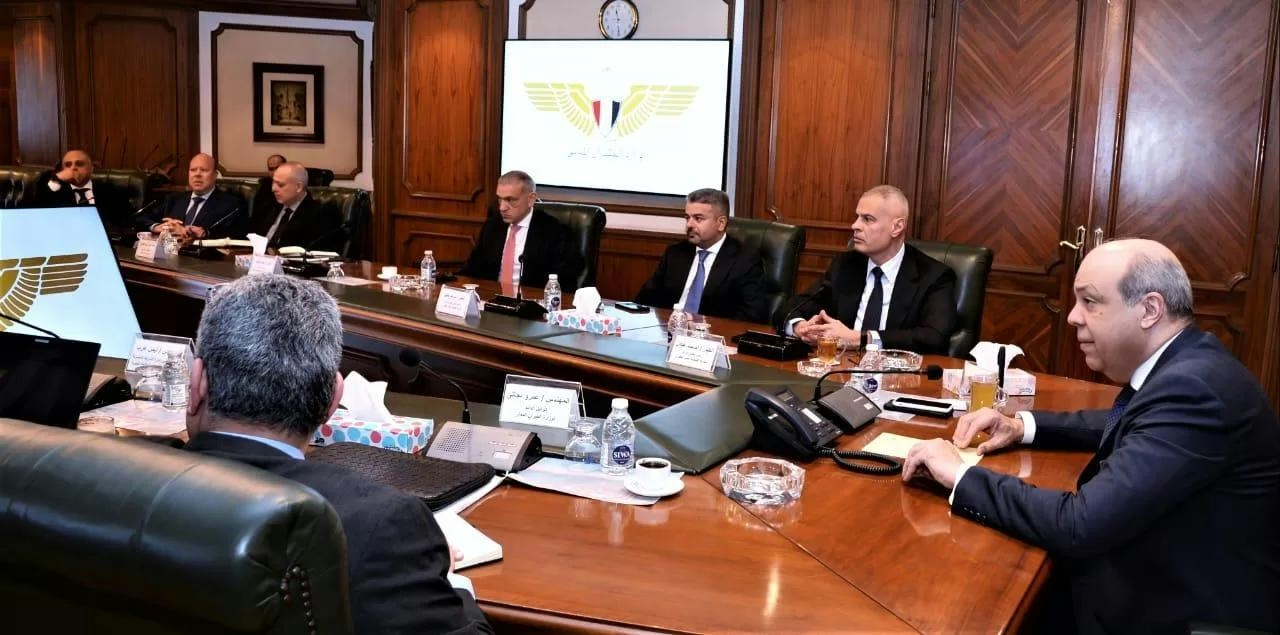
This strategic vision was articulated during a recent meeting at the ministry’s headquarters, where Minister el-Hefny welcomed a delegation from Microsoft led by Naim Yazbeck, President for the Middle East and Africa. The meeting also included Eng. Amr Negaty, Permanent Undersecretary of the Ministry. Discussions focused on expanding collaboration in information technology and digital transformation, with particular emphasis on the ongoing partnership between EgyptAir and Microsoft.
Leveraging Artificial Intelligence to Enhance Travel Experience
Central to this collaboration is the deployment of artificial intelligence (AI) technologies aimed at improving the travel experience. The initiative supports EgyptAir’s strategy to adopt advanced digital tools designed to boost operational efficiency and elevate service quality for passengers. By integrating AI-driven solutions, the ministry seeks to modernize its aviation services and align with global industry standards.
However, this partnership unfolds within a rapidly evolving and highly competitive AI landscape. Microsoft, despite its substantial investments in AI—including its Copilot platform—faces scrutiny regarding the tangible returns on these investments. The company’s dependence on external AI models, such as those developed by Anthropic, has raised questions about its capacity to keep pace with leading industry players like Anthropic and Alphabet (Google). Market responses to Microsoft’s AI ventures have been mixed, with some analysts expressing doubt over whether the company can effectively narrow the gap with competitors who are simultaneously advancing their own sophisticated AI models to capture greater market share.
Addressing Workforce Implications Amid Digital Transformation
Beyond competitive dynamics, the broader implications of AI adoption in aviation present challenges related to workforce roles traditionally reliant on direct, in-person interactions. As digital transformation accelerates, the Ministry of Civil Aviation remains attentive to the necessity of equipping its workforce with new skills to fully leverage these technologies while managing potential shifts in employment patterns.
Minister el-Hefny reaffirmed the ministry’s commitment to digital innovation as a catalyst for progress. By investing strategically in both technological capabilities and human capital, the ministry aims to ensure that Egypt’s aviation sector remains competitive and adaptable to the evolving demands of the global aviation industry.

Etihad Airways Suspends Airbus A380 Flights on Key Route

Aditya Birla Group Seeks Approval for Aircraft Leasing in GIFT City

Qatar Airways Highlights Innovation and Connectivity at Arabian Travel Market 2026

Hong Kong's Five-Year Plan Includes Andrew Fan's Aircraft Parts Processing Hub Proposal

ACIA Aero Leasing Delivers ATR72-600 to Air Nostrum

RTX Appoints Jill Albertelli as Head of Pratt & Whitney

TAT Technologies Joins Beyond Aero Hydrogen Aircraft Program

AURAK Study Highlights Barriers to Air Taxi Adoption in Emerging Economies

Xiamen Air Selects Altitude for 787 Maintenance at Heathrow

Etihad and Swissport Extend Global Partnership
