
AIによるインサイトを行動へとつなげる

現在のトレンド
Categories
Aviation Regulator Considers Harsher Penalties and Safety Ratings for Charter Operators
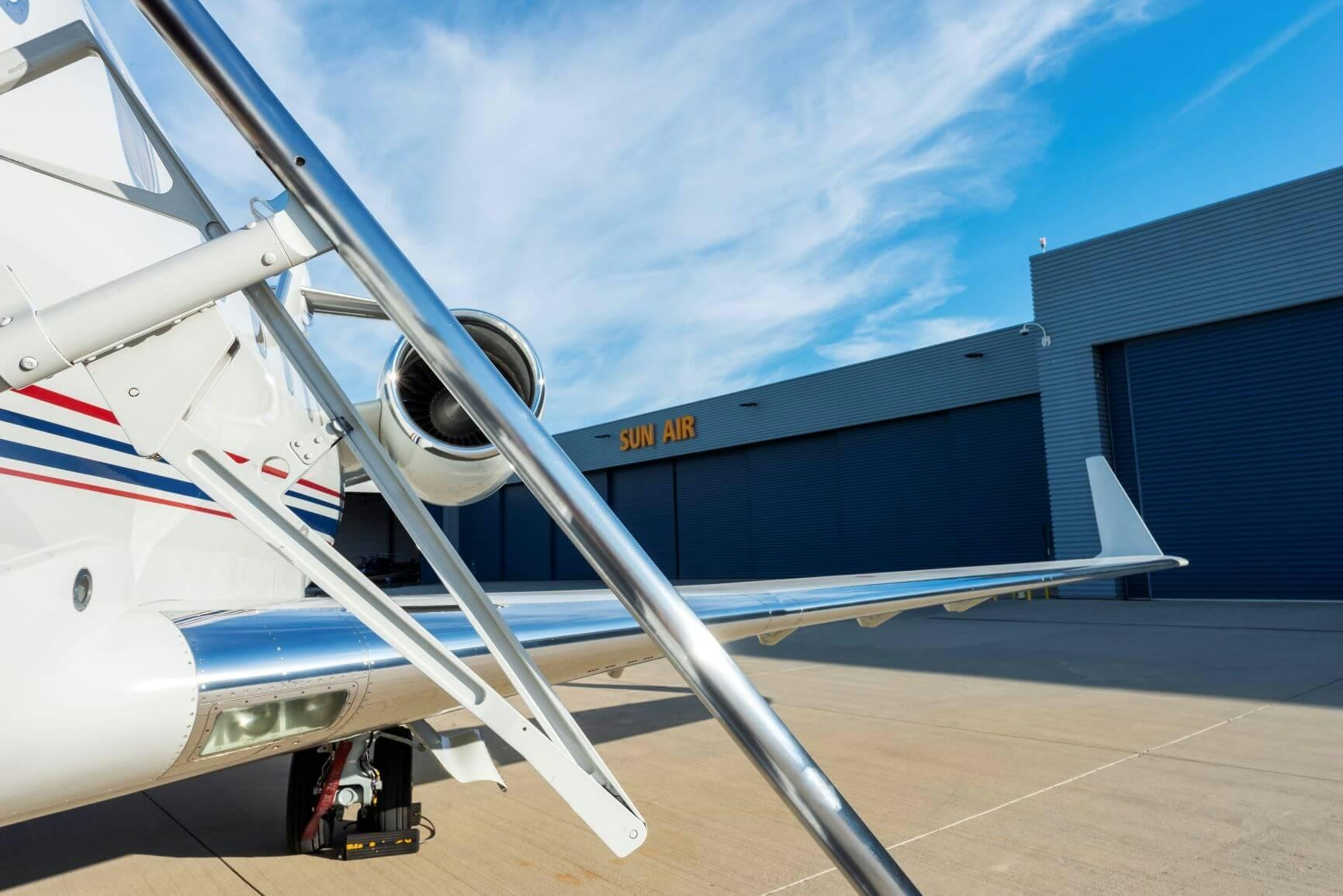
Aviation Regulator Proposes Stricter Penalties and Public Safety Ratings for Charter Operators
Heightened Regulatory Response Following Fatal Crashes
In the wake of two tragic crashes involving small charter aircraft within a single month, which resulted in the loss of 12 lives, India’s Directorate General of Civil Aviation (DGCA) is poised to implement comprehensive reforms targeting non-scheduled operator permit (NSOP) holders, including charter and private jet operators. These measures aim to enhance safety standards and restore public confidence in the country’s charter aviation sector.
Central to the DGCA’s proposals is the introduction of a public safety rating system for charter operators. These ratings, based on operators’ safety records, will be published on the regulator’s official website. Additionally, operators will be mandated to disclose critical safety information on their own platforms, including details about aircraft age, maintenance history, and pilot experience. This transparency initiative is designed to empower customers with essential information regarding the safety standards of the aircraft they choose to charter.
Stricter Enforcement and Accountability Measures
The DGCA plans to enforce more severe penalties for safety violations. Pilots found breaching flight duty time limits or attempting landings below prescribed safety minima could face license suspensions of up to five years. Operators failing to comply with regulatory standards risk suspension of their operating licenses. These measures come amid increased scrutiny following a series of aviation incidents, including Air India’s recent grounding of a Boeing 787-9 due to a fuel switch error, highlighting the urgent need to reinforce safety culture within the industry.
During a recent meeting with all NSOP operators, the DGCA underscored that safety must take precedence over commercial considerations, including charter commitments and VIP movements. The regulator reaffirmed that decisions made by pilots-in-command to divert, delay, or cancel flights on safety grounds are final and must not be overridden by operators for commercial reasons.
The meeting identified several critical issues contributing to recent accidents, such as non-adherence to standard operating procedures (SOPs), inadequate flight planning, and deficiencies in pilot training. In response, the DGCA announced a zero-tolerance policy toward safety compromises in the NSOP sector, accompanied by immediate measures including mandatory public disclosure of fleet and crew safety data, increased random audits of cockpit voice recorders, fuel records, and technical logs to detect unauthorized operations or data falsification.
Furthermore, the regulator emphasized personal accountability for senior management in cases of systemic non-compliance, extending responsibility beyond pilots alone. Enhanced oversight will be applied to older aircraft and those undergoing ownership changes. Maintenance facilities will be subject to rigorous audits, with mandatory outsourcing to approved organizations if deficiencies are identified. The DGCA also called for the implementation of real-time weather update systems and stricter adherence to SOPs, supported by recurrent pilot training focused on weather awareness and decision-making.
Implications for the Charter Aviation Market
These reforms are expected to increase operational costs for charter operators, who may need to invest significantly in compliance and safety upgrades. Market dynamics could shift as consumers increasingly favor operators with higher safety ratings, potentially providing a competitive advantage to those who adapt swiftly. Industry players may respond by enhancing their own safety protocols or lobbying against the proposed regulatory changes.
A senior DGCA official encapsulated the regulator’s firm stance: “The message is clear to NSOP operators: Either operate with 100% compliance of all norms or surrender your licence and go home. They have to fall in line or be out of business.”
With the aviation sector under intense scrutiny, the DGCA’s decisive actions signal a renewed commitment to prioritizing passenger safety and operational transparency across India’s charter flight industry.

Etihad Airways Suspends Airbus A380 Flights on Key Route

Aditya Birla Group Seeks Approval for Aircraft Leasing in GIFT City

Qatar Airways Highlights Innovation and Connectivity at Arabian Travel Market 2026

Hong Kong's Five-Year Plan Includes Andrew Fan's Aircraft Parts Processing Hub Proposal

ACIA Aero Leasing Delivers ATR72-600 to Air Nostrum

RTX Appoints Jill Albertelli as Head of Pratt & Whitney

TAT Technologies Joins Beyond Aero Hydrogen Aircraft Program

AURAK Study Highlights Barriers to Air Taxi Adoption in Emerging Economies

Xiamen Air Selects Altitude for 787 Maintenance at Heathrow

Etihad and Swissport Extend Global Partnership
