
AIによるインサイトを行動へとつなげる

現在のトレンド
Categories
Azul Airlines Uses Fetcherr’s LMM to Boost Revenue
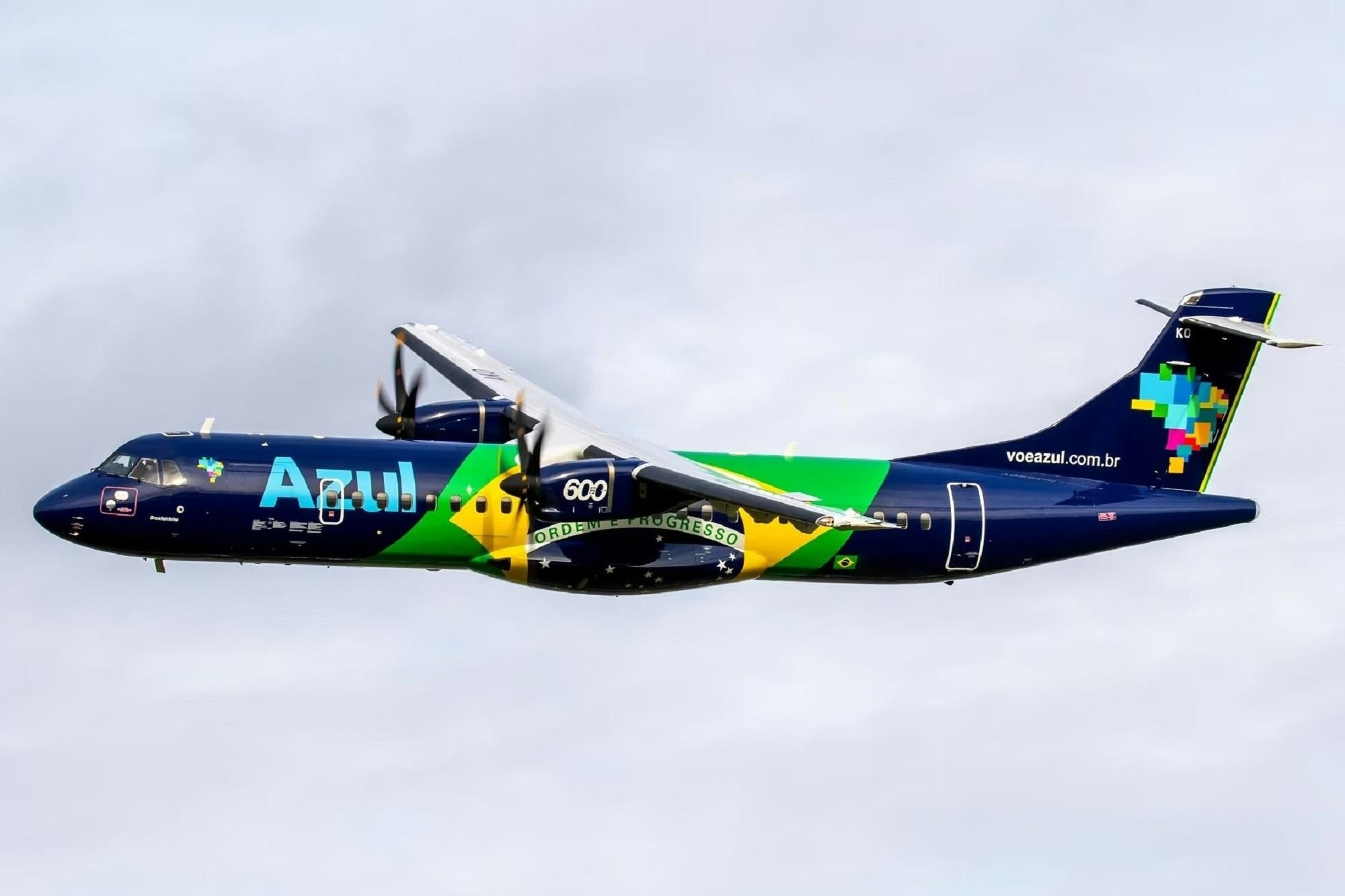
Azul Airlines Leverages Fetcherr’s Large Market Model to Enhance Revenue
Artificial intelligence (AI), large market models (LMM), and big data are often heralded as transformative forces in modern business. However, tangible examples of their successful, large-scale implementation remain limited. While AI features prominently in corporate strategies, many initiatives falter beyond pilot stages or fail to integrate seamlessly with core operations. The airline industry, known for early adoption of innovative technologies, now offers a notable exception through Azul Airlines’ collaboration with the technology startup Fetcherr.
Implementing AI-Driven Pricing at Scale
At the World Aviation Festival 2025 in Lisbon, Azul Airlines and Fetcherr showcased a compelling case study demonstrating the practical impact of LMM technology on airline pricing strategies. André Américo, Azul’s Director of Planning & Revenue, alongside Dr. Uri Yerushalmi, Fetcherr’s Chief AI Officer, outlined how their partnership yielded measurable benefits for one of Latin America’s largest carriers. Azul operates nearly 200 aircraft and transported approximately 30 million passengers in 2024.
Américo described the implementation as a gradual process, “doing it step by step, adding one market at a time and scaling it up.” Initially deployed across half of Azul’s operations, Fetcherr’s LMM contributed to a 3-5% increase in revenue before expanding system-wide. While the technical integration was relatively straightforward, supported by Fetcherr’s data science team, the more significant challenge involved shifting the mindset of Azul’s seasoned revenue management professionals to embrace an AI-driven framework.
Beyond revenue growth, the adoption of LMM technology also reduced manual workload by approximately 10%, enabling analysts to redirect their focus toward higher-value projects and strategic initiatives. Américo emphasized this efficiency gain, noting, “We are wasting less time inputting information and have more time to strategize and align our revenue management with marketing,” addressing common concerns about AI-induced workplace disruption.
Tailored Technology Amid Regulatory Challenges
Fetcherr’s LMM was specifically customized for Azul and the airline sector, with Dr. Yerushalmi highlighting the model’s capacity to process extensive market data and conduct continuous simulations to optimize pricing decisions. This bespoke approach has been central to the model’s effectiveness and Azul’s operational success.
However, Azul’s adoption of AI-driven pricing occurs amid increasing regulatory scrutiny. Recent controversies surrounding similar models, such as those experienced by Delta Airlines, have intensified calls for greater transparency in AI-based fare setting. Azul’s leadership remains vigilant, closely monitoring regulatory developments as it continues to expand its use of LMM technology.
Market response to Azul’s technological advancements has been predominantly positive. The airline recently secured court approval for its Chapter 11 restructuring plan, positioning it for a profitable emergence from bankruptcy. This financial recovery, combined with operational improvements, distinguishes Azul from some competitors. For example, while JetBlue has demonstrated signs of operational recovery, analysts maintain a cautious outlook on its long-term prospects.
Azul’s partnership with Fetcherr represents a rare, quantifiable instance of AI delivering substantial business value at scale. It also underscores the evolving challenges and opportunities airlines face as they navigate the complex interplay of technology, regulation, and market dynamics.

Etihad Airways Suspends Airbus A380 Flights on Key Route

Aditya Birla Group Seeks Approval for Aircraft Leasing in GIFT City

Qatar Airways Highlights Innovation and Connectivity at Arabian Travel Market 2026

Hong Kong's Five-Year Plan Includes Andrew Fan's Aircraft Parts Processing Hub Proposal

ACIA Aero Leasing Delivers ATR72-600 to Air Nostrum

RTX Appoints Jill Albertelli as Head of Pratt & Whitney

TAT Technologies Joins Beyond Aero Hydrogen Aircraft Program

AURAK Study Highlights Barriers to Air Taxi Adoption in Emerging Economies

Xiamen Air Selects Altitude for 787 Maintenance at Heathrow

Etihad and Swissport Extend Global Partnership
