
AIによるインサイトを行動へとつなげる

現在のトレンド
Categories
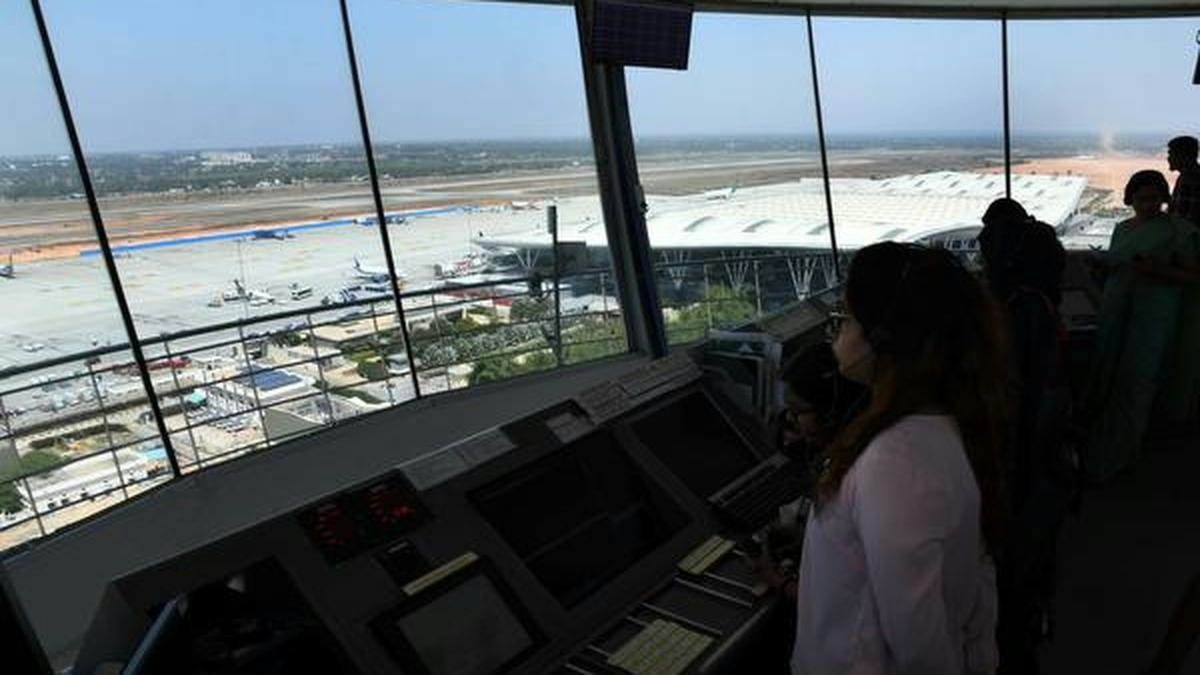
Bengaluru Airport Introduces AI-Based Airside Safety System
Bengaluru Airport Introduces AI-Based Airside Safety System
Advancing Airside Safety with Artificial Intelligence
Kempegowda International Airport (KIA) in Bengaluru has launched an integrated Smart Airside Safety System, representing a significant leap forward in operational safety and control within critical airside zones. Announced by Bangalore International Airport Limited (BIAL), the new system employs artificial intelligence, computer vision, and intelligent automation to enhance safety at cross-service road intersections—areas where aircraft and ground vehicles converge.
These intersections are recognized as some of the most sensitive points in airport operations, requiring precise coordination to prevent accidents and minimize delays. Historically, right-of-way management at these crossings depended on manual or semi-manual activation of inset lights, a process vulnerable to human error and operational inefficiencies. The newly implemented system overcomes these challenges by integrating real-time situational awareness. AI-enabled cameras continuously monitor vehicle movements at these intersections, assess contextual risks, and detect potential conflicts regarding right-of-way. The system then automatically activates inset lights to safeguard aircraft movement and reverts to normal signaling once the area is clear. All activities are digitally recorded through a centralized monitoring and analytics platform, enhancing governance, compliance, and operational oversight.
Enhancing Efficiency and Predictive Safety
By embedding advanced technology into daily operations, BIAL aims to establish a data-driven separation between aircraft and ground vehicles, significantly reducing the likelihood of human error, particularly during night operations or periods of low visibility. The precision-led activation of signals not only improves traffic flow and reduces unnecessary stoppages but also contributes to greater turnaround efficiency for airlines.
Moreover, the system provides a foundation for predictive safety analytics, enabling detailed trend analysis, optimization during peak hours, compliance tracking, and risk forecasting. This data-centric approach supports continuous operational improvements and strengthens airside governance.
Industry Implications and Security Considerations
Bengaluru Airport’s adoption of AI-based safety technology reflects a broader global trend as airports increasingly seek to harness advanced solutions to enhance safety and operational efficiency. The market has responded positively, with growing investor interest in airports that integrate AI capabilities, exemplified by Melbourne Airport’s recent deployment of AI agents for incident response. However, this technological advancement also highlights the critical importance of robust cybersecurity measures. Recent alerts from the United Kingdom’s cybersecurity agency regarding AI-driven threats underscore the necessity for airports to protect these sophisticated systems against potential cyberattacks.
Competitor airports are closely observing these developments. Major international hubs, including New York’s LaGuardia Airport, are reportedly exploring upgrades to their safety systems in response to recent runway safety incidents. As the aviation industry continues to evolve, the integration of AI-driven safety solutions is poised to become a defining factor in operational excellence and passenger confidence worldwide.

Etihad Airways Suspends Airbus A380 Flights on Key Route

Aditya Birla Group Seeks Approval for Aircraft Leasing in GIFT City

Qatar Airways Highlights Innovation and Connectivity at Arabian Travel Market 2026

Hong Kong's Five-Year Plan Includes Andrew Fan's Aircraft Parts Processing Hub Proposal

ACIA Aero Leasing Delivers ATR72-600 to Air Nostrum

RTX Appoints Jill Albertelli as Head of Pratt & Whitney

TAT Technologies Joins Beyond Aero Hydrogen Aircraft Program

AURAK Study Highlights Barriers to Air Taxi Adoption in Emerging Economies

Xiamen Air Selects Altitude for 787 Maintenance at Heathrow

Etihad and Swissport Extend Global Partnership
