
AIによるインサイトを行動へとつなげる

現在のトレンド
Categories
Boeing 747 Airframe Valued Less Than One Landing Gear Component
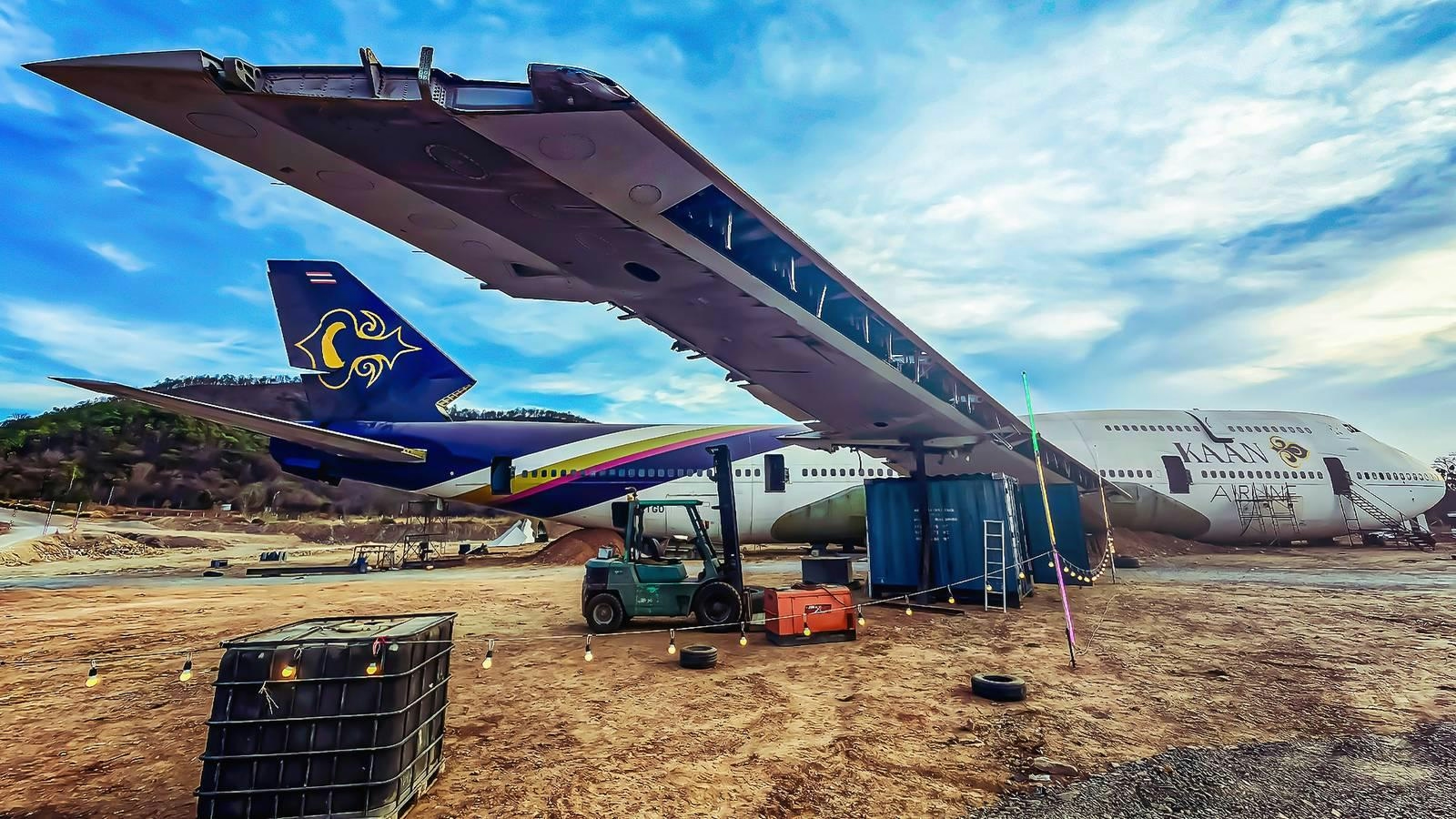
Boeing 747 Airframe Valued Less Than Its Landing Gear Component
Disparities in Component Valuation
As Boeing 747 aircraft reach the end of their operational lives, they are typically retired to aircraft boneyards where they undergo a detailed dismantling process. During this phase, scrappers and recyclers carefully drain fluids, deactivate evacuation slide explosives, and extract high-value components for resale or reuse. Although the 747 has been out of production for over three years, demand for its parts remains strong, largely driven by the continued operation of numerous 747 freighters worldwide.
The value of individual components, however, varies significantly. Engines top the list, commanding prices of approximately $2 million each. Landing gear, often outfitted with advanced technology from suppliers such as IAI Aviation Group, can fetch nearly $300,000—remarkably exceeding the scrap value of the entire airframe. Cockpit displays are valued at around $30,000 apiece, while auxiliary power units (APUs) typically sell for about $25,000. In stark contrast, the raw scrap metal from the remainder of the 747 is generally worth only about $55,000. Compounding this, the cost of storing a 747 at a boneyard can reach approximately $60,000 per month.
Technological Advances and Industry Implications
This pronounced disparity highlights a broader trend within the aviation industry: as technology advances, certain components such as landing gear are becoming increasingly sophisticated and valuable, sometimes surpassing the worth of the airframe itself. This evolution presents significant challenges for manufacturers like Boeing, which may face mounting pressure to innovate or risk losing competitive ground. Rival companies, including Airbus and emerging firms specializing in composite materials, are well-positioned to exploit these market shifts by offering more advanced and cost-effective alternatives. Consequently, Boeing may need to reconsider its material selections and production strategies to sustain its market position.
Efficiency in the Scrapping Process
The dismantling of a Boeing 747 is a highly efficient operation. Each aircraft contains roughly six million parts, 170 miles (274 kilometers) of wiring, and approximately 147,000 pounds (66,680 kilograms) of aluminum. Around 30 percent of the components recovered from scrapped 747s are reused in active aircraft, with only 10 to 15 percent of the airframe typically discarded as waste. Airlines frequently acquire used aircraft and engines specifically to harvest parts, enabling them to source components more rapidly and at lower cost than purchasing new ones. For instance, United Airlines acquired several Airbus A319s in the late 2010s solely to salvage their engines and parts, never placing the aircraft into service.
Evolving Economics of Aircraft Components
The economics surrounding aircraft components continue to evolve. While engines remain the most valuable and complex parts, the increasing worth of landing gear and other advanced systems is reshaping industry dynamics. As scrutiny intensifies on cost management and operational efficiency, both manufacturers and airlines must adapt to a landscape where select components can exceed the value of the airframes they support.
BBN Airlines Becomes IATA Member

FAA Orders Breeze Airways and Delta to Inspect Airbus A220 Fuel Hoses
Philippine Aviation Navigates Expansion and Costs Amid Fuel Price Volatility

On April 26, 1971, an SR-71 Blackbird Flew Over 15,000 Miles in 10.5 Hours, Limited by Liquid Nitrogen Supply
The Rear-Fan Engine Behind the Crash of the World's Fastest Airliner
Morphing Aircraft Skin Improves Safety and Fuel Efficiency
BRICS Nations Commit to Enhanced Cooperation on Sustainable Transport and Green Aviation
CFM Turbine Upgrade Doubles LEAP Engine Service Life in Harsh Conditions
CFM Upgrade Doubles LEAP Engine Lifespan in Harsh Climates
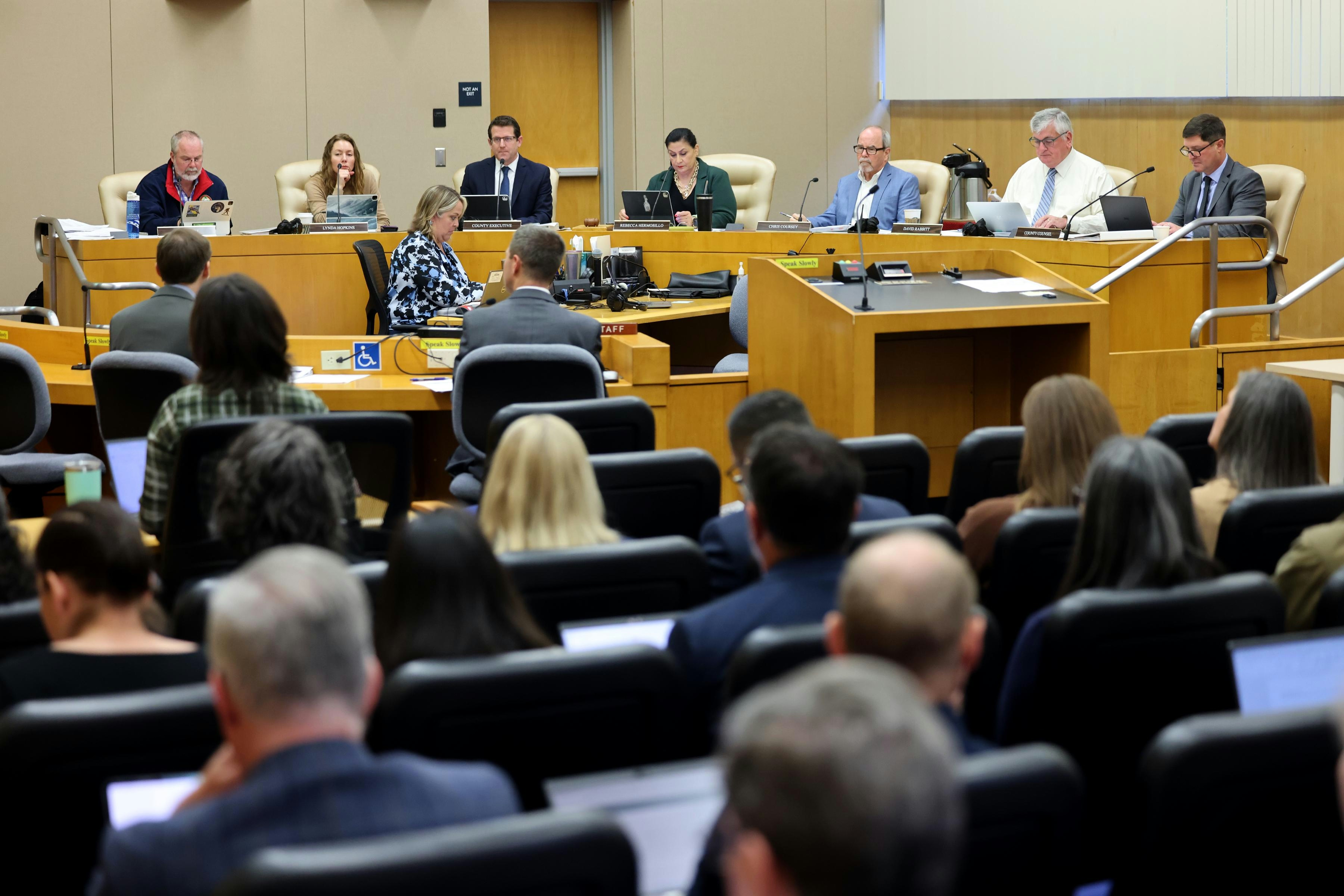
Sonoma County Board of Supervisors Revisits Controversial Government Office Deal
