
AIによるインサイトを行動へとつなげる

現在のトレンド
Categories
Boeing 777X Test Fleet Grounded After Part Failure on Hawaii Flight
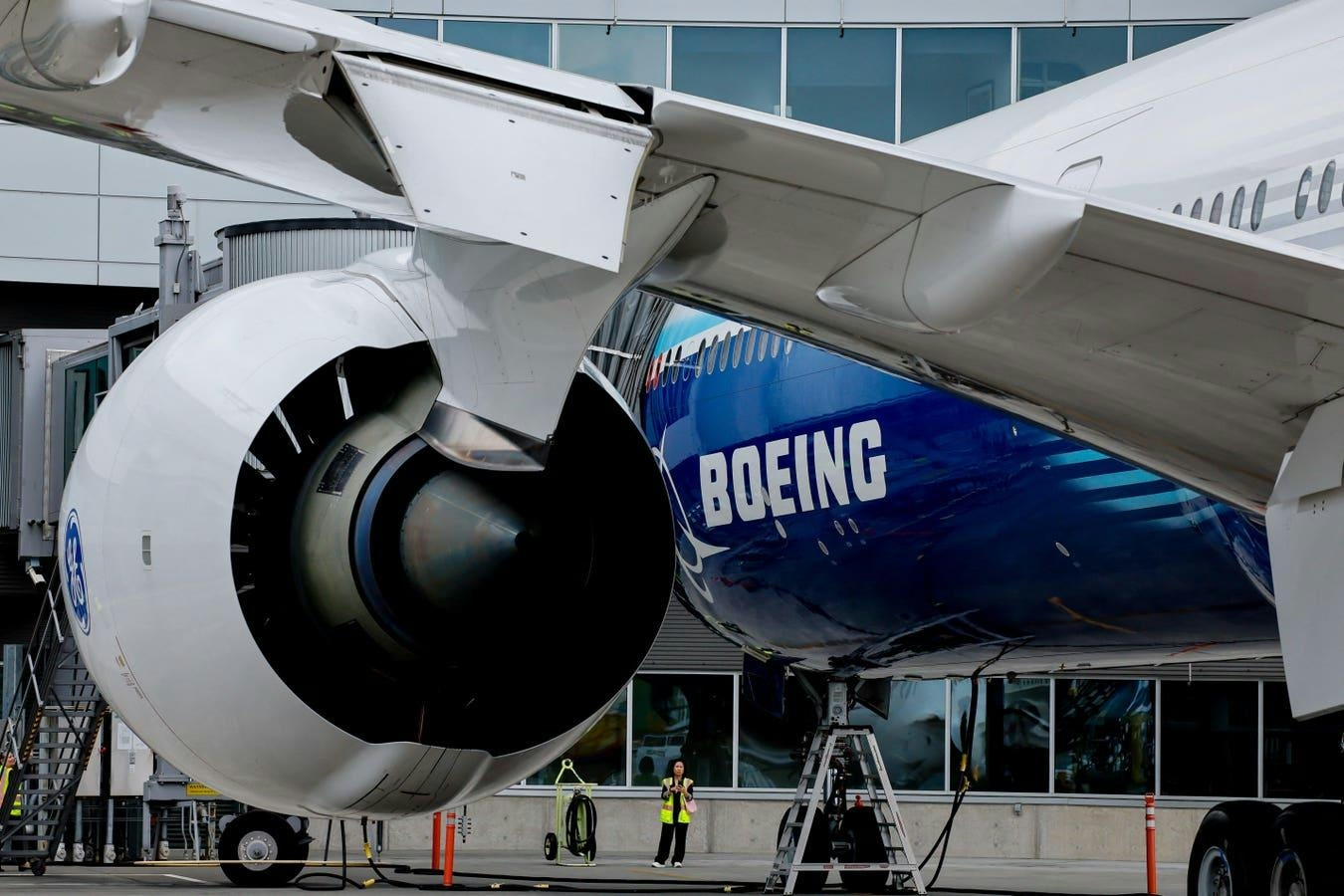
Boeing Grounds 777X Test Fleet Following Critical Component Failure
Boeing has suspended all test flights of its 777-9 aircraft after identifying a fractured thrust link on test aircraft WH003 during post-flight inspections following a routine mission from Hawaii in August 2024. This discovery has initiated an extensive investigation within the aviation industry and intensified scrutiny of Boeing’s safety certification procedures.
Thrust Link Fracture and Safety Implications
The failure involves the engine thrust link assembly, a crucial load-bearing element that connects the engine’s thrust vectoring system to the aircraft fuselage. Boeing engineers determined that the thrust link had fractured and detached from its mounting points, not as a result of an abrupt in-flight event but due to progressive cracking caused by metal fatigue and unforeseen stress concentrations in the aluminum-titanium alloy used.
Significantly, the component had previously passed all pre-flight certification tests without any indication of weakness. In response, Boeing has introduced enhanced inspection protocols and issued Airworthiness Directives mandating detailed metallurgical examinations of thrust link assemblies across the entire 777-9 test fleet.
Regulatory and Industry Reactions
The Federal Aviation Administration (FAA), alongside international aviation regulators, has demanded comprehensive failure analysis reports before permitting the resumption of test flights. This heightened regulatory oversight recalls earlier investigations into Boeing models such as the MD-11 and 737 Max, reflecting persistent concerns regarding the company’s safety certification processes.
The grounding is expected to lead to an in-depth FAA inquiry into the 777X’s safety, potentially resulting in revised certification requirements and extended development timelines. Although operationally disruptive, these regulatory measures are critical to preserving the aviation sector’s rigorous safety standards.
Wider Impact on Boeing and the Aviation Sector
The suspension of the 777X test program carries significant consequences beyond immediate safety considerations. Major launch customers, including Lufthansa and Emirates, now face delivery delays ranging from several months to over a year. These postponements disrupt airline fleet planning, route development, and crew training schedules, with Emirates particularly affected given its plans to deploy the 777-9 on key long-haul routes.
The incident also intensifies competitive pressures on Boeing, as rival manufacturers may leverage the situation to emphasize the safety and reliability of their own aircraft. Market reactions have included a temporary decline in Boeing’s stock price and a reassessment of the 777X’s anticipated delivery timeline.
Engineering Challenges and Ongoing Investigations
While component failures during flight testing are not uncommon and play a vital role in uncovering design vulnerabilities, the thrust link fracture has highlighted several engineering challenges. These include the need to revise material specifications for components subjected to high stress, improve finite element analysis models, and reevaluate the aircraft’s advanced engine mounting system, which may have introduced unexpected load paths.
As investigations proceed, the 777X program faces intensified scrutiny from regulators, airlines, and the broader aviation community. The findings will likely influence not only the future trajectory of Boeing’s flagship widebody but also the standards governing aircraft certification and safety in the years to come.

Etihad Airways Suspends Airbus A380 Flights on Key Route

Aditya Birla Group Seeks Approval for Aircraft Leasing in GIFT City

Qatar Airways Highlights Innovation and Connectivity at Arabian Travel Market 2026

Hong Kong's Five-Year Plan Includes Andrew Fan's Aircraft Parts Processing Hub Proposal

ACIA Aero Leasing Delivers ATR72-600 to Air Nostrum

RTX Appoints Jill Albertelli as Head of Pratt & Whitney

TAT Technologies Joins Beyond Aero Hydrogen Aircraft Program

AURAK Study Highlights Barriers to Air Taxi Adoption in Emerging Economies

Xiamen Air Selects Altitude for 787 Maintenance at Heathrow

Etihad and Swissport Extend Global Partnership
