
AIによるインサイトを行動へとつなげる

現在のトレンド
Categories
Boeing Enhances Range of 777-8 and 777-9 to Boost Long-Haul Travel
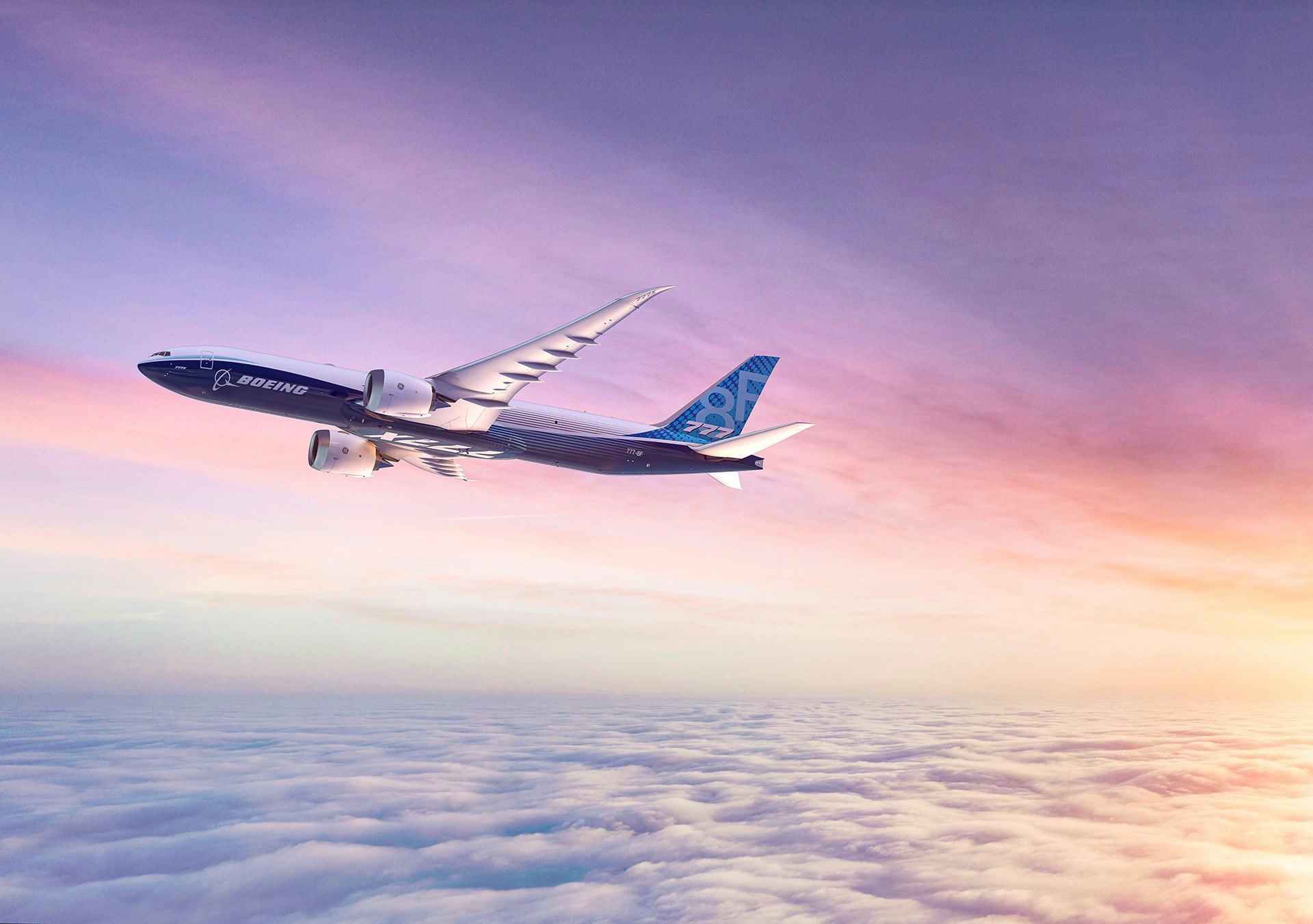
Boeing Enhances Range of 777-8 and 777-9 to Boost Long-Haul Travel
Boeing has quietly revised the advertised range of its next-generation 777X family, significantly extending the capabilities of both the 777-8 and 777-9 passenger variants. These updated specifications, now reflected on Boeing’s official website, have attracted considerable attention from airlines and industry analysts, as range remains a crucial factor in long-haul route planning and fleet modernization.
Substantial Range Increases
The latest figures indicate that the 777-8’s range has increased from 8,745 to 9,500 nautical miles, representing a gain of 755 nautical miles. Similarly, the 777-9’s range has been extended from 7,285 to 8,000 nautical miles, an improvement of 715 nautical miles. These enhancements correspond to approximate increases of 8.5% and 10% respectively, positioning both models more firmly within the ultra-long-haul category.
Market Response and Competitive Landscape
The market has responded positively to Boeing’s announcement. China Southern Airlines has become the first Chinese carrier to commit to the 777-8F freighter variant, signaling growing confidence in the aircraft’s long-haul capabilities. The enhanced range strengthens the 777X family’s position as a formidable competitor to the Airbus A350 series, although the A350 continues to hold a slight edge in maximum range and payload capacity.
Key customers are closely monitoring the 777X’s development timeline. All Nippon Airways (ANA) remains optimistic about Boeing’s ability to deliver the first 777-9 by 2027, while maintaining contingency plans should further delays arise. Emirates, another major customer, anticipates receiving its initial 777X aircraft by June next year, though it has expressed concerns regarding the durability of the Rolls-Royce engines that power the rival Airbus A350-1000.
The Importance of Extended Range
Extended range offers significant advantages to airlines by enabling nonstop flights between distant city pairs, thereby reducing travel times and enhancing passenger convenience. For carriers, this translates into greater scheduling flexibility, improved fleet utilization, fewer fuel stops, enhanced network planning, and expanded destination options. As international travel demand continues to recover, airlines are increasingly prioritizing aircraft capable of efficiently operating longer sectors with high passenger loads.
Strengthening the 777X’s Market Position
The 777X family, designed as the successor to the popular 777-300ER and incorporating advanced technologies from the 787 Dreamliner, features composite folding wingtips to improve aerodynamic efficiency, GE9X engines that reduce fuel consumption, advanced lightweight materials for enhanced performance, and modern passenger cabins that increase comfort. The updated range figures underscore Boeing’s commitment to refining the 777X’s performance and maintaining its competitiveness in the evolving long-haul market. As airlines evaluate future fleet investments, the enhanced capabilities of the 777-8 and 777-9 are poised to play a pivotal role in shaping the next era of global air travel.

Hong Kong's Five-Year Plan Includes Andrew Fan's Aircraft Parts Processing Hub Proposal

ACIA Aero Leasing Delivers ATR72-600 to Air Nostrum

RTX Appoints Jill Albertelli as Head of Pratt & Whitney

TAT Technologies Joins Beyond Aero Hydrogen Aircraft Program

AURAK Study Highlights Barriers to Air Taxi Adoption in Emerging Economies

Xiamen Air Selects Altitude for 787 Maintenance at Heathrow

Etihad and Swissport Extend Global Partnership

Sepehran Airlines B737 Returns to Mashhad After Tyre and Engine Issues

Etihad Deploys Widebody Fleet to Meet Strong Demand

Korean Air Finalizes $36.2 Billion Deal with Boeing
