
AIによるインサイトを行動へとつなげる

現在のトレンド
Categories
Boeing Warned of MD-11 Engine Bearing Risk Years Before UPS Crash
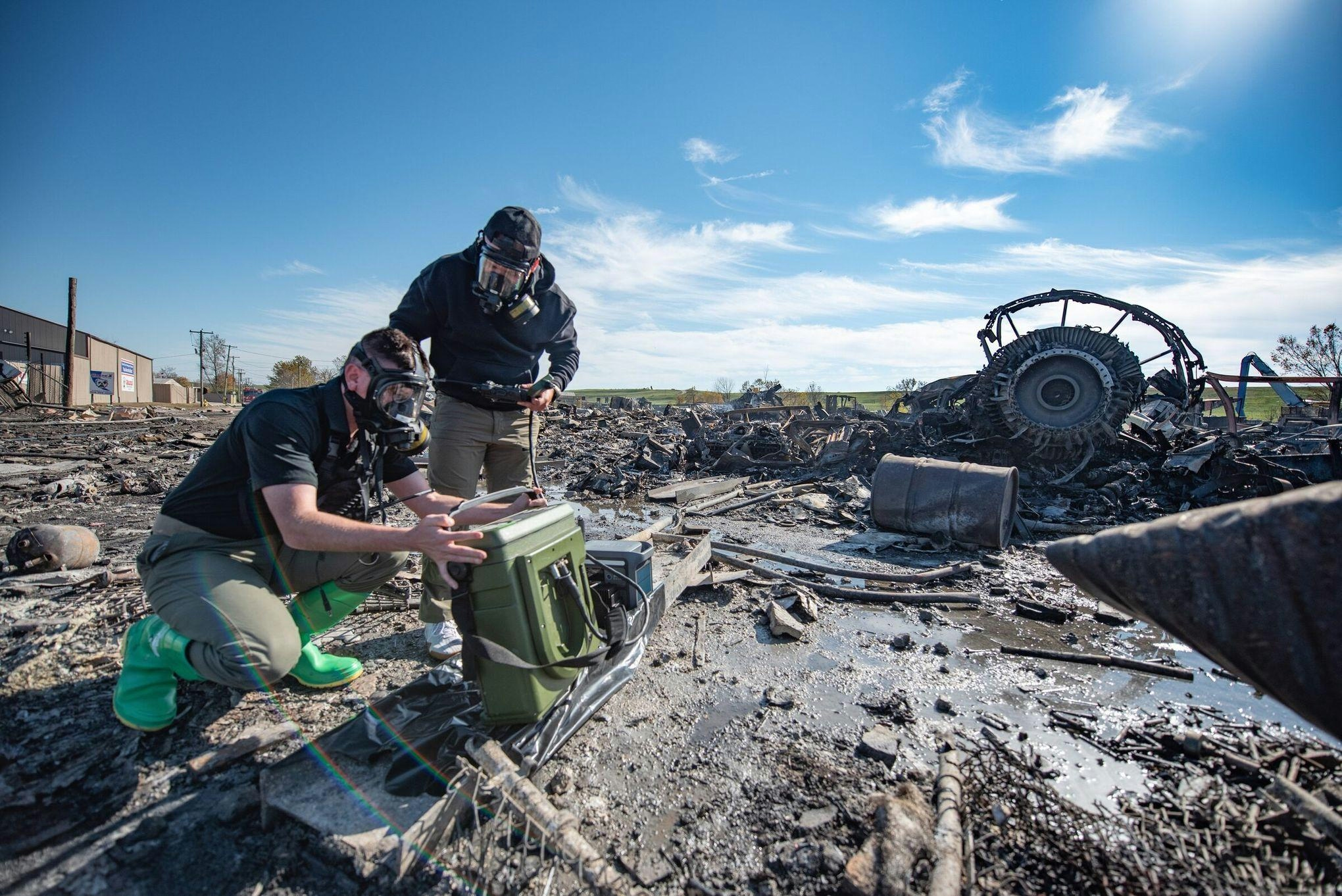
Boeing Warned of MD-11 Engine Bearing Risk Years Before Deadly UPS Crash
The US National Transportation Safety Board (NTSB) has identified a progressive fatigue failure in a critical engine pylon bearing as the cause of the fatal crash of a UPS-operated McDonnell Douglas MD-11 in November 2025. The catastrophic engine separation occurred during takeoff at Louisville’s Muhammad Ali International Airport, resulting in at least 12 fatalities. This revelation has raised significant concerns regarding the adequacy of inspection protocols, manufacturer guidance, and regulatory oversight in preventing such a disaster.
Early Warnings from Boeing
Boeing had flagged potential issues with the MD-11’s spherical bearing race—the component securing the engine to the wing—as early as 2011. In a service bulletin issued that year, the manufacturer documented four prior bearing failures across three different aircraft. Although none of these incidents had led to safety events, Boeing recommended enhanced inspections and maintenance focused on lubrication and visual checks. Notably, the bulletin did not call for replacement of the bearing assemblies nor did it classify the component as safety-critical.
This guidance, now central to the NTSB’s investigation, stopped short of advocating for more intrusive inspections or a redesign of the bearing. Investigators are scrutinizing whether Boeing’s risk assessment and the resulting inspection regime sufficiently accounted for the bearing’s critical role in the aircraft’s structural integrity.
Design Legacy and Unanticipated Failure Mode
The MD-11’s engine mount design has been in service for decades and was not previously regarded as a safety-of-flight critical item. While wear and corrosion in pylon bearings are recognized maintenance concerns for aging widebody aircraft, the specific progressive fatigue failure identified by the NTSB had not been considered a direct threat to engine retention.
Examination of the wreckage revealed clear evidence of long-term deterioration, including beach marks and crack propagation features, indicating that the bearing had been weakening internally over an extended period before the final failure. This finding has shifted the investigation’s focus from a singular mechanical anomaly to the adequacy of long-term inspection and monitoring practices.
Scrutiny of Inspection Regimes
The MD-11’s maintenance program primarily relied on visual inspections of the pylon bearing assembly at prescribed intervals, consistent with manufacturer recommendations and regulatory requirements at the time. However, the fatigue cracking originated internally, in areas not visible without disassembly or specialized non-destructive testing techniques.
The NTSB is now evaluating whether the inspection methods prescribed by Boeing and accepted by regulators were capable of detecting such internal degradation before it reached a critical stage. The investigation continues to focus on the failed aft mount assembly in the left engine pylon and whether earlier, more rigorous intervention could have averted the tragedy.
As the inquiry progresses, its findings are expected to prompt a broader review of inspection standards and risk assessments for aging aircraft components throughout the aviation industry.

Etihad Airways Suspends Airbus A380 Flights on Key Route

Aditya Birla Group Seeks Approval for Aircraft Leasing in GIFT City

Qatar Airways Highlights Innovation and Connectivity at Arabian Travel Market 2026

Hong Kong's Five-Year Plan Includes Andrew Fan's Aircraft Parts Processing Hub Proposal

ACIA Aero Leasing Delivers ATR72-600 to Air Nostrum

RTX Appoints Jill Albertelli as Head of Pratt & Whitney

TAT Technologies Joins Beyond Aero Hydrogen Aircraft Program

AURAK Study Highlights Barriers to Air Taxi Adoption in Emerging Economies

Xiamen Air Selects Altitude for 787 Maintenance at Heathrow

Etihad and Swissport Extend Global Partnership
