
画像

AIによるインサイトを行動へとつなげる

今すぐAeroGenieのウェイティングリストに登録しよう!

現在のトレンド

Categories

Britten-Norman launches Global Aircraft Recovery service
June 18, 2026By ePlane AI
Britten-Norman launches Global Aircraft Recovery service
0
0
Britten-Norman
Aircraft Recovery
BN2A-21 Islander

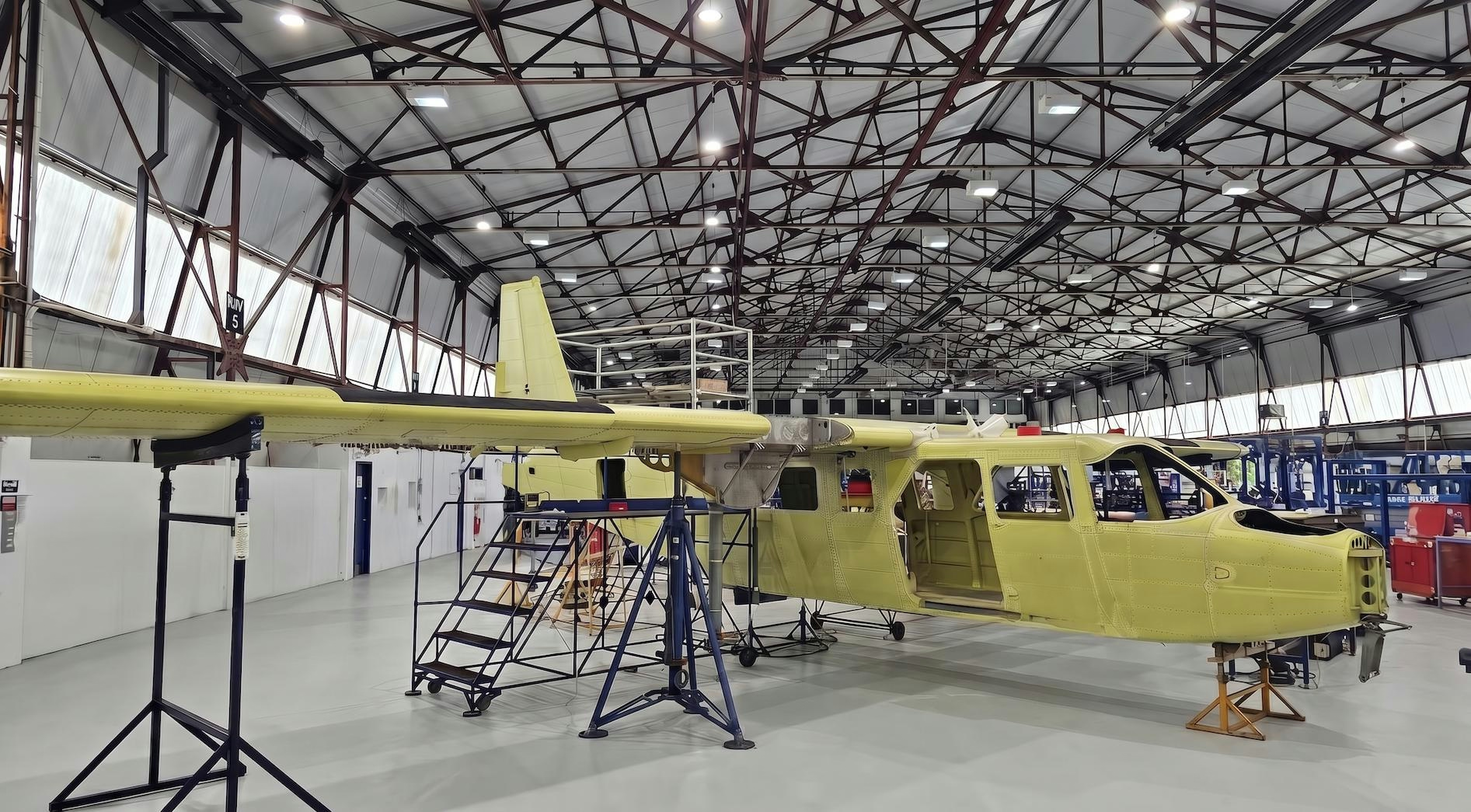
Britten-Norman Launches Global Aircraft Recovery Service

Britten-Norman, the UK-based manufacturer renowned for its Islander aircraft, has introduced a new Global Aircraft Recovery (GAR) service designed to provide swift and coordinated assistance to operators facing grounded aircraft in challenging and remote environments. Developed in collaboration with specialist partners such as Avitrius Air International, the GAR service addresses the complex logistical, regulatory, and operational challenges frequently encountered in unstable or inaccessible regions.

Demonstrating Capability in High-Risk Environments

The service’s capabilities were showcased during its inaugural mission, which involved the recovery of a stranded BN2A-21 Islander in Saudi Arabia. This operation required navigating shifting airspace restrictions and securing necessary permits amid ongoing regional conflict. The aircraft was successfully ferried over 2,500 miles back to Britten-Norman’s maintenance facility in the UK. This mission underscored the GAR team’s ability to operate effectively in high-risk, dynamic environments where conventional recovery methods may prove inadequate.

With hundreds of Islander aircraft operating daily across more than 70 countries, often in areas characterized by harsh environmental conditions, limited infrastructure, and geopolitical instability, the GAR service aims to provide a dependable response when aircraft are grounded due to operational damage, adverse weather, or deteriorating ground conditions.

Comprehensive Support and Industry Collaboration

Lara Harrison, Business Development Director at Britten-Norman, highlighted the importance of aligning the rugged capabilities of the Islander with equally robust support services. She stated, “Islanders are chosen because they go where others can’t, and our support needs to match that reality. With this Global Aircraft Recovery service, delivered with specialist industry partners, we can respond quickly when aircraft are grounded in remote locations. As the OEM, we can also help owners take the next step: whether that is refurbishment, remarketing, or a trade-in path that keeps operations moving.”

Through GAR, Britten-Norman coordinates a global network of engineering teams to provide on-site assessments, logistics management, and repair or ferry solutions. The company’s original equipment manufacturer (OEM) expertise and parts supply underpin these operations, ensuring aircraft can be safely returned to service. For more extensive repairs, aircraft may be transported to Britten-Norman’s UK facility for full refurbishment. The service also supports fleet renewal by offering trade-in options for recovered aircraft against new Islander orders.

Market Challenges and Strategic Positioning

Britten-Norman’s entry into the global aircraft recovery market presents several challenges. The company faces competition from established recovery providers, potential regulatory obstacles, and the inherent complexities of managing international operations. Market reactions may include skepticism from operators loyal to existing competitors, while rival firms could respond with intensified marketing efforts, price adjustments, or new service offerings to protect their market share.

Nonetheless, Britten-Norman’s ongoing progress, including its trajectory toward delivering the first new UK-built Islander, may enhance its credibility and strengthen its position in both the aircraft manufacturing and recovery sectors.

William Sheppard, Executive Director at Avitrius Air International, described the first GAR mission as “a genuine test of what specialist recovery looks like under pressure,” emphasizing the added complexity of operating in a conflict zone. He noted, “Permits, routing, and airspace approvals are in constant flux, and that demands crews and coordinators who can adapt quickly and keep a mission moving. Combining that operational experience with Britten-Norman’s OEM technical knowledge and access to manufacturer parts made a real difference.”

With the launch of the Global Aircraft Recovery service, Britten-Norman aims to establish a new benchmark for aircraft recovery, leveraging its manufacturing expertise and international partnerships to support Islander operators worldwide.

More news
American Airlines Seeks Proposals for Widebody Aircraft Order

American Airlines Seeks Proposals for Widebody Aircraft Order

American Airlines Initiates Request for Proposals on Widebody Aircraft American Airlines has formally launched a request for proposals (RFP) from both Airbus and Boeing as it evaluates its next significant widebody aircraft acquisition. CEO Robert Isom announced the initiative during the airline’s 2026 annual meeting, framing it as a critical component of the company’s broader strategy to modernize and expand its internationally capable fleet. This move aims to ensure American remains competitive with key rivals such as Delta Air Lines and United Airlines. Isom emphasized the importance of timing in the decision-making process, noting that while American currently holds orders for 19 Boeing 787-9s with options for 28 additional units, the anticipated retirement of its Boeing 777 fleet in the 2030s necessitates early planning. “Now is the right time to define what comes next,” he stated, underscoring the lengthy lead times associated with widebody aircraft deliveries and the airline’s focus on long-term investments. Strategic and Financial Considerations Amid Industry Challenges The competition between Boeing and Airbus for American’s widebody contract is expected to be intense, reflecting the high stakes involved. The airline industry continues to grapple with challenges such as volatile fuel prices, which can significantly impact the cost-effectiveness of new aircraft purchases. Beyond acquisition costs, American must also consider the financial and operational implications of integrating new widebody jets, including maintenance demands, crew training, and adjustments to existing operational frameworks. Industry analysts suggest that American’s decision to seek proposals may invite closer scrutiny from investors regarding the airline’s financial health and strategic direction. Furthermore, this development could trigger competitive responses from Delta and United, potentially accelerating their own plans to expand widebody fleets in an effort to maintain market share. American Airlines currently operates a diverse fleet of 1,030 aircraft, comprising various models including Airbus A319-100s, A320-200s, A321 variants, Boeing 737-8s, 737-800s, 777-200ERs, 777-300ERs, and multiple 787 Dreamliner models. The company has not disclosed a specific timeline for finalizing its decision on the new widebody order.
Southwest Airlines to Complete Migration to AWS by 2028

Southwest Airlines to Complete Migration to AWS by 2028

Southwest Airlines to Complete Migration to AWS by 2028 Southwest Airlines has announced a strategic partnership with Amazon Web Services (AWS) to fully migrate its core operational systems, customer-facing platforms, and data infrastructure to the cloud by 2028. This initiative forms a central part of the airline’s broader strategy to develop an AI-driven, cloud-based operation. By leveraging AWS’s advanced tools, Southwest aims to enhance flight scheduling, improve customer interactions, and optimize internal decision-making processes. Embracing Digital Transformation As one of the leading low-cost carriers in the United States, Southwest’s migration to AWS reflects a wider industry trend toward digital transformation, automation, and sophisticated data management. The airline plans to deploy artificial intelligence models to streamline flight operations, manage disruptions more effectively, and elevate the overall customer experience. This long-term technology roadmap is expected to influence how Southwest allocates capital and prioritizes projects through the remainder of the decade. Despite the promising outlook, the migration poses significant challenges. Integrating AWS with Southwest’s existing legacy systems will require meticulous planning to ensure seamless operations and uninterrupted service. The financial implications of transitioning to a new cloud provider also warrant close attention, particularly in managing costs while maintaining service continuity. Investors are likely to monitor key milestones such as system migrations, the introduction of AI-enabled features, and updates on operational use cases linked to the cloud transition. Competitive Dynamics and Strategic Implications The competitive landscape in the airline industry is rapidly evolving, with rivals adopting innovative technologies to enhance passenger experience. For instance, American Airlines has partnered with SpaceX’s Starlink to improve in-flight Wi-Fi connectivity, underscoring the sector’s race to integrate cutting-edge solutions. Southwest’s strategic focus on expanding long-haul international flights and introducing new amenities, including airport lounges, may further shape its technological approach and competitive positioning. For investors, Southwest’s infrastructure overhaul could have significant implications for operational efficiency, disruption management, and customer satisfaction. As the company advances its AWS migration, stakeholders will be closely watching for tangible benefits arising from this digital transformation. Market Overview Southwest Airlines currently trades at $46.66 per share, approximately 1.6% above the analyst target of $45.95, within a trading range of $30 to $60. Despite recent gains, the stock remains 56.9% below an internal fair value estimate. Over the past 30 days, the share price has increased by 21.6%, reflecting positive momentum amid the company’s ongoing technological initiatives. As Southwest embarks on this significant cloud migration, both investors and industry observers will be attentive to its progress and the broader implications for the airline’s future competitiveness.
Stephens-Owned Aptus Aero Acquires Aviation Repair Firm

Stephens-Owned Aptus Aero Acquires Aviation Repair Firm

Stephens-Owned Aptus Aero Expands Aviation Repair Capabilities with EMC Aerospace Acquisition Aptus Aero LLC, a portfolio company of Stephens Group LLC, has announced the acquisition of EMC Aerospace Inc., a North Miami Beach-based provider specializing in component maintenance, repair, and overhaul (MRO) services for the aviation sector. EMC Aerospace operates as a certified repair station, servicing a broad range of aircraft components including power-generation, pneumatic, hydraulic, and fuel systems. The company supports passenger, cargo, and military customers worldwide across all major aircraft platforms. This acquisition represents Aptus Aero’s second strategic purchase this year, following its earlier acquisition of Atlas Aerospace Accessories LLC. The move aligns with Aptus Aero’s broader objective to establish itself as a leading provider of highly engineered component repairs within the aviation market. Aptus Aero CEO Dale Gabel emphasized the significance of the deal, stating that combining EMC’s extensive repair expertise and part sourcing capabilities with Aptus Aero’s corporate infrastructure marks a substantial advancement for the company. Financial details of the transaction were not disclosed. Strategic Growth and Industry Context Founded in 2026 by The Stephens Group, Aptus Aero focuses on acquiring and developing premier component MRO service providers. Jack Nadal, managing director at Stephens Group, highlighted the importance of the EMC acquisition in advancing Aptus Aero’s mission to deliver best-in-class component MRO services. He noted that EMC’s established presence and technical capabilities complement Aptus Aero’s vision of assembling the right talent and resources to serve a global customer base effectively. Eddie Monserrat, president of EMC Aerospace, expressed confidence in the partnership, describing Aptus Aero as rapidly emerging into a premier aviation component MRO provider and expressing optimism about future growth prospects. The acquisition occurs amid a broader wave of consolidation within the aviation MRO industry. Major competitors such as Steiner Aviation and VSE Corporation have recently expanded their maintenance capacities through acquisitions, including VSE’s $2 billion purchase of Precision Aviation Group and StandardAero’s acquisition of Unified Turbines. In Europe, Lufthansa’s acquisition of ITA further exemplifies the global trend toward consolidation, intensifying competitive pressures and compelling firms like Aptus Aero to adapt swiftly to evolving market dynamics. As Aptus Aero integrates EMC Aerospace, it faces challenges including the seamless incorporation of new operations, adherence to stringent regulatory standards, and management of rising operational costs. Industry analysts anticipate that competitors may respond with additional strategic partnerships or acquisitions to bolster their repair capabilities. Despite these challenges, Aptus Aero’s acquisition of EMC Aerospace underscores its commitment to expanding its presence and technical expertise within the global aviation MRO market.
The Aircraft Poised to Replace the World’s First Partial Double-Deck Jetliner

The Aircraft Poised to Replace the World’s First Partial Double-Deck Jetliner

The Aircraft Poised to Replace the World’s First Partial Double-Deck Jetliner Few aircraft have left as profound an imprint on the history of aviation as the Boeing 747, famously known as the "Queen of the Skies." Since its commercial introduction with Pan Am in 1970, this partially double-decked, four-engine widebody revolutionized long-haul air travel. It became a flagship for airlines worldwide, symbolizing the dawn of a new era in global connectivity by transporting millions of passengers across continents. Over 1,500 Boeing 747s have been delivered since its maiden flight in 1969, encompassing several variants such as the original 747-100, the shortened 747SP, the widely used 747-400, and the latest 747-8. These models have served both passenger and cargo markets with distinction. While the 747 remains a cornerstone for cargo operations, most passenger airlines have phased out the type, a trend accelerated by the COVID-19 pandemic’s impact on travel demand. Currently, only four passenger carriers—Lufthansa, Korean Air, Air China, and Russia’s Rossiya Airlines—continue to operate the 747. Lufthansa, for instance, plans to retire its remaining 747-400s by 2028 as it transitions to more modern aircraft. The Boeing 777X: The Natural Successor As the era of the 747 approaches its conclusion, attention turns to its successor. The Boeing 777X, particularly the 777-9 variant, is widely regarded as the most viable replacement in terms of capacity and operational efficiency. Boeing highlights the 777-9’s ability to accommodate up to 426 passengers in a two-class layout, making it an attractive option for airlines aiming to sustain high-capacity, long-haul routes. This aircraft is positioned to carry forward the legacy of the 747 by combining advanced technology with improved fuel efficiency. The Airbus A380 and Industry Transitions The Boeing 747 is not the only iconic double-deck jetliner undergoing transition. The Airbus A380, the world’s first full-length double-deck passenger aircraft, is also nearing the end of its production. Emirates, the largest operator of the A380, has recently begun retrofitting its fleet to include premium economy cabins on the upper deck. This move reflects both the aircraft’s adaptability and Emirates’ commitment to enhancing passenger comfort, underscoring the A380’s continued relevance even as the industry increasingly favors more fuel-efficient, twin-engine aircraft. Challenges in the Transition to New Aircraft The shift to next-generation aircraft is accompanied by significant challenges. Airbus has encountered supply-chain disruptions that have delayed the delivery of the first of twelve specially adapted A350-1000s to Qantas. These delays have pushed back the airline’s ambitious plans for nonstop flights from Australia to London and New York. Additionally, operational incidents such as Lufthansa’s recent Boeing 787 nose-gear collapse, which resulted in injuries to staff, have raised concerns about the reliability of newer aircraft models. Such events may influence airlines’ fleet decisions and the pace at which they retire older aircraft. These developments illustrate the complexities faced by airlines as they phase out iconic double-deckers like the 747 and A380. While aircraft such as the Boeing 777X and Airbus A350-1000 are poised to assume their roles, ongoing supply-chain issues and operational setbacks are likely to shape the trajectory of this transition. The enduring legacy of the 747 and A380 will continue to inform the future of long-haul air travel as the industry evolves.
Aviation’s hybrid moment has finally arrived

Aviation’s hybrid moment has finally arrived

Aviation’s Hybrid Moment Has Finally Arrived Addressing Aviation’s Emissions Challenge The aviation industry is confronting an escalating emissions challenge, with hybrid-electric propulsion emerging as a promising solution. Supported by the Clean Aviation Joint Undertaking—a collaborative initiative between the European Commission and the aviation sector—four major EU-funded projects are working to demonstrate the feasibility of hybrid-electric regional aircraft by 2030. These efforts represent a significant step toward reducing the environmental impact of air travel, a sector responsible for approximately 2.5% of global carbon emissions, a figure that continues to rise alongside increasing passenger demand. Unlike road transport, which is rapidly advancing toward decarbonization, aviation remains a difficult sector to transform. Emissions released at cruising altitudes have a disproportionately greater warming effect compared to those at ground level, intensifying the urgency for innovation. Laure Dupire, project manager at ATR—a European manufacturer specializing in regional aircraft—emphasizes the critical nature of this transition. “If no action is taken, the emissions and climate impacts of aviation will keep increasing,” she stated. “The aviation sector has set itself the goal of achieving climate neutrality by 2050. We cannot meet those objectives without new technologies.” Pioneering Hybrid-Electric Regional Aircraft The four Clean Aviation co-funded projects—PHARES, DEMETRA, OSYRYS, and HERACLES—are each addressing distinct technical challenges associated with hybrid-electric flight. Their collective ambition is to develop an ultra-efficient regional aircraft capable of reducing emissions by up to 30% compared to current models. This reduction will be achieved by combining conventional combustion engines with electric propulsion, moving beyond traditional aircraft designs. Building on prior EU-funded research that established foundational hybrid architectures and tackled issues such as heat management, these projects are transitioning from theoretical frameworks to practical application. The focus now lies in constructing, integrating, and flight-testing the new technologies. ATR, a joint venture between Airbus and Leonardo, coordinates two of these initiatives. Dupire leads DEMETRA, which aims to develop a flight test demonstrator to validate the hybrid-electric technologies. Meanwhile, aerospace engineer Alessandro Sgueglia heads HERACLES, tasked with integrating these innovations into a cohesive aircraft concept. ATR is also responsible for overseeing battery selection, performance optimization, and system integration. Sgueglia highlights the anticipated benefits of the new design: “This new design will reduce emissions by 30%, while delivering performance and range comparable to, or better than, today’s regional aircraft.” The PHARES project focuses on the hybrid-electric propulsion system itself, expected to contribute up to 20% of the emissions reduction. The remaining 10% is projected to come from airframe improvements, including novel fuselage and wing designs. Challenges and the Path Forward Despite the promising outlook, the transition to hybrid aviation faces significant hurdles. Startups in this emerging field encounter difficulties securing sufficient funding, scaling production, and competing with established aerospace players from China and the United States. Market responses have been mixed; while some investors and airlines support innovative ventures, others have experienced setbacks, exemplified by the recent bankruptcy of Maeve Aerospace. Established competitors continue to leverage government backing and technological advancements to maintain their market positions. Industry leaders and policymakers are urging the European Union to establish robust frameworks that support research, development, and market creation. Such measures are deemed essential to ensure Europe’s leadership in next-generation aircraft technologies. As the aviation sector accelerates toward its 2050 climate neutrality target, the success of these hybrid-electric projects could represent a defining moment in the pursuit of sustainable flight.
GE Aerospace Says Aviation Supply Shortages Will Persist Through the Decade

GE Aerospace Says Aviation Supply Shortages Will Persist Through the Decade

GE Aerospace Predicts Aviation Supply Shortages Will Persist Through the Decade GE Aerospace CEO and chairman Larry Culp has warned that the aerospace industry will continue to face significant supply-chain bottlenecks for the foreseeable future, with disruptions expected to last through the end of the decade. Speaking to Valor, Culp highlighted that these challenges extend beyond engine shortages to encompass a wide array of critical components and raw materials essential for aircraft manufacturing, thereby constraining aircraft availability and delaying deliveries. Supply-Chain Challenges and Industry Response Culp emphasized that the industry’s supply difficulties are multifaceted, involving numerous products and commodities beyond just engines. He noted that while engines often receive the most attention, the broader supply chain faces pressures from rising material costs and labor shortages. Recent surveys, including one conducted by Oliver Wyman, underscore how these factors are intensifying the strain on aviation supply chains, prompting companies to reassess their procurement strategies and focus on enhancing supply chain resilience. Despite these persistent challenges, GE Aerospace has made notable strides in closing the production gap. Over the past two years, the company has improved productivity and output not only within its own operations but also across its network of supply-chain partners. Culp pointed to double-digit growth in supplier inputs over the last eight quarters and a roughly 40 percent increase in first-quarter revenue driven by new engine sales and aftermarket services as indicators of progress. He attributed these gains to a more efficient supply chain and sustained demand for GE’s products. Looking forward, Culp stressed the importance of enhanced coordination among aircraft manufacturers, suppliers, and airlines to further strengthen the supply chain. He also acknowledged that ongoing shortages may accelerate innovation in alternative propulsion technologies. GE Aerospace is actively exploring hybrid-electric engines and developing small turbofan projects tailored for the collaborative combat aircraft market, aiming to maintain its technological leadership. The company is also conducting dust ingestion tests on Leap-1A engines equipped with RISE technology blades, demonstrating its commitment to advancing engine durability and performance amid supply constraints. Strategic Expansion in Brazil Brazil has emerged as a critical component of GE Aerospace’s global strategy, particularly in expanding maintenance and overhaul capabilities. The company is on track to complete a $78 million expansion of its Celma facility in Rio de Janeiro state this year. The new plant in Três Rios is expected to double the unit’s capacity, which already accounts for 25 percent of all GE engine overhauls worldwide. Once operational in the fourth quarter, the facility will consolidate all maintenance for LEAP-1A and LEAP-1B engines, allowing the existing 14-Bis workshop to specialize exclusively in GEnx engine repairs. According to Jefferies, the Celma facility serviced over 600 engines in 2025, and the expansion aims to double that volume. Culp noted that as the global installed base of LEAP engines is projected to more than double by the decade’s end, GE is strategically expanding its aftermarket footprint to meet growing demand. Culp also highlighted the robustness of Brazil’s aviation sector, citing major domestic carriers such as Gol, Latam, and Azul, alongside Embraer’s significant global presence. As the aerospace industry continues to navigate persistent supply-chain challenges, GE Aerospace is placing its confidence in strategic investments and technological innovation to sustain growth and maintain its competitive edge.
Bolen Emphasizes Innovation at Aviation Safety Conference

Bolen Emphasizes Innovation at Aviation Safety Conference

Bolen Emphasizes Innovation at Aviation Safety Conference At the 2026 International Aviation Safety Conference, NBAA President and CEO Ed Bolen highlighted the imperative for sustained collaboration between government agencies and industry stakeholders to keep pace with rapid technological advancements in aviation. During a fireside chat, Bolen was joined by FAA Deputy Administrator Chris Rocheleau and EASA Executive Director Florian Guillermet to moderate a panel discussion focused on how regulatory bodies and industry leaders are jointly fostering innovation while upholding stringent safety standards. Balancing Innovation and Safety The panel addressed the complex challenge of integrating emerging technologies without compromising established safety protocols. Bolen and his counterparts acknowledged that while innovation is crucial for the future of aviation, it must be carefully balanced against regulatory compliance and proven safety measures. This balance is particularly delicate given the skepticism among some stakeholders who remain cautious about the rapid pace of technological change. A key example discussed was the FAA’s expanded eVTOL and Advanced Air Mobility Integration Pilot Program (eIPP). With 33 applications and eight approved test sites across 26 states, the program facilitates real-world operations such as cargo delivery and medical transport. Both the FAA and EASA regard these initiatives as essential testing grounds for validating new operational concepts prior to wider deployment, providing a framework for integrating innovation without sacrificing safety. Regulatory Adaptation and AI Integration Rocheleau emphasized the urgency for regulators and industry to synchronize efforts in accelerating standards development, especially as new technologies enter the airspace more rapidly than traditional rulemaking processes can accommodate. Guillermet highlighted the potential of “direct submission” mechanisms, which would enable mature standards to be proposed directly to the International Civil Aviation Organization (ICAO), thereby circumventing protracted procedural delays. The discussion also turned to the complexities of incorporating artificial intelligence (AI) into aviation systems. Bolen remarked on AI’s dual nature, describing it as “a blessing,” “a curse,” “a force multiplier,” and “a security risk.” Rocheleau detailed the FAA’s application of AI in areas such as safety data analysis, air traffic operations, rulemaking, and certification. Both agencies underscored the necessity of clear regulatory frameworks to ensure that AI serves to enhance safety oversight rather than undermine it. Future Priorities and Industry Outlook Looking ahead, Guillermet identified the digitalization of regulatory processes and records within the European Union as a key priority. Rocheleau pointed to ongoing efforts in eVTOL aircraft certification, the deployment of a new air traffic control system, and meeting recruitment and training targets for air traffic controllers. Market responses to these developments have been cautiously optimistic. While stakeholders recognize the potential benefits of new safety innovations, concerns persist regarding the speed of change. Competitors may respond by accelerating their own innovation initiatives or by closely scrutinizing emerging safety protocols. Despite these challenges, both Rocheleau and Guillermet concurred that maintaining alignment on safety will remain the foremost priority for regulators and industry on both sides of the Atlantic as aviation innovation continues to accelerate.
Shield AI Completes Initial Test Aircraft Ahead of X-Bat First Flight

Shield AI Completes Initial Test Aircraft Ahead of X-Bat First Flight

Shield AI Nears Completion of X-Bat Test Aircraft Ahead of Maiden Flight Shield AI is approaching a significant milestone in its X-Bat collaborative combat aircraft (CCA) program, with the first three test aircraft nearing completion as the company prepares for the jet’s inaugural flight later this year. The autonomous vertical take-off and landing (VTOL) combat jet, designed to operate without a crew, is expected to make its maiden sortie from Shield AI’s Newton, Kansas facility—a former US government test range currently being adapted for the program. Progress and Testing Plans At the Eurosatory defense exhibition in Paris, Andrew Hawkes, director of X-Bat campaigns for Europe, confirmed that two prototypes are finished and a third is in the final stages of assembly. He indicated that the first flight is anticipated toward the end of this year, although extensive ground testing remains before takeoff. Initial flight tests will employ a rail-launch system to streamline the process, with the first sorties flown tethered—a rare approach for jet-powered aircraft. This method is intended to validate the X-Bat’s VTOL capabilities, including recovery via the launch rail. The aircraft’s control during vertical operations will rely on vectored thrust from its main engine, supplemented by additional wingtip thrusters and Shield AI’s proprietary Hivemind autonomous control software. Hawkes emphasized that the primary objective of the upcoming test campaign is data collection to validate the company’s modeling. Following these initial tests, Shield AI plans to transition to conventional wingborne flight testing and expand the aircraft’s performance envelope in early 2027, with avionics and weapons integration scheduled for later that year. The company aims to achieve initial combat capability for the X-Bat by 2029, a timeline described by Hawkes as ambitious but feasible given current resources. Design, Capabilities, and Market Interest The X-Bat is powered by a single 30,000-pound-thrust GE Aerospace F110 engine—the same engine used in the Lockheed Martin F-16—and incorporates stealth features. It is designed to carry two weapons on external hardpoints, with additional munitions housed in a conformal weapons bay. Hawkes noted that the aircraft can accommodate cruise missiles up to the size of the Kongsberg Joint Strike Missile or MBDA Storm Shadow, positioning the X-Bat as a strong contender in the CCA market. Interest from potential customers has been robust, particularly among operators of the Lockheed F-35, with Shield AI reportedly engaged in advanced discussions with several nations. While Hawkes declined to provide specific details, he indicated that an announcement is forthcoming. Notably, recent remarks by Polish President Donald Tusk suggest that Shield AI may establish an X-Bat assembly line and F110 engine maintenance facility in Poland should the country place an order. Challenges and Competitive Landscape Despite the program’s momentum, Shield AI faces considerable technical challenges, especially in validating the X-Bat’s VTOL performance. Safety concerns have also been raised following incidents involving the company’s V-BAT drones. These issues have contributed to a mixed market reaction: while some investors and defense sectors remain optimistic about the X-Bat’s autonomous combat capabilities, others are cautious due to past technical and safety problems. Competition in the autonomous combat aircraft sector is intensifying, with companies such as Anduril and General Atomics securing contracts from the US Air Force for their own autonomous and collaborative combat aircraft prototypes. Shield AI’s positioning of the X-Bat as the world’s first autonomous combat aircraft—rather than merely a collaborative platform—may prompt rivals to adjust their strategies as the race for next-generation air combat dominance accelerates.
Gulf Wings Receives Bombardier Global 8000 for BUA Group

Gulf Wings Receives Bombardier Global 8000 for BUA Group

Gulf Wings Receives Bombardier Global 8000 for BUA Group Africa’s First Bombardier Global 8000 Delivered to Nigerian Conglomerate Bombardier has officially delivered Africa’s first Global 8000 business jet to the BUA Group, a prominent Nigerian conglomerate with diversified interests in cement, food, oil and gas, energy, infrastructure, ports, and real estate. The ultra-long-range aircraft, managed by Dubai-based Gulf Wings, is poised to enhance BUA Group’s expanding international operations by enabling non-stop flights from Lagos to key global business centers including Los Angeles, Perth, and Tokyo. The delivery took place at Bombardier’s manufacturing facility in Montreal and represents a significant milestone for both Bombardier and BUA Group. The aircraft will soon commence operations under Gulf Wings’ management from its base in the United Arab Emirates, further expanding the fleet Gulf Wings operates on behalf of BUA. Abdul Samad Rabiu, Founder and Chairman of BUA Group and Africa’s second-richest individual, underscored the strategic importance of the new jet. He stated, “The Global 8000 offers the range, speed, comfort, and reliability required to support our international business activities. For a group with international operations and commitments, the ability to reach more destinations non-stop while maintaining comfort and productivity on board is an important advantage.” Advanced Capabilities and Strategic Partnerships Éric Martel, President and CEO of Bombardier, emphasized the significance of this delivery, describing it as a proud moment that reflects the strong relationship between the two organizations. He expressed gratitude for BUA Group’s continued trust in Bombardier and highlighted the company’s commitment to supporting the group’s international travel needs with its flagship Global 8000 aircraft. The Bombardier Global 8000 currently holds the distinction of being the world’s longest-range business jet, certified for 8,000 nautical miles, and is the fastest business jet in operation, capable of reaching speeds up to Mach 0.95. Its four-zone cabin includes a private suite, living area, dining space, and dedicated office, setting a new standard for ultra-long-range travel by combining the reach of commercial aircraft with the privacy and luxury demanded by global business leaders. Hani Haddadin, Regional Vice President at Bombardier Aviation, noted that the Global 8000 marks the third new Bombardier aircraft delivered to BUA Group, underscoring the conglomerate’s sustained confidence in Bombardier’s products, personnel, and global support network. For Gulf Wings, this acquisition further solidifies its position as a key aviation partner for BUA Group. The conglomerate’s diverse operations across West Africa have driven increasing demand for sophisticated business aviation solutions. Khaldoun Ghalayini, Managing Director of Gulf Wings, remarked, “Receiving this aircraft from Mr. Rabiu, a client we have had the privilege of serving for four years, is not just a business milestone for us. It is a reflection of everything we have built Gulf Wings to represent.” Market Implications and Industry Challenges While the addition of the Global 8000 represents a significant advancement, it also introduces challenges related to the high costs of ownership and maintenance associated with such advanced jets. Industry analysts suggest that this high-profile delivery could stimulate greater interest in Bombardier’s offerings across Africa, potentially leading to additional regional orders. Competitors may respond by upgrading their own fleets or focusing on more cost-effective alternatives to maintain market share. The prestige associated with the Global 8000, particularly in the hands of a prominent figure like Abdul Samad Rabiu, may also influence other high-net-worth individuals in Africa to consider similar acquisitions, potentially reshaping the landscape of business aviation on the continent.
Ukrainian Aviation Industry Struggles Amid High Taxes and Losses

Ukrainian Aviation Industry Struggles Amid High Taxes and Losses

Ukrainian Aviation Industry Faces Mounting Financial Challenges Amid War and Economic Pressures The Ukrainian aviation sector continues to grapple with significant financial difficulties despite some airlines reporting revenue growth during the ongoing conflict. For the fourth consecutive year, most aviation enterprises are operating at a loss, with even the few profitable companies experiencing rapidly shrinking margins. The industry’s struggle reflects a complex interplay of wartime disruptions, increased operational costs, and broader economic pressures. Impact of War and Operational Shifts The full-scale Russian invasion led to the closure of Ukrainian airspace to civil aviation, forcing airlines to fundamentally restructure their business models and relocate operations abroad. Many carriers successfully pivoted to international markets, securing contracts and specialized work overseas. This strategic shift enabled them to sustain revenue streams and continue contributing to the Ukrainian budget through taxes. However, these adaptations have significantly increased expenses related to fleet maintenance, personnel, certification, insurance, and foreign basing, placing additional strain on profitability. Data from the analytical platform Opendatabot illustrates the severity of the financial downturn among Ukraine’s 16 largest aviation enterprises. SkyUp Airlines, for example, saw its profitability plummet from nearly 8% in 2023 to just 0.69% in 2025, despite maintaining revenues of approximately 3.8 billion UAH. Ukrainian Helicopters’ profitability also declined, falling from 1.37% in 2023 to a negative 0.24% in 2025. Passenger carriers have been hit hardest: Windrose Airlines has reported negative profitability throughout the war, with a staggering minus 98.33% in 2025 and revenues reduced nearly sevenfold from pre-war levels. Other carriers, including YANAIR, Maximus Airlines, and Supernova Airlines, remain unprofitable. Supernova’s losses are particularly severe, with profitability plunging to minus 3275% in 2025 and forecasted to remain near minus 1000% in 2026, reflecting heavy investment costs amid a collapsed passenger market. Broader Industry and Economic Pressures The financial challenges facing Ukraine’s aviation industry are compounded by wider sectoral and economic issues. The recent imposition of a 20% value-added tax on electric vehicles has inadvertently disrupted the supply of ground drones, which are critical for military operations, pushing major manufacturers toward potential closure. Globally, the aviation sector is also under pressure, with airline profitability expected to halve in 2026 due to a projected $100 billion increase in jet fuel costs. Maintenance operations worldwide are contending with labor and material shortages, rising costs, and declining performance. Similar concerns have been voiced internationally; for instance, Kenyan aviation leaders have warned that proposed tax hikes in their 2026 Finance Bill could further escalate operating costs and threaten industry stability. Within Ukraine, only a small number of specialized aviation companies, such as H3Operations and Cavok Air, have managed to sustain positive profitability—around 4-5% and 9.34% respectively—though even these firms are experiencing gradual margin erosion. Overall, just a few of the 16 major aviation enterprises remain profitable, while the majority hover near break-even or incur losses. Financial Fragility and Debt Burdens The sector’s financial vulnerability is further highlighted by the imbalance between assets and liabilities. Several companies now carry debt loads that exceed their total assets, underscoring the deepening crisis. Windrose Airlines, for example, has liabilities exceeding 4.9 billion UAH against assets of just 1.1 billion UAH. Similarly, YANAIR’s liabilities have surged to over 564 million UAH, while its assets stand at only 42 million UAH. These figures reflect the profound challenges confronting Ukraine’s aviation industry as it navigates both domestic economic difficulties and global market headwinds.
line









