
AIによるインサイトを行動へとつなげる

現在のトレンド
Categories
Canada Leases 10 New Aircraft Ahead of Wildfire Season
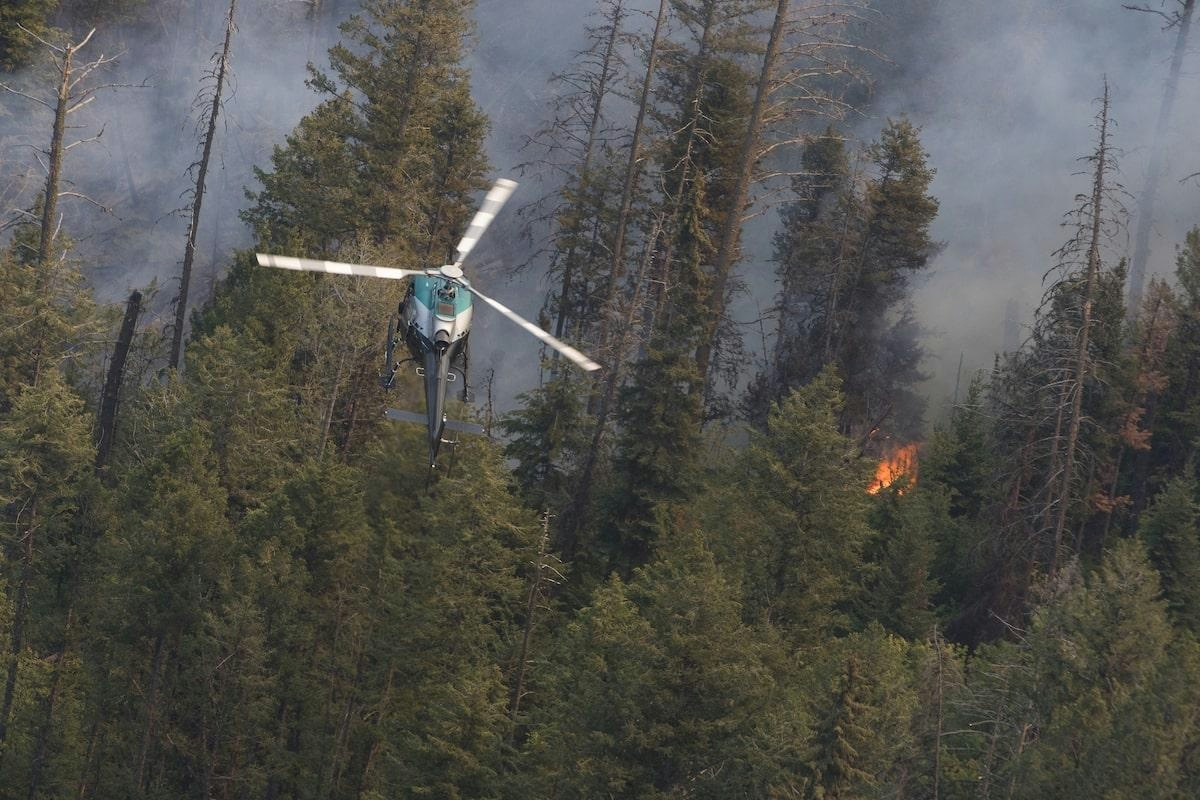
Canada Leases 10 New Aircraft to Strengthen Wildfire Response
The Canadian federal government has announced the leasing of ten new firefighting aircraft to enhance its capacity to combat wildfires during the upcoming season. The fleet includes four air tankers, one spotter plane, and five heavy-lift helicopters, which will be made available to provincial and territorial wildfire agencies upon request. Emergency Management Minister Eleanor Olszewski emphasized that this initiative aims to bolster Canada’s ability to respond effectively to periods of intense wildfire activity.
Establishing a National Aerial Firefighting Surge Capacity
This marks the first occasion on which Ottawa will maintain federally controlled firefighting aircraft that can be loaned to provinces, supported by a new $317-million budget allocation. The government plans to strategically position these aircraft across the country, guided by fire activity forecasts and real-time wildfire developments. The initiative is part of a broader effort to create a national aerial firefighting surge capacity, ensuring rapid deployment of resources where they are most needed.
The decision comes amid escalating challenges in wildfire management. The 2025 wildfire season was the second-worst in Canadian history, with nearly 90,000 square kilometres burned by September—an area exceeding the size of New Brunswick. In response, federal authorities have intensified their focus on wildfire preparedness, investing in improved coordination and response mechanisms to mitigate future risks.
Operational and Financial Considerations
While the addition of new aircraft represents a significant enhancement, it also introduces operational complexities. The high costs associated with running these aircraft, the requirement for skilled pilots and ground crews, and the logistical challenges of integrating new assets into existing firefighting frameworks are critical factors that the government must address. Effective deployment and maintenance will be essential to maximize the impact of these resources.
The financial aspects of this initiative have attracted attention from investors and stakeholders, who are closely monitoring the operational efficiency and cost-effectiveness of the expanded aerial fleet. Furthermore, this move may influence global wildfire management strategies, potentially prompting other nations or private entities to adopt similar measures, thereby altering competitive dynamics within the international firefighting services market.
As wildfire risks continue to escalate, federal support and reforms remain central to Canada’s strategy. The government underscores that the new aircraft will enhance national surge capacity and improve access for provinces and territories during critical periods, reflecting a sustained commitment to strengthening the country’s wildfire response infrastructure.

Etihad Airways Suspends Airbus A380 Flights on Key Route

Aditya Birla Group Seeks Approval for Aircraft Leasing in GIFT City

Qatar Airways Highlights Innovation and Connectivity at Arabian Travel Market 2026

Hong Kong's Five-Year Plan Includes Andrew Fan's Aircraft Parts Processing Hub Proposal

ACIA Aero Leasing Delivers ATR72-600 to Air Nostrum

RTX Appoints Jill Albertelli as Head of Pratt & Whitney

TAT Technologies Joins Beyond Aero Hydrogen Aircraft Program

AURAK Study Highlights Barriers to Air Taxi Adoption in Emerging Economies

Xiamen Air Selects Altitude for 787 Maintenance at Heathrow

Etihad and Swissport Extend Global Partnership
