
画像

エアロジニー — あなたのインテリジェントな副操縦士。

何でも尋ねてください。全てを分析してください。即座に行動してください。

現在のトレンド

Categories

Collins advances hybrid-electric aviation with HECATE milestone
March 19, 2026By ePlane AI
Collins advances hybrid-electric aviation with HECATE milestone
0
0
Collins Aerospace
Hybrid-Electric Aviation
HECATE Project

Collins Advances Hybrid-Electric Aviation with HECATE Milestone

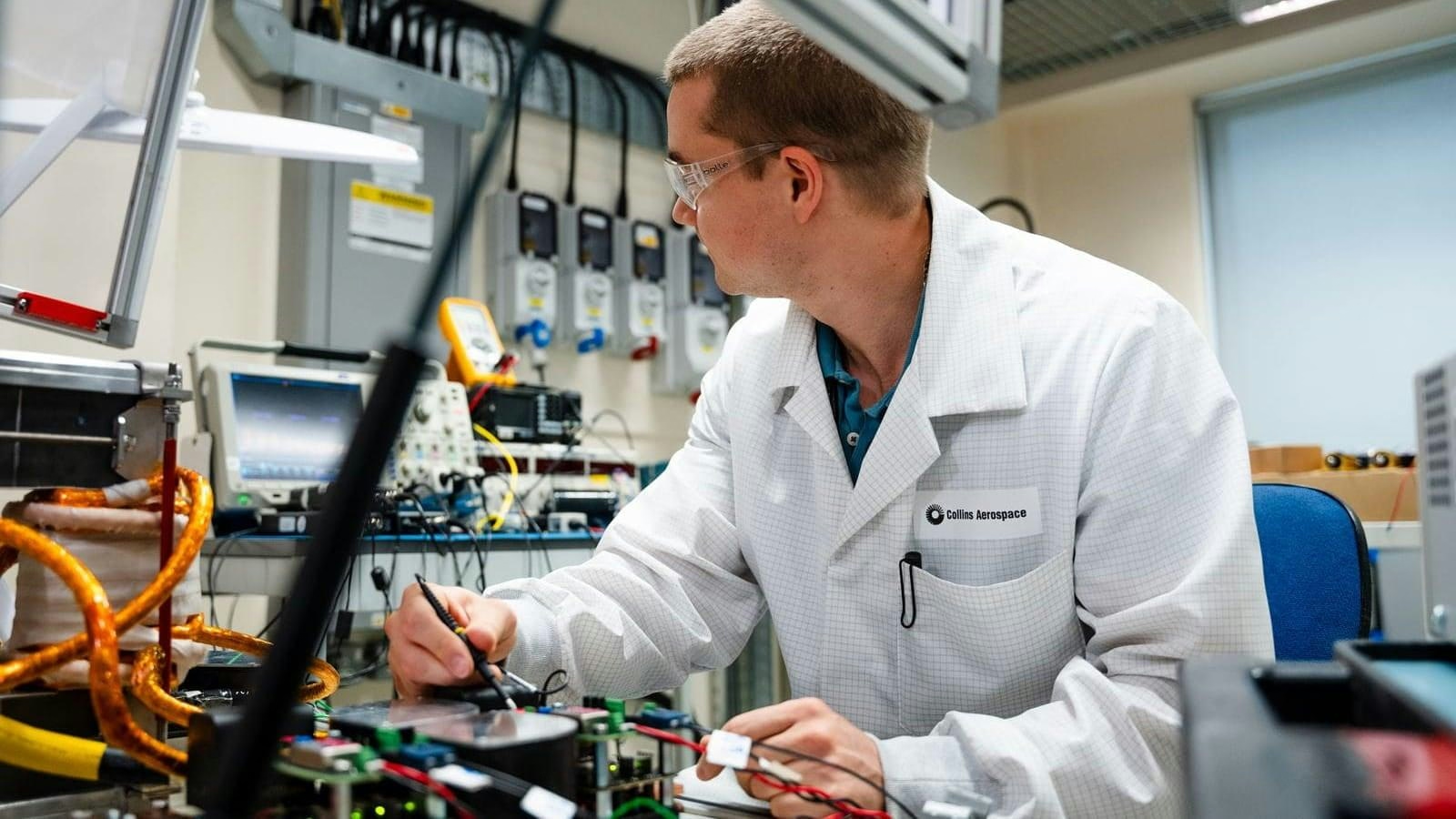
Collins Aerospace has achieved a significant breakthrough in hybrid-electric aviation by successfully completing the HECATE project, a pivotal initiative under the European Union’s Clean Aviation Joint Undertaking, supported by UK Research and Innovation. The project has attained Technology Readiness Level 5 (TRL5), confirming the viability of its electrical architecture for future hybrid-electric aircraft under real-world operating conditions.

HECATE Project and Consortium Collaboration

The Hybrid-ElectriC regional Aircraft distribution TEchnologies (HECATE) project reached this milestone in late 2025 following extensive testing, verification, and validation of its Electrical Power Generation and Distribution System. The hybrid-electric system, capable of generating over 500 kilowatts, was tested on Safran Electrical & Power’s Copper Bird platform in Niort, France. This platform simulates and validates advanced electrical systems within a controlled environment, providing critical data to support the system’s readiness.

The HECATE consortium comprises leading European aerospace entities, including Collins Aerospace, Safran, Airbus Defence and Space, Leonardo, and several academic institutions. Collins Aerospace, through its Applied Research & Technology organization and Power & Controls business, led the project’s steering committee, while Safran Electrical & Power acted as the technical coordinator. This collaboration underscores the collective effort to advance hybrid-electric propulsion technologies across Europe.

Technological Innovations and Future Challenges

Phase 1 of the Clean Aviation Joint Undertaking incorporated digital twin technology to simulate real-world operations, significantly reducing testing time and ensuring compliance with stringent electromagnetic compatibility standards. This approach allowed the system to operate safely without interference, even in challenging electromagnetic environments, marking a critical step toward practical deployment.

Despite this technical success, Collins and its partners face several challenges moving forward. Regulatory approval processes, market acceptance, and intensifying competition from other hybrid-electric and hydrogen-powered aircraft initiatives may influence the pace and trajectory of future developments. Industry observers have responded with cautious optimism, closely monitoring progress as competitors such as Airbus and Electra.aero are expected to accelerate their own hybrid-electric and advanced air mobility projects.

Collins is also advancing efforts to hybridize the Pratt & Whitney PW1100G engine, supported by EU Clean Aviation funding. Progress in this area could establish a benchmark for hybrid-electric propulsion systems and significantly impact the broader adoption of sustainable aviation technologies.

Pathway to Future Clean Aviation Projects

The HECATE milestone sets the stage for subsequent Clean Aviation projects, including OSYRYS and LEIA. OSYRYS, led by Safran Electrical & Power, focuses on developing and testing electrical systems for hybrid-electric regional aircraft. Meanwhile, LEIA, led by Airbus, aims to integrate and validate hybrid-electric architectures in laboratory settings, preparing for the entry into service of new short- to medium-range aircraft by 2035. These initiatives highlight the ongoing collaboration among Airbus, Safran, and Collins to accelerate the development and adoption of hybrid-electric aviation technologies throughout Europe.

More news
GE Aerospace commits €110 million to expand European operations

GE Aerospace commits €110 million to expand European operations

GE Aerospace Commits €110 Million to Expand European Operations GE Aerospace has unveiled a significant investment plan exceeding €110 million to enhance its manufacturing capabilities across Europe in 2024. This strategic initiative is designed to increase production capacity, accelerate the adoption of advanced manufacturing technologies, and improve delivery performance for its diverse customer base. Central to this expansion is the recruitment of over 1,000 new employees by 2026, underscoring the company’s dedication to strengthening its regional footprint and maintaining technological leadership in the aerospace sector. Investment Allocation and Technological Enhancements The bulk of the investment will be directed towards the development of cutting-edge engine test cells, advanced machining equipment, additive manufacturing facilities, and comprehensive infrastructure upgrades. These enhancements will support a wide array of engine programs, including commercial narrowbody and widebody engines, as well as military fighter jet and helicopter engines. The €110 million will be distributed among five European countries, each receiving targeted funding to bolster specific capabilities. Italy will receive the largest share, €77 million, aimed at expanding advanced manufacturing and testing infrastructure, including new and upgraded test cells, machining equipment, and additive manufacturing technologies to support both commercial and defense engine programs. Poland is allocated €15 million to enhance grinding and machining equipment, welding and inspection tooling, alongside facility improvements. The Czech Republic will see an €8 million investment focused on precision machining, grinding systems, quality inspection technologies, assembly tooling, and infrastructure upgrades. The United Kingdom is set to receive €10 million for the modernization of test and manufacturing equipment, expansion of electronics and component production, and facility enhancements. Romania will benefit from a €3 million investment dedicated to metal-cutting machines, tooling, fixtures, and building upgrades. In addition to manufacturing investments, GE Aerospace plans to allocate approximately €40 million this year to its European maintenance, repair, and overhaul (MRO) and component repair facilities. This forms part of a broader global commitment of US$1 billion to enhance MRO capabilities worldwide. Challenges and Workforce Development Initiatives While the expansion presents significant growth opportunities, GE Aerospace must navigate a complex landscape of regulatory and logistical challenges across multiple countries. Integrating a rapidly growing workforce and ensuring supply chain resilience amid intensifying global competition will be critical to sustaining the company’s market position and technological advantage in Europe. The aerospace sector is expected to witness heightened competition as rival firms may respond with increased investments in their European operations, potentially intensifying the race for market share and innovation. To address the persistent shortage of skilled labor in high-technology industries, GE Aerospace is investing heavily in workforce development. The company plans to recruit new talent while supporting existing manufacturing personnel and future engineers through comprehensive training programs and educational grants. In the United Kingdom and Italy, these initiatives are projected to benefit over 800 students this year through partnerships with vocational schools. Meanwhile, in Poland, the expansion of the ‘Next Engineers’ program in Warsaw aims to engage more than 4,000 students, thereby strengthening the pipeline of skilled workers essential for the company’s long-term growth. Through this multifaceted investment strategy, GE Aerospace seeks to reinforce its manufacturing infrastructure, cultivate workforce capabilities, and adeptly navigate the evolving dynamics of the European aerospace industry.
TCS and Amadeus Collaborate on Airline Retailing Platform to Advance AI in Travel Technology

TCS and Amadeus Collaborate on Airline Retailing Platform to Advance AI in Travel Technology

TCS and Amadeus Collaborate to Advance AI-Driven Airline Retailing Platform Tata Consultancy Services (TCS) has announced a global strategic partnership with Amadeus, aimed at developing next-generation airline retailing solutions and accelerating digital transformation within the travel industry. This collaboration will combine TCS’s expertise in artificial intelligence, cloud computing, and data analytics with Amadeus’s established travel technology platforms to modernize airline retailing and customer service systems on a global scale. Developing a Cloud-Native Service Centre Interface Under the terms of the agreement, TCS will design a Service Centre User Interface for Amadeus’s Nevio platform, a next-generation system intended to revolutionize how airlines manage offers, orders, and customer interactions. The interface will be developed as a cloud-native, software-as-a-service (SaaS) solution, fully integrated into Nevio. It is expected to equip airline customer service agents with AI-driven insights, enabling more personalized and real-time retailing experiences that enhance customer engagement. Arun Pradeep Surendra Mohan, business head for Travel, Transportation & Hospitality at TCS for the EMEA and APAC regions, emphasized the significance of the partnership. He stated, “Our global strategic partnership with Amadeus marks an important step in reshaping the future of travel technology. By combining Amadeus’s powerful platform capabilities with TCS’s deep expertise in AI, cloud, and large-scale transformation, we are moving beyond traditional integration towards true co-innovation.” Enhancing Operational Efficiency and Expanding Integration The platform will integrate offer and order lifecycle management with AI-guided workflows designed to improve operational efficiency, reduce handling times, and increase revenue through targeted upselling. Cyril Tetaz, executive vice president of airline solutions at Amadeus, highlighted the value of the partnership, noting, “TCS is one of the world’s largest technology service providers, bringing expertise in travel as part of the Tata Group, which operates several airlines. Our strategic partnership will accelerate the deployment of transformational travel technology for our customers globally, helping them provide an even better retail experience to air travellers.” In addition to developing the interface, TCS will support the implementation of Amadeus Nevio across airlines, focusing on faster rollouts and deeper integration into airline contact centre ecosystems. The partnership is expected to expand over time into other areas such as airport operations and broader travel ecosystem platforms. Navigating a Competitive and Evolving AI Landscape This collaboration enters a competitive environment where other technology leaders, including Anthropic with its AI plugins, are actively seeking to disrupt traditional travel intermediaries. The rapid advancement of AI agents capable of automating planning, booking, and operational tasks presents both opportunities and challenges for established players in the travel sector. Market responses have included skepticism regarding the immediate impact of AI on entrenched business models, while competitors may accelerate their own AI initiatives to maintain market share. Amadeus’s recent multi-year growth targets and its acquisition of SkyLink, aimed at integrating conversational AI, underscore its proactive approach to innovation. As the travel industry continues to rely heavily on intermediaries, the emergence of advanced AI solutions has the potential to significantly reshape how airlines and travel providers interact with customers and manage their operations.
BOC Aviation Reports Record Profit and Portfolio Growth

BOC Aviation Reports Record Profit and Portfolio Growth

BOC Aviation Reports Record Profit and Portfolio Growth Amid Industry Challenges BOC Aviation has announced record audited results for the year ended December 31, 2025, posting a net profit after tax (NPAT) of US$787 million. This performance was driven by an 18% increase in underlying earnings, which rose to US$746 million from US$633 million the previous year. The company’s robust financial health is further reflected in its balance sheet, which expanded to over US$26 billion, with total equity reaching US$6.8 billion. Operating cash flow, net of interest expenses, hit a record US$2.2 billion. Dividend Increase and Investment Expansion In recognition of its strong results, BOC Aviation’s Board has recommended a final dividend of US$0.3061 per share, marking the highest payout in the company’s history. When combined with the interim distribution, total dividends for the year amounted to US$0.45371 per share. The company also revised its dividend payout policy, increasing it to up to 40% of NPAT from the previous 35%. Investment activity remained vigorous throughout 2025, with capital expenditure reaching US$4.2 billion, surpassing internal targets. BOC Aviation committed to acquiring an additional 160 aircraft during the year, closing 2025 with a total committed capital expenditure of US$19 billion and an order book comprising 337 aircraft. Steven Townend, Chief Executive Officer and Managing Director, highlighted the company’s achievement of strong underlying earnings growth and successful delivery of aircraft as scheduled. He emphasized that the largest-ever order book and committed liquidity provide a solid foundation for pursuing long-term growth objectives. Navigating Industry Challenges Despite these record-breaking results, BOC Aviation operates within a dynamic and challenging environment. The company’s growth prospects may be tempered by intensifying competition, evolving regulatory frameworks, and broader economic uncertainties. Rival firms may respond with aggressive expansion or cost-reduction strategies, potentially affecting market share and profitability across the aviation leasing sector. Investor interest in the industry is expected to rise following BOC Aviation’s strong performance. However, concerns persist regarding profit margins and escalating operational costs, which are influenced by fluctuating fuel prices and ongoing geopolitical tensions. These factors could constrain the company’s ability to maintain its current growth trajectory. As BOC Aviation seeks to capitalize on its record order book and liquidity position, its future success will depend on effectively managing these external challenges while upholding operational and financial discipline.
IAF Attributes Tejas Incident to Software Fault Ahead of Flight Resumption

IAF Attributes Tejas Incident to Software Fault Ahead of Flight Resumption

IAF Attributes Tejas Incident to Software Fault Ahead of Flight Resumption The Indian Air Force (IAF) has attributed the runway incident involving a Tejas fighter jet on 7 February to a software glitch in the aircraft’s onboard computer. This clarification, provided after weeks of speculation, confirms that the cause was not related to any structural or mechanical failure but originated from a fault within the jet’s digital systems during take-off. Sources familiar with the investigation, as reported by *The Tribune*, emphasized that the issue was confined to the aircraft’s software architecture rather than its physical components. Investigation and Response Following the incident at a forward airbase along India’s western front, where the single-seat Tejas veered off the runway and came to rest in a mud ditch, the pilot sustained injuries but survived. Initial concerns had pointed to potential problems with the braking system or undercarriage, prompting the IAF to initiate a comprehensive investigation and mandate fleet-wide inspections. Standard aviation protocols were rigorously applied, with detailed examinations of the landing gear, brakes, and avionics software to exclude systemic faults. The investigation ultimately identified the anomaly within the digital control architecture of the aircraft. All physical subsystems, including the landing gear, brakes, and flight controls, were found to be fully operational and free of defects. This outcome highlights the increasing complexity of modern fighter jets, where software and hardware are deeply integrated. The Tejas employs a digital fly-by-wire system that translates pilot commands through software-controlled computers, enhancing precision and stability but also introducing new vulnerabilities. Experts from the Indian Institute for Aeronautical Engineering and Information Technology have noted that such digital systems, while offering significant operational advantages, can render even minor software glitches critical. Software Revision and Future Prospects In response to the findings, a revised software package has been developed in collaboration with Hindustan Aeronautics Limited (HAL) and is currently undergoing final validation. The resumption of flying operations is anticipated in the coming days, contingent upon the successful completion of software testing. HAL declined to comment publicly, but informed sources suggest that the grounded Tejas aircraft are expected to return to service shortly. The software fault has posed several challenges for the Tejas program, including delays that have attracted scrutiny from stakeholders and raised concerns about potential impacts on the program’s budget and timeline. Defense analysts and investors have expressed doubts regarding the aircraft’s reliability, while competitors may leverage the incident to underscore their own technological progress. This external pressure is likely to motivate program managers to expedite resolution efforts and strengthen quality assurance protocols. Despite these challenges, the IAF’s transparent investigation and prompt collaboration with HAL demonstrate a proactive commitment to operational safety. As the updated software nears approval, the Tejas fleet is poised to re-enter service, with the lessons learned from this incident expected to inform future upgrades and risk mitigation strategies within India’s indigenous fighter program.
ACIA Aero Leasing Delivers ATR 72-600 to Chingis Airlines Unity

ACIA Aero Leasing Delivers ATR 72-600 to Chingis Airlines Unity

ACIA Aero Leasing Delivers ATR 72-600 to Chingis Airlines Unity, Enhancing Mongolia’s Regional Air Connectivity ACIA Aero Leasing has completed the delivery of an ATR 72-600 passenger aircraft on lease to Chingis Airlines Unity, marking a pivotal development in Mongolia’s efforts to expand regional air connectivity. Chingis Airlines Unity, a subsidiary of the NOMIN Group—one of Mongolia’s largest and most diversified private conglomerates—intends to address the country’s unique transportation challenges, particularly in remote and sparsely populated regions. Strategic Expansion into Aviation The NOMIN Group, established in 1992, operates across multiple sectors including retail, banking, insurance, construction, real estate, and information technology, employing over 6,000 people nationwide. Its venture into aviation through Chingis Airlines Unity forms part of a broader strategy to support Mongolia’s economic growth and improve access to essential services. The introduction of the ATR 72-600 is a key component of this strategy, given the aircraft’s suitability for Mongolia’s demanding environment. The ATR 72-600 is renowned for its capability to operate on both paved and unpaved runways, a critical feature for Mongolia’s diverse climate and terrain, which range from the harsh winters of Ulaanbaatar to the arid conditions of the Gobi Desert. This versatility is expected to facilitate not only passenger travel but also support the country’s rapidly expanding mining sector, which requires reliable and flexible transportation solutions. Operational and Market Implications Mick Mooney, CEO of ACIA Aero Leasing, expressed enthusiasm about the partnership, emphasizing the ATR 72-600 as an economical and practical solution for Mongolia’s evolving transportation needs. Mark Dunnachie, ACIA’s Senior Vice President Commercial, underscored the aircraft’s adaptability to rugged operations and extreme weather conditions, highlighting its operational flexibility as a decisive advantage. Bayarsaikhan Shagdarsuren, Chairman of the NOMIN Group, drew attention to the significant decline in regional air services, noting that the number of towns served by air has dropped from 330 to fewer than ten. He reaffirmed the group’s commitment to restoring and expanding air connectivity across Mongolia. Ganbold Namsraijav, CEO of Chingis Airlines Unity, emphasized the importance of the ATR 72-600’s turboprop configuration for accessing remote areas and announced plans to introduce a second aircraft by June. He outlined ambitions to stimulate the domestic aviation market by offering passengers greater choice and more affordable travel options, with future plans to develop international routes and establish a competitive regional presence. Despite the promising outlook, the integration of the ATR 72-600 presents operational challenges for Chingis Airlines Unity. These include ensuring strict compliance with safety and maintenance standards and adapting to new operational protocols. Effective management of these factors will be essential as the airline incorporates the aircraft into its fleet. The delivery has also attracted attention within the broader aviation sector. Industry observers suggest that this move could encourage other airlines to consider similar aircraft, potentially prompting a reassessment of fleet strategies across the region. Furthermore, the successful delivery may bolster investor confidence in both ACIA Aero Leasing and Chingis Airlines Unity, with possible implications for market valuations and future strategic partnerships in the aviation leasing and airline industries.
Spirit AeroSystems Profitability Delayed to 2020 Amid Boeing Acquisition Impact

Spirit AeroSystems Profitability Delayed to 2020 Amid Boeing Acquisition Impact

Spirit AeroSystems Profitability Postponed to 2027 Amid Boeing Acquisition Challenges Spirit AeroSystems is confronting significant delays in achieving profitability following its $4.7 billion acquisition by Boeing, completed in December 2025. Recent updates from Boeing in March 2026 reveal that integration expenses have exceeded initial projections, pushing the expected profitability timeline for Boeing’s Commercial Airplanes division to 2027. This revision has elicited cautious responses from investors, who are closely scrutinizing Boeing’s financial stability and the broader ramifications for the aerospace supply chain. Integration Challenges and Margin Pressures Boeing’s disclosures highlight substantial near-term margin pressures directly linked to the integration of Spirit AeroSystems. The Commercial Airplanes unit now anticipates operating margins between -7.5% and -8% in early 2026, a marked deterioration from earlier forecasts that predicted flat or positive margins. Audits conducted at Spirit’s production facilities uncovered deeper operational difficulties, including quality control issues necessitating rework on 25 Boeing 737 aircraft, each requiring approximately three days of corrective work. These findings have led Boeing to designate 2026 as a pivotal year focused on stabilizing production processes rather than generating profits. For shareholders of Spirit AeroSystems, the acquisition has introduced uncertainty as the company undergoes delisting and Boeing consolidates its operations. European investors, particularly those with exposure to aerospace through Boeing shares traded on Xetra, must now recalibrate expectations regarding cash flow recovery from this critical supplier. Production and Delivery Adjustments The production rate for the Boeing 737 MAX remains constrained at 42 aircraft per month due to Federal Aviation Administration (FAA) restrictions, with an aspirational target of 53 units by the end of 2026. However, delays associated with Spirit AeroSystems have shifted some deliveries from the first to the second quarter of the year, dampening near-term revenue growth prospects. Boeing aims to deliver a total of 500 aircraft in 2026, a key benchmark for scaling output following the integration. Strategic Implications and Industry Context The acquisition represents a strategic reversal of Boeing’s two-decade-long outsourcing approach, bringing fuselage production in-house to address persistent quality issues that have affected the company since the 2024 safety crises. Spirit AeroSystems, formerly Boeing’s primary supplier for the 737, 777, and 787 fuselages, had been grappling with recurring defects traced back to its manufacturing sites. Boeing’s management regards the current integration costs as temporary, anticipating a return to positive margins and operational normalization by 2027. A reported 40% reduction in manufacturing defects over the past year indicates progress, yet ongoing audits suggest that some challenges will require additional time to resolve fully. This shift toward vertical integration aligns with a broader industry trend favoring resilient, sovereign supply chains that emphasize quality assurance over just-in-time efficiency. Investor Outlook For investors in Europe and globally, Boeing’s consolidation raises important questions about component pricing and competitive dynamics within a less fragmented supplier market. With Airbus maintaining its dominance in Europe, Boeing’s supply chain restructuring could indirectly benefit regional carriers through improved quality and delivery reliability. As the aerospace sector observes Boeing’s efforts to manage integration costs and sustain its market position, competitor responses remain uncertain. The delayed timeline for profitability underscores the execution risks inherent in large-scale aerospace consolidations and highlights the ongoing challenges confronting the industry’s recovery.
Here’s How Far The Airbus A380 Can Fly Without Refueling

Here’s How Far The Airbus A380 Can Fly Without Refueling

Here’s How Far The Airbus A380 Can Fly Without Refueling When the Airbus A380 entered commercial service nearly two decades ago, it transformed long-haul air travel with its exceptional range and passenger capacity. Designed to carry several hundred passengers between major international hubs, the A380 enabled airlines to operate some of the world’s longest routes at a comparatively low operating cost—provided the aircraft was consistently filled to capacity. The A380’s Maximum Range and Operational Capabilities Airbus states that the A380 can cover up to 8,000 nautical miles (approximately 14,800 kilometers) in a typical four-class configuration seating 545 passengers. Engine Alliance, the manufacturer of one of the A380’s engine options, suggests the range can extend to 8,200 nautical miles (around 15,200 kilometers), depending on the payload. The aircraft’s actual range fluctuates with the number of passengers and cargo onboard, as increased weight results in higher fuel consumption. This extensive range allows the A380 to service ultra-long-haul routes such as London to Singapore, Dubai to Los Angeles, and Dubai to Auckland, the latter spanning 7,668 nautical miles (14,202 kilometers). Some of the longest scheduled flights, including Sydney to Dallas/Fort Worth at 7,474 nautical miles (13,840 kilometers), keep the aircraft in the air for over 14 hours. Although the A380 is theoretically capable of flying nonstop for up to 16 hours, regulatory requirements mandating fuel reserves mean this maximum duration is seldom reached in commercial operations. Technological Innovations Underpinning the Range The A380’s remarkable range is the product of several key technological advancements. Its efficient turbofan engines deliver substantial thrust while minimizing fuel burn. The aircraft’s wing and airframe incorporate approximately 25% composite materials, reducing overall weight and enhancing fuel efficiency despite its large size. Additionally, the A380 boasts an enormous fuel capacity, holding up to 84,535 US gallons (320,000 liters) distributed across 11 tanks primarily located in the wings. Sophisticated automated systems continuously manage fuel distribution to maintain optimal balance and efficiency throughout the flight. These innovations enabled the A380 to excel within the hub-and-spoke model of air travel, transporting large numbers of passengers between major airports at a lower cost per seat mile than many other widebody aircraft. However, this advantage depended heavily on airlines’ ability to consistently fill the aircraft to near capacity. Challenges and the Evolving Aviation Landscape Despite its engineering achievements, the A380 faces mounting challenges in today’s aviation environment. Geopolitical tensions, such as recent airspace closures related to the U.S.-Israeli conflict with Iran, have disrupted long-haul routes, forcing airlines to cancel flights or adopt longer detours. These developments have directly affected the operational viability of ultra-long-range aircraft like the A380. Coupled with rising oil prices, these factors have unsettled airline stocks and raised questions about the sustainability of operating large, fuel-intensive jets. In response, many carriers are transitioning toward more fuel-efficient twin-engine widebodies, including the Airbus A350 and the forthcoming Boeing 777X, which offer comparable range with lower operating costs. The industry is also investing in sustainable aviation fuels and exploring next-generation propulsion technologies, such as hydrogen-powered and hybrid-electric engines, which may significantly alter the future of long-haul air travel. While the Airbus A380 remains a remarkable feat of aerospace engineering, its dominance is increasingly challenged by technological advancements, shifting market dynamics, and the unpredictable realities of global aviation.
AI and Machine Learning in the 2026 Marine Aviation Sustainment Plan

AI and Machine Learning in the 2026 Marine Aviation Sustainment Plan

AI and Machine Learning Transform the 2026 Marine Aviation Sustainment Plan The 2026 Marine Aviation Plan represents a significant evolution in the Marine Corps’ approach to aviation readiness, placing artificial intelligence (AI) and machine learning (ML) at the heart of a new predictive sustainment model. This strategic shift departs from decades of reactive maintenance and supply practices, aiming to establish a data-driven framework that anticipates operational needs and enhances agility. Such innovation is particularly critical as Marine Aviation confronts the challenge of maintaining high readiness levels across dispersed and austere environments with limited logistical support. The plan candidly acknowledges the current limitations: “Marine Corps Aviation remains reactive in maintenance, supply, and operations planning, limiting readiness and reducing the ability to sustain distributed aviation operations and crisis response.” Traditional sustainment models, which rely on centralized maintenance, predictable supply chains, and steady operational tempos, are increasingly inadequate for Distributed Aviation Operations (DAO) in contested regions such as the Indo-Pacific. In these scenarios, the conventional practice of returning aircraft to main bases for scheduled maintenance or enduring lengthy waits for parts is no longer viable. A New Sustainment Paradigm: Dynamic Supply, Predictive Maintenance, and Optimized Operations To overcome these challenges, the AI and ML sustainment initiative is organized around three integrated Lines of Operation: Dynamic Aviation Supply, Predictive Maintenance, and Optimized Operations. Together, these efforts seek to establish a seamless data flow between maintenance, supply, and operational functions. AI and ML algorithms will uncover patterns beyond human detection, enabling Marines to anticipate and mitigate failures before they degrade combat readiness. This approach signifies a fundamental reimagining of how the Marine Corps sustains its aviation combat power rather than a mere incremental improvement. The first line of effort, Dynamic Aviation Supply, tackles the persistent difficulty of ensuring the timely availability of the right parts, especially when operating from widely dispersed and austere locations. Traditional supply packages, which are based on historical averages and stable environments, falter when squadrons operate from multiple Forward Arming and Refueling Points (FARPs) or expeditionary airfields where resupply opportunities are irregular. Dynamic Aviation Supply envisions adaptive, AI-driven spare parts packages that respond in real time to operational conditions and evolving aircraft configurations. Machine learning algorithms will analyze extensive datasets—including aircraft configurations, operational tempo, environmental conditions, mission profiles, and component failure rates—to identify subtle patterns. For example, AI can detect that F-35B aircraft operating in high-temperature, high-humidity maritime environments with specific weapons loads experience distinct wear patterns compared to those based at temperate locations. Integration Challenges and Broader Implications Despite its promise, the integration of AI and ML into Marine Aviation sustainment faces significant challenges. Rapid technological adoption is essential, yet ensuring interoperability with existing legacy systems remains a formidable obstacle. Additionally, the high costs associated with advanced AI capabilities present considerable budgetary constraints. Beyond the military domain, these technological advancements are influencing the defense industry and financial markets. Investor responses to AI-driven developments have been marked by volatility, oscillating between panic selling and euphoric rallies. Concurrently, competitors are accelerating their own research and development efforts, forging strategic partnerships, and pursuing acquisitions to maintain pace with the Marine Corps’ technological advancements. As the 2026 Marine Aviation Plan progresses, its success will hinge not only on the transformative potential of AI and machine learning but also on the Marine Corps’ capacity to manage the complexities of integration, cost, and a rapidly evolving technological environment.
The Role of American Propulsion in Future Global UAV Missions

The Role of American Propulsion in Future Global UAV Missions

The Role of American Propulsion in Future Global UAV Missions Advancing UAV Propulsion Through Strategic Innovation The global unmanned aerial systems (UAS) sector is experiencing a significant transformation driven by escalating geopolitical tensions and an increasing demand for sophisticated intelligence capabilities. Central to this evolution is Northwest UAV (NWUAV), an Oregon-based company that has emerged as a pivotal force within the American UAV propulsion industry. NWUAV’s approach is anchored in three strategic pillars: the Single-Fuel Mandate, Supply Chain Sovereignty, and Vertical Integration. Through these initiatives, the company is not only manufacturing advanced engines but also strengthening the resilience of national security infrastructure. The Single-Fuel Mandate addresses a longstanding logistical challenge faced by military operations, which have traditionally managed multiple fuel types across different platforms. While ground vehicles and manned aircraft commonly utilize heavy fuels such as JP-8, many tactical UAVs have depended on high-octane gasoline, creating a complex and potentially hazardous dual-fuel environment. NWUAV’s portfolio of heavy-fuel engines—including the NW-44, NW-88, and NW-230—is engineered to operate efficiently on the same fuels already deployed in military theaters. These multi-fuel systems streamline logistics, enhance operational safety, and improve survivability, aligning closely with NATO’s “Single Fuel” initiative. Moreover, NWUAV engines are capable of performing at density altitudes up to 36,000 feet, enabling seamless mission launches from a variety of environments while reducing logistical burdens and associated risks. Ensuring National Security Through Domestic Manufacturing As the drone industry matures, dependence on global supply chains has evolved from a matter of convenience to a critical vulnerability. Foreign-manufactured propulsion components pose risks including embedded “kill switches,” data breaches, and abrupt supply interruptions. In response, NWUAV has committed since 2013 to developing a fully American-made propulsion stack, consolidating all design, manufacturing, and support operations at its AS9100D-certified facility in McMinnville, Oregon. This reshoring effort guarantees that U.S. defense contractors and agencies have access to propulsion systems free from adversarial influence. The company’s adherence to EAR99 export approval and stringent American aerospace standards provides customers with transparency and reliability—factors that are increasingly vital as secure supply chains and trusted microelectronics become top priorities for the Department of Defense. Navigating Global Competition and Emerging Opportunities Despite these technological and strategic advancements, American propulsion manufacturers face formidable competition from established foreign entities, particularly China, which has rapidly expanded its drone industry. With signals from Congress and the current administration indicating increased investment in revitalizing the domestic drone sector, demand for American-made propulsion systems is anticipated to grow substantially. This development may prompt intensified efforts by foreign competitors to maintain their market share, while U.S. companies like NWUAV capitalize on their domestic manufacturing capabilities and national security advantages. The escalating global threat posed by drones, as emphasized by leaders of counter-drone task forces, highlights the urgent need for advanced and secure propulsion solutions. In this context, American propulsion technology is positioned to play a critical role in shaping the future of global UAV missions, offering not only innovation but also the assurance of supply chain integrity and operational security.
Joby Electric Air Taxi Conducts Test Flights at Half Moon Bay Airport Following FAA Approval

Joby Electric Air Taxi Conducts Test Flights at Half Moon Bay Airport Following FAA Approval

Joby Electric Air Taxi Conducts Test Flights at Half Moon Bay Airport Following FAA Approval Joby Aviation, a prominent developer of electric vertical takeoff and landing (eVTOL) aircraft, has recently completed a series of test flights at Half Moon Bay Airport (HAF) after securing approval from the Federal Aviation Administration (FAA). These flights represent a pivotal step for the California-based company as it moves closer to launching commercial air taxi services. Advancing Urban Air Mobility The test flights, conducted with the collaboration of airport personnel and partners, took place over the Moss Beach Distillery and featured Joby’s all-electric air taxi. Designed to provide fast, quiet, and convenient urban transportation, the aircraft is central to Joby’s vision of operating its own air taxi service in cities worldwide, alongside plans to sell the aircraft to other operators. This progress aligns with a broader surge of interest and investment in urban air mobility, reflecting growing optimism about the future of electric air taxis. Industry Context and Challenges Ahead Joby’s recent FAA approval has been met with enthusiasm from investors, yet the company faces a competitive environment. Rivals such as Archer Aviation and Beta Technologies are also intensifying their testing and certification efforts in response to Joby’s advancements. Despite the successful test flights, Joby must still overcome significant challenges before commencing commercial operations. These include ongoing regulatory scrutiny as the company pursues full FAA certification, as well as technical and manufacturing hurdles related to scaling production and meeting rigorous safety and performance standards. Joby has announced plans to initiate early operations under the FAA’s eVTOL Integration Pilot Program (eIPP) in 2026. The company aims to increase manufacturing capacity to four aircraft per month by 2027, with a long-term goal of producing up to 500 aircraft annually at its Ohio facilities. The Future of Electric Air Taxis The urban air mobility sector is rapidly evolving, with companies competing to secure regulatory approvals and establish market leadership. The growth of this industry will depend on continued technological innovation, effective regulatory collaboration, and public acceptance of electric air taxis as a practical mode of transportation. For further details on Joby Aviation and its developments, visit www.jobyaviation.com.
line









