
AIによるインサイトを行動へとつなげる

現在のトレンド
Categories
Drone Delivery and Ground Robots: Assessing the Future of Last-Mile Logistics
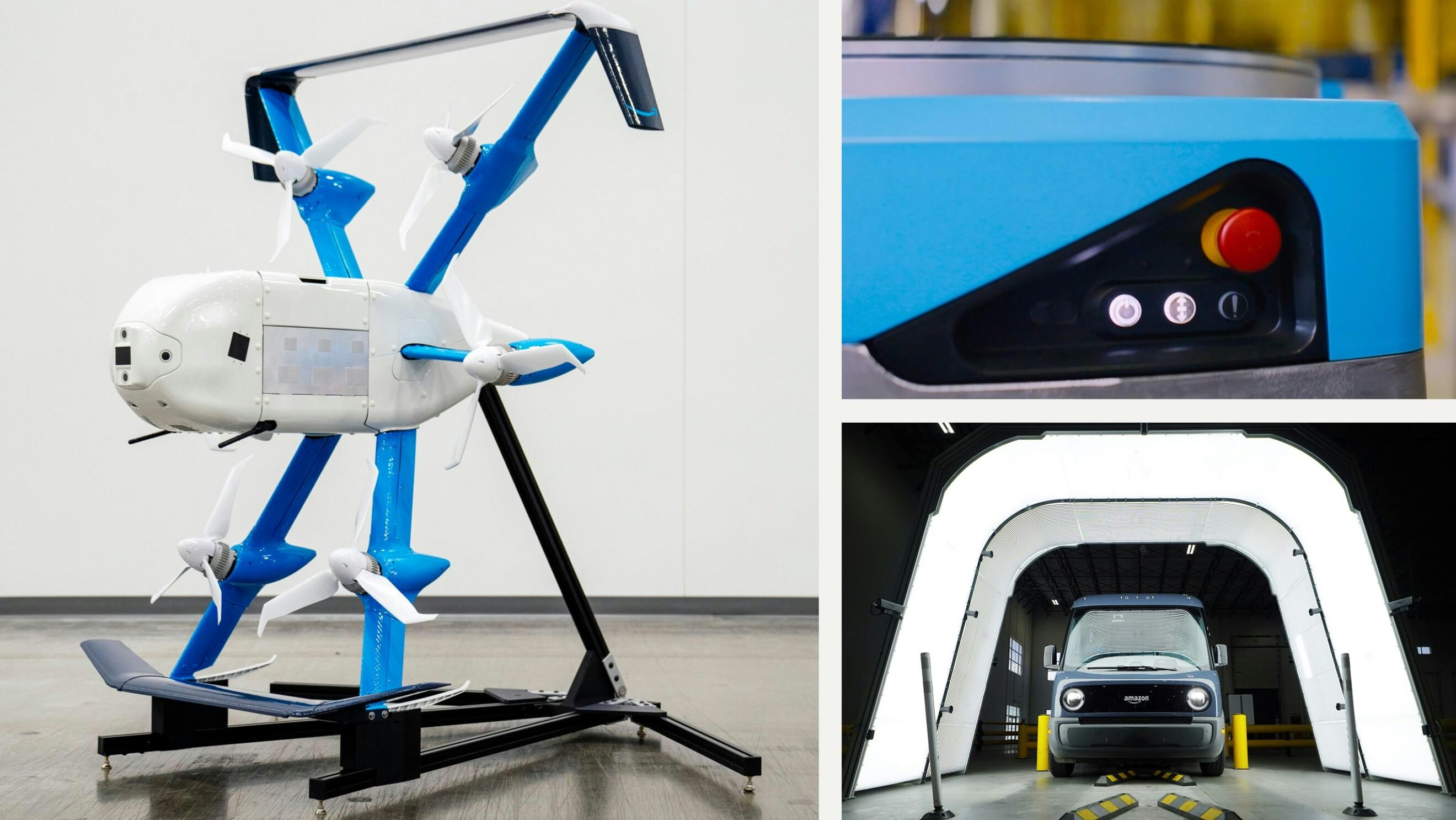
Drone Delivery and Ground Robots: Assessing the Future of Last-Mile Logistics
For years, drone delivery has captivated public imagination as a transformative advancement in last-mile logistics. The vision of parcels soaring above congested streets, hot meals arriving within minutes, and essential medicines reaching remote locations without reliance on traditional vehicles has dominated headlines. However, alongside this aerial innovation, ground delivery robots have steadily progressed, navigating sidewalks and crossing streets to deliver groceries and small parcels with quiet persistence.
The question arises: which technology will ultimately shape the future of last-mile delivery—drones in the air or robots on the ground? The answer is complex. Rather than one supplanting the other, both technologies address distinct logistical challenges. Ground robots appear better suited to scaling operations in dense urban environments, while drones may maintain an advantage in rural, urgent, or specialized delivery scenarios.
Fundamental Differences Between Drones and Ground Robots
At its core, a delivery drone is an aircraft, subject to a wide array of regulatory and operational complexities. Compliance with aviation laws, integration into controlled airspace, safety certifications, authorization for Beyond Visual Line of Sight (BVLOS) operations, emergency landing protocols, noise pollution concerns, weather dependencies, and public acceptance all present significant hurdles. Each drone flight demands meticulous management, as failures can have serious consequences.
In contrast, ground delivery robots are small, wheeled vehicles that operate on sidewalks and streets. While they face challenges such as pedestrian navigation, obstacle avoidance, and cargo security, they are not burdened by the complexities of airspace regulation. A malfunctioning robot typically halts safely on the pavement, avoiding the risks associated with aerial failures. This fundamental distinction grants ground robots a regulatory and operational advantage, particularly in densely populated urban areas.
Cost and Economic Considerations
The construction of a reliable delivery drone extends beyond affixing a package to a quadcopter. Commercial-grade drones require redundant flight systems, high-capacity batteries, secure communication links, payload release mechanisms, remote monitoring capabilities, safety features such as parachutes, and weather-resistant designs. These requirements drive costs into the tens of thousands of pounds per unit, especially when accounting for charging infrastructure and ongoing maintenance.
Ground robots, while not inexpensive, are mechanically simpler. They incorporate motors, batteries, cameras, sensors, cellular connectivity, secure cargo compartments, and autonomy software. Depending on their specifications, delivery robots may cost only a few thousand pounds, resembling rugged electric mobility devices more than complex aviation systems. Consequently, drones generally incur higher expenses in manufacturing, certification, maintenance, and insurance.
Industry Dynamics and the Path Forward
The economics of drone delivery remain challenging. Although drones offer speed advantages, operational costs are elevated due to regulatory oversight and the necessity for human supervision. The primary bottleneck lies not in energy consumption but in labor requirements, regulatory approvals, and underutilized infrastructure. Without the ability for a single operator to manage multiple drones simultaneously, the cost per delivery remains high.
Meanwhile, competition within the delivery sector is intensifying. Uber’s recent $11.6 billion bid for Delivery Hero reflects a strategic effort to anticipate and adapt to the rise of robotic delivery solutions. Walmart’s plan to expand drone delivery services to seven additional markets by 2027 underscores growing corporate reliance on aerial logistics to enhance speed and efficiency. Even military organizations are investing in autonomous ground vehicles for battlefield logistics, signaling broader adoption of robotics for complex operational tasks.
Both drones and ground robots are poised to play pivotal roles in the evolution of last-mile logistics. Drones may prove most effective in rural or time-sensitive deliveries, while ground robots are likely to become the primary agents of urban delivery. As regulatory frameworks, technological capabilities, and competitive pressures evolve, companies are investing heavily in both platforms to improve efficiency and secure their positions in the future of delivery. The competition is not merely between air and ground but among the enterprises striving to redefine how goods reach consumers’ doorsteps.

Hong Kong's Five-Year Plan Includes Andrew Fan's Aircraft Parts Processing Hub Proposal

ACIA Aero Leasing Delivers ATR72-600 to Air Nostrum

RTX Appoints Jill Albertelli as Head of Pratt & Whitney

TAT Technologies Joins Beyond Aero Hydrogen Aircraft Program

AURAK Study Highlights Barriers to Air Taxi Adoption in Emerging Economies

Xiamen Air Selects Altitude for 787 Maintenance at Heathrow

Etihad and Swissport Extend Global Partnership

Sepehran Airlines B737 Returns to Mashhad After Tyre and Engine Issues

Etihad Deploys Widebody Fleet to Meet Strong Demand

Korean Air Finalizes $36.2 Billion Deal with Boeing
