
AIによるインサイトを行動へとつなげる

現在のトレンド
Categories
Economic Growth Drivers Show Signs of Slowing
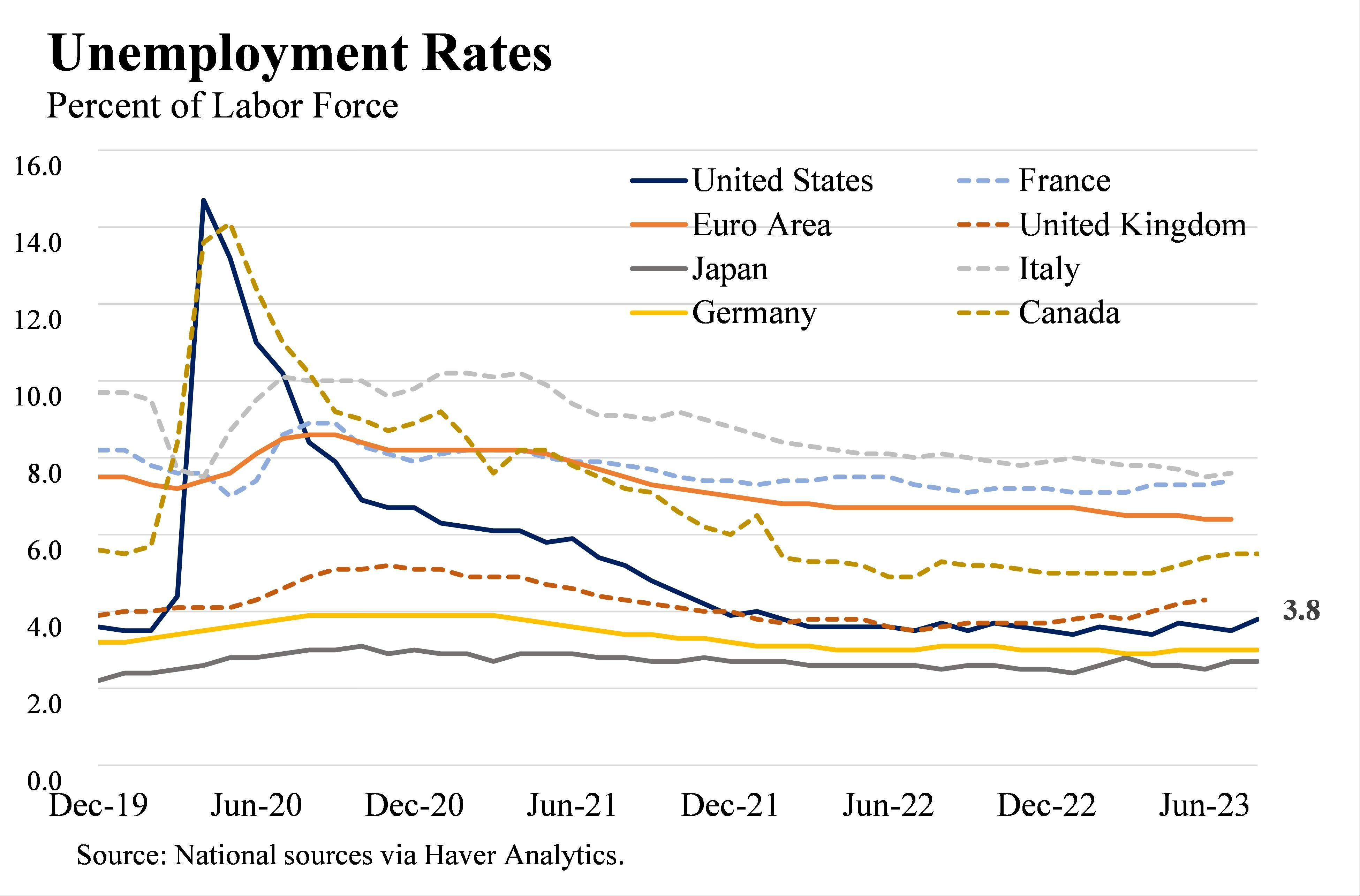
Economic Growth Drivers Show Signs of Slowing
Aviation Industry Faces Unprecedented Challenges
Aircraft engines have surged in value, now often exceeding the worth of the planes they power. Persistent maintenance difficulties and a global shortage of spare parts have grounded hundreds of aircraft over recent years, disrupting operations across the aviation sector. According to aircraft lessor Avolon, engines on new short-haul aircraft can represent up to 80% of the plane’s total value, a dramatic increase from two decades ago when engines accounted for just 30%. By the time an aircraft reaches six years of age, its engines may be worth more off the wing than on it. This shift is particularly striking given that the average commercial aircraft is currently 15 years old.
The latest generation of fuel-efficient engines, while technologically advanced, demand more frequent and intensive maintenance, leading to extended ground times. These challenges have been compounded by a shortage of spare parts worldwide and a significant inspection campaign by US manufacturer Pratt & Whitney. The company has been scrutinizing hundreds of its geared turbofan (GTF) engines, which power the Airbus A320neo, after identifying a defect that could cause cracks. Budget airline Wizz Air has been notably affected, with over 30 aircraft grounded at the start of this year, some remaining out of service for more than a year.
The cost of leasing engines has escalated sharply, now surpassing the expense of leasing entire replacement aircraft for short-haul operations. This unusual market dynamic has led to the dismantling of at least 17 Airbus A320 and A321 neo aircraft to harvest engines for sale or lease, according to aviation analyst Cirium. Avolon has described the aviation supply chain as “fragile,” emphasizing that aircraft groundings have persisted stubbornly. The company warns that the current maintenance, repair, and overhaul (MRO) “super-cycle” is expected to continue, with engine manufacturers increasing shop visit and spare-part prices at rates well above inflation. These groundings are projected to last through 2028.
Broader Economic Implications and Industry Responses
The supply chain pressures have bolstered the market valuations of engine manufacturers such as GE Aerospace and Rolls-Royce, with Rolls-Royce shares outperforming even those of leading AI chipmaker Nvidia. The rising costs and ongoing shortages have forced airlines to reconsider their maintenance strategies. Ryanair, for instance, recently unveiled a multibillion-dollar initiative to internalize engine maintenance through a partnership with CFM, a joint venture between GE Aerospace and Safran Aircraft Engines. Starting in 2029, Ryanair plans to operate two engine maintenance workshops servicing its fleet and nearly 2,000 engines, supported by a $1 billion annual spare parts agreement. CEO Michael O’Leary described engine costs as “completely out of control,” warning of significant inflationary pressures on new aircraft, engines, and repairs over the coming decade.
These aviation-specific challenges mirror broader economic headwinds affecting multiple sectors. Traditional growth drivers are showing signs of fatigue amid moderating housing market activity, slowing construction starts, and labor market uncertainties, even as recession risks remain low. Job growth is increasingly decoupled from economic expansion, raising concerns about wage stagnation and job security. Liquidity pressures persist in private capital markets, with aging fund portfolios and a growing dependence on secondary markets. Meanwhile, the S&P 500’s growth narrative is evolving, shifting from AI-driven gains toward renewed emphasis on Old Economy sectors and productivity enhancements.
For emerging regions such as Cambodia and the wider ASEAN bloc, the aviation sector’s difficulties highlight the critical importance of supply chain resilience and long-term investment strategies. As global growth slows and trade risks intensify, robust supply chains and strategic planning will be essential to navigating an increasingly uncertain economic environment.

Etihad Airways Suspends Airbus A380 Flights on Key Route

Aditya Birla Group Seeks Approval for Aircraft Leasing in GIFT City

Qatar Airways Highlights Innovation and Connectivity at Arabian Travel Market 2026

Hong Kong's Five-Year Plan Includes Andrew Fan's Aircraft Parts Processing Hub Proposal

ACIA Aero Leasing Delivers ATR72-600 to Air Nostrum

RTX Appoints Jill Albertelli as Head of Pratt & Whitney

TAT Technologies Joins Beyond Aero Hydrogen Aircraft Program

AURAK Study Highlights Barriers to Air Taxi Adoption in Emerging Economies

Xiamen Air Selects Altitude for 787 Maintenance at Heathrow

Etihad and Swissport Extend Global Partnership
