
AIによるインサイトを行動へとつなげる

現在のトレンド
Categories
Efficiency Gains in New Engine Models Compared to Older Generations
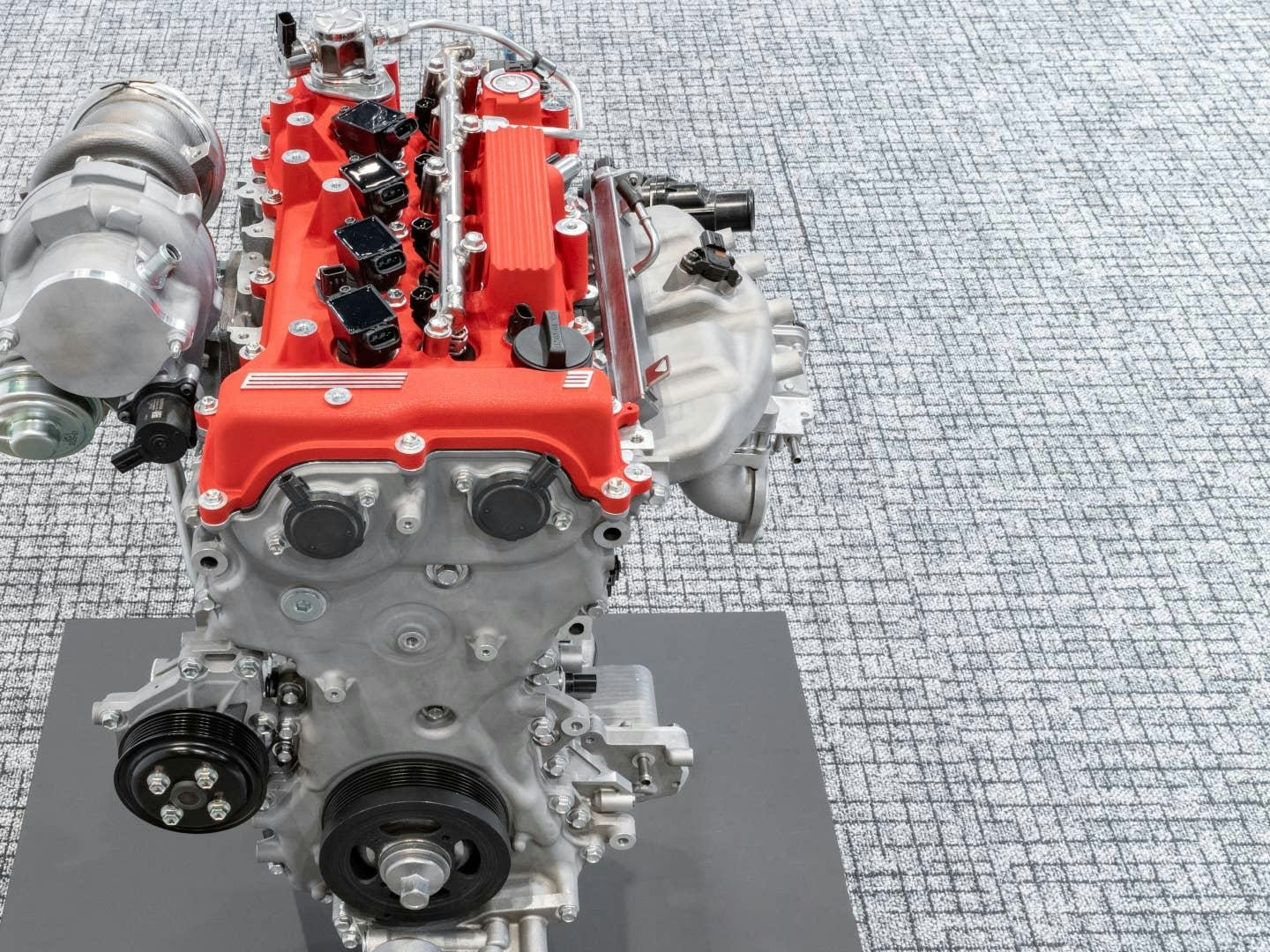
Efficiency Gains in New Engine Models Compared to Older Generations
The engine remains the foremost determinant of aircraft fuel efficiency, despite notable advances in aerodynamics and materials. While improvements in airframe design have contributed to reduced fuel consumption, it is the propulsion system that primarily dictates how much fuel an aircraft consumes. Interestingly, older aircraft retrofitted with modern engines can often rival or even surpass the efficiency of newly designed aircraft, underscoring the critical role of engine technology in aviation performance.
Evolution of Jet Engine Technology
In the early Jet Age, engine manufacturers focused predominantly on increasing power output, with fuel efficiency considered a secondary priority. As jet engines matured and achieved the necessary thrust levels, the industry’s emphasis shifted toward reducing operational costs, particularly fuel expenses, which constitute a significant portion of airline budgets. This shift has been further accelerated by the aviation sector’s commitment to carbon neutrality by 2050, where more efficient engines are essential to lowering emissions and complying with increasingly stringent environmental regulations.
The progression of jet engine technology has seen a transition from turbojets to turboprops and ultimately to turbofans, which now dominate commercial aviation. Turbojets operate by compressing air, mixing it with fuel, and combusting the mixture before expelling exhaust gases to generate thrust. Turboprops, while similar in principle, use the turbine to drive a propeller, offering improved fuel economy at the expense of speed. Turbofan engines enhance efficiency by incorporating a large fan at the front, allowing a substantial volume of air to bypass the engine core. This bypass air requires less energy to move, resulting in increased thrust and improved fuel efficiency.
A key advancement in turbofan design has been the increase in bypass ratios—the ratio of air that bypasses the core compared to the air passing through it. Modern engines feature significantly higher bypass ratios than their predecessors, enabling them to produce greater thrust with only marginal increases in fuel consumption, or in some cases, even less.
Measuring Modern Efficiency and Emerging Challenges
Fuel consumption varies with flight conditions and aircraft configurations, yet clear efficiency trends are evident. For instance, the Boeing 737 MAX, equipped with the CFM LEAP-1B engine, achieves a 15% reduction in specific fuel consumption compared to the earlier CFM56-7B engine, which itself improved fuel efficiency by 8% over previous models.
Despite these gains, the integration of advanced technologies presents new challenges. High-performance cooling systems necessary for modern engine components increase production complexity and costs, paralleling trends observed in other high-tech industries such as semiconductor manufacturing. Market reception remains cautious, as airlines and consumers assess whether these efficiency improvements translate into meaningful reductions in operating expenses or enhanced performance. Competitors may respond by developing alternative engine architectures that offer more cost-effective or specialized solutions.
Additionally, the adoption of new engine models faces regulatory and supply chain obstacles, particularly in competitive and geopolitically sensitive markets like China. Trade barriers and logistical disruptions can slow the deployment of advanced engines, affecting the overall pace of efficiency improvements across the global aviation industry.
While modern jet engines deliver substantial efficiency improvements over older generations, fully capitalizing on these advancements requires navigating a complex interplay of technological innovation, economic considerations, and regulatory frameworks.

Etihad Airways Suspends Airbus A380 Flights on Key Route

Aditya Birla Group Seeks Approval for Aircraft Leasing in GIFT City

Qatar Airways Highlights Innovation and Connectivity at Arabian Travel Market 2026

Hong Kong's Five-Year Plan Includes Andrew Fan's Aircraft Parts Processing Hub Proposal

ACIA Aero Leasing Delivers ATR72-600 to Air Nostrum

RTX Appoints Jill Albertelli as Head of Pratt & Whitney

TAT Technologies Joins Beyond Aero Hydrogen Aircraft Program

AURAK Study Highlights Barriers to Air Taxi Adoption in Emerging Economies

Xiamen Air Selects Altitude for 787 Maintenance at Heathrow

Etihad and Swissport Extend Global Partnership
