
AIによるインサイトを行動へとつなげる

現在のトレンド
Categories
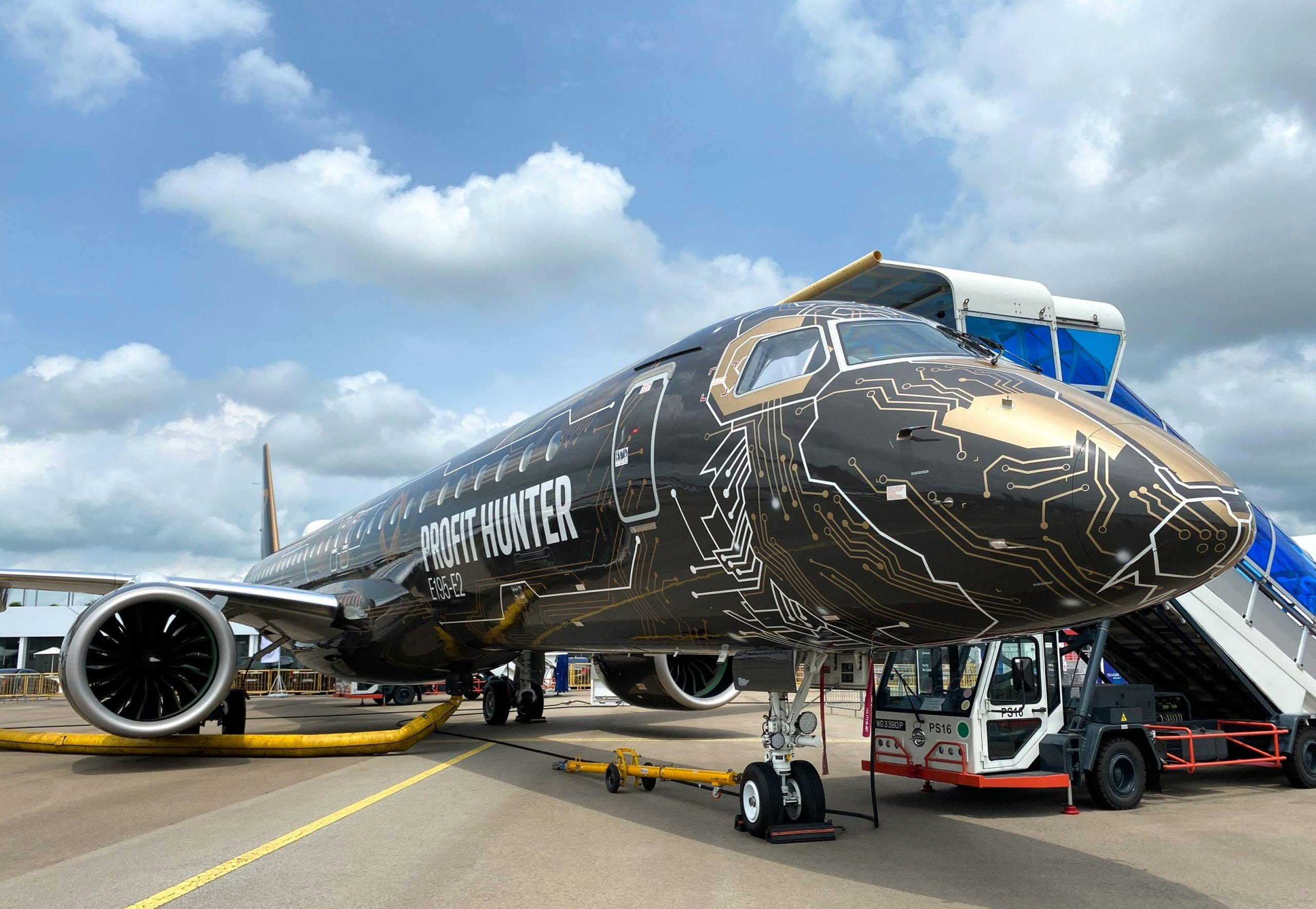
Embraer E-Jets Surpass 2,000 Deliveries, Joining Top Three Commercial Jet Families
Embraer E-Jets Surpass 2,000 Deliveries, Joining Top Three Commercial Jet Families
Embraer has achieved a significant milestone with the delivery of its 2,000th E-Jet, an E195-E2 handed over to Brazilian carrier Azul on September 2 at the company’s São José dos Campos facility. This accomplishment, coming more than 22 years after the E-Jet family entered commercial service, places Embraer’s E-Jets among the top three commercial jet families in aviation history, alongside the Boeing 737 and Airbus A320.
Evolution and Global Reach of the E-Jet Family
Since their introduction in 2004, E-Jets have accumulated approximately 48 million flight hours and transported over 2.85 billion passengers. The aircraft have been operated by more than 90 airlines across 60 countries, demonstrating the global reach and versatility of the E-Jet program. The family initially comprised the E170, E175, E190, and E195 models. Today, the second generation features the E190-E2 and the larger E195-E2. Production of the original E170, E190, and E195 models has ceased, with final delivery totals of 191, 568, and 172 units respectively. The E175 remains the most popular variant, with over 830 delivered, largely due to its widespread adoption by US regional airlines.
The second-generation models continue to gain momentum. As of June, Embraer had delivered 38 E190-E2s and 175 E195-E2s, with recent fleet records indicating these numbers have since increased to approximately 40 and over 180, respectively. The E195-E2, in particular, has established a strong lead over its smaller sibling. The planned E175-E2 has yet to enter commercial service and is not included in the current delivery total.
Market Position and Competitive Landscape
While Embraer’s milestone of 2,000 E-Jet deliveries marks a major achievement, the company faces intense competition in the single-aisle market. Airbus, for instance, commands a significantly larger market share with over 11,000 A320 family aircraft in operation worldwide. This competitive environment is expected to intensify as Embraer’s milestone highlights the growing demand for efficient and versatile regional jets. Beyond commercial aviation, Embraer also competes with manufacturers such as Bombardier and Textron in the executive aviation sector, and with Lockheed Martin in tactical airlift.
Embraer’s competitive advantage lies in its commitment to technological innovation. The E-Jet family’s advanced fly-by-wire system has improved operational efficiency and passenger comfort, maintaining the aircraft’s appeal to airlines seeking modern, fuel-efficient solutions.
The precise breakdown of the 2,000 E-Jets by variant will become clearer with the release of Embraer’s third-quarter delivery figures. Current data, however, underscores the varied commercial success of each model, with the E175 alone accounting for more than 40 percent of all deliveries.
Launched in 1999, the E-Jet program saw the first E170 flight in 2002 and entered commercial service in 2004. The program reached 1,000 deliveries in September 2013 and has now doubled that figure a decade later, solidifying its position among the world’s leading commercial jet families.

Etihad Airways Suspends Airbus A380 Flights on Key Route

Aditya Birla Group Seeks Approval for Aircraft Leasing in GIFT City

Qatar Airways Highlights Innovation and Connectivity at Arabian Travel Market 2026

Hong Kong's Five-Year Plan Includes Andrew Fan's Aircraft Parts Processing Hub Proposal

ACIA Aero Leasing Delivers ATR72-600 to Air Nostrum

RTX Appoints Jill Albertelli as Head of Pratt & Whitney

TAT Technologies Joins Beyond Aero Hydrogen Aircraft Program

AURAK Study Highlights Barriers to Air Taxi Adoption in Emerging Economies

Xiamen Air Selects Altitude for 787 Maintenance at Heathrow

Etihad and Swissport Extend Global Partnership
