
AIによるインサイトを行動へとつなげる

現在のトレンド
Categories
Engine Manufacturers Split Over Design Priorities as Boeing Plans Future
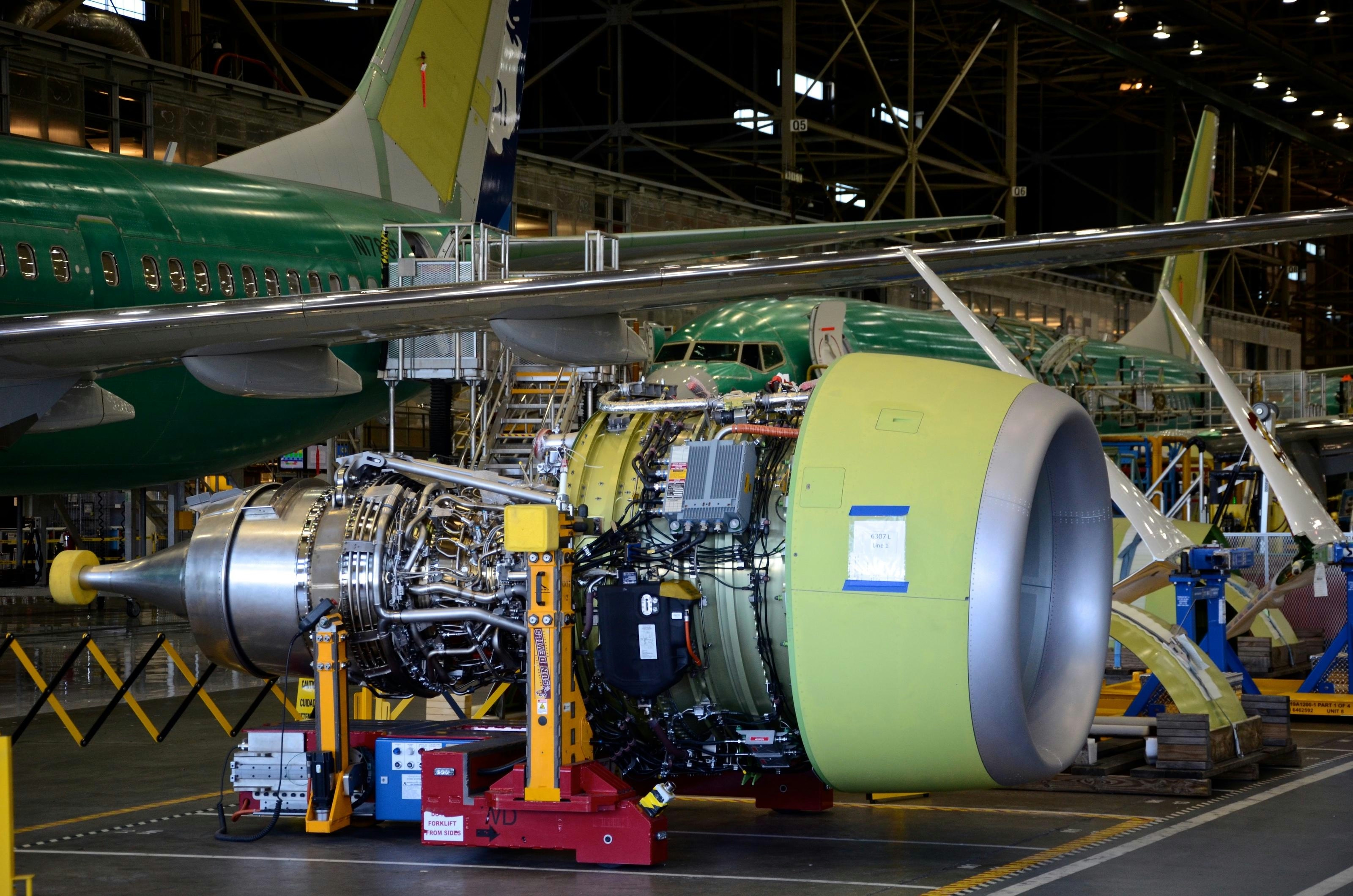
Engine Manufacturers Diverge on Design Priorities as Boeing Plans Future Aircraft
FARNBOROUGH, England — As Boeing and Airbus prepare for the next generation of commercial aircraft, engine manufacturers are pursuing markedly different strategies in the quest to power the future of aviation. The competition is intensifying, with industry leaders divided on how best to balance efficiency, reliability, and environmental considerations.
Contrasting Approaches to Engine Innovation
CFM International, a joint venture between GE Aerospace and France’s Safran Aircraft Engines, is championing a radical open-fan engine design. This concept, which removes the traditional casing around the fan blades, aims to achieve substantial fuel savings and reduce carbon emissions. Although the technology remains several years from commercial deployment, CFM showcased progress at the Farnborough Airshow, positioning the open-fan as a potential breakthrough in efficiency and sustainability.
In contrast, Pratt & Whitney is focusing on incremental improvements to its geared turbofan engine, a platform already widely used in commercial aviation. Rick Deurloo, president of commercial engines at Pratt & Whitney, highlighted that this approach offers airlines a lower-risk and more reliable option amid growing operational demands. Pratt & Whitney also views the upcoming wave of aircraft development as an opportunity to regain market share on Boeing jets, which currently rely on CFM engines for the 737 Max and GE or Rolls-Royce engines for the 787.
Challenges and Industry Implications
These divergent strategies reflect the complex trade-offs confronting both engine manufacturers and airframers. Boeing’s efforts to develop new aircraft families must reconcile competing priorities such as noise reduction, aerodynamic efficiency, weight management, and long-term operational costs. Both Boeing and Airbus face mounting pressure to deliver aircraft that significantly outperform current models in fuel efficiency to comply with tightening environmental regulations and meet airlines’ demands for lower operating expenses over decades of service.
Engine availability remains a critical factor in the supply chain, with manufacturers cautioning that delays or technical setbacks could impede aircraft deliveries. Durability concerns persist with existing engines, prompting ongoing efforts to enhance reliability. CFM announced notable advancements in hardware designed to improve the durability of its LEAP engine, which powers both the Airbus A320 and Boeing 737 Max. Meanwhile, Pratt & Whitney is nearing completion of repairs on Airbus A220 engines affected by corrosion and continues to address issues with engines for the A320 family, though a definitive timeline for resolution has yet to be established.
Airbus, which has experienced frustration over engine-related delays, remains optimistic that these challenges will be resolved soon. Lars Wagner, head of commercial airplanes at Airbus, indicated that all major engine issues are expected to be addressed by 2028.
Navigating a Complex Competitive Landscape
The competitive environment remains mixed. While steady government demand and long-term contracts provide some stability for manufacturers such as Boeing and Airbus, the industry continues to contend with supply chain disruptions, certification delays, and heightened regulatory scrutiny. These factors threaten to slow recovery efforts and complicate the introduction of new technologies.
As the aviation sector looks to the future, the divide between bold innovation and incremental refinement among engine makers underscores the high stakes and intricate decisions shaping the next generation of commercial flight.

Etihad and Swissport Extend Global Partnership

Sepehran Airlines B737 Returns to Mashhad After Tyre and Engine Issues

Etihad Deploys Widebody Fleet to Meet Strong Demand

Korean Air Finalizes $36.2 Billion Deal with Boeing

Australia’s RFDS Queensland Section Orders Six King Air 260Cs

Korean Air Finalizes Order for 103 Boeing Jets and Engines

Embraer E195-E2 Features Distinctive Engine Placement Among Regional Jets

What Passengers Can Expect on Boeing’s New 777X Jet

How Ethiopian Airlines Became Africa’s Leading Carrier Amid Gulf Competition

Joby Aviation Extends Autonomous Flight Capabilities with Cross-Country Tour
