
AIによるインサイトを行動へとつなげる

現在のトレンド
Categories
Experts Disagree on Cause of Deadly Air India Crash
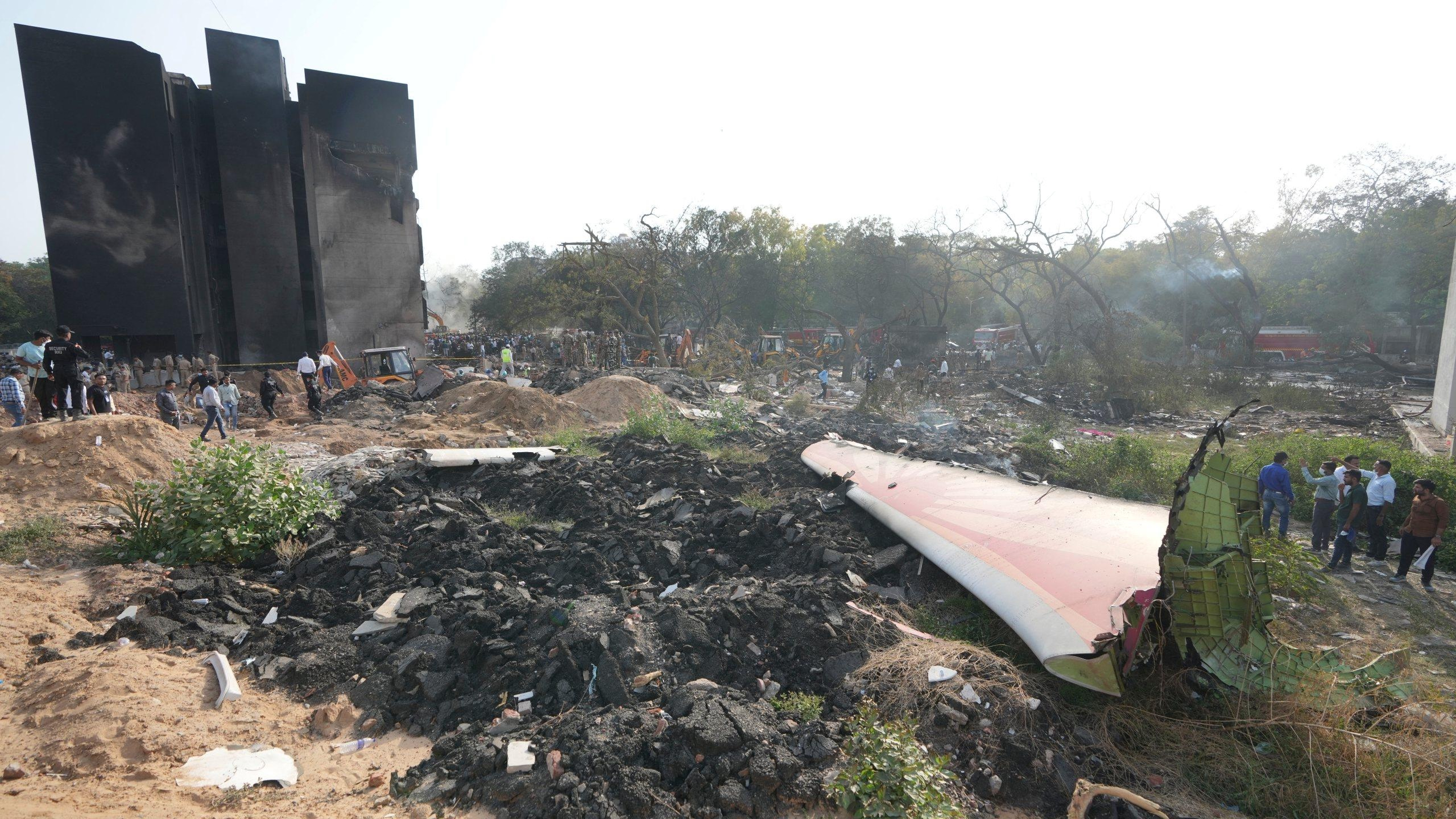
Experts Disagree on Cause of Deadly Air India Crash
Aviation experts remain divided over the cause of the recent Air India crash that resulted in the deaths of dozens of passengers. The Boeing 787 Dreamliner, carrying 242 people and en route to London, crashed shortly after taking off from Ahmedabad airport in Gujarat on Thursday.
Conflicting Theories on the Cause
Initial reports indicate that the aircraft began an unexpected descent soon after a routine takeoff. Saurabh Bhatnagar, an aviation analyst, suggested to New Delhi Television that early evidence points to multiple bird strikes, which may have caused both engines to lose power. He explained that the takeoff appeared normal, but the plane started losing altitude before the landing gear was retracted, implying a sudden loss of engine thrust or lift. Video footage from the scene showed the aircraft descending in what Bhatnagar described as a "controlled fashion." Bird strikes, collisions between birds and aircraft during critical phases of flight, are a recognized hazard in aviation. Large flocks entering engines can cause significant power loss, prompting airports to use deterrent measures such as lights and loud noises.
However, this explanation is not universally accepted. Richard Curran, professor of sustainable aviation at City, University of London, expressed doubts about the bird strike theory. He argued that if an engine problem had occurred, pilots would have been immediately aware during takeoff and would have altered their flight path accordingly. Curran questioned the plausibility of the bird strike scenario unless its effects were somehow delayed.
Ongoing Investigation and Industry Implications
The investigation into the crash faces considerable challenges in pinpointing the exact cause. While bird strikes and engine failure remain under scrutiny, other factors such as pilot error or technical malfunction have not been excluded. Authorities are expected to analyze flight data, cockpit voice recordings, and maintenance logs to reconstruct the sequence of events leading to the crash.
The incident has intensified scrutiny of aviation safety protocols. Industry observers anticipate that insurance claims and regulatory reviews will follow, and competing airlines may respond by reinforcing safety measures and reviewing operational procedures.
Officials have urged caution against premature conclusions. The latest updates confirm that no definitive cause has yet been established, with experts emphasizing the importance of a thorough and objective investigation before any final determination is made.

Etihad Airways Suspends Airbus A380 Flights on Key Route

Aditya Birla Group Seeks Approval for Aircraft Leasing in GIFT City

Qatar Airways Highlights Innovation and Connectivity at Arabian Travel Market 2026

Hong Kong's Five-Year Plan Includes Andrew Fan's Aircraft Parts Processing Hub Proposal

ACIA Aero Leasing Delivers ATR72-600 to Air Nostrum

RTX Appoints Jill Albertelli as Head of Pratt & Whitney

TAT Technologies Joins Beyond Aero Hydrogen Aircraft Program

AURAK Study Highlights Barriers to Air Taxi Adoption in Emerging Economies

Xiamen Air Selects Altitude for 787 Maintenance at Heathrow

Etihad and Swissport Extend Global Partnership
