
AIによるインサイトを行動へとつなげる

現在のトレンド
Categories
Germany Unveils 15-Year Strategy to Strengthen Aviation Sector
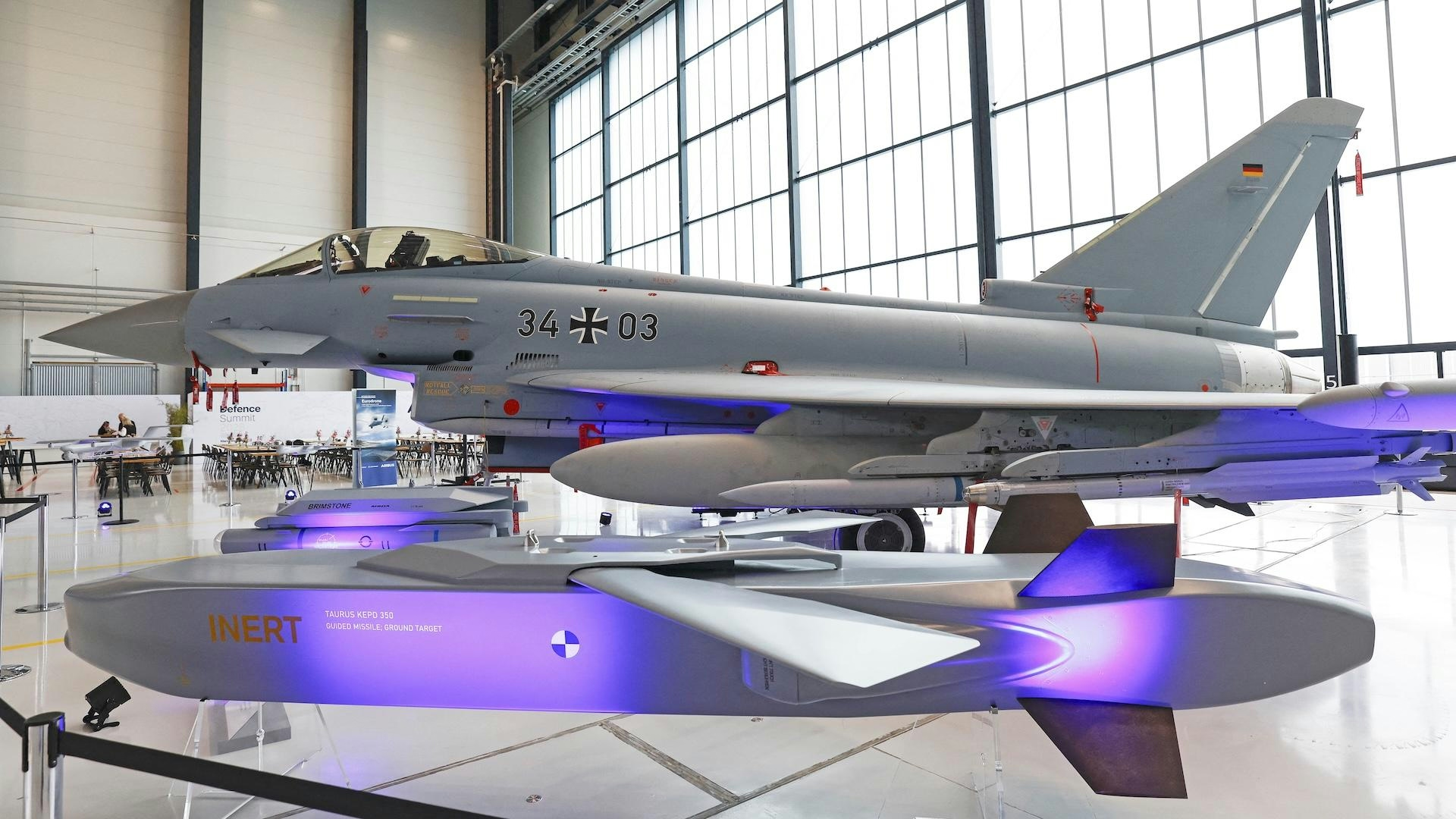
Germany Unveils 15-Year Strategy to Strengthen Aviation Sector
Berlin, June 9 – The German government is preparing to launch an ambitious 15-year strategy aimed at transforming the nation into a global leader in sustainable, safe, and competitive aviation. A draft document obtained by Reuters outlines a comprehensive plan focused on reducing costs, accelerating research and development, and rapidly expanding the use of sustainable aviation fuels (SAFs) to secure the future of both civil and military aviation.
The strategy, expected to be approved by the German cabinet this Wednesday, sets out a detailed roadmap with short- and medium-term measures designed to provide greater planning certainty for policymakers, industry stakeholders, the military, and society at large.
Pillars of the Aviation Strategy
The framework of the strategy rests on four principal pillars: economic competitiveness, technological leadership, aviation as a military technology, and aviation as a civil security technology. These pillars are intended to prepare the sector for future crises, enhance climate sustainability, and reinforce Germany’s standing in the global aviation market.
Central to the plan is the rapid scale-up of sustainable aviation fuels, which are deemed essential for meeting Germany’s climate targets. The government intends to support both national and European production of SAFs, alongside the development of the necessary infrastructure, to facilitate a transition toward greener aviation.
Addressing Industry Challenges Amid Geopolitical Tensions
Germany’s aviation sector currently faces significant challenges, including slower passenger growth relative to other European countries, rising operational costs, and intensifying international competition. The draft strategy acknowledges that ongoing geopolitical tensions—exemplified by conflicts such as the Iran war—have heightened uncertainty and increased regulatory burdens, further undermining the competitiveness of European airlines. Additionally, global protectionist trends continue to disadvantage EU carriers, while the European Union’s Aviation and Aeronautics Strategy struggles to effectively counter these external pressures.
The aviation maintenance sector is also under considerable strain, contending with labor and material shortages, escalating costs, and declining operational performance. These difficulties may complicate the implementation of Germany’s ambitious aviation goals. Furthermore, the recent increase in Germany’s defense spending could divert resources away from civil aviation, potentially impacting the overall effectiveness of the strategy.
Competitive Pressures and Industry Uncertainty
As Germany advances its aviation overhaul, other European nations are actively pursuing their own aerospace ambitions. The United Kingdom, for instance, is targeting a $41 billion aerospace market by 2050, highlighting the competitive pressures Germany faces. Meanwhile, uncertainty surrounds key projects such as Airbus’s development of a two-aircraft solution for the Future Combat Air System (FCAS) program, which could have significant implications for Germany’s broader aviation objectives.
Policy Initiatives and Financial Outlook
To mitigate these challenges, the German government plans to reduce air traffic taxes and control fees, as well as streamline aviation security procedures. However, the draft document emphasizes that the full realization of the strategy will depend on the availability of adequate budgetary resources.
Germany’s 15-year aviation strategy represents a comprehensive effort to revitalize the sector amid a complex and rapidly evolving global environment. It seeks to balance sustainability, competitiveness, and security as the country charts a course for the future of aviation.

Etihad Airways Suspends Airbus A380 Flights on Key Route

Aditya Birla Group Seeks Approval for Aircraft Leasing in GIFT City

Qatar Airways Highlights Innovation and Connectivity at Arabian Travel Market 2026

Hong Kong's Five-Year Plan Includes Andrew Fan's Aircraft Parts Processing Hub Proposal

ACIA Aero Leasing Delivers ATR72-600 to Air Nostrum

RTX Appoints Jill Albertelli as Head of Pratt & Whitney

TAT Technologies Joins Beyond Aero Hydrogen Aircraft Program

AURAK Study Highlights Barriers to Air Taxi Adoption in Emerging Economies

Xiamen Air Selects Altitude for 787 Maintenance at Heathrow

Etihad and Swissport Extend Global Partnership
