
AIによるインサイトを行動へとつなげる

現在のトレンド
Categories
How Boeing 777X Crew Will Rest on Ultra-Long Flights
How Boeing 777X Crew Will Rest on Ultra-Long Flights
The Boeing 777X has been specifically engineered to serve ultra-long-haul routes, where managing crew fatigue is critical for both flight safety and regulatory compliance. Airlines such as Lufthansa, operating via Frankfurt, and Emirates, flying through Dubai, are preparing to deploy the 777X on flights exceeding 14 hours. To support augmented crews and maintain operational readiness on these extended journeys, the aircraft incorporates certified, concealed rest compartments designed to meet stringent regulatory standards.
Modern Crew Rest Facilities and Certification
On long-haul widebody aircraft, dedicated crew rest areas are mandatory and strictly off-limits to passengers. These spaces are reserved exclusively for on-duty crew members to ensure they receive adequate rest and comply with duty time limitations. Rest periods typically range from one to three and a half hours, depending on the flight duration and crew size.
The Federal Aviation Administration (FAA) classifies crew rest facilities into three categories. Class 1 compartments are enclosed spaces equipped with horizontal bunks, suitable for both flight and cabin crew. Class 2 facilities consist of lie-flat business class seats approved for flight crew use only, while Class 3 areas involve reclining economy seats curtained off, generally for cabin crew when dedicated bunks are unavailable. Older aircraft models, such as the Boeing 767, often rely on Class 2 and Class 3 arrangements due to the absence of built-in rest compartments. The 777X, however, eliminates these compromises by providing dedicated, enclosed Class 1 rest areas, enhancing crew comfort and rest quality.
Layout and Amenities of the 777X Crew Rest Areas
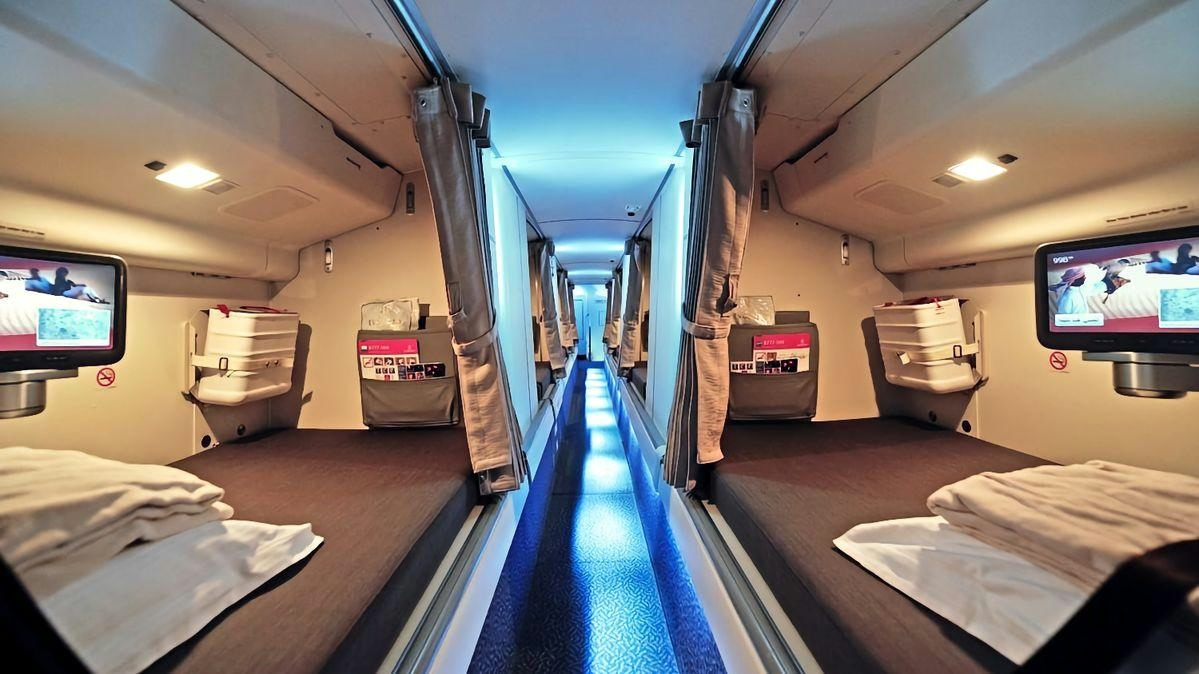
The Boeing 777X features two separate crew rest areas: one designated for pilots and another for cabin crew. The flight crew rest compartment is located near the cockpit to allow quick access during emergencies. It typically includes two bunks and may also feature an additional business-class-style seat. These compartments are equipped with temperature controls, power outlets, reading lights, uniform hooks, and in-flight entertainment screens. Each bunk is fitted with a seatbelt and has direct intercom connections to both the flight deck and cabin crew, ensuring seamless communication.
The cabin crew rest area is generally situated near the tail or within the lower fuselage and contains between four and eight bunks, with some configurations accommodating up to ten. Bunks may be arranged in a one-up, one-down layout or in a narrow, aisle-separated “coffin-style” configuration. Although these spaces are more confined than the pilot rest areas, they provide essential amenities such as blankets, pillows, and sound-dampening curtains to ensure privacy and comfort.
Regulatory Considerations and Market Implications
Regulations typically prohibit the use of crew rest compartments during taxi, takeoff, and landing. However, newer aircraft models like the Boeing 777-9 and 787-8 have received special FAA certification allowing exceptions under certain conditions, reflecting evolving regulatory approaches to crew rest on ultra-long flights.
The 777X’s crew rest solutions are also influenced by broader industry dynamics. The FAA’s ongoing scrutiny of emissions waivers, Boeing’s production pace, and delivery schedules all affect how rapidly airlines can integrate these ultra-long-haul aircraft into their fleets. Competitors are closely monitoring these developments as airlines adjust operational models to accommodate extended flight durations. Market analysts project Boeing’s return to positive free cash flow by 2026, a milestone expected to further stimulate innovation and competitiveness in crew rest design and overall ultra-long-haul operations.
By integrating advanced rest facilities and navigating complex regulatory and market pressures, the Boeing 777X aims to establish new benchmarks for crew welfare and operational efficiency on some of the world’s longest commercial routes.
Comments

Etihad Airways Suspends Airbus A380 Flights on Key Route

Aditya Birla Group Seeks Approval for Aircraft Leasing in GIFT City

Qatar Airways Highlights Innovation and Connectivity at Arabian Travel Market 2026

Hong Kong's Five-Year Plan Includes Andrew Fan's Aircraft Parts Processing Hub Proposal

ACIA Aero Leasing Delivers ATR72-600 to Air Nostrum

RTX Appoints Jill Albertelli as Head of Pratt & Whitney

TAT Technologies Joins Beyond Aero Hydrogen Aircraft Program

AURAK Study Highlights Barriers to Air Taxi Adoption in Emerging Economies

Xiamen Air Selects Altitude for 787 Maintenance at Heathrow

Etihad and Swissport Extend Global Partnership
