
AIによるインサイトを行動へとつなげる

現在のトレンド
Categories
How the Hub-and-Spoke Model Enables Widebody Business Class on Short European Flights
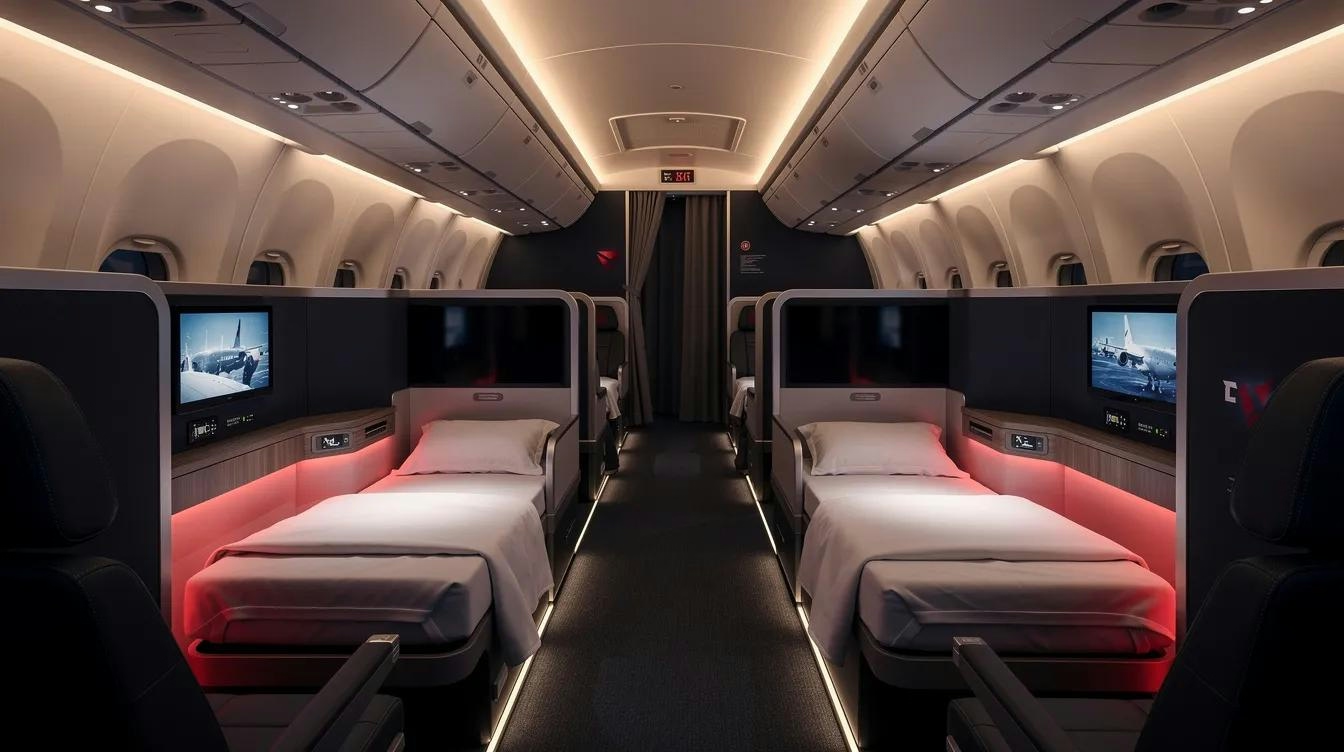
How the Hub-and-Spoke Model Enables Widebody Business Class on Short European Flights
Traveling in business class within Europe is often characterized by modest comfort, typically involving the so-called Euro-business model—essentially an economy seat with the middle seat left empty to provide additional space. However, a distinctive operational nuance allows discerning travelers to experience genuine international luxury on flights lasting less than three hours. For the Summer 2026 season, this phenomenon has become increasingly common, offering passengers the opportunity to fly on widebody flagship aircraft equipped with authentic lie-flat suites, all at the cost of a standard regional ticket.
This elevated level of comfort is not the result of airline generosity but rather a consequence of the rigid mathematical constraints inherent in the hub-and-spoke scheduling model combined with commercial imperatives. When widebody jets return from long-haul missions, they often face prolonged idle periods before their next departure. To avoid leaving these costly assets unused, network planners assign them to short European rotations, thereby creating a valuable opportunity for frequent flyers to enjoy premium cabins on brief sectors.
The Economics Behind Short-Haul Widebodies
At first glance, deploying widebody aircraft on short European routes appears economically counterintuitive. These twin-aisle planes are optimized for long-haul cruising, and frequent short cycles accelerate mechanical wear and tear. Despite the higher operational costs, legacy carriers such as Iberia and British Airways regularly allocate their largest aircraft to short-haul routes to address complex network requirements.
The principal economic justification lies in the strong demand for under-floor belly cargo capacity between major industrial and logistics hubs. For instance, during the peak Summer 2026 schedule, Iberia operates its Airbus A350-900 between Madrid (MAD) and London Heathrow (LHR) to transport high-priority freight volumes that exceed the capacity of standard narrowbody aircraft cargo holds. The substantial cargo revenue generated offsets the elevated fuel consumption, enabling airlines to offer premium passenger seats as a profitable secondary product.
In addition to cargo considerations, these short-haul widebody rotations play a critical role in maintaining crew training and adhering to maintenance schedules. Operating long-haul aircraft on brief sectors allows airlines to cycle flight crews through the required takeoffs and landings without resorting to empty positioning flights. British Airways, for example, utilized its Airbus A380 on the London–Frankfurt route in 2021 for crew familiarization purposes. These short runs also facilitate the return of aircraft to primary hubs for scheduled technical inspections, ensuring readiness for subsequent intercontinental operations.
Market Shifts and Emerging Challenges
Despite the current advantages, the future of this model faces significant challenges. The traditional hub-and-spoke system is increasingly under pressure as airlines and manufacturers, notably Airbus, promote a shift toward point-to-point services. This trend, combined with rising operating costs, geopolitical uncertainties, and growing sustainability demands, is reshaping the European aviation landscape. Major airline groups such as Lufthansa, Air France-KLM, and International Airlines Group are consolidating operations to adapt to these evolving conditions.
Environmental regulations further complicate the outlook. The European Union’s planned extension of its emissions trading system to encompass flights up to 5,000 kilometers from the EU center by 2029 could substantially affect the economics of short-haul widebody operations. This regulatory change is expected to increase costs and compel airlines to reconsider their fleet deployment strategies.
Competitors are also adjusting their approaches. For example, Gol’s intention to double its widebody fleet signals a strategic pivot toward more direct, point-to-point routes, potentially challenging the dominance of the hub-and-spoke model and the unique business class experiences it currently facilitates.
The Future of Widebody Comfort on Short Routes
While the hub-and-spoke model presently creates rare opportunities for travelers to enjoy widebody business class on short European flights, shifting market dynamics and regulatory pressures may soon render these experiences increasingly exclusive or obsolete. For the time being, aviation enthusiasts and frequent flyers can still capitalize on this operational loophole, but the window for such opportunities may be narrowing as the industry adapts to new realities.

Hong Kong's Five-Year Plan Includes Andrew Fan's Aircraft Parts Processing Hub Proposal

ACIA Aero Leasing Delivers ATR72-600 to Air Nostrum

RTX Appoints Jill Albertelli as Head of Pratt & Whitney

TAT Technologies Joins Beyond Aero Hydrogen Aircraft Program

AURAK Study Highlights Barriers to Air Taxi Adoption in Emerging Economies

Xiamen Air Selects Altitude for 787 Maintenance at Heathrow

Etihad and Swissport Extend Global Partnership
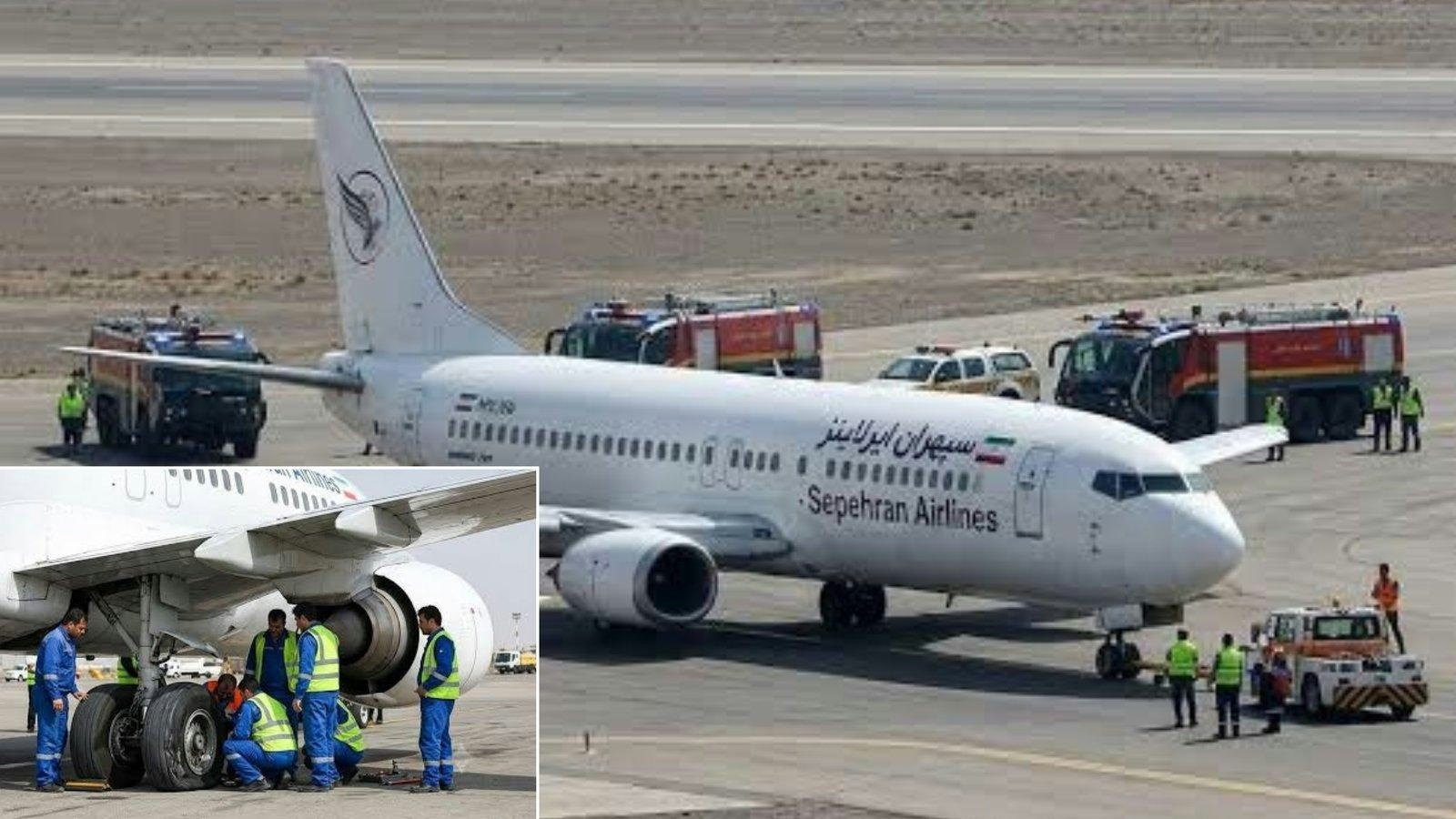
Sepehran Airlines B737 Returns to Mashhad After Tyre and Engine Issues

Etihad Deploys Widebody Fleet to Meet Strong Demand
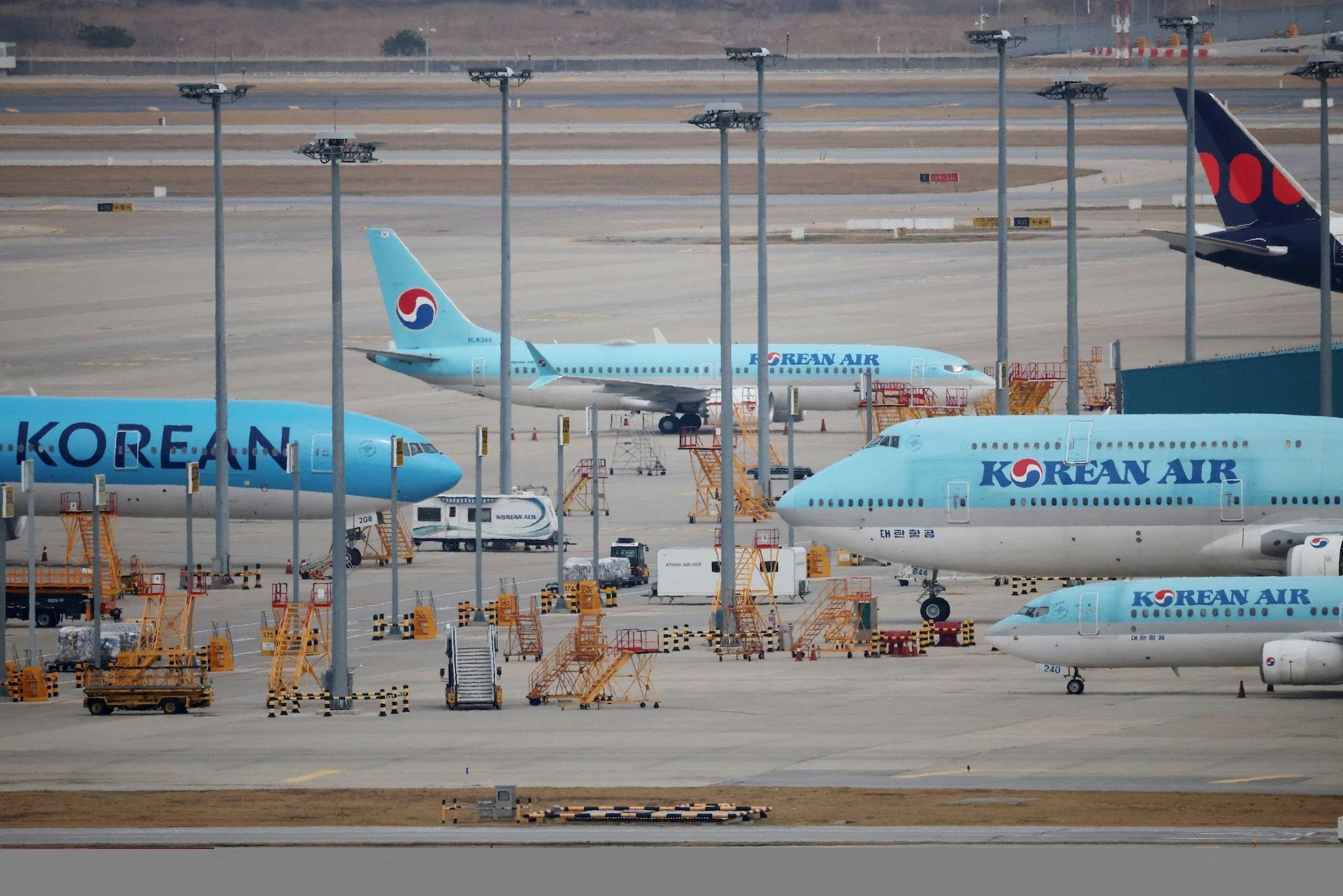
Korean Air Finalizes $36.2 Billion Deal with Boeing
