
AIによるインサイトを行動へとつなげる

現在のトレンド
Categories
IndiGo Launches New 11-Hour Nonstop Airbus A321XLR Flights
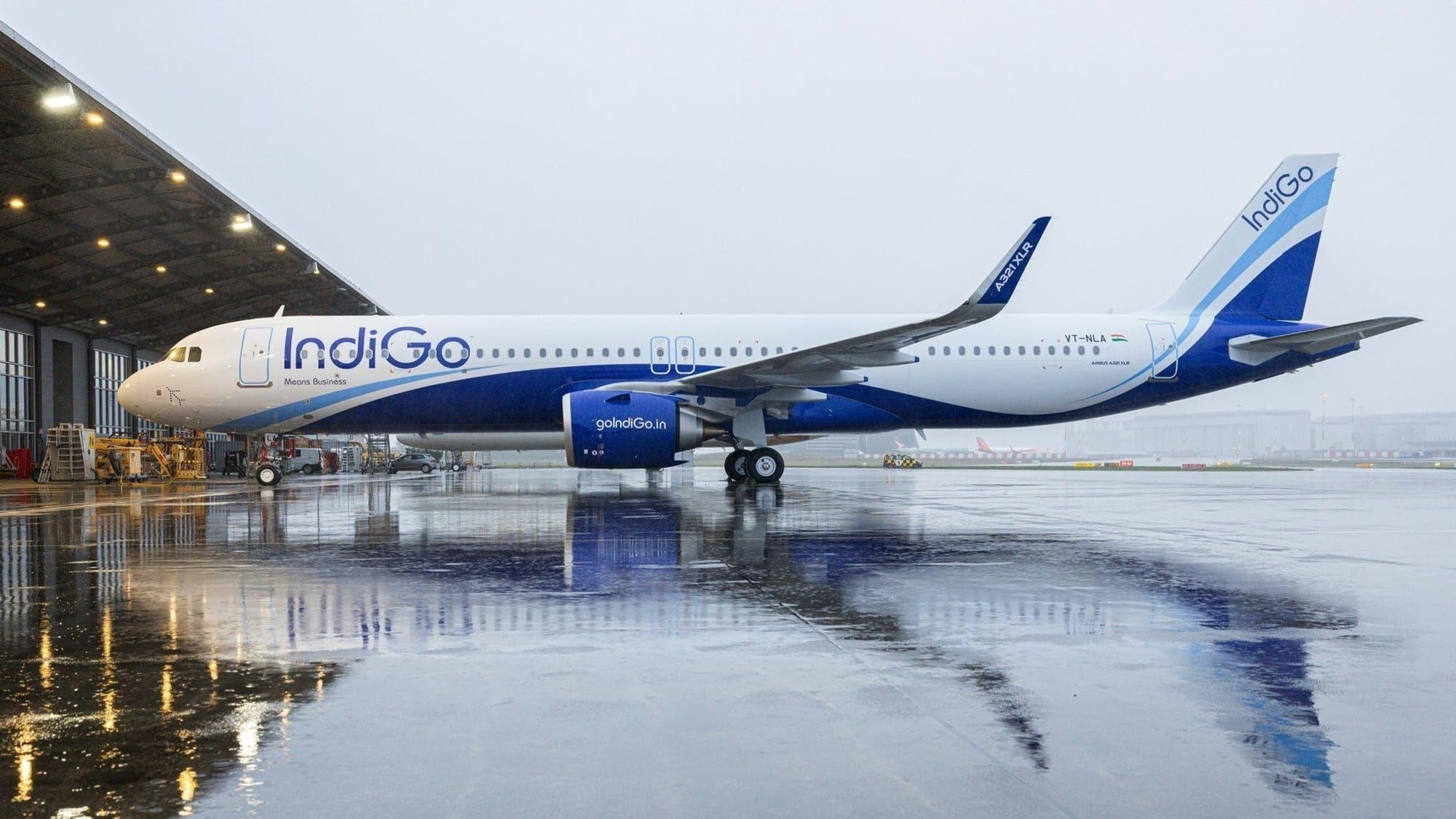
IndiGo Launches 11-Hour Nonstop Airbus A321XLR Flights Amid Fleet Transition and Geopolitical Constraints
IndiGo, India’s largest airline, is set to inaugurate one of the world’s longest nonstop flights operated by a narrowbody aircraft, deploying the Airbus A321XLR on its Mumbai to Amsterdam Schiphol route. This strategic move coincides with the airline’s phase-out of its short-term lease of Boeing 787-9 Dreamliners from Norse Atlantic, with the final 787 flights scheduled to conclude in October. The transition marks a pivotal moment in IndiGo’s evolving long-haul strategy as it anticipates the delivery of its own Airbus A350-900 widebodies beginning next year.
Strategic Use of the Airbus A321XLR and Slot Retention
IndiGo’s decision to operate the A321XLR on this route is primarily driven by the need to retain valuable landing slots at Amsterdam, which the airline secured as a new entrant. European slot regulations mandate that airlines utilize their slots at least 80% of the time to avoid forfeiture. To comply, IndiGo will operate daily flights using the 195-seat A321XLR, configured with 12 Stretch seats offering a 44-inch pitch (though not lie-flat) and 183 standard economy seats with a 31-inch pitch. While the aircraft does not feature seat-back entertainment systems, passengers will have access to streaming content on personal devices, a service expected to be in demand on this ultra-long route.
The scheduled flight times are as follows: the outbound journey from Mumbai departs at 6:30 AM local time, arriving in Amsterdam at 1:00 PM after approximately 11 hours in the air. The return flight leaves Amsterdam at 2:00 PM, landing in Mumbai at 4:10 AM the following day, with a flight duration of around 9 hours and 40 minutes.
Operational Challenges and Geopolitical Impact on Flight Routing
The outbound flight’s duration, reaching up to 11 hours, will establish a new record for the longest nonstop operation by an A321XLR globally, surpassing previous durations achieved with the Boeing 787-9. This extended block time is largely attributable to ongoing geopolitical tensions and resultant airspace restrictions. IndiGo is unable to fly the most direct routes over Pakistan, Iran, Russia, or Ukraine, necessitating a detour over Saudi Arabia and Egypt before entering European airspace. This rerouting increases both flight time and operational costs, affecting fuel consumption and emissions, and potentially influencing IndiGo’s competitiveness on the route.
The deployment of the A321XLR on this sector underscores IndiGo’s commitment to expanding its international presence despite these operational challenges. The airline’s plan to phase out Boeing 787 Dreamliners by 2025 reflects a broader shift in its long-haul fleet strategy, emphasizing cost efficiency and network flexibility. Industry analysts suggest that leveraging the A321XLR’s extended range and efficiency could provide IndiGo with a competitive advantage, particularly in maintaining critical European slots.
Competitors, including Air India and emerging players such as the Adani Group, are expected to closely observe IndiGo’s approach. As the airline navigates complex airspace restrictions and prepares for the introduction of its A350 fleet, its adaptability will be essential to sustaining its leadership position in India’s rapidly evolving aviation market.

Etihad Airways Suspends Airbus A380 Flights on Key Route

Aditya Birla Group Seeks Approval for Aircraft Leasing in GIFT City

Qatar Airways Highlights Innovation and Connectivity at Arabian Travel Market 2026

Hong Kong's Five-Year Plan Includes Andrew Fan's Aircraft Parts Processing Hub Proposal

ACIA Aero Leasing Delivers ATR72-600 to Air Nostrum

RTX Appoints Jill Albertelli as Head of Pratt & Whitney

TAT Technologies Joins Beyond Aero Hydrogen Aircraft Program

AURAK Study Highlights Barriers to Air Taxi Adoption in Emerging Economies

Xiamen Air Selects Altitude for 787 Maintenance at Heathrow

Etihad and Swissport Extend Global Partnership
