
AIによるインサイトを行動へとつなげる

現在のトレンド
Categories
Jet Engines Perform Equally on Coconut-Blend and Conventional Jet Fuel, but Environmental Impact Differs
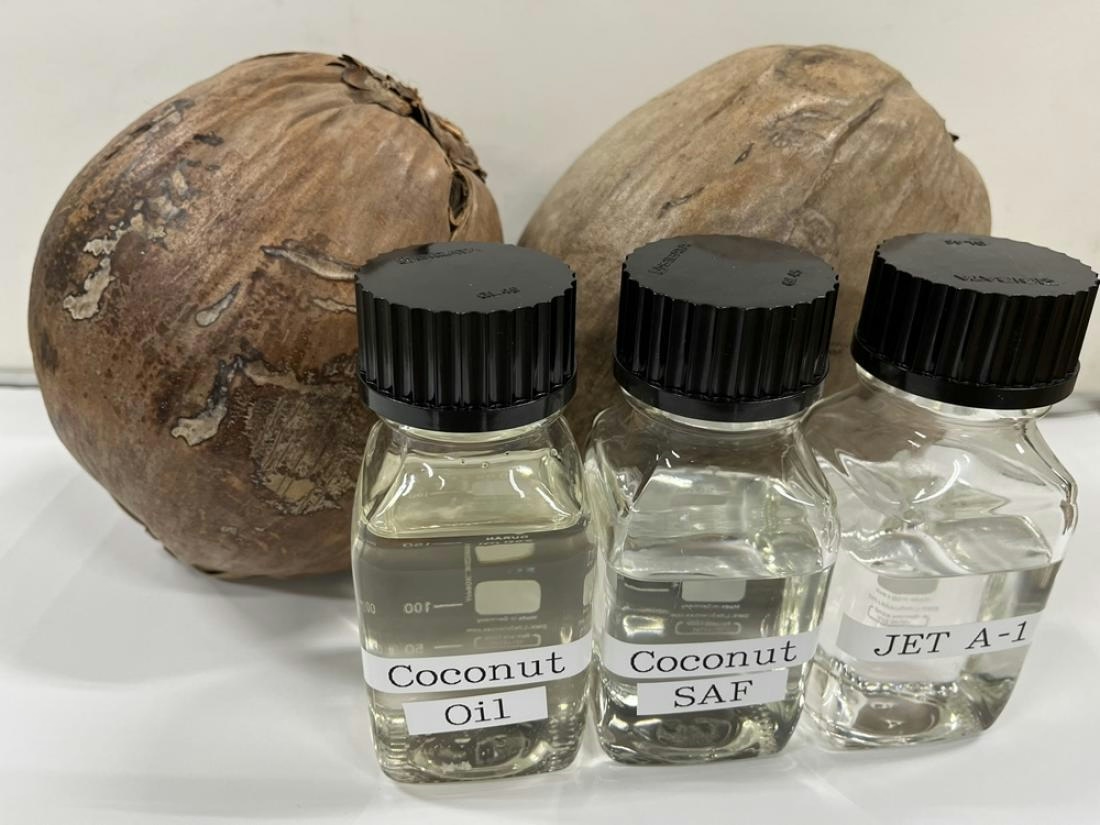
Jet Engines Perform Equally on Coconut-Blend and Conventional Jet Fuel, but Environmental Impact Differs
Promising Advances in Sustainable Aviation Fuel
The aviation industry’s substantial contribution to global carbon emissions has intensified the search for sustainable alternatives to conventional jet fuel. Researchers at Osaka Metropolitan University have recently demonstrated that a biofuel derived from coconut oil can be blended with standard Jet A-1 fuel without compromising engine performance. In controlled tests using a small turbojet engine, the coconut-based fuel exhibited thermal efficiency on par with traditional aviation fuel while achieving a notable reduction in hydrocarbon emissions, underscoring its potential environmental benefits.
Production and Properties of Coconut-Derived Biofuel
The study emphasizes the viability of utilizing discarded or substandard coconuts—abundant in Southeast Asia due to stringent commercial grading—as a sustainable feedstock for aviation biofuel. The fuel was synthesized through a co-solvent process combining coconut oil extracts with acetone and an alcohol at ambient temperature and pressure. This method contrasts with conventional biofuel production techniques that often require elevated temperatures, high pressure, or extensive purification, thereby potentially reducing energy consumption and preserving fuel quality.
Two variants of coconut-derived aviation biofuel were produced: fatty acid methyl ester (FAME), synthesized with methanol, and fatty acid ethyl ester (FAEE), synthesized with ethanol. Both belong to the fatty acid ester family commonly associated with biodiesel, but their chemical properties can be adjusted to meet aviation fuel standards. Coconut oil’s fatty acids, characterized by shorter carbon chains, are chemically closer to the hydrocarbons found in Jet A-1 than many other vegetable oils, making it particularly suitable for this application.
Engine Performance and Emissions Testing
Raw coconut oil is unsuitable for turbine engines due to its high viscosity and chemical composition differing significantly from aviation kerosene. Conversion into FAME or FAEE modifies these properties, producing a fuel compatible with conventional jet fuel blends. The research team prepared blends with varying ratios of FAME or FAEE mixed with Jet A-1 and evaluated them in a turbojet engine, measuring fuel consumption, thermal efficiency, and emissions.
Results indicated that thermal efficiency remained stable across all blends. However, fuel consumption increased with higher proportions of biofuel, attributed primarily to the lower heating value of the coconut-derived blends rather than any decline in engine performance. Importantly, the coconut-blend fuels demonstrated reduced hydrocarbon emissions compared to conventional jet fuel, highlighting a significant environmental advantage.
Challenges and Future Prospects
Despite these encouraging findings, several obstacles must be addressed before coconut-blend fuels can be widely adopted in commercial aviation. Infrastructure modifications may be necessary to accommodate the new fuel, and regulatory approval processes will be essential to ensure safety and validate environmental claims. While airlines may view coconut-blend fuels as a means to reduce their carbon footprint, concerns regarding supply consistency and cost competitiveness could influence their willingness to adopt the technology. Additionally, competition from other sustainable fuel developments and improvements in conventional jet fuel efficiency may impact market dynamics.
The reduced hydrocarbon emissions associated with coconut-blend fuels position them as a promising option in the aviation sector’s pursuit of sustainability. As the industry continues to balance operational demands with environmental imperatives, such biofuels could play a critical role in shaping the future of air travel.

Etihad Airways Suspends Airbus A380 Flights on Key Route

Aditya Birla Group Seeks Approval for Aircraft Leasing in GIFT City

Qatar Airways Highlights Innovation and Connectivity at Arabian Travel Market 2026

Hong Kong's Five-Year Plan Includes Andrew Fan's Aircraft Parts Processing Hub Proposal

ACIA Aero Leasing Delivers ATR72-600 to Air Nostrum

RTX Appoints Jill Albertelli as Head of Pratt & Whitney

TAT Technologies Joins Beyond Aero Hydrogen Aircraft Program

AURAK Study Highlights Barriers to Air Taxi Adoption in Emerging Economies

Xiamen Air Selects Altitude for 787 Maintenance at Heathrow

Etihad and Swissport Extend Global Partnership
