
AIによるインサイトを行動へとつなげる

現在のトレンド
Categories
Jet Fuel Shortage and Its Impact on Air Cargo Supply Chains
Jet Fuel Shortage and Its Impact on Air Cargo Supply Chains
Rising Costs and Operational Constraints
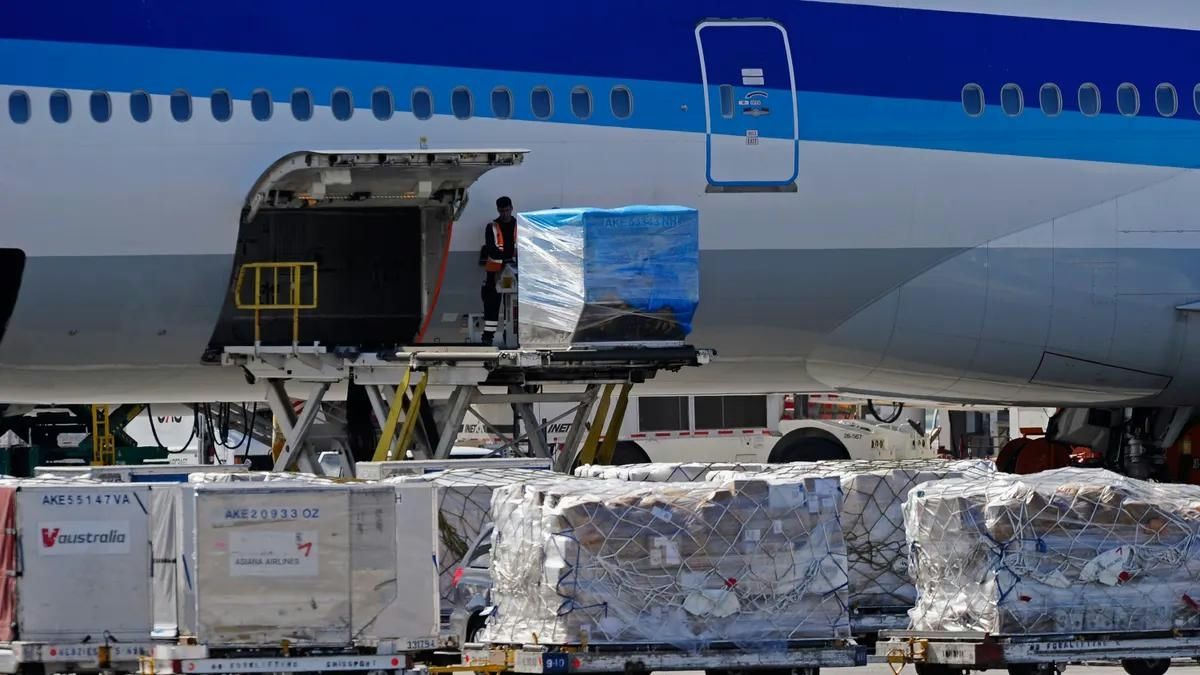
Global air cargo networks are increasingly strained as jet fuel shortages and soaring prices reveal significant vulnerabilities within airline operations. Over the past month, jet fuel prices have surged to double their previous levels, prompting major international hubs to confront the looming threat of a "no-fuel" scenario. This crisis has compelled prominent carriers such as United Airlines, Scandinavian Airlines, and Air New Zealand to reduce flight schedules, directly diminishing cargo capacity and complicating logistics for businesses reliant on swift international shipments.
Consequences for Supply Chains and Cargo Capacity
The ramifications for supply chain planners extend far beyond immediate flight cancellations. The availability of aircraft belly space—a vital and adaptable element of global freight networks—is rapidly diminishing. This contraction is triggering a series of challenges, including tighter cargo availability, escalating shipping costs, and prolonged delivery times. Anticipating further fuel shortages, some airlines are expected to preemptively cancel flights to conserve dwindling fuel reserves, thereby exacerbating uncertainty within already fragile supply chains.
Regional Vulnerabilities and Global Implications
The situation is particularly critical in Europe, where jet fuel security is operating on a precariously thin margin. According to the International Air Transport Association (IATA), several European and UK hubs face the prospect of depleting their commercial fuel inventories within days. The ongoing conflict in Iran has further destabilized the market by threatening supply routes and intensifying market volatility.
While the United States, as the world’s largest oil producer and refiner, remains comparatively insulated from the most severe effects of the supply shortage, the interconnected nature of global air cargo means disruptions in one region can rapidly propagate worldwide. Airlines and logistics providers are now confronted with the dual challenge of managing immediate operational disruptions while reevaluating long-term strategies to enhance supply chain resilience.
As the jet fuel shortage deepens, the air cargo industry is poised to endure a period marked by increased uncertainty, with further rate hikes, delivery delays, and operational adjustments expected to continue until fuel supplies stabilize.

Etihad Airways Suspends Airbus A380 Flights on Key Route

Aditya Birla Group Seeks Approval for Aircraft Leasing in GIFT City

Qatar Airways Highlights Innovation and Connectivity at Arabian Travel Market 2026

Hong Kong's Five-Year Plan Includes Andrew Fan's Aircraft Parts Processing Hub Proposal

ACIA Aero Leasing Delivers ATR72-600 to Air Nostrum

RTX Appoints Jill Albertelli as Head of Pratt & Whitney

TAT Technologies Joins Beyond Aero Hydrogen Aircraft Program

AURAK Study Highlights Barriers to Air Taxi Adoption in Emerging Economies

Xiamen Air Selects Altitude for 787 Maintenance at Heathrow

Etihad and Swissport Extend Global Partnership
