
AIによるインサイトを行動へとつなげる

現在のトレンド
Categories
JFK Ground Stop Issued Following Engine Issue on Puerto Rico Flight
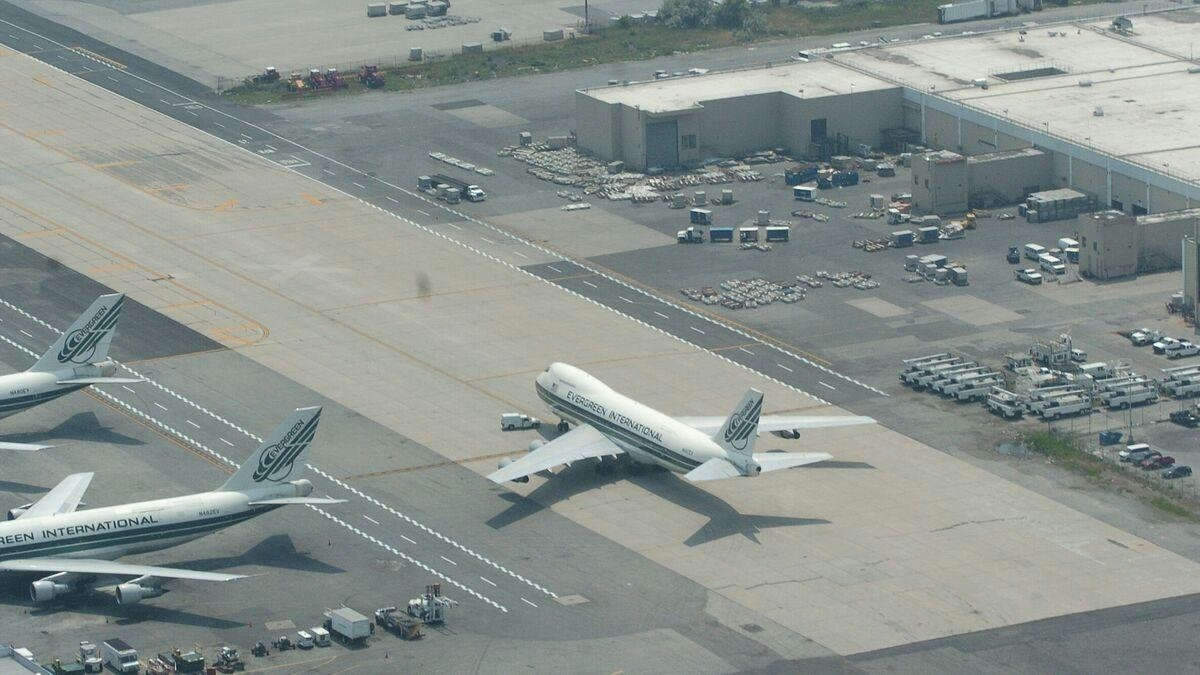
JFK Ground Stop Following Engine Issue on Puerto Rico Flight Causes Extensive Delays
Travel at John F. Kennedy International Airport (JFK) was severely disrupted on Thursday after an engine problem on a Frontier Airlines flight from Puerto Rico prompted a ground stop, intensifying delays already worsened by adverse weather conditions. The incident has drawn increased attention from aviation safety authorities and raised concerns about operational reliability at one of the nation’s busiest airports.
Incident Details and Immediate Response
Frontier Airlines Flight 3546, operated by an Airbus A320 and originating from Luis Muñoz Marín International Airport in Puerto Rico, landed safely at JFK at approximately 12:45 p.m. The flight crew reported an unspecified engine issue upon arrival, though the precise nature of the malfunction has not been disclosed. In response, the Federal Aviation Administration (FAA) implemented a ground stop, halting all inbound flights to JFK at their departure points until at least 1:45 p.m. The ground stop, initially attributed to weather, remained in effect until 3:45 p.m., resulting in hundreds of delayed flights.
Compounding the situation, low cloud cover and inclement weather contributed to average inbound flight delays of around three and a half hours, while departures experienced delays of approximately one hour. The FAA has confirmed that its investigation into the engine problem is ongoing, with potential implications for both Frontier Airlines and JFK airport operations.
Broader Operational Impact and Industry Context
This incident follows a recent ground stop at Newark Liberty International Airport caused by staffing shortages, highlighting ongoing challenges within the air traffic control system. The operational disruptions at JFK are expected to have cascading effects, including possible flight rerouting and extended delays for Frontier Airlines. Additionally, the airline may face increased scrutiny from regulators, as well as heightened insurance claims and compensation requests from affected passengers.
The episode underscores broader vulnerabilities within the airline industry, which has recently contended with technical failures such as the Alaska Airlines IT outage. These events are prompting carriers to reevaluate their contingency planning and risk management frameworks amid an increasingly complex and demanding travel environment.
Passengers affected by the delays are advised to remain in contact with their airlines for the latest information as investigations continue and operational adjustments are made. No further details regarding the engine issue or its impact on subsequent flights have been released at this time.

Etihad Airways Suspends Airbus A380 Flights on Key Route

Aditya Birla Group Seeks Approval for Aircraft Leasing in GIFT City

Qatar Airways Highlights Innovation and Connectivity at Arabian Travel Market 2026

Hong Kong's Five-Year Plan Includes Andrew Fan's Aircraft Parts Processing Hub Proposal

ACIA Aero Leasing Delivers ATR72-600 to Air Nostrum

RTX Appoints Jill Albertelli as Head of Pratt & Whitney

TAT Technologies Joins Beyond Aero Hydrogen Aircraft Program

AURAK Study Highlights Barriers to Air Taxi Adoption in Emerging Economies

Xiamen Air Selects Altitude for 787 Maintenance at Heathrow

Etihad and Swissport Extend Global Partnership
