
画像

AIによるインサイトを行動へとつなげる

今すぐAeroGenieのウェイティングリストに登録しよう!

現在のトレンド

Categories

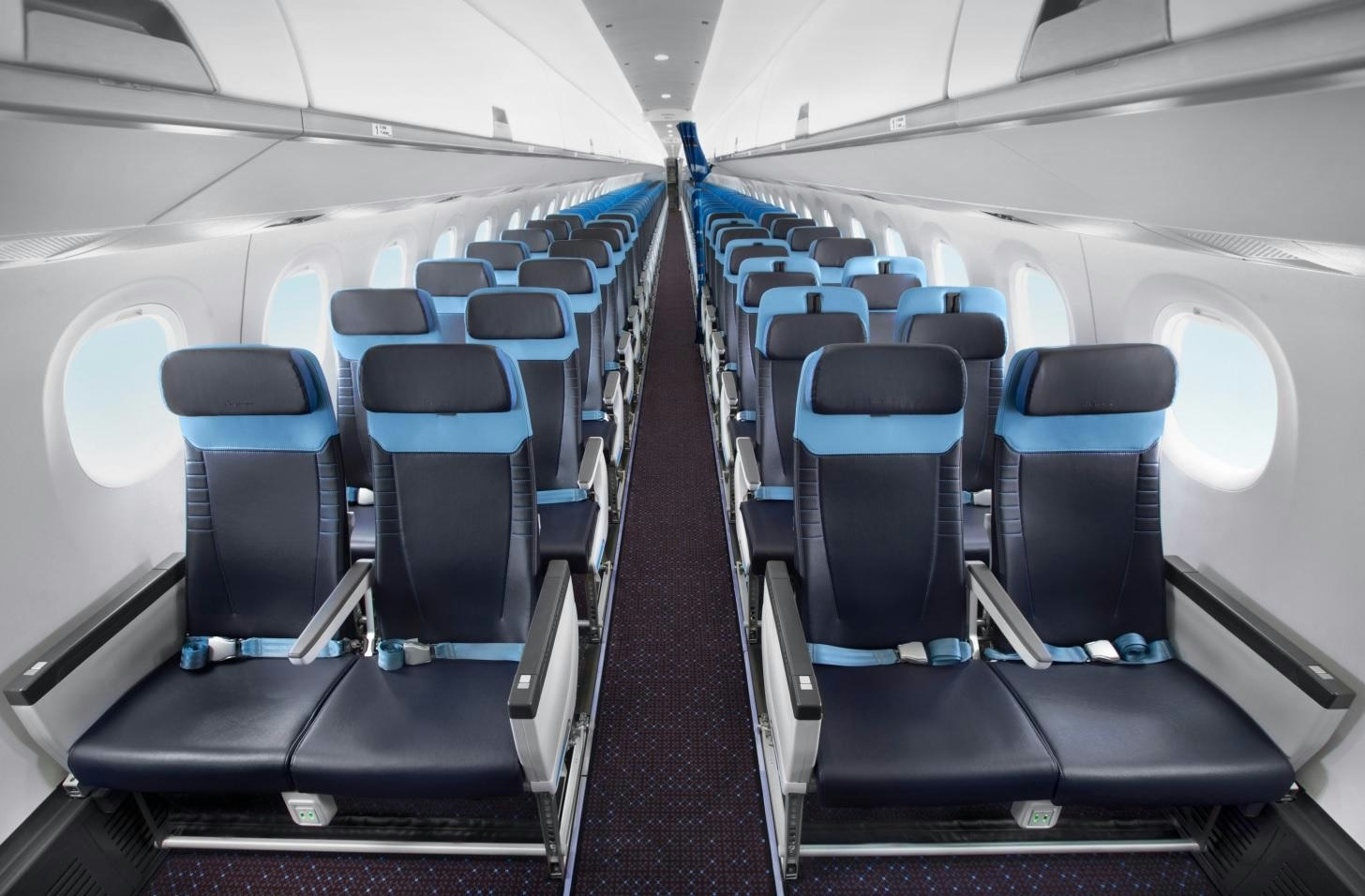
KLM Cityhopper Considers Embraer E2 and Airbus A220 for 25-Aircraft Order
May 6, 2026By ePlane AI
KLM Cityhopper Considers Embraer E2 and Airbus A220 for 25-Aircraft Order
0
0
KLM Cityhopper
Embraer E2
Airbus A220

KLM Cityhopper Evaluates Embraer E2 and Airbus A220 for Fleet Renewal

KLM Cityhopper is currently assessing a significant order for 25 new regional jets, with Embraer’s E2 family and Airbus’s A220 emerging as the primary contenders. The Dutch regional airline, a subsidiary of KLM, is expected to finalize its decision by the end of the year, according to managing director Maarten Koopmans in a recent interview with Valor newspaper.

Fleet Modernization and Strategic Considerations

This potential acquisition represents a crucial phase in KLM Cityhopper’s ongoing fleet renewal program, aimed at replacing its aging first-generation Embraer E190 aircraft. Presently, the airline operates an all-Embraer fleet comprising 61 aircraft: 25 E195-E2s, 19 E190s, and 17 E175s. The outcome of this procurement will determine whether the carrier maintains its long-standing single-manufacturer strategy or opts to diversify its fleet for the first time in several years.

The replacement focus is primarily on the E190 model, which accommodates approximately 100 passengers. This is notably smaller than the 136-seat E195-E2 and the 148-seat Airbus A220-300, the latter already in service with KLM’s partner, Air France. This capacity difference suggests that KLM Cityhopper may lean towards smaller variants such as the E190-E2 or the A220-100, although these models have experienced less market demand compared to their larger counterparts.

Market Dynamics and Technical Challenges

The decision is unfolding amid evolving market dynamics and intensified competition between aircraft manufacturers. Airbus has recently secured several high-profile A220 orders, including a landmark agreement with AirAsia for 150 A220-300 jets. This momentum, coupled with Airbus’s strong first-quarter order performance, could influence KLM Cityhopper’s evaluation process. Conversely, Embraer is addressing technical issues related to its E195-E2 jets, which may impact its competitiveness in the selection.

Both the Embraer E2 and Airbus A220 families are powered by Pratt & Whitney geared turbofan engines—the PW1900G on the E2 and the PW1500G on the A220. These engines have been subject to extensive inspection and repair campaigns, causing disruptions in availability and deliveries across the industry. Embraer has highlighted the lighter design of its aircraft, arguing that this reduces engine stress and enhances reliability.

Economic Pressures and Industry Context

KLM Cityhopper’s decision is further influenced by broader industry trends and economic pressures. Regional aviation remains a cornerstone of KLM’s business model, feeding long-haul operations through an extensive European network. Operating approximately 400 daily flights, KLM Cityhopper is among Europe’s largest regional carriers. However, rising fuel costs pose a significant challenge. Koopmans warned that sustained high fuel prices could necessitate adjustments to routes and frequencies, particularly in less profitable markets.

The wider European aviation environment is also undergoing change, with policy shifts such as Germany’s air traffic tax reduction receiving a muted response from local carriers. These factors, combined with the competitive positioning of Airbus and Embraer, are expected to play a critical role in shaping KLM Cityhopper’s strategic direction as it prepares for the next stage of its fleet modernization.

More news
Lamont and DeLauro Outline Plans for Stratford Shoreline Redevelopment at Former Aircraft Engine Plant

Lamont and DeLauro Outline Plans for Stratford Shoreline Redevelopment at Former Aircraft Engine Plant

Lamont and DeLauro Present Redevelopment Plans for Stratford Shoreline Connecticut Governor Ned Lamont and U.S. Representative Rosa DeLauro have introduced a comprehensive plan to redevelop Stratford’s shoreline, centering on the former Avco Lycoming aircraft engine plant. This long-dormant industrial site is slated for transformation into a vibrant waterfront destination, with the project poised to stimulate economic growth and enhance public access to the area. Challenges and Controversies Surrounding the Project Despite the ambitious vision, the redevelopment faces notable challenges. Members of Connecticut’s Democratic congressional delegation have expressed concerns regarding a proposed helipad linked to former President Donald Trump, citing a lack of transparency and insufficient public information. These concerns have raised questions about the oversight and broader implications of the helipad within the redevelopment framework. Environmental considerations remain paramount, as the Avco Lycoming site carries a history of industrial contamination. Local and federal officials are closely monitoring the progress of environmental remediation efforts to ensure the waterfront is restored safely for both public and commercial use. Any delays or complications in the cleanup process could affect the project’s timeline and public confidence. Integration with Regional Transportation Initiatives The Stratford shoreline redevelopment is part of a wider strategy to modernize Connecticut’s transportation infrastructure. Significant investments are underway to upgrade the New Haven Line, aiming to reduce travel times between New Haven and New York City by up to 25 minutes by 2035. This enhancement is expected to influence regional economic dynamics by attracting new businesses and residents to shoreline communities such as Stratford, potentially prompting competitive responses from neighboring areas. Governor Lamont and Representative DeLauro have underscored the necessity of community engagement and intergovernmental collaboration throughout the redevelopment process. They emphasize that transparent communication, adherence to stringent environmental standards, and alignment with statewide transportation and economic objectives are critical to the project’s success. The Stratford shoreline initiative presents a substantial opportunity for regional revitalization, yet its ultimate success will depend on effectively navigating the environmental, political, and logistical challenges that lie ahead.
The Rise of Passenger-to-Freighter Conversions Transforming Air Cargo in 2026

The Rise of Passenger-to-Freighter Conversions Transforming Air Cargo in 2026

The Rise of Passenger-to-Freighter Conversions Transforming Air Cargo in 2026 As commercial airliners reach the end of their passenger service lives, a growing number are being repurposed as dedicated freighters, a development that is significantly reshaping the global air cargo industry in 2026. While newly manufactured cargo aircraft often dominate headlines, it is the conversion of midlife passenger jets into freighters that is providing the majority of new capacity for cargo operators this year. Drivers Behind the Surge in Conversions The surge in passenger-to-freighter (P2F) conversions is primarily fueled by the relentless expansion of cross-border e-commerce and ongoing limitations on lower-belly cargo space aboard passenger flights, particularly along key regional routes. Cargo airlines and aircraft lessors are increasingly relying on converted aircraft to assemble flexible, high-capacity fleets capable of meeting the evolving demands of global logistics networks. Boeing’s long-term market outlook projects a need for more than 2,800 additional freighters worldwide through the 2040s, with over half expected to come from converted passenger jets. Supporting this trend, the International Air Transport Association (IATA) reported an 8.5% year-on-year increase in global air cargo demand in June 2026, while capacity grew by only 4.4%. This widening disparity highlights the urgent need for additional freighter capacity and underscores the limitations of relying solely on passenger aircraft belly holds, which are constrained by passenger schedules rather than cargo logistics requirements. The shift toward high-frequency express parcel shipments, driven by e-commerce giants and express delivery providers, has fundamentally transformed air freight demand. Modern supply chains require reliable, point-to-point schedules optimized for speed and volume—capabilities that dedicated freighters are uniquely positioned to deliver. The main deck of a converted freighter, with its wide and unobstructed space, is essential for accommodating the light, high-volume packaging typical of e-commerce shipments, which often fill available space before reaching weight limits. Challenges and Market Dynamics Despite the rapid growth of P2F conversions, the expansion is not without challenges. Market responses have been mixed, with some operators facing setbacks. For instance, Lufthansa’s recent attempt to convert Airbus A321 passenger aircraft into freighters has been deemed unsuccessful due to high fuel costs, increased maintenance requirements, and lower efficiency compared to the more widely favored Boeing 737-800. This has led to a surplus of narrowbody freighters and complicated the remarketing of A321s, illustrating the risks associated with selecting aircraft types that do not align well with market demands. Nevertheless, global air cargo demand continues to outpace capacity, with the exception of Latin America and the Caribbean. The conversion process itself is a complex, multi-stage engineering undertaking. Aircraft interiors are stripped to bare metal, with seats, lavatories, galleys, and overhead bins removed. Cabin windows are sealed with lightweight aluminum plugs, and the floor structure is reinforced to support the concentrated weight of palletized freight. The most significant modification involves cutting the fuselage to install a hydraulic main deck cargo door—sometimes as wide as 146 inches—requiring temporary internal supports to maintain structural integrity. As cargo carriers, express integrators, and ACMI charter operators aggressively acquire and convert 15-to-20-year-old passenger jets, the air cargo industry is constructing a more adaptable logistics infrastructure. Although the conversion market in 2026 is more disciplined and selective than during the post-pandemic surge, the fundamental need for flexible, dedicated freighter capacity remains robust, ensuring that passenger-to-freighter conversions will continue to play a pivotal role in the future of global air logistics.
Joby Plans September Launch for Texas eVTOL Flights

Joby Plans September Launch for Texas eVTOL Flights

Joby Plans September Launch for Texas eVTOL Flights Joby Aviation has announced its intention to commence electric vertical takeoff and landing (eVTOL) flights in Texas as early as September, under the federal eVTOL Integration Pilot Program (eIPP). The company aims to initiate its first passenger operations in the state before the end of the year, marking a pivotal advancement toward establishing commercial air taxi services in the region. Expansion and Strategic Base in North Texas To support this expansion, Joby has secured a 45,000-square-foot facility at the Alliance Air Trade Center in Haslet, situated at Perot Field Fort Worth Alliance Airport. This location will serve as Joby’s operational base for eIPP flights in North Texas and will underpin future air taxi services across the Dallas-Fort Worth metropolitan area. The Texas Department of Transportation is spearheading one of eight projects selected by the Federal Aviation Administration (FAA) in March to promote eVTOL integration. Alongside Joby, the Texas initiative includes participation from Archer Aviation, Beta Technologies, and Wisk Aero. The program seeks to establish regional eVTOL routes connecting Dallas, Austin, and San Antonio, with plans to extend services to Houston and develop localized air taxi networks within each city. Joby has yet to disclose specific routes or schedules for its initial flights planned for September. FAA Deputy Administrator Chris Rocheleau emphasized the significance of these partnerships, stating, “These partnerships will help us better understand how to safely and efficiently integrate these aircraft into the National Airspace System. The program will provide valuable operational experience that will inform the standards needed to enable safe Advanced Air Mobility operations.” Regulatory, Infrastructure, and Competitive Challenges Despite the forward momentum, Joby faces several challenges ahead of its Texas launch. Regulatory complexities remain, as the eIPP requires coordination among federal, state, and local agencies, alongside project-specific agreements and airspace approvals. Infrastructure development is a critical focus, with Joby forging strategic partnerships—including a recent collaboration with Atoms to develop multimodal transportation hubs—to meet the logistical demands of commercial eVTOL operations. The competitive landscape in the eVTOL sector is intensifying, with rivals adopting varied strategies. Some competitors are expanding manufacturing capabilities, while others prioritize autonomous flight technologies and progress toward their own certification milestones. Market response to Joby’s advancements has been favorable. The company’s stock rose by 9% this week following an upward revision of its guidance and the announcement of its strongest quarterly progress to date in the fifth and final stage of the FAA type certification process. Joby currently operates five aircraft in flight and has an additional twelve in production. However, the company has not yet set definitive dates for receiving its type certificate or for launching regular commercial passenger services beyond the eIPP framework. As Joby prepares for its anticipated September debut in Texas, its ability to navigate regulatory, infrastructure, and competitive challenges will be closely observed as a measure of the broader eVTOL industry’s readiness for commercial operations.
How Modern Jet Engines Withstand Direct Lightning Strikes

How Modern Jet Engines Withstand Direct Lightning Strikes

How Modern Jet Engines Withstand Direct Lightning Strikes Commercial aircraft are struck by lightning approximately once or twice annually, according to aviation lightning data analyzed by MiGFlug. Since the tragic 1963 crash of Pan Am Flight 214—caused by a lightning bolt igniting fuel vapor in a wing tank—no U.S. commercial jet has been lost due to lightning. This disaster fundamentally transformed aircraft design, leading to stringent engineering standards that treat direct lightning strikes as routine, survivable events. Today, every certified engine, nacelle, and fuel system is meticulously designed to withstand such occurrences without compromising safety. The Physics of a Lightning Strike on Aircraft Lightning does not strike an aircraft arbitrarily; it tends to attach at specific extremities such as the nose, wingtips, tail, and engine cowlings. These points protrude furthest into charged clouds, making them prime targets. Aviation regulators have formalized these areas as “lightning strike zones,” ranked by the likelihood and duration of a direct hit. For jet engines, critical components including the spinner, fan blades, and cowling lip fall within Zone 1A—zones where the full force of a lightning strike can occur without warning and must be safely managed. The nacelle’s metal or metal-lined structure, together with the engine mounts, functions as an extension of the aircraft’s Faraday cage. This design provides a low-resistance pathway for the electrical current, channeling it from the point of contact through the pylon and back into the wing or fuselage. This controlled conduction prevents the current from traveling through vulnerable systems such as fuel lines or electrical wiring, thereby mitigating the risk of catastrophic damage. Certification Standards and Emerging Challenges Lightning protection is rigorously regulated and never left to chance. According to SKYbrary, manufacturers are required to map every lightning strike zone on a full-scale aircraft and validate these zones using waveform generators that simulate real lightning strikes. These procedures are mandated by FAA Advisory Circular 20-136C and equivalent regulations from the European Union Aviation Safety Agency (EASA). Engine designs must demonstrate, both through documentation and exhaustive testing, their ability to absorb a Zone 1A strike without allowing electrical current to infiltrate critical systems. The challenge of lightning protection is evolving alongside advances in aircraft technology. The increasing complexity of more-electric aircraft architectures demands that modern jet engines withstand lightning strikes while integrating more sensitive electronics and composite materials. In response, the FAA’s updated guidance, effective from May 2026, has raised the standards for lightning protection, compelling manufacturers to develop more robust solutions. These enhanced requirements can influence aircraft mass, with potential implications for range and payload capacity. Innovation and the Future of Lightning Protection To meet these heightened demands, industry leaders are investing heavily in research and development of scalable lightning protection technologies. Innovations include lightweight conductive coatings and hybrid composite structures engineered to maintain safety without significantly increasing weight. As regulatory standards become more stringent and aircraft systems grow increasingly sophisticated, the market for advanced lightning protection solutions is expanding rapidly. Despite the extraordinary power of lightning—delivering currents up to 200,000 amps and temperatures nearing 54,000°F (30,000°C)—modern engineering ensures that such strikes remain almost entirely uneventful for passengers and crew. This resilience stands as a testament to decades of innovation and rigorous safety standards within the aviation industry.
Airlines Offering the Widest Economy Seats in 2026

Airlines Offering the Widest Economy Seats in 2026

Airlines Offering the Widest Economy Seats in 2026 For travelers prioritizing comfort without the expense of premium fares, economy class remains the preferred choice. Traditionally associated with limited space, economy seating is undergoing a transformation as several airlines introduce some of the widest and most comfortable seats available in 2026. This shift reflects a broader industry effort to enhance passenger experience amid evolving market dynamics. Leading Airlines and Their Innovations Swiss International Air Lines (SWISS) has positioned itself at the forefront of economy comfort with its comprehensive Senses cabin redesign on the Airbus A330-300 and Boeing 777-300ER. The A330 now features a 2-4-2 seating layout, enabling seat widths of up to 18.5 inches—an increase of one inch over previous configurations. Similarly, the 777’s aft section has transitioned from a 3-4-3 to a 2-4-2 arrangement, providing additional space for passengers. These modifications are part of SWISS’s strategic emphasis on quality over quantity, which includes expanded premium cabins and a refined economy section. Passengers also benefit from enhanced in-flight entertainment systems, USB charging ports, six-way adjustable headrests, and options for extra legroom seats. Cathay Pacific continues to set high standards in economy class, having been awarded the Skytrax World's Best Economy Class in both 2024 and 2025. Its Airbus A350 economy seats offer widths up to 18.5 inches and an average pitch of 32 inches, complemented by six-way adjustable headrests. This commitment to passenger comfort maintains Cathay Pacific’s competitive edge as airlines vie to attract travelers seeking more spacious accommodations. In Asia, Japan Airlines is recognized for providing roomy economy seating, while Singapore Airlines and EVA Air are actively refreshing their cabins. Singapore Airlines, in particular, is updating both its economy and premium economy products, reflecting a wider industry trend toward enhanced comfort and service. Within the United States, JetBlue leads the domestic market with notably spacious economy seats, especially on its new Airbus A220 regional jets. Although JetBlue’s mainline fleet primarily consists of narrowbody aircraft, the airline compensates with a range of amenities. Notably, JetBlue is introducing "Junior Mint" seats, designed to bridge the gap between economy and business class by offering increased comfort at a competitive price point. Industry Trends and Competitive Dynamics The push for wider economy seats presents financial and operational challenges for airlines. Balancing the reduction in seat density with the potential to attract discerning travelers requires careful consideration. Some carriers, such as Delta Air Lines, are prioritizing the expansion of premium economy cabins at the expense of standard economy space. Similarly, Emirates and Lufthansa are investing heavily in premium economy offerings, driven by strong financial returns and growing demand from business travelers seeking enhanced comfort without the premium cost of business class. As airlines continue to innovate and compete, passengers in 2026 can anticipate a broader array of choices and improved comfort in economy cabins. Whether traveling across the Atlantic, Pacific, or within the United States, the competition to provide the widest and most comfortable economy seats is reshaping the flying experience for budget-conscious travelers worldwide.
The Airbus A380: A Technological Triumph and Commercial Challenge

The Airbus A380: A Technological Triumph and Commercial Challenge

The Airbus A380: A Technological Triumph and Commercial Challenge The Airbus A380 was conceived as a revolutionary advancement in widebody airliners, featuring two full passenger decks, seating capacity exceeding 850, and the quietest cabin environment in long-haul aviation. Airbus envisioned the superjumbo as a catalyst for a new era of hub-to-hub travel, designed to ease airport congestion through its unprecedented size. Despite these technological achievements and ambitious objectives, the A380’s commercial trajectory proved to be far more complex and challenging. Ambitious Beginnings and Development In the early 1990s, Airbus anticipated a future where increasing passenger demand at a limited number of major airports would necessitate a high-capacity aircraft. At that time, the Boeing 747 dominated the long-haul market. Airbus aimed to surpass its American competitor by creating an aircraft with a second deck extending the entire length of the fuselage, a design unparalleled in commercial aviation. Development officially commenced in 2000, with initial deliveries targeted for 2006. However, a series of delays postponed the first commercial flight until October 2007, when Singapore Airlines introduced the A380 to the public. By this point, the aviation industry was already undergoing a shift. Airlines were increasingly favoring smaller, more fuel-efficient twin-engine jets capable of operating point-to-point routes, thereby diminishing the appeal of the A380’s hub-centric model. Market Realities and Industry Reception The A380 captivated passengers and aviation enthusiasts alike, earning praise for its spacious interiors, quiet ride, and luxurious onboard amenities such as Emirates’ showers and bars. However, airlines were more cautious in their reception. The aircraft’s enormous size and high operational costs limited its attractiveness, particularly as fuel-efficient twin-engine jets began to dominate long-haul travel. Significantly, no U.S. airline ever incorporated the A380 into its fleet, highlighting the aircraft’s niche status within the global market. Many carriers preferred more versatile and economical aircraft, casting doubt on the commercial viability of such a large airliner. Industry reactions were mixed: while the A380 was lauded for its technological innovations, it was also viewed by some as an expensive strategic misstep. Competitor Strategies and Enduring Legacy In response, competitors intensified their focus on efficiency and operational flexibility, with twin-engine models like the Boeing 787 and Airbus A350 gaining widespread adoption. Some airlines continued to utilize the A380 as a platform for testing advanced aviation technologies, even after Airbus ceased production. Despite the initial promise and the substantial investment involved, Airbus concluded the A380 program less than two decades after its commercial launch. Nevertheless, the aircraft’s legacy persists. A limited number of operators continue to fly the A380, and it remains a beloved icon among aviation enthusiasts. Its role as a testbed for innovation ensures that, although its commercial success was mixed, the A380’s impact on the evolution of aviation technology is indisputable.
Merlin Advances Autonomous Flight System Toward Certification

Merlin Advances Autonomous Flight System Toward Certification

Merlin Advances Autonomous Flight System Toward Certification Merlin has announced the successful completion of the third Stage of Involvement (SOI 3) review for two critical components of its Merlin Pilot autonomous flight system, marking a pivotal advancement in its pursuit of regulatory approval. The Civil Aviation Authority of New Zealand (CAA NZ) conducted a thorough evaluation of the system’s Flight Control Computer, responsible for managing the aircraft’s flight path, alongside the Automated Communication System, which processes spoken air traffic control instructions and generates corresponding responses. This communication system is designed to translate commands related to heading, altitude, and airspeed into executable directives for the flight control mechanism. Progress in Certification and Regulatory Collaboration The SOI 3 review concentrated on confirming that the software adheres to the requirements established earlier in the certification process and has undergone extensive testing. Merlin had previously completed SOI 1 in 2023, when regulators approved its software planning documentation, and announced the completion of SOI 2 for the flight-control computer in October 2025. The certification process is being led by CAA NZ in collaboration with the U.S. Federal Aviation Administration (FAA) under a bilateral aviation safety agreement. This arrangement allows the New Zealand authority to oversee the program while the FAA participates in the review, facilitating potential validation for the U.S. market. A significant milestone in this phase was the resolution of an issue paper concerning the artificial intelligence and machine-learning technologies employed for natural-language processing within the automated communication system. Merlin and CAA NZ have reached consensus on the evidentiary standards required to assess these AI-driven functions. The overarching Part 23 program aims to enable fully autonomous flight operations from takeoff through landing, advancing beyond current pilot-assistance capabilities. Challenges and Industry Context Despite these advancements, Merlin continues to face considerable challenges on the road to full certification and commercial deployment. Regulatory obstacles remain substantial, particularly in obtaining approval for autonomous systems on commercial cargo aircraft. The integration of AI-powered autonomy into existing aviation frameworks presents complex technical difficulties. Furthermore, market reception has been varied, with some traditional aviation stakeholders expressing reservations about the reliability and safety of autonomous flight technologies. The competitive environment in autonomous aviation is intensifying, with companies such as Vertical Aerospace accelerating their own development programs. This heightened competition is driving increased investment in research and development across the sector, as firms vie to secure certification and establish leadership in autonomous flight technology. While the completion of SOI 3 marks a major software review milestone for Merlin, it does not represent final certification of the Merlin Pilot system. The company remains committed to working closely with regulators to fulfill remaining requirements as it progresses toward the commercial deployment of autonomous flight operations.
Joby Aviation Opens Hub at Fort Worth Alliance Airport to Advance Air Mobility

Joby Aviation Opens Hub at Fort Worth Alliance Airport to Advance Air Mobility

Joby Aviation Establishes Hub at Fort Worth Alliance Airport to Propel Air Mobility in Texas FORT WORTH, Texas — Joby Aviation, Inc. (NYSE: JOBY), a prominent developer of electric vertical takeoff and landing (eVTOL) aircraft, has inaugurated a 45,000-square-foot facility at Perot Field Fort Worth Alliance Airport. This development marks the first major eVTOL company hub in Texas and positions Joby as a key player in advancing air mobility within the Dallas-Fort Worth Metroplex. Strategic Location and Industry Collaboration Situated within Hillwood’s expansive 27,000-acre AllianceTexas development, the new facility will serve as the operational base for Joby’s forthcoming eVTOL Integration Pilot Program (eIPP) flights. These flights, conducted in partnership with the Federal Aviation Administration (FAA), aim to evaluate eVTOL operations under real-world conditions throughout the region. The initiative represents a critical phase as Joby prepares to commence commercial passenger services, with flight launches anticipated by the end of the year. Greg Bowles, Joby Aviation’s Chief Policy Officer, reflected on the significance of the location, noting that his first visit to Perot Field two decades ago revealed its potential as a regional aviation hub. He emphasized that establishing a presence in Texas places Joby in one of the nation’s most dynamic markets. Bowles highlighted the collaborative efforts with partners such as Hillwood, the Texas Department of Transportation (TxDOT), and the North Central Texas Council of Governments (NCTCOG), which collectively demonstrate Texas’s leadership in advanced air mobility. Integration within AllianceTexas and Industry Impact Joby’s integration into AllianceTexas connects the company to a well-established aviation and logistics ecosystem, providing access to multimodal transportation infrastructure, a skilled labor pool, and a network of public and private stakeholders dedicated to mobility innovation. The AllianceTexas Mobility Innovation Zone, anchored by Perot Field, serves as a nexus for industry leaders, policymakers, and infrastructure partners working to advance both air and surface mobility technologies. Samuel Rhea, vice president at Hillwood, underscored the significance of Joby’s arrival, stating that it exemplifies AllianceTexas’s capacity to offer flexible real estate solutions alongside essential resources for growth. He noted that Joby’s presence introduces a vital new capability and reflects the ongoing evolution of AllianceTexas in supporting aviation, manufacturing, and the advanced air mobility sector. Challenges and Competitive Landscape Despite the positive momentum and strong partnerships—including a recent collaboration with Virgin Atlantic—Joby faces regulatory challenges as it moves toward commercial operations. The FAA’s pilot program seeks to test eVTOL aircraft beyond traditional airport environments, necessitating the development of new vertiports and regulatory frameworks. The competitive landscape remains dynamic, with companies such as Archer Aviation also participating in the FAA’s pilot program and pursuing similar commercial applications, highlighting the rapid evolution of urban air mobility. Christopher Ash, president of Alliance Aviation Companies, remarked that Joby’s establishment at Perot Field represents a significant milestone for both the airport and North Texas aviation. He emphasized that Joby’s location within the AllianceTexas Mobility Innovation Zone validates the collaborative efforts underway and advances the integration of eVTOL technology into the region’s transportation network. With the opening of its new hub, Joby Aviation is positioned to play a pivotal role in shaping the future of air mobility in Texas and beyond.
ITA Airways Introduces Self-Supply Fuel Model at Fiumicino Hub

ITA Airways Introduces Self-Supply Fuel Model at Fiumicino Hub

ITA Airways Introduces Self-Supply Fuel Model at Fiumicino Hub Strategic Shift in Fuel Procurement ITA Airways has launched a pioneering Self-Supply fuel procurement model at its Rome-Fiumicino hub, becoming the first Italian airline to directly manage its jet fuel supply chain. This strategic initiative transforms ITA Airways into a Fuel Trader, fundamentally redefining its relationship with fuel suppliers and marking a significant development within the Italian aviation industry. Authorized by Italian customs authorities, the new model grants ITA Airways unprecedented autonomy in sourcing jet fuel for its operations. By assuming direct control over procurement, the airline aims to bolster operational continuity and resilience amid the volatility of global energy markets and geopolitical uncertainties that frequently disrupt fuel availability and pricing. Enhancing Control and Competitiveness Joerg Eberhart, Chief Executive Officer and General Manager of ITA Airways, emphasized the significance of this innovation, stating that it repositions the airline within the aviation fuel value chain by providing greater control and enhancing value creation in a challenging market environment. He described the initiative as the first phase of a gradual transformation designed to capitalize on emerging opportunities and strengthen ITA Airways’ international competitiveness. The Self-Supply model allows the airline not only to purchase but also potentially to sell fuel, leveraging industrial synergies within the Lufthansa Group. This approach is expected to improve operational efficiency, flexibility, and cost optimization. However, it also introduces new responsibilities, particularly in areas such as taxation and customs compliance. Navigating Industry Challenges Despite the anticipated advantages, ITA Airways faces considerable challenges entering a market traditionally dominated by integrated oil majors including ExxonMobil, Shell, BP, Chevron, and TotalEnergies, which maintain comprehensive control over aviation fuel supply chains. The airline’s move may encounter skepticism from established suppliers and competitors, especially those with investments in sustainable aviation fuel (SAF) producers. Industry analysts suggest that ITA Airways’ initiative could prompt other carriers to explore similar self-supply models or increase investments in SAF to secure fuel supply and protect profit margins. Through this bold step, ITA Airways not only underscores its commitment to innovation but also contributes to the advancement of Italy’s principal aviation hub. As the competitive landscape evolves, the Self-Supply model is poised to play a crucial role in consolidating the airline’s position as a leading European carrier.
U.S. Army Seeks to Expand Hydra-70 Rocket Supply Chain Amid Rising Demand

U.S. Army Seeks to Expand Hydra-70 Rocket Supply Chain Amid Rising Demand

U.S. Army Expands Hydra-70 Rocket Supply Chain to Meet Rising Demand The U.S. Army is undertaking significant efforts to expand its supply chain for the Hydra-70 rocket, a critical aviation munition with an annual demand ranging between 100,000 and 200,000 rounds. This initiative responds to escalating operational requirements and involves establishing agreements with multiple suppliers to reinforce the industrial base and ensure consistent production. Strategic Importance of the Hydra-70 Rocket The Hydra-70 serves as the Army’s primary unguided rocket and is extensively deployed on platforms such as the AH-64 Apache helicopter, as well as by reconnaissance and attack aviation units. It is also a vital component for the 160th Special Operations Aviation Regiment, known as the Night Stalkers, who utilize the 70mm rockets on AH-6M attack helicopters and MH-60 Black Hawk Direct Action Penetrator variants. The rocket system consists of the MK66 MOD 4 motor, a selection of up to nine warhead types—including high explosive, smoke, flechette, and white phosphorus—and a fuze. Additionally, the Hydra-70 forms the basis for the APKWS I/II guided rocket, which has gained prominence as a cost-effective solution against drone threats. Expanding Industrial Capacity Through Flexible Acquisition To broaden its supplier base and enhance industrial capacity, the Army is employing Other Transaction Authority (OTA) agreements, which provide greater flexibility and facilitate faster collaboration with non-traditional defense contractors. The Aviation Rockets and Small Guided Munitions (ARSGM) Product Office recently awarded contracts to four companies—Firehawk, iRocket, Nammo Perry, and Albers—each tasked with delivering 24 prototype Hydra-70 M151 high-explosive rockets within an 18-month timeframe. According to the Army’s Portfolio Acquisition Executive (PAE) FIRES, this innovative sourcing strategy allows the Army to engage multiple industry partners and leverage their expertise to improve the government-owned Hydra-70 Technical Data Package (TDP). The approach is anticipated to deliver immediate benefits, including increased production capacity, enhanced product quality, and more competitive pricing as suppliers compete for future contracts. Challenges and Market Implications While the expansion promises significant advantages, it also presents challenges. Managing a diversified supply chain necessitates stringent quality control across multiple production sources and careful negotiation to maintain competitive pricing. The Army must ensure that all suppliers adhere to rigorous standards to prevent disruptions that could affect readiness and operational capability. Market responses to the new strategy have already emerged, with heightened competition among suppliers potentially driving down costs. Companies are likely to leverage existing relationships or innovate to meet the Army’s evolving requirements in pursuit of securing contracts. PAE FIRES emphasized that this acquisition strategy guarantees critical industrial responsiveness, enabling the Army to rapidly address urgent mission demands while sustaining uninterrupted readiness for its operational forces. By diversifying its supplier base and adopting flexible acquisition methods, the Army aims to secure a reliable and cost-effective supply of Hydra-70 rockets, positioning itself to meet both current and future operational needs.
line









