
AIによるインサイトを行動へとつなげる

現在のトレンド
Categories
Korean Air Highlights Innovation and Sustainability at Singapore Airshow
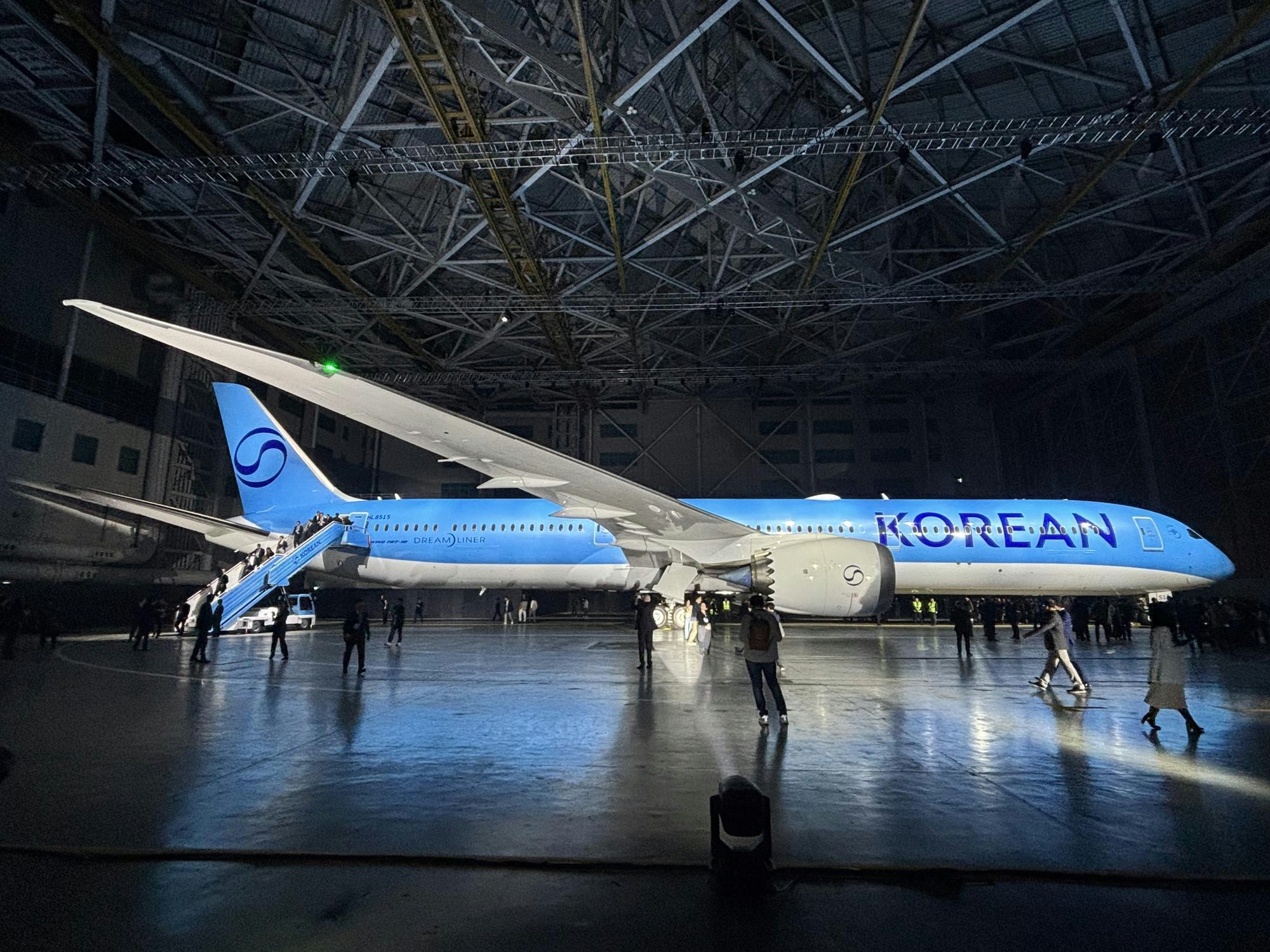
Korean Air Highlights Innovation and Sustainability at Singapore Airshow
Korean Air has been honored as Asia Airline of the Year by the Centre for Aviation (CAPA), marking a historic milestone for South Korea’s national carrier. The accolade was presented at the CAPA Airline Leader Summit – Asia & Awards for Excellence 2025 in Singapore, recognizing Korean Air’s pioneering role in reshaping the regional aviation sector through a strong emphasis on innovation and sustainability.
Transforming South Korea’s Aviation Industry
At the heart of Korean Air’s recent success is its landmark $1.3 billion merger with Asiana Airlines, finalized in December 2024 following approval from 13 international regulatory bodies, including the United States. This strategic consolidation granted Korean Air a 63.88% controlling stake in Asiana, a move that CAPA judges described as “transformational.” The merger has unified fleets, operations, and networks, forging a more robust global airline brand while preserving service quality and customer confidence.
The integration process has been comprehensive, encompassing changes to aircraft liveries, information systems, crew operations, and corporate branding. In a symbolic gesture of renewal, Korean Air unveiled its first new logo in 41 years, signaling the dawn of a new era for the airline. The full rebranding is scheduled for completion by early 2027.
Building a Global Mega Carrier
The expanded Korean Air has significantly enhanced the status of Incheon International Airport as a premier aviation hub in Asia. Passengers now enjoy access to an extended network covering Asia, North America, and Europe, with improved connectivity and reduced transfer times. The merger has also harmonized loyalty programs and optimized flight schedules, delivering a more seamless travel experience that combines operational efficiency with the renowned hospitality of Korean Air.
Embracing Innovation and Sustainability
In response to rapid technological advancements and growing environmental concerns within the aviation industry, Korean Air has taken proactive steps to address these challenges. Its recent partnership with Archer Aviation to explore electric vertical takeoff and landing (eVTOL) air taxis exemplifies the airline’s commitment to pioneering new mobility solutions. Additionally, Korean Air is dedicated to meeting evolving regulatory standards and embedding sustainable practices throughout its operations, aiming to establish new benchmarks for environmental responsibility in the sector.
International Cooperation and Strategic Alliances
Korean Air’s active participation in the SkyTeam Alliance, highlighted during the alliance’s 25th anniversary at the CAPA Summit, underscores its dedication to global collaboration. Its joint venture with Delta Air Lines has bolstered trans-Pacific connectivity, positioning Incheon Airport as a key gateway to Asia for U.S. travelers. Coordinated flight schedules and shared customer benefits have enhanced the overall travel experience, further solidifying Korean Air’s international reputation.
Navigating Future Challenges
Despite widespread industry acclaim, Korean Air faces ongoing challenges in sustaining its competitive advantage. The airline must continue to innovate, adapt to evolving sustainability imperatives, and effectively manage complex partnerships as the aviation landscape evolves. Market analysts are closely monitoring how Korean Air leverages technological advancements and sustainability initiatives, while competitors are expected to adopt similar strategies to maintain relevance.
Recognition for Visionary Leadership
CAPA’s award reflects Korean Air’s ability to balance robust business growth with a long-term strategic vision and operational stability. The airline’s decisive actions, particularly its successful merger and focus on innovation, position it as a leading force in shaping the future of aviation across Asia and beyond.

Etihad Airways Suspends Airbus A380 Flights on Key Route

Aditya Birla Group Seeks Approval for Aircraft Leasing in GIFT City

Qatar Airways Highlights Innovation and Connectivity at Arabian Travel Market 2026

Hong Kong's Five-Year Plan Includes Andrew Fan's Aircraft Parts Processing Hub Proposal

ACIA Aero Leasing Delivers ATR72-600 to Air Nostrum

RTX Appoints Jill Albertelli as Head of Pratt & Whitney

TAT Technologies Joins Beyond Aero Hydrogen Aircraft Program

AURAK Study Highlights Barriers to Air Taxi Adoption in Emerging Economies

Xiamen Air Selects Altitude for 787 Maintenance at Heathrow

Etihad and Swissport Extend Global Partnership
