
画像

AIによるインサイトを行動へとつなげる

今すぐAeroGenieのウェイティングリストに登録しよう!

現在のトレンド

Categories

MTU Aero Engines Joins Made for Germany Initiative
July 29, 2025By ePlane AI
MTU Aero Engines Joins Made for Germany Initiative
0
0
MTU Aero Engines
Made For Germany
Aviation Industry Policy

MTU Aero Engines Joins Made for Germany Initiative

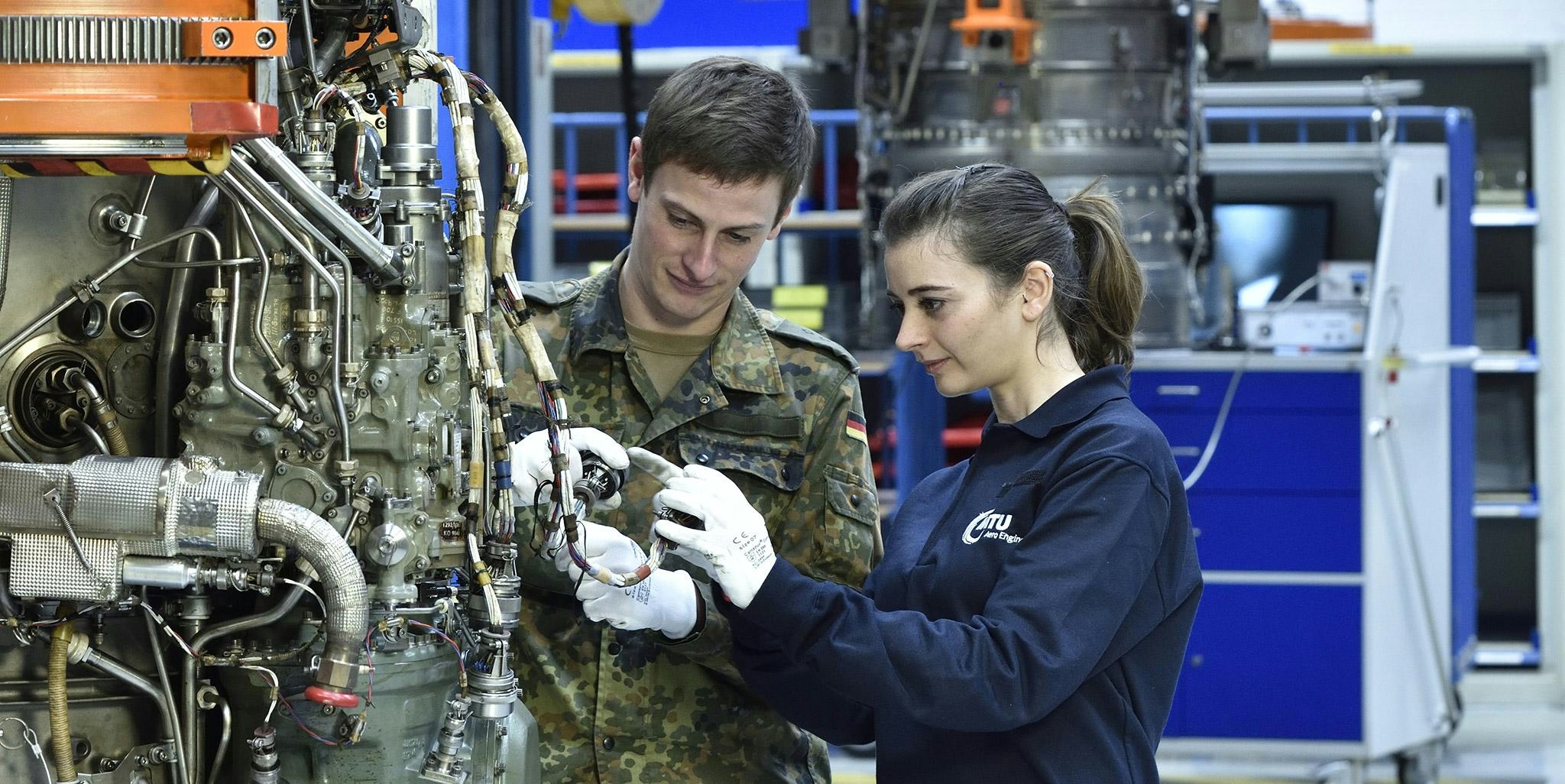
MTU Aero Engines has become a key participant in the Made for Germany initiative, joining 60 leading companies and investors in a concerted effort to shape the future of Germany’s economy. This collaborative platform aims to foster a renewed dialogue between the business community and government authorities, with the overarching goal of sustainably enhancing Germany’s investment climate.

Commitment to Economic Growth and Innovation

By engaging in the initiative, MTU Aero Engines seeks to play an active role in defining strategic priorities, developing targeted policy measures, and implementing reforms in close partnership with policymakers. The initiative focuses on addressing critical challenges such as digitisation, infrastructure development, innovation, sustainability, and the shortage of skilled labor. Industry leaders from diverse sectors are contributing their expertise to support political decision-making, complementing the efforts of established business associations.

Lars Wagner, CEO of MTU Aero Engines, underscored the company’s dedication to Germany as a vital economic hub. He highlighted ongoing investments, including the expansion and modernization of facilities in Hannover and Ludwigsfelde to meet increasing maintenance demands, as well as the establishment of a new development centre in Munich. Wagner also noted the construction of a geothermal plant and the introduction of advanced production facilities as part of the company’s forward-looking strategy. “We want to take responsibility with politics for Germany as an economic hub and send a strong signal together,” he stated.

Investment Pledges and Market Challenges

Members of the Made for Germany initiative have collectively pledged to invest €631 billion (approximately $733 billion) in the German economy by 2028. This substantial commitment encompasses planned and new capital expenditures alongside research and development spending, with significant contributions from international investors. MTU Aero Engines emphasized that a large share of these funds will be allocated to new investments, signaling renewed confidence in Germany’s long-term economic prospects following years of considerable investment outflows.

Despite this optimism, MTU Aero Engines and its peers operate in a highly competitive and rapidly evolving market. Rivals such as Rolls-Royce continue to secure major contracts, while competitors advance in areas including sustainable aviation fuels and sophisticated simulation technologies. These developments are expected to influence MTU’s strategic direction as it strives to maintain its leadership in the aerospace engine sector. Meanwhile, market confidence remains robust in major aerospace manufacturers like Airbus and Boeing, reflecting the dynamic nature of the industry.

MTU Aero Engines also stresses the importance of ensuring that small and medium-sized enterprises (SMEs) and start-ups have access to private capital, recognizing that stable economic conditions are essential for realizing both current and future investments. The company acknowledges that regulatory compliance and supply chain constraints pose ongoing challenges that could affect the initiative’s overall effectiveness.

As the Made for Germany initiative progresses, its success will hinge on the ability of participating companies and government entities to collaborate effectively in addressing Germany’s most pressing economic challenges and capitalizing on emerging opportunities within a competitive global landscape.

More news
Why the Boeing 777X May Not Suit This European Airline

Why the Boeing 777X May Not Suit This European Airline

Why the Boeing 777X May Not Suit This European Airline Scandinavian Airlines (SAS) is currently undertaking a significant widebody fleet renewal, with the Boeing 777X among the aircraft under consideration alongside established competitors such as the Airbus A350 and Boeing 787. Despite the 777X’s impressive range and passenger capacity, its suitability for SAS’s network and strategic direction remains uncertain, particularly as the airline undergoes a period of substantial transformation. Scale and Network Compatibility The Boeing 777-9, the flagship model of the 777X family, is designed primarily for high-density routes and mega-hubs like Dubai or Doha, where daily passenger volumes can consistently fill its expansive cabin of over 400 seats. In contrast, SAS’s hubs in Copenhagen and Stockholm typically operate routes that are better served by aircraft seating between 250 and 300 passengers. Consistently filling a 400-plus seat aircraft would pose a considerable challenge for SAS, potentially necessitating a reduction in flight frequencies to maintain high load factors. Such a shift could alienate business travelers who value schedule flexibility over aircraft size, thereby undermining a key segment of SAS’s customer base. Operational and Economic Challenges Introducing the 777X would also disrupt SAS’s current technical commonality. The airline’s existing fleet includes six Airbus A350-900s, averaging just 3.8 years in service, which efficiently cover its long-haul operations. Incorporating a small sub-fleet of 777X aircraft would require significant investment in pilot training, spare parts, and ground support equipment, particularly due to the 777-9’s distinctive folding wingtips. Unless SAS commits to a fleet size of at least 18 to 20 units, the costs associated with maintaining a separate 777X operation could outweigh the potential benefits, especially if passenger demand does not meet projections. Market Timing and Competitive Pressures The timing of any potential 777X order is further complicated by ongoing delivery delays. Boeing’s backlog for the 777X has grown to nearly 600 aircraft, with Singapore Airlines not expected to receive its first delivery until after April 2027. This high demand and delayed availability could affect pricing and delivery schedules for European carriers like SAS, increasing the risk of falling behind in the competitive race for next-generation widebodies. Boeing’s recent surge in orders during April highlights the aircraft’s popularity but also underscores the urgency for airlines to act swiftly or risk missing out. Strategic Considerations Amid Alliance Shifts SAS’s decision extends beyond considerations of aircraft size and range to encompass long-term alignment with manufacturers and airline alliances. With Air France-KLM set to increase its stake in SAS to approximately 60.5% by 2026, the airline is transitioning away from its Star Alliance roots toward the SkyTeam alliance. This strategic shift coincides with the pressing need to replace SAS’s aging fleet of eight Airbus A330-300s. Evaluating the A330neo and A350 alongside the 787 and 777X allows SAS to leverage its market position, but operational realities and evolving network strategies suggest that the 777X may be too large and complex for the airline’s current needs. While the Boeing 777X represents a technological advancement, its scale, cost implications, and market timing present significant challenges for SAS. The airline’s forthcoming fleet decisions will require a careful balance between ambition and operational pragmatism as it navigates a new chapter in European aviation.
Why the SR-71 Blackbird Used Twin Buick V8 Engines for Starting

Why the SR-71 Blackbird Used Twin Buick V8 Engines for Starting

Why the SR-71 Blackbird Used Twin Buick V8 Engines for Starting The Lockheed SR-71 Blackbird remains one of the most remarkable feats in aviation history, with only 32 units ever constructed. Its legendary status is attributed not only to its advanced titanium airframe and powerful Pratt & Whitney J58 turbojet engines but also to an unexpected ground-based starting system powered by twin Buick V8 engines. This article examines the engineering considerations behind this unconventional choice, the mechanics of the AG330 start cart, and the operational demands that necessitated such a solution. Engineering Constraints and the Weight-Saving Imperative Developed by Lockheed’s Skunk Works under the leadership of Clarence “Kelly” Johnson, the SR-71 was designed to sustain flight at speeds exceeding Mach 3.2 and altitudes above 85,000 feet. In this extreme performance envelope, every pound of weight was critical. Excess weight would reduce the aircraft’s range and increase fuel consumption, while also complicating the management of intense aerodynamic heating. To optimize performance, Johnson’s team made a deliberate decision to exclude any onboard engine starter system. The weight savings achieved by this omission were considered more valuable than the convenience of self-starting capability. The Challenge of Starting the J58 Engines This design choice introduced significant operational challenges. The J58 engines, among the few turbojets engineered for continuous afterburner operation at supersonic speeds, each weighed approximately 6,500 pounds. Their compressor stages demanded immense torque to accelerate to ignition speed—far beyond the capacity of conventional pneumatic or electric starters. Any starter system capable of delivering the required power would have been prohibitively heavy for onboard installation, necessitating a ground-based solution. The Selection of Buick V8 Engines The solution emerged from two Skunk Works engineers with backgrounds in automotive racing, who opted to utilize proven American automotive technology rather than develop a bespoke starter. They selected the Buick 401-cubic-inch (6.6-liter) “Nailhead” V8 engines for their robust construction, reliability, and ability to generate the high torque essential for the demanding startup sequence of the J58 engines. Each Buick V8 produced 325 horsepower and 445 lb-ft of torque. When paired in the AG330 start cart, these engines provided sufficient power to spin the J58 compressors to the necessary speed for fuel ignition. This choice was both practical and strategic. Given the critical nature of the SR-71’s reconnaissance missions during the Cold War, mechanical reliability was paramount. The Buick V8 engines offered a dependable, field-tested solution that minimized the risk of startup failure and ensured the Blackbird could launch as scheduled. Operation of the AG330 Start Cart During engine startup, the AG330’s twin Buick V8s powered a shaft connected to the J58’s accessory gearbox, rapidly accelerating the engine’s compressors. Once the J58 reached the required rotational speed, fuel and ignition systems were engaged, bringing the engine to life. This process was complex and occasionally hazardous, demanding precise coordination from ground crews. Any malfunction, such as a misfire or mechanical fault, necessitated halting and resetting the entire sequence, highlighting the critical importance of the starter cart’s reliability. Conclusion The SR-71 Blackbird’s reliance on twin Buick V8 engines for starting exemplifies innovative engineering under stringent constraints. By harnessing the strength and dependability of these automotive powerplants, Lockheed’s engineers ensured that one of the world’s most advanced aircraft could meet its exacting operational requirements. This approach underscores how sophisticated technological solutions can sometimes arise from practical mechanical ingenuity.
EU Today Editor Discusses Sanctions and Russia’s Shadow Aviation Supply Chains

EU Today Editor Discusses Sanctions and Russia’s Shadow Aviation Supply Chains

EU Today Editor Discusses Sanctions and Russia’s Shadow Aviation Supply Chains Following an extensive investigation by EU Today into Russia-linked aviation supply chains and potential sanctions circumvention, Editor Gary Cartwright spoke with the Ukrainian news outlet Podrobnosti about the findings, the pressures encountered after publication, and the broader challenges faced by journalists covering sanctions-sensitive issues. Originally published in Ukrainian, the interview is presented here in English. Investigating Sanctions Evasion in Russia’s Aviation Sector Cartwright outlined EU Today’s sustained focus on sanctions enforcement, particularly in relation to Russia’s aviation industry. He emphasized that uncovering evidence of sanctions evasion is a complex and often hazardous endeavor. Journalists, researchers, and civil society organizations meticulously analyze contracts, invoices, customs records, and procurement trails to expose hidden networks before governmental authorities intervene. Since Russia’s annexation of Crimea in 2014, the European Union has relied heavily on sanctions as a key instrument in responding to Moscow’s aggression against Ukraine. These measures expanded significantly following the full-scale invasion in 2022, targeting sectors including finance, energy, transport, dual-use goods, aviation, shipping, technology, and military-industrial supply chains. However, as Cartwright noted, the effectiveness of sanctions depends largely on rigorous enforcement. Russia has repeatedly adapted by rerouting supplies through third countries, brokers, logistics firms, and intermediaries, complicating efforts to stem the flow of restricted goods. EU Today has maintained dedicated coverage of sanctions since 2014, including a specialized Sanctions section and extensive reporting on Russia’s shadow fleet, Western components embedded in Russian weaponry, and the networks facilitating the continued movement of prohibited items. Its White Paper on Russia’s shadow fleet has attracted over 32,000 views. Cartwright himself has actively participated in demonstrations in Brussels advocating for the renewal of sanctions—a process that was not always politically assured prior to 2022. For Cartwright, EU Today functions as more than a news outlet; it serves as a public-interest platform designed to highlight issues that might otherwise remain obscured within technical documentation. This mission has also informed the outlet’s earlier advocacy efforts, such as its Holodomor petition submitted to the British Parliament. Unveiling the Opaque Russian Aviation Supply Chains In May 2026, EU Today published an article delving into the opaque world of Russian aviation supply chains. Despite sanctions restricting spare parts, maintenance, insurance, and certification, many Western-owned aircraft leased to Russia—primarily Boeing and Airbus models—continue to operate both within and beyond Russian borders. This situation raises a critical question: how are parts, repairs, and services still reaching Russian aviation entities under such restrictions? The investigation was grounded in a comprehensive review of documents including contracts, invoices, purchase orders, licensing materials, and freight records. While the article named several companies involved, Cartwright clarified that the documents alone did not constitute proof of unlawful conduct or sanctions violations by every party mentioned. The publication prompted swift responses, including legal demands and private communications directed at EU Today. The report also underscored broader market implications. Sanctions targeting Russia’s shadow aviation supply chains have contributed to increased costs and delays for European airlines, as access to aircraft and parts becomes more constrained. This dynamic risks placing EU carriers at a competitive disadvantage, potentially allowing non-EU airlines to capture greater market share. In response, European airlines are lobbying for regulatory reforms aimed at mitigating disruptions and bolstering their global competitiveness. Cartwright concluded by stressing the need for stronger protections for journalists, researchers, and civil society actors investigating sanctions evasion. As enforcement challenges persist and market pressures intensify, transparent reporting remains vital to understanding both the risks involved and the wider economic consequences of sanctions policy.
Why US Airlines Pay Long-Haul Pilots More to Fly the Boeing 787 Than the 777

Why US Airlines Pay Long-Haul Pilots More to Fly the Boeing 787 Than the 777

Why US Airlines Pay Long-Haul Pilots More to Fly the Boeing 787 Than the 777 Technical Complexity and Pilot Expertise Recent data from United Airlines’ 2025 pilot salary tables indicate that pilots flying the Boeing 787 generally earn higher wages than those operating the Boeing 777. This pay disparity is largely attributed to the advanced technology and operational demands of the 787, commonly known as the Dreamliner. Unlike the 777, the 787 employs a “more-electric” architecture, replacing traditional pneumatic bleed-air systems with electrically driven alternatives. This design shift requires pilots to closely monitor electrical loads, system redundancies, and automated responses, necessitating a greater level of technical proficiency. Consequently, airlines tend to assign their most experienced and senior pilots to the 787, which further elevates the average compensation for those flying this aircraft. Operational Advantages and Market Position Beyond its technical sophistication, the Boeing 787 offers significant operational benefits that enhance its appeal to airlines. The aircraft is celebrated for its superior fuel efficiency, lower maintenance costs, and improved passenger comfort. These factors contribute to increased profitability and operational efficiency on long-haul routes, incentivizing airlines to offer higher pay to pilots operating these flights. The competitive edge of the 787 is exemplified by recent route expansions, such as Alaska Airlines’ new Seattle-Rome service, which utilizes the Dreamliner to capitalize on its long-range capabilities and cost advantages. Pay Structures and Industry Variations While aircraft type plays a crucial role in pilot compensation, other factors such as seniority, total flight hours, and overall experience remain significant determinants of wages. Additionally, pilots often weigh benefits like 401(k) plans alongside salary when evaluating employment options. The pay gap between 787 and 777 pilots is most pronounced at United Airlines. According to reporting by Simple Flying, a United 777 captain with 12 years of service earns approximately $438 per hour, whereas a 787 captain with similar seniority receives about $465 per hour, reflecting a nearly $30 hourly premium. This difference underscores both the complexity of the 787 and the seniority of the pilots typically assigned to it. Not all US carriers adopt this differentiated pay model. For instance, American Airlines maintains parity in base salaries for its 777 and 787 pilots. This approach may evolve with the introduction of newer aircraft such as the Boeing 777X, which is expected to command higher pilot salaries due to its increased complexity. However, since no US airline has yet placed orders for the 777X, this factor has not yet influenced current pay structures. Challenges of Long-Haul Operations Although the 787’s advanced systems do not necessarily make flying more difficult, the nature of its long-haul missions demands seasoned pilots. Flights often exceed ten hours, requiring crews to manage the cognitive effects of fatigue and jet lag. This operational environment further justifies the assignment of experienced pilots to the Dreamliner, reinforcing the rationale behind the higher compensation offered for these roles. In essence, the premium pay for Boeing 787 pilots at US airlines reflects a combination of the aircraft’s technological complexity, its operational advantages, and the seniority of the pilots entrusted with its operation, solidifying the Dreamliner’s position as a coveted assignment in the long-haul market.
CD Aviation Services Acquires STC for TPE331-5-252K Engine Installation on Twin Commander Aircraft

CD Aviation Services Acquires STC for TPE331-5-252K Engine Installation on Twin Commander Aircraft

CD Aviation Services Secures STC for Honeywell TPE331-5-252K Engine Installation on Twin Commander Aircraft CD Aviation Services (CDAS) has obtained Supplemental Type Certificate (STC) SA1024SO, authorizing the installation of Honeywell TPE331-5-252K engines on Twin Commander 690, 690A, and 690B aircraft models. This certification facilitates the conversion of existing aircraft from the TPE331-5-251K to the more advanced -252K engine configuration, which incorporates the Woodward fuel system. The upgrade offers operators a more widely supported and serviceable engine option, addressing growing concerns over parts availability and maintenance support for legacy systems. Engine Upgrade and Technical Details The conversion process adheres to Honeywell Service Bulletin SB 72-0216, which outlines the transition from the Bendix to the Woodward fuel control system as part of the engine upgrade. The STC provides the necessary airframe approval for these installations, enabling Twin Commander operators to replace aging Bendix-based configurations that face increasing challenges due to diminishing parts supply and limited overhaul capabilities. CD Aviation Services highlights that the -252K engine configuration delivers enhanced parts availability, expanded overhaul options, and greater familiarity within the maintenance community. The company emphasized that this STC offers operators a practical and reliable pathway for engine upgrades or addressing long-term support issues. CDAS’s commitment centers on improving aircraft reliability, maintainability, and lifecycle support through this solution. Industry Implications and Market Response While the acquisition of this STC broadens CDAS’s capacity to support Twin Commander operators, it also introduces complexities related to regulatory compliance and integration with existing aircraft systems. This development aligns with a wider industry trend of strategic acquisitions aimed at expanding service capabilities and market presence. Recent analyses indicate that such moves often reflect a shift toward increased consolidation and specialization within the aviation services sector. Market observers anticipate that CDAS’s acquisition may stimulate heightened interest among competitors in pursuing similar engine certification projects. This could prompt rival companies to enhance their own certification processes or expand service offerings to remain competitive. As operators continue to evaluate long-term maintenance strategies, the availability of the -252K engine configuration is expected to play a significant role in decision-making within the Twin Commander community. The STC specifically applies to the Twin Commander 690, 690A, and 690B models. CD Aviation Services provides detailed information regarding installation availability, scheduling, and program specifics. Operators considering the conversion or planning maintenance activities are encouraged to contact CDAS directly for further details and quotations. About CD Aviation Services CD Aviation Services specializes in the maintenance, repair, and overhaul of Honeywell TPE331 engines and GTCP36 auxiliary power units. The company supports operators across agricultural, business, cargo, and regional aviation sectors. With facilities located in the United States and Europe, CDAS holds FAA and EASA certifications and brings over 30 years of industry experience to its operations.
America’s Last Piston-Engine Propeller Plane

America’s Last Piston-Engine Propeller Plane

America’s Last Piston-Engine Propeller Plane In an age dominated by sleek jets and highly efficient turboprops, the distinctive roar of piston-engine propeller aircraft has become a rare and nostalgic sound, evoking memories of aviation’s golden era. While most of these classic planes now rest in museums or make occasional appearances at airshows, the Douglas DC-7 remains a notable exception. It stands as America’s last great piston-powered airliner, symbolizing the final chapter before the jet age revolutionized commercial flight. The Douglas DC-7: The Pinnacle of Piston-Powered Aviation Developed in the 1950s, the Douglas DC-7 represented the culmination of large, piston-engine American airliners. Building upon the success of its predecessor, the DC-6, the DC-7 was designed specifically for nonstop coast-to-coast travel, making its debut in 1953. Equipped with four Wright R-3350 Duplex-Cyclone engines, the aircraft was capable of flying from New York to Los Angeles in under eight hours, surpassing the range and speed of earlier models. The DC-7 was Douglas Aircraft’s response to the Lockheed Super Constellation and the evolving demands of major airlines such as American and United. Its technical sophistication was matched by its ambition: later variants, including the DC-7B and DC-7C, featured increased fuel capacity to accommodate overseas flights, while the DC-7F freighter conversion extended the aircraft’s utility into cargo transport. Despite its impressive capabilities, the DC-7 was mechanically complex and often temperamental. The powerful engines that enabled its performance were prone to overheating and mechanical difficulties, particularly on demanding transcontinental routes. Nonetheless, during the 1950s, the DC-7 was regarded as the premier choice for long-range domestic air travel. Transition to Turboprops and Jets The decline of the DC-7 and other piston-powered airliners was driven by rapid advancements in engine technology and changing airline economics. Turboprop and jet engines offered superior reliability, efficiency, and speed, quickly rendering piston engines obsolete in commercial aviation. The introduction of Douglas’s jet-powered DC-8 just a few years after the DC-7’s debut marked a decisive shift away from piston propulsion. Today, surviving DC-7 aircraft are preserved in institutions such as the Delta Flight Museum and the Pima Air & Space Museum, serving as enduring reminders of a transformative period in aviation history. Challenges and Legacy in the Contemporary Aviation Market If a piston-engine propeller plane like the DC-7 were to compete in today’s aviation market, it would face significant obstacles. Modern turbofan engines have established new benchmarks for efficiency and performance, while regulatory scrutiny concerning emissions and safety has intensified. Additionally, the industry’s growing focus on electric and hybrid aircraft further diminishes the appeal of traditional piston-engine designs. Although the DC-7 retains a nostalgic allure among aviation enthusiasts, the broader market demand for piston-engine airliners is minimal compared to newer, more sustainable aircraft. Airlines and manufacturers continue to prioritize improvements in performance and environmental impact, often overshadowing the legacy of piston-powered planes. Nevertheless, the story of the DC-7 endures—not only as a technical marvel of its era but also as a symbol of the innovation and ambition that propelled American aviation into the modern age.
Oklahoma Approves $520 Million for Airport Upgrades

Oklahoma Approves $520 Million for Airport Upgrades

Oklahoma Approves $520 Million for Airport Upgrades The Oklahoma Aerospace and Aeronautics Commission has authorized a $520 million, five-year initiative aimed at modernizing the state’s airport infrastructure to stimulate economic growth and enhance aviation safety. Approved during the commission’s meeting on May 13, 2026, the program will finance 176 infrastructure projects across Oklahoma’s airports, including 99 developments specifically designed to promote economic expansion. Scheduled to commence on June 1, 2026, and conclude by May 31, 2031, the Oklahoma Department of Aerospace and Aeronautics Airport Construction Program will leverage a combination of federal, state, and local funding. The initiative seeks to attract new commercial investments, transform airports into dynamic economic hubs for their communities, and ensure that aviation facilities keep pace with the state’s evolving transportation demands. Grayson Ardies, executive director of the Oklahoma Department of Aerospace and Aeronautics (ODAA), described the plan as a “bold, pro-growth vision” that positions Oklahoma to advance within the global aerospace economy. He emphasized that the program goes beyond routine maintenance, aiming to develop a world-class airport network capable of supporting next-generation commercial aircraft and pioneering aerospace operations that will drive the state’s economy for decades. Major Hangar and Facility Projects Key projects within the program include significant expansions and new constructions at several airports. At Chickasha Municipal Airport, new hangars measuring 12,000 and 10,000 square feet will be built to address the statewide shortage of aircraft storage and foster aviation business growth. This nearly $2.9 million project will be funded through a combination of approximately $723,000 from the Federal Aviation Administration (FAA), nearly $1.3 million from the ODAA, and over $850,000 from the City of Chickasha, with construction expected to begin in summer 2026. The Infinity One Oklahoma Spaceport, formerly known as Clinton-Sherman Airport, will receive new facilities to support New Zealand-based Dawn Aerospace and its suborbital flight program. This $7.5 million state-funded project includes the construction of a hangar, office building, and supporting infrastructure, enabling Dawn Aerospace to conduct safe and rapid flight operations. Construction is anticipated to start in the latter half of 2026. Tulsa International Airport will also benefit from the program with the development of a Maintenance, Repair, and Overhaul (MRO) hangar designed to accommodate widebody commercial aircraft. This facility is expected to further establish Oklahoma as a hub for advanced aviation services. Opportunities and Challenges While the upgrade program is poised to increase passenger traffic and generate substantial economic benefits, it faces several potential challenges. These include the complexities of funding allocation, possible opposition from local stakeholders, and competition from other regional airports. Past large-scale investments, such as Arlington’s $273 million upgrade of AT&T Stadium, have drawn public scrutiny and underscored the importance of meticulous planning to ensure sustainable long-term returns. Market analysts suggest that Oklahoma’s ambitious initiative may prompt competing airports to accelerate their own modernization efforts to maintain market share. State officials maintain that the program’s collaborative funding approach and dual focus on economic development and aviation safety will secure Oklahoma’s airports as critical assets for the foreseeable future.
NTSB Finds UPS Cockpit Voice Recordings Were Fabricated Using AI

NTSB Finds UPS Cockpit Voice Recordings Were Fabricated Using AI

NTSB Reveals AI-Fabricated Cockpit Voice Recordings in UPS Crash Probe The National Transportation Safety Board (NTSB) has uncovered that cockpit voice recordings related to the 2025 crash of UPS Flight 2976 in Louisville, Kentucky, were artificially fabricated using advanced AI technology. The agency disclosed on Thursday that certain individuals employed artificial intelligence to reconstruct approximations of cockpit audio from sound spectrum imagery that had been publicly released as part of the investigation’s documentation. This discovery has sparked serious concerns regarding privacy violations and the potential misuse of sensitive investigative data. Privacy and Legal Protections Surrounding Cockpit Recordings The NTSB traditionally releases only transcripts of cockpit voice recorder (CVR) conversations, refraining from making the actual audio publicly available due to the highly sensitive nature of cockpit communications. Federal law explicitly prohibits the public dissemination of cockpit audio recordings to protect the privacy of crew members and the integrity of investigations. In an official statement, the NTSB reaffirmed its commitment to these protections, emphasizing that it “does not release cockpit audio recordings” and takes privacy restrictions “seriously.” In light of the AI-generated fabrications, the NTSB has taken the rare measure of temporarily suspending public access to its docket system. This pause allows the agency to assess the full extent of the issue and to develop appropriate safeguards before restoring access. The NTSB has expressed its intention to reinstate public availability as soon as it can ensure the integrity and security of its investigative materials. Ongoing Investigation into the UPS Flight 2976 Crash The incident under scrutiny involves the November 4 crash of a UPS MD-11 aircraft, which resulted in the deaths of all three crew members and 12 individuals on the ground. During a recent two-day hearing, the NTSB released video footage showing the left engine detaching from the wing during takeoff, triggering a catastrophic fire. The CVR transcript detailed the crew’s unsuccessful efforts to regain altitude before the aircraft crashed into an industrial area beyond the runway. Testimony during the hearing included contributions from Boeing, the manufacturer of the MD-11, focusing on the spherical bearing and lugs that secure the engine mounts. The investigation revealed that both Boeing and UPS had been aware of cracks and bearing migration issues dating back to 2008 and 2011. Furthermore, the inquiry highlighted that prior reporting and analysis errors may have obscured the risk of engine failure, underscoring the necessity for more stringent safety evaluations. The NTSB’s final report on the probable cause of the crash is anticipated in the coming months. Meanwhile, the agency’s response to the AI fabrication incident underscores growing apprehension about how emerging technologies such as artificial intelligence can be exploited to manipulate or counterfeit sensitive investigative materials, thereby challenging established privacy protections and the credibility of accident investigations.
MTU Aero Engines Reaches PW800 Repair Milestone, Enhancing MRO Profile

MTU Aero Engines Reaches PW800 Repair Milestone, Enhancing MRO Profile

MTU Aero Engines Reaches PW800 Repair Milestone, Enhancing MRO Profile Expanding Capabilities in Business Aviation Maintenance MTU Aero Engines has successfully completed the redelivery of its first repaired PW800 engine, marking a pivotal advancement in the company’s maintenance, repair, and overhaul (MRO) capabilities. This achievement, carried out by MTU Maintenance Berlin-Brandenburg, highlights the German engine manufacturer’s expanding footprint in high-value aftermarket services, particularly within the business aviation sector and the US-linked engine market. The PW800 engine family powers a variety of business jets, a segment that demands rigorous technical standards and comprehensive global support networks. MTU’s Berlin-Brandenburg facility is one of only two worldwide authorized to service the PW800, positioning the company as a critical player in this specialized niche. This expertise not only supports the existing installed base of PW800 engines but also secures long-term service contracts, thereby reinforcing MTU’s integral role within the global aerospace supply chain. Market Context and Strategic Significance This milestone coincides with a period of robust demand for aftermarket services. MTU reported an 8% increase in commercial MRO revenues, reaching €1.6 billion in the first quarter of the year. This growth has persisted despite challenges such as rising fuel prices, underscoring the resilience of the MRO market. The company maintains an optimistic outlook for the full year, anticipating revenue growth across all business segments, driven by strong performance in both engine and airframe maintenance operations. Industry competitors, including ITP Aero and Woodward, have similarly noted sustained demand in their aftermarket businesses, reflecting a competitive yet stable environment for MRO providers. For MTU, the ability to translate engineering expertise into efficient service throughput remains central to preserving healthy margins in the aerospace aftermarket. The recurring demand for repairs, spare parts, and technical support offers a buffer against volatility in new engine orders. Global Reach and Long-Term Strategy The significance of the PW800 repair milestone extends beyond Europe. Business aviation holds a substantial presence in North America, and MTU’s support for this fleet aligns the company with established maintenance spending and utilization trends in the US market. This transatlantic engagement enhances MTU’s profile as a global aerospace service provider rather than solely a European industrial entity. While the redelivery of the first repaired PW800 engine may not be a headline-grabbing event, it serves as a clear demonstration of MTU Aero Engines’ operational capabilities and its commitment to broadening its MRO portfolio. This development adds momentum to the company’s strategy of deepening its involvement in long-duration service markets, which continue to be a key revenue driver alongside its core engine programs and spare parts business. MTU Aero Engines’ latest milestone in PW800 repair operations thus reinforces its strong MRO profile and signals sustained strength in aftermarket demand, positioning the company for continued growth in both European and North American markets.
NASA’s 12-Foot Aircraft Reached Mach 9.6, Surpassing Modern Engines, but Faster Speeds Remain Elusive

NASA’s 12-Foot Aircraft Reached Mach 9.6, Surpassing Modern Engines, but Faster Speeds Remain Elusive

NASA’s Hypersonic Milestone: Mach 9.6 Achieved but Challenges Persist More than two decades after NASA’s X-43A aircraft reached an unprecedented speed of Mach 9.6, the United States continues to grapple with the complexities of harnessing hypersonic technology for practical military and scientific applications. The Department of Defense’s 2026 budget proposal, which allocates $3.9 billion toward hypersonic weapons development, highlights the ongoing struggle not only to achieve extreme speeds but also to sustain technological progress beyond initial breakthroughs. The Legacy of the X-43A On November 16, 2004, NASA’s X-43A set a hypersonic speed record that remains unbroken. This 12-foot, uncrewed vehicle was carried to high altitude by a B-52B bomber, boosted by a Pegasus rocket, and then propelled by an air-breathing scramjet engine for approximately ten seconds at an altitude of 109,000 feet. NASA confirmed that the aircraft reached Mach 9.6, or nearly 7,000 miles per hour, a velocity that theoretically could reduce cross-country travel in the United States to mere minutes. The X-43A was part of the Hyper-X program, a seven-year, $230 million initiative designed to test whether an aircraft traveling faster than Mach 5 could utilize atmospheric oxygen for combustion instead of carrying onboard oxidizers like traditional rockets. The program’s success demonstrated the viability of scramjet technology under real flight conditions, a significant achievement given the extreme heat, pressure, and stability challenges inherent in hypersonic flight. The Air Force has described maintaining scramjet combustion at such speeds as akin to “lighting a match in a hurricane.” Despite this success, the X-43A was never intended to be reusable or operational. Each vehicle was lost in the Pacific Ocean after its flight, and the program concluded without a pathway to production or deployment. NASA engineer Paul Reukauf emphasized that while the flights validated scramjet technology, sustaining combustion for only a few seconds falls short of the requirements for a deployable military system capable of storage, launch, and precise guidance. The Ongoing Quest for Faster and Practical Hypersonic Flight Although the X-43A surpassed the capabilities of contemporary engines, advancing beyond Mach 9.6 remains a formidable challenge. Engineers continue to confront significant obstacles related to heat management, material durability, and propulsion stability. Recent developments, such as the lithium plasma engine tested at NASA’s Jet Propulsion Laboratory, offer promising avenues for faster and more efficient space missions, particularly to Mars. However, these technologies are still in experimental stages, and practical application for routine hypersonic travel or military use is not imminent. The hypersonic propulsion field remains largely experimental, with no direct competitors yet demonstrating comparable systems. Market responses to these technological advances are speculative, reflecting the nascent state of the technology. NASA’s pioneering hypersonic programs have laid critical groundwork for future research, but the transition from record-setting experimental flights to operational systems continues to be a complex and protracted endeavor. For now, the aspiration of routine hypersonic travel and surpassing the Mach 9.6 threshold remains an elusive goal.
line









