
AIによるインサイトを行動へとつなげる

現在のトレンド
Categories
NASA Receives Next-Generation Flying Laboratory Ahead of Schedule
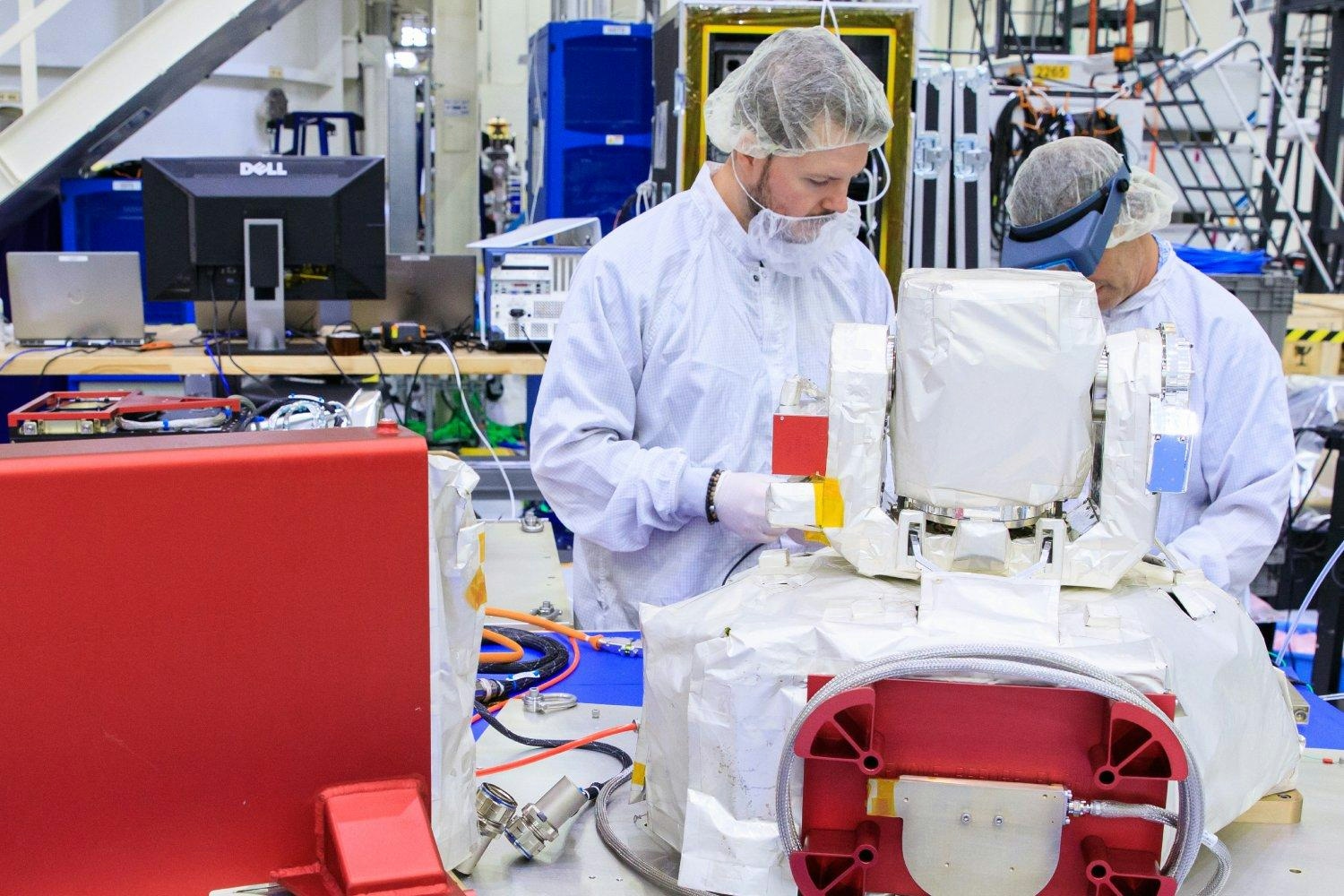
NASA Receives Next-Generation Flying Laboratory Ahead of Schedule
NASA has taken delivery of a next-generation research aircraft, a heavily modified Boeing 777, from L3Harris Technologies five weeks ahead of schedule. Developed in collaboration with aviation services provider Yulista, this aircraft represents a significant advancement in NASA’s airborne science capabilities and is poised to become the agency’s most sophisticated airborne research platform to date.
Advanced Capabilities and Mission Flexibility
Now stationed at NASA’s Langley Research Center in Virginia, the wide-body jet has undergone extensive structural and systems modifications to transform it into a state-of-the-art “flying laboratory.” The aircraft can accommodate between 50 and 100 scientists and mission specialists, with the ability to remain airborne for up to 18 hours and operate at altitudes reaching 43,000 feet. These capabilities enable long-duration missions over vast and remote regions, ranging from the Arctic to the equator, thereby supporting NASA’s longstanding Airborne Science Program.
Equipped to carry a diverse array of advanced scientific instruments, the aircraft will facilitate research into atmospheric composition, greenhouse gas emissions, ocean health, and the monitoring of natural disasters such as bushfires, cyclones, and floods. Its capacity for high-resolution data collection is designed to complement satellite observations, contributing to a more comprehensive understanding of Earth’s interconnected climate systems.
Engineering Innovation and Strategic Impact
L3Harris has employed cutting-edge engineering techniques in the project, including high-fidelity 3D scanning and custom installation tooling, to enable rapid integration and reconfiguration of mission payloads. This modular design ensures the aircraft can be swiftly adapted for a wide range of scientific campaigns, enhancing NASA’s ability to respond to emerging research priorities and global events.
Jason Lambert, president of intelligence, surveillance, and reconnaissance at L3Harris, emphasized the platform’s transformative potential, stating, “Its range, capacity, and flexibility will accelerate scientific discovery and help turn complex observations into practical insights for decision makers, emergency services, and communities around the world.”
While the arrival of the modified 777 addresses a critical gap left by the retirement of previous airborne research platforms, integrating its advanced technology into NASA’s existing research infrastructure will be essential to fully realize its potential. The aerospace community is closely monitoring how this new capability will influence future research initiatives, with competitors likely evaluating its impact on their own technology development and opportunities for interdisciplinary collaboration.
The introduction of NASA’s new flying laboratory is anticipated to drive further innovation in airborne and space-based research, potentially opening new market opportunities and establishing a new standard for scientific data collection from the skies.

Etihad Airways Suspends Airbus A380 Flights on Key Route

Aditya Birla Group Seeks Approval for Aircraft Leasing in GIFT City

Qatar Airways Highlights Innovation and Connectivity at Arabian Travel Market 2026

Hong Kong's Five-Year Plan Includes Andrew Fan's Aircraft Parts Processing Hub Proposal

ACIA Aero Leasing Delivers ATR72-600 to Air Nostrum

RTX Appoints Jill Albertelli as Head of Pratt & Whitney

TAT Technologies Joins Beyond Aero Hydrogen Aircraft Program

AURAK Study Highlights Barriers to Air Taxi Adoption in Emerging Economies

Xiamen Air Selects Altitude for 787 Maintenance at Heathrow

Etihad and Swissport Extend Global Partnership
