
AIによるインサイトを行動へとつなげる

現在のトレンド
Categories
New Long-Range Aircraft Delivery Signals Shift in Global Connectivity and Network Expansion
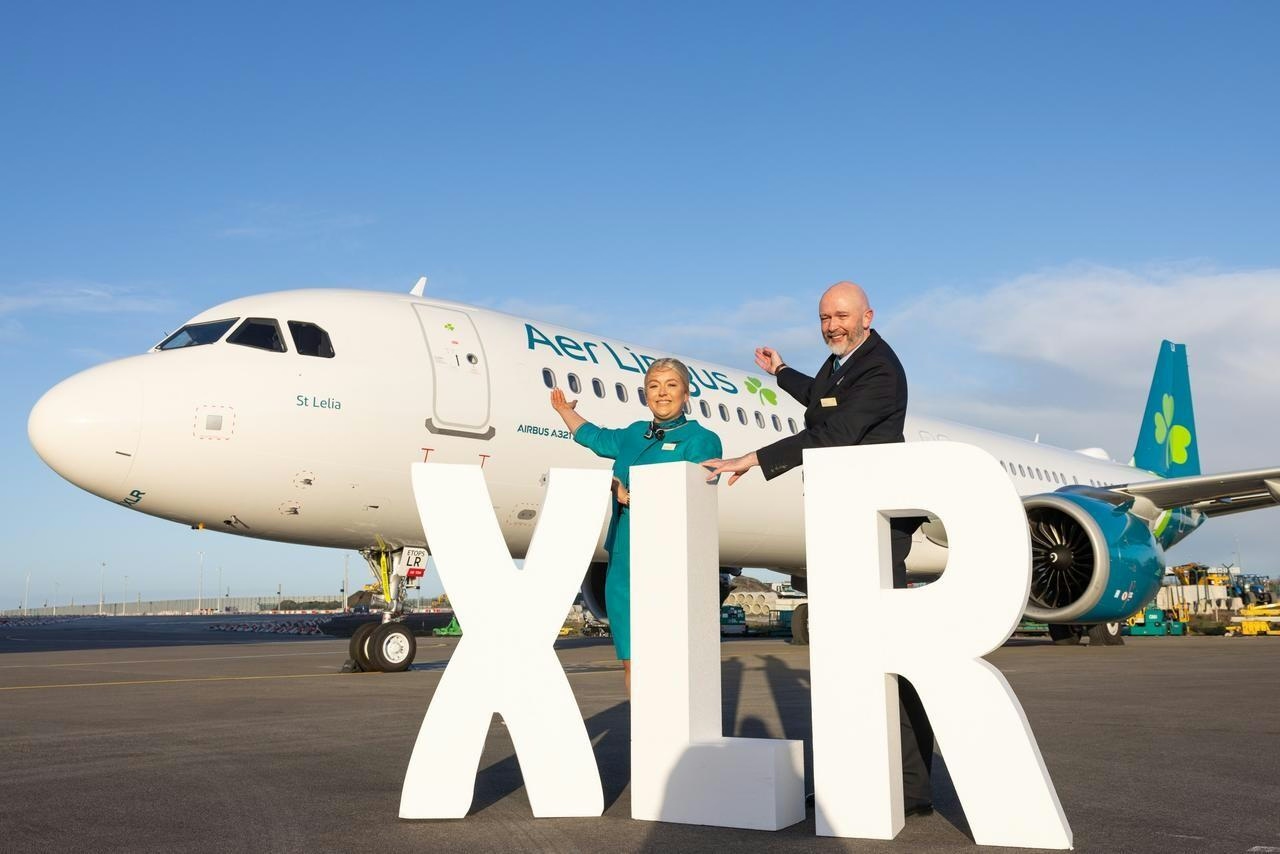
New Long-Range Aircraft Delivery Signals Shift in Global Connectivity and Network Expansion
In April 2026, the aviation industry witnessed a significant milestone with the delivery of a new generation long-range narrow-body jetliner, designed to enhance passenger connectivity across continents. This advancement marks a notable evolution in aircraft technology, bridging the gap between traditional short-haul routes and those historically served by larger wide-body jets. The introduction of this aircraft signals a transformative shift in how airlines approach route planning and network expansion.
Next-Generation Capabilities Take Flight
On April 24, 2026, the first extended-range version of a widely used single-aisle aircraft was officially delivered at the manufacturer’s facility in Hamburg, Germany. Developed by a leading European aerospace company, this model builds upon a family of aircraft initially launched in 2019. It incorporates a permanent rear center fuel tank alongside aerodynamic refinements, enabling longer nonstop flights, enhanced fuel efficiency, and greater operational flexibility. These technical improvements allow airlines to explore new direct routes that were previously unfeasible for narrow-body jets.
The delivery is significant for its potential to reshape airline networks by enabling frequent long-distance services without exclusive reliance on wide-body aircraft. This development opens opportunities for direct connections between secondary markets, reducing dependence on connecting flights and streamlining passenger travel.
Enhancing Global Connectivity
The extended-range technology embedded in this aircraft facilitates the expansion of route networks by linking distant cities, including underserved secondary markets. It offers airlines the ability to better match aircraft capacity to passenger demand without resorting to larger, less efficient jets. Additionally, the improved fuel performance supports both passenger and cargo operations over longer distances, enhancing overall operational efficiency.
Traditionally, single-aisle jets were confined to short- and medium-haul routes. The introduction of this extended-range variant now positions narrow-body aircraft as viable options for transcontinental and transoceanic flights, broadening their role within global aviation.
Strategic Fleet Renewal Amid Industry Shifts
This delivery forms part of a wider fleet modernization strategy, with plans to introduce up to 30 additional aircraft—through both leasing and purchases—over the coming years. This initiative supports airlines in upgrading aging fleets while expanding their long-range capabilities to meet evolving market demands.
The broader aviation landscape, however, remains influenced by geopolitical and competitive challenges. Ongoing tensions between the United States and China have disrupted Boeing’s delivery schedules and order book, prompting airlines to diversify their fleet strategies. Concurrently, airlines are negotiating compensation related to a costly, multi-billion-dollar project aimed at updating altimeters to prevent interference from 5G networks, with a new compliance deadline set for the end of 2029.
Competitive and Market Responses
The introduction of these advanced aircraft has elicited varied responses across the industry. In Brazil, authorities are actively encouraging the establishment of new long-haul air services connecting Europe and Asia, while GOL Linhas Aéreas is planning to expand its long-haul network utilizing Airbus A330 aircraft. Boeing’s ongoing industrial restructuring and efforts to restore profitability are expected to influence its competitive stance in the long-range market.
Looking forward, emerging technologies such as Panasonic’s multi-network low Earth orbit (LEO) connectivity, anticipated to launch in 2027, promise to further enhance the passenger experience and optimize airline operational strategies.
Implications for Travelers
For passengers, these developments translate into more direct flight options and improved connectivity between cities, potentially resulting in more efficient and comfortable journeys across continents. As airlines continue to modernize their fleets and integrate new technologies, travelers can anticipate access to a broader range of destinations and a new era of global air travel.

Etihad Airways Suspends Airbus A380 Flights on Key Route

Aditya Birla Group Seeks Approval for Aircraft Leasing in GIFT City

Qatar Airways Highlights Innovation and Connectivity at Arabian Travel Market 2026

Hong Kong's Five-Year Plan Includes Andrew Fan's Aircraft Parts Processing Hub Proposal

ACIA Aero Leasing Delivers ATR72-600 to Air Nostrum

RTX Appoints Jill Albertelli as Head of Pratt & Whitney

TAT Technologies Joins Beyond Aero Hydrogen Aircraft Program

AURAK Study Highlights Barriers to Air Taxi Adoption in Emerging Economies

Xiamen Air Selects Altitude for 787 Maintenance at Heathrow

Etihad and Swissport Extend Global Partnership
