
AIによるインサイトを行動へとつなげる

現在のトレンド
Categories
New Nigerian Leasing Firm Aims to Lower Costs for Domestic Airlines
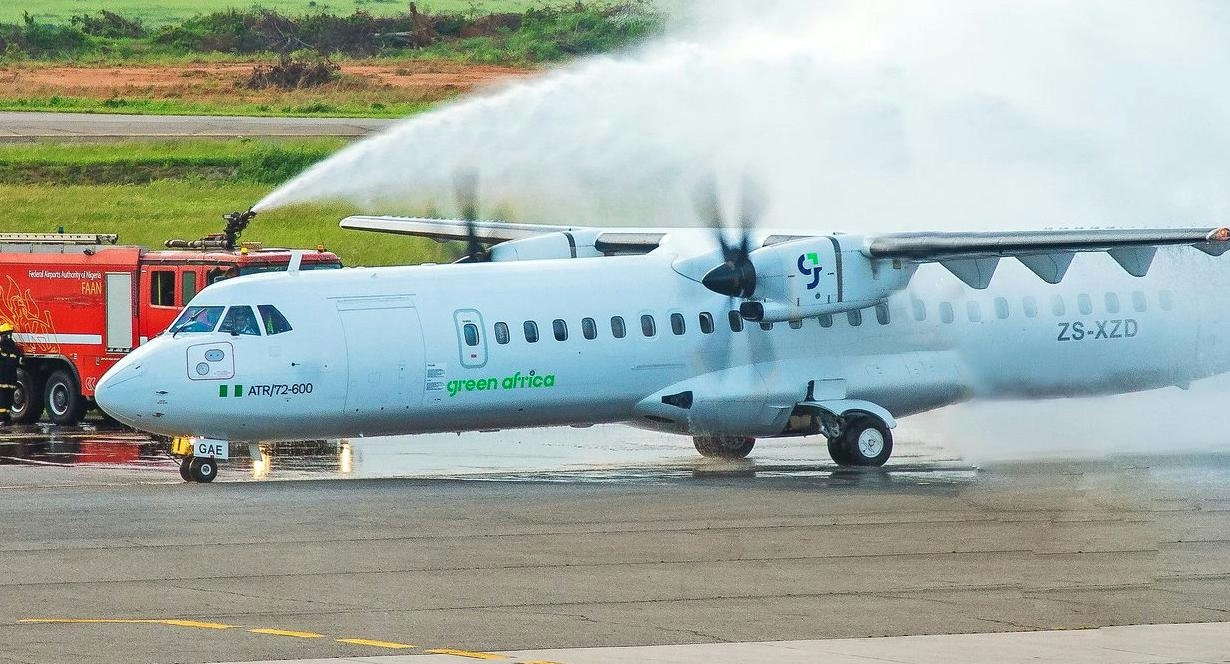
New Nigerian Leasing Firm Aims to Lower Costs for Domestic Airlines
Nigeria has inaugurated a new aircraft leasing company designed to alleviate financial burdens on domestic airlines and diminish their dependence on foreign lessors. Aviation Minister Festus Keyamo announced the establishment of the Nigeria Aircraft Leasing Company, which will be predominantly financed by private investors and development banks, with the government maintaining a minority stake.
Addressing Financial Barriers in Nigerian Aviation
This initiative forms part of ongoing discussions with the African Development Bank, which is exploring investment opportunities in Nigeria under its $7 billion integrated aviation transformation programme. The leasing company is expected to provide local carriers with access to aircraft at substantially lower interest rates and in Nigerian currency, tackling a significant obstacle faced by Nigerian airlines.
At the unveiling, Ibom Air chief executive George Uriesi emphasized the high costs domestic airlines currently endure when acquiring new aircraft. He noted that while competitors secure aircraft at interest rates as low as 3%, Nigerian airlines often face rates as steep as 30%. Uriesi described the new leasing company as a means to "untie our hands," offering access to aircraft financing at reduced rates payable in local currency, thereby improving the financial viability of fleet expansion.
Challenges Ahead for the New Leasing Company
Despite the positive outlook, the Nigeria Aircraft Leasing Company confronts several challenges in establishing itself within a market long dominated by established international lessors. Gaining credibility and market share will be essential, as domestic airlines may initially harbor doubts about the company’s capacity to deliver on promises of cost reduction and dependable service. The firm must also navigate complex regulatory environments and secure adequate capital to support its operations and aircraft acquisitions.
International competitors may respond by intensifying their presence in Nigeria or offering more competitive terms to maintain their market share. Furthermore, the new company will need to manage operational complexities, including logistics, maintenance, and ensuring a consistent supply of aircraft.
If successful, the Nigeria Aircraft Leasing Company could represent a transformative development for the country’s aviation sector, facilitating fleet growth for domestic airlines and reducing reliance on foreign capacity providers. Its long-term impact will hinge on overcoming initial skepticism and operational challenges while delivering measurable benefits to Nigerian carriers.

Etihad Airways Suspends Airbus A380 Flights on Key Route

Aditya Birla Group Seeks Approval for Aircraft Leasing in GIFT City

Qatar Airways Highlights Innovation and Connectivity at Arabian Travel Market 2026

Hong Kong's Five-Year Plan Includes Andrew Fan's Aircraft Parts Processing Hub Proposal

ACIA Aero Leasing Delivers ATR72-600 to Air Nostrum

RTX Appoints Jill Albertelli as Head of Pratt & Whitney

TAT Technologies Joins Beyond Aero Hydrogen Aircraft Program

AURAK Study Highlights Barriers to Air Taxi Adoption in Emerging Economies

Xiamen Air Selects Altitude for 787 Maintenance at Heathrow

Etihad and Swissport Extend Global Partnership
