
AIによるインサイトを行動へとつなげる

現在のトレンド
Categories
NTSB: Engine Detachment on UPS Plane Linked to Lax Inspection Schedule
NTSB Links UPS Plane Engine Detachment to Inadequate Inspection Schedule
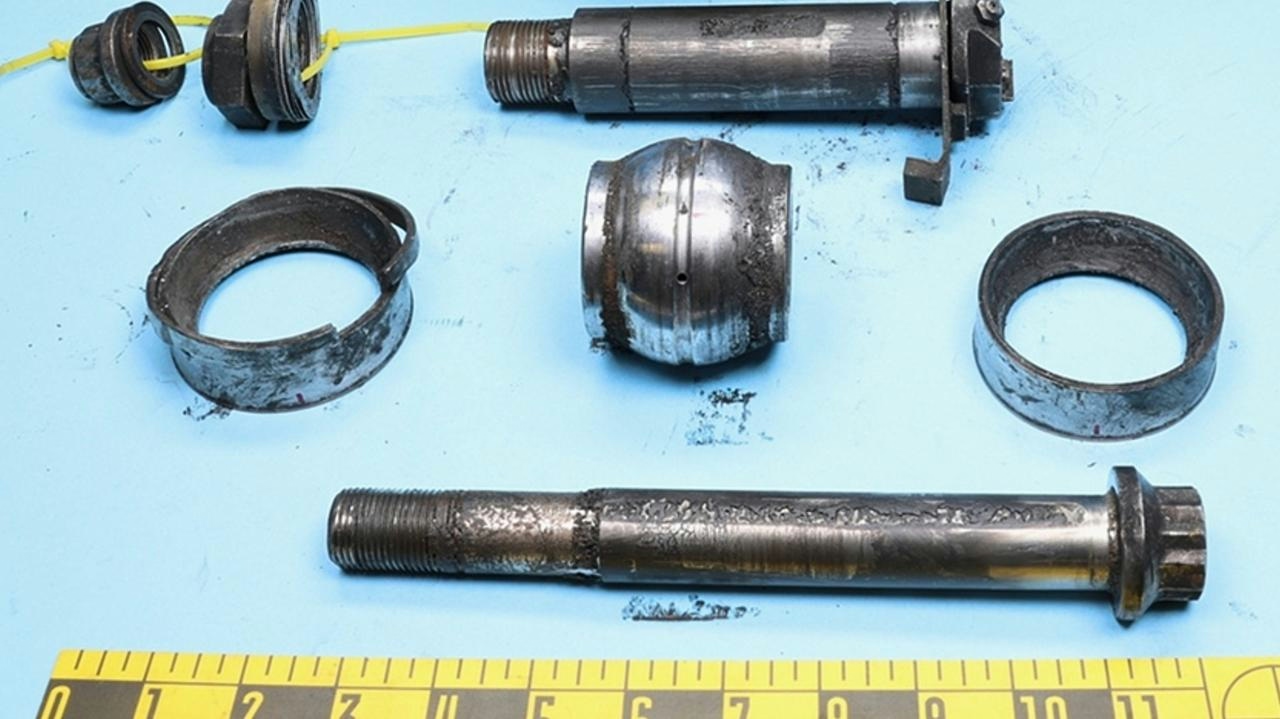
A fatal crash involving a UPS cargo plane last year, which claimed 15 lives, might have been averted had a more stringent inspection regimen been enforced, according to testimony presented at a National Transportation Safety Board (NTSB) hearing on Wednesday. The investigation revealed that inspection intervals for vital engine mount components were extended following Boeing’s recommendation, a change subsequently approved by federal regulators.
Investigation Reveals Flaws in Inspection Approval Process
The NTSB disclosed that Boeing’s 2015 petition to lengthen inspection intervals relied on outdated data and neglected to consider seven prior occurrences of similar part failures within the same aircraft model. Despite these significant warning signs, the Federal Aviation Administration (FAA) granted approval after a cursory one-month review, without requesting further information or conducting a more thorough evaluation.
Aviation safety expert Jeff Guzzetti emphasized the shared responsibility among airlines, manufacturers, and regulators in maintaining safety standards. He noted that the NTSB is working to delineate the specific roles and accountability of each party involved.
The hearings further revealed a fundamental misunderstanding by Boeing and FAA officials regarding the risks posed by potential failure of a steel bearing and metal sheath located deep within the engine pylons. These components are challenging to inspect without engine removal. Fatigue or failure in these bearings can impose abnormal stress on the lugs securing the engines to the MD-11’s wings, increasing the risk of engine detachment.
Consequences of Extended Inspection Intervals
Boeing successfully extended the inspection interval from once every 19,900 takeoff and landing cycles to once every 29,260 cycles, justifying the change as a means to synchronize major maintenance tasks and reduce aircraft downtime. However, this request came despite reports of seven bearing defects occurring well before the original inspection threshold. In the years following the relaxation of the inspection schedule, three additional failures were identified prior to the crash.
The UPS aircraft involved had completed 21,043 cycles, which would have triggered a comprehensive inspection under the original schedule. The engine detached while the plane was accelerating on the runway at Louisville’s Muhammad Ali International Airport, resulting in the deaths of all three crew members and 12 individuals on the ground, with 23 others sustaining injuries.
The NTSB investigation underscored the critical importance of addressing bearing fatigue within engine pylons, as such failures can precipitate catastrophic engine separation. This incident represents only the second recorded case of an MD-11 losing an engine in a crash; the earlier event, occurring decades prior, was attributed to improper maintenance rather than a design defect.
Greg Raiff, proprietor of multiple aviation maintenance firms, highlighted that operators are bound to adhere to federally approved maintenance schedules, underscoring the pivotal role of regulators in ensuring that safety standards remain rigorous and current.

Etihad Airways Suspends Airbus A380 Flights on Key Route

Aditya Birla Group Seeks Approval for Aircraft Leasing in GIFT City

Qatar Airways Highlights Innovation and Connectivity at Arabian Travel Market 2026

Hong Kong's Five-Year Plan Includes Andrew Fan's Aircraft Parts Processing Hub Proposal

ACIA Aero Leasing Delivers ATR72-600 to Air Nostrum

RTX Appoints Jill Albertelli as Head of Pratt & Whitney

TAT Technologies Joins Beyond Aero Hydrogen Aircraft Program

AURAK Study Highlights Barriers to Air Taxi Adoption in Emerging Economies

Xiamen Air Selects Altitude for 787 Maintenance at Heathrow

Etihad and Swissport Extend Global Partnership
