
画像

AIによるインサイトを行動へとつなげる

今すぐAeroGenieのウェイティングリストに登録しよう!

現在のトレンド

Categories

Oman Air to Highlight Digital Innovation at COMEX 2025
July 11, 2025By ePlane AI
Oman Air to Highlight Digital Innovation at COMEX 2025
0
0
Oman Air
Digital Innovation
Smart Travel Solutions

Oman Air to Highlight Digital Innovation at COMEX 2025

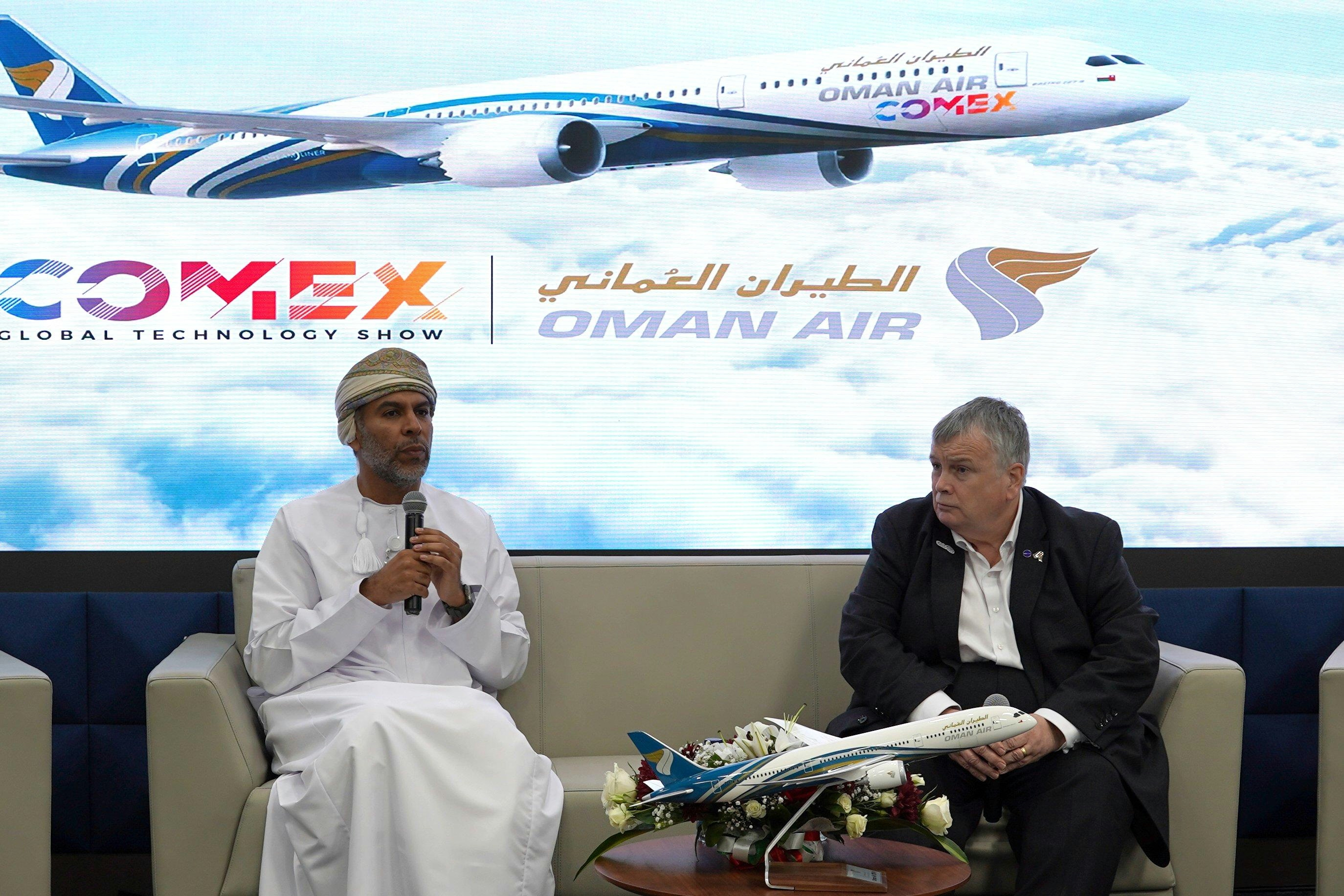
Oman Air, the national carrier of the Sultanate of Oman, has been appointed the Official Airline Partner for COMEX 2025, reinforcing its dedication to digital innovation and smart travel solutions. The partnership positions Oman Air prominently at Oman’s largest technology and innovation exhibition, scheduled to take place from September 7 to 10, 2025, at the Oman Convention & Exhibition Centre. The event is anticipated to draw global technology leaders and innovation experts, further establishing Oman as a regional hub for digital advancement.

Advancing Digital Transformation in Aviation

In an industry undergoing rapid technological evolution, Oman Air’s collaboration with COMEX 2025 represents a significant step in its ongoing digital transformation journey. The airline has introduced a range of technological enhancements aimed at improving and personalizing the travel experience. These include direct digital booking platforms, self-service check-in options, and an expanded portfolio of Oman Air Holidays packages. These initiatives form part of a comprehensive strategy to maintain competitiveness amid swift advancements in aviation technology.

Oman Air’s recent integration into the Oneworld Alliance has further bolstered its digital credentials, providing passengers with seamless connectivity to over 900 destinations across more than 170 countries. This strategic alliance, coupled with planned cabin upgrades under the leadership of CEO Con Korfiatis, underscores the airline’s commitment to modernization and digital integration. Such developments are expected to influence the competitive dynamics of the region’s aviation sector, as rival carriers respond with their own innovation initiatives and partnerships.

Mike Rutter, Chief Commercial Officer of Oman Air, emphasized the significance of the partnership, stating, “We are delighted to host COMEX 2025 and display our commitment towards digital innovation. This event marks another milestone towards becoming a smart aviation leader, as Oman strives to become the region’s digital hub. Through the event, we want to demonstrate how Oman Air is transforming travel in the digital age, introducing new experiences to our guests.”

Showcasing Innovation at COMEX 2025

At COMEX 2025, Oman Air will showcase its latest digital capabilities alongside its award-winning service standards. Visitors will have the opportunity to engage with interactive displays illustrating how technology is shaping the future of air travel. The airline will also present its flagship Business Studio cabin, noted for its luxury and advanced features, and highlight its newest travel offerings at a dedicated exhibition booth.

To enhance the event’s visibility and impact, Oman Air plans to implement a series of support initiatives. These include prominent aircraft decals, digital activations across the airline’s platforms, and co-branded content integrated into its inflight entertainment system. Such efforts aim to amplify the reach of COMEX 2025 and reinforce Oman’s positioning as a leader in digital travel and tourism.

In addition, Oman Air will provide specialized travel assistance for regional and international delegates attending the expo, further solidifying its role as a facilitator of innovation and connectivity. While the airline’s digital initiatives are expected to strengthen its market position, industry analysts note that competitor responses and market dynamics will be critical in shaping the long-term outcomes of Oman Air’s digital transformation.

With a clear strategic focus on modernization and digital integration, Oman Air’s participation in COMEX 2025 is poised to highlight both the opportunities and challenges inherent in leading within a rapidly evolving aviation landscape.

More news
Airbus Partners with Indamer Technics to Establish South Asia’s First Radome Repair Facility in Nagpur

Airbus Partners with Indamer Technics to Establish South Asia’s First Radome Repair Facility in Nagpur

Airbus and Indamer Technics Establish South Asia’s First Radome Repair Facility in Nagpur European aerospace leader Airbus has joined forces with Indamer Technics to inaugurate South Asia’s first dedicated radome repair facility in Nagpur, India. This collaboration marks a pivotal advancement in enhancing the region’s maintenance, repair, and overhaul (MRO) infrastructure, particularly for commercial aircraft. Expanding MRO Capabilities in India Under the terms of the partnership, Indamer Technics will operate as an authorised centre for the repair, storage, and exchange of radomes for Airbus aircraft models including the A320, A330, A350, and A380. The Nagpur facility will provide a comprehensive range of services such as structural inspections, advanced non-destructive testing (NDT), paint stripping and repainting, as well as both major and minor repairs. All work performed will adhere to stringent Release to Service (RTS) certification standards, ensuring the highest levels of safety and quality. Prajay Patel, Director of Indamer Technics, emphasized the significance of the agreement, describing it as a testament to the company’s engineering capabilities. He stated that safety and precision remain paramount, and the partnership represents a critical step toward positioning India as a self-reliant, world-class aerospace MRO hub. Jürgen Westermeier, President and Managing Director of Airbus India and South Asia, underscored the strategic value of the facility in supporting the Government of India’s ‘Make in India’ initiative. He noted that by localising these essential maintenance services in Nagpur, Airbus aims to reduce turnaround times and bolster the region’s capacity to manage an anticipated surge in aircraft fleet size. Strategic Importance of Radome Maintenance The radome, located at the aircraft’s nose cone, serves as a vital weatherproof enclosure that protects radar and antenna systems from environmental hazards such as hail, bird strikes, and aerodynamic forces, while allowing uninterrupted electromagnetic signal transmission. The establishment of this repair centre is expected to play a crucial role in supporting airline operations across South Asia, particularly as the region prepares for increased deployment of widebody aircraft and seeks to optimise maintenance for single-aisle fleets. Despite the promising outlook, the partnership must navigate several challenges, including India’s complex regulatory framework, the need to secure a skilled workforce, and the management of supply chain logistics. Additionally, the move is likely to intensify competition within the regional MRO market, with major players such as Boeing and COMAC anticipated to expand their own service offerings in response. Airbus regards this collaboration as a foundational step toward building a localised avionics repair network throughout South Asia. The initiative not only addresses the demands of a rapidly growing aviation sector but also establishes a platform for future expansion of Airbus’ repair capabilities in the region. Indamer Technics operates as a wholly owned subsidiary of Horizon Aero Solutions Limited, a joint venture between Adani Defence & Aerospace and Prime Aero. With this partnership, all Airbus programme radomes for the A320, A330, A350, and A380 families will now be serviced locally at the Nagpur facility, reinforcing India’s emerging status as a key hub for aerospace maintenance and repair.
Air Sénégal Takes Delivery of Its First Boeing 737-800

Air Sénégal Takes Delivery of Its First Boeing 737-800

Air Sénégal Takes Delivery of Its First Boeing 737-800, Signaling Fleet Expansion and Regional Ambitions Air Sénégal has officially received its first Boeing 737-800 aircraft, marking a significant milestone in the airline’s fleet expansion and modernization efforts. Fully financed and managed by the Senegalese government, this acquisition highlights the state’s commitment to enhancing the national carrier’s operational capacity and competitiveness across regional and international markets. The announcement, made through a statement by Dakar-based news agency Seneweb, underscores the strategic importance placed on Air Sénégal as a key player in the country’s economic development and connectivity. Government Support and Strategic Role of the New Aircraft CEO Tidiane Ndiaye attributed the purchase to strong government backing, describing it as a clear endorsement of Air Sénégal’s growth trajectory. While the airline has not disclosed specific details regarding the aircraft’s registration, delivery date, or previous operator, nor clarified whether the plane is owned outright or leased, industry observers anticipate further information as the airline integrates the jet into its operations. The Boeing 737-800 will serve a prominent role as the official aircraft for the Dakar 2026 Youth Olympic Games, scheduled from October 31 to November 13. It is set to transport the Olympic flame to Senegal and will be adorned with a special Dakar 2026 livery, promoting the first Olympic Games to be hosted on African soil. This high-profile assignment reflects the aircraft’s symbolic and practical significance within Air Sénégal’s fleet. Fleet Modernization and Regional Market Dynamics This delivery is part of a broader fleet modernization strategy aimed at building a stronger, more competitive national airline. In the first quarter of 2026, the Senegalese government allocated XOF27 billion (approximately USD 47.7 million) in financial support to Air Sénégal, including operating subsidies and investment transfers. Half of these funds were designated for the acquisition of two new aircraft, underscoring the government’s long-term vision for the carrier. Air Sénégal’s expansion aligns with a wider trend of fleet renewal among African airlines. For instance, Nigeria’s ValueJet has also incorporated Boeing 737-800s into its fleet, reflecting a regional push toward modernization and enhanced service quality. However, integrating new aircraft presents operational challenges such as crew training, maintenance, and schedule adjustments, which may affect short-term performance as the airline adapts to its evolving fleet. The airline’s growth is expected to intensify competition within the regional aviation market, potentially challenging established carriers such as Royal Air Maroc, Ethiopian Airlines, and Gulf-based operators. These competitors may respond by refining their fleet strategies, adjusting pricing models, or enhancing service offerings to maintain their market positions. Current Fleet and Future Orders At present, Air Sénégal wet leases two Boeing 737-800s from GetJet Airlines for regional routes including Abidjan, Cotonou, Conakry, Casablanca, and Tenerife, according to ADS-B data. Additionally, it leases a Boeing 777-200ER from MyWay Airlines for services to Paris Charles de Gaulle. The airline’s owned fleet includes two ATR72-600 turboprops, with only one currently active on domestic and regional routes. In November 2025, Air Sénégal placed an order for nine Boeing 737-8 aircraft, with six additional options, signaling a clear intent to expand its regional and international footprint. As the airline advances its modernization program, its ability to successfully integrate new aircraft and navigate a competitive landscape will be closely observed within the African aviation sector.
HAL Receives Three Additional GE F404 Engines for Tejas Mk1A, Total Now Ten

HAL Receives Three Additional GE F404 Engines for Tejas Mk1A, Total Now Ten

HAL Receives Three Additional GE F404 Engines for Tejas Mk1A, Total Now Ten US defense contractor GE Aerospace has delivered three more F404-IN20 engines to Hindustan Aeronautics Limited (HAL) for India’s Light Combat Aircraft (LCA) Tejas Mk1A program, increasing the total number of engines supplied to ten. This latest shipment, completed in August, forms part of a broader contract to provide 99 engines for the indigenous fighter fleet. The F404-IN20 Engine and Its Significance The F404 engine, regarded by GE Aerospace as one of the most successful military aviation powerplants globally, powers thousands of combat aircraft. The F404-IN20 variant is specifically designed for India’s single-engine Tejas, offering the highest thrust within the F404 family. It features a higher-flow fan, unique single-crystal turbine blades, and several specialized components tailored to the aircraft’s operational requirements. While HAL’s production line for the Tejas Mk1A is operational, the pace of aircraft deliveries has been constrained by delays in engine supply. Engine availability remains a critical bottleneck, prompting HAL to impose contractual penalties on GE for late deliveries. HAL officials confirmed that the contract includes provisions for liquidated damages should GE fail to meet delivery schedules, with penalties being enforced accordingly. Production Commitments and Challenges Ahead Former HAL Chairman DK Sunil has indicated that GE has committed to delivering 20 F404 engines between June and December 2026. The Indian Air Force’s order of 180 LCA Mk1A aircraft underscores the urgency of timely engine deliveries to meet operational demands. GE Aerospace had previously fulfilled an earlier commitment by delivering 65 F404-IN20 engines by 2016. Following a pause in orders, production was halted. However, the 2021 contract with HAL, valued at ₹5,375 crore, led GE to restart the F404-IN20 production line after a five-year hiatus and to re-engage its global supply chain. Despite recent deliveries, HAL continues to face challenges in securing additional engines. Industry analysts highlight that production delays and quality control issues—concerns also raised by the U.S. Air Force regarding current jet engine manufacturing—could further affect the Tejas program’s timeline. These difficulties arise amid intensifying competition in the military engine market. Notably, French manufacturer Safran is collaborating with HAL to develop a new turboshaft engine, indicating potential shifts in future procurement strategies. Market observers anticipate that these developments may prompt rival engine manufacturers to intensify efforts to secure defense contracts and enhance their technological offerings to meet evolving military requirements. As HAL and GE Aerospace maintain their partnership, overcoming supply chain obstacles remains critical to ensuring the timely induction of the Tejas Mk1A into the Indian Air Force.
Airbus A330neo Deliveries Suspended for Nearly Three Months Due to Quality Issue

Airbus A330neo Deliveries Suspended for Nearly Three Months Due to Quality Issue

Airbus Suspends A330neo Deliveries for Nearly Three Months Amid Quality Concerns Airbus temporarily halted deliveries of its A330neo aircraft for close to three months after identifying a quality issue with the horizontal tail plane. This disruption occurred during a period of robust market demand, significantly affecting the handover process. Airbus described the problem as isolated, confirming that the root cause has been identified and that deliveries have since resumed. Production and Delivery Impact Between March and May, Airbus delivered nine A330neos—three in March, two in April, and four in May. However, no deliveries took place in June or July, marking a notable interruption. The suspension ended on August 11, when Starlux Airlines received an A330-900, the sole A330neo delivered that month. Despite the delivery pause, Airbus maintained production, continuing to build aircraft while implementing additional inspections. These extra checks slowed the handover process, with some jets awaiting further inspection or corrective work before being handed over to customers. Airbus has not disclosed the specific details of the tail plane issue or the number of aircraft affected but emphasized that there is no evidence of any impact on A330neos already in service. Backlog and Market Response The delivery suspension coincides with the A330neo program’s largest backlog since its launch. As of July, Airbus reported 523 firm orders for the two A330neo variants, with 126 aircraft delivered. The A330-900 dominates the order book with 511 orders and 119 deliveries following the August handover to Starlux. The smaller A330-800 has recorded only 12 orders, with eight delivered. Approximately 396 A330neos remain undelivered, representing about three-quarters of all orders. Market reactions to the delivery halt have been mixed. Some investors have expressed concerns about Airbus’s ability to meet its delivery targets, particularly as the company plans to increase A330 production from around four to five aircraft per month by 2029. Others regard the issue as a contained setback rather than indicative of broader systemic problems. Meanwhile, competitors have subtly capitalized on the disruption; Boeing, for example, surpassed Airbus in aircraft deliveries in August. Ongoing Challenges and Future Outlook The delivery pause adds to Airbus’s ongoing challenges, which include supply chain delays and quality issues affecting other aircraft components. Nevertheless, the manufacturer remains committed to ramping up production to meet its 2026 delivery goals. Airlines continue to seek replacements for aging widebody fleets and alternatives to the Boeing 787 and larger Airbus A350 models. Although monthly production and delivery figures do not always align precisely, the sharp decline in A330neo handovers following the quality issue underscores the vulnerability of Airbus’s delivery schedule to manufacturing disruptions. With deliveries now resumed, Airbus is focused on clearing the backlog and regaining momentum in a highly competitive market.
Junkers G.38 Featured Passenger Seats Inside Its Wings

Junkers G.38 Featured Passenger Seats Inside Its Wings

Junkers G.38: The Airliner That Seated Passengers Inside Its Wings The Junkers G.38, a remarkable feat of 1920s aeronautical engineering, featured an exceptionally thick wing—measuring approximately two metres at the root—that enabled a daring and unconventional design choice: seating passengers within the wings themselves. This innovation was a direct expression of Hugo Junkers’ vision of the “flying wing,” where the aircraft’s wing served not only as a structural and aerodynamic element but also as habitable space for passengers. Design and Innovation On the second G.38 aircraft, six passengers were accommodated in the leading edge of the wing, positioned between the fuselage and the inner engines. These passengers enjoyed panoramic views through forward-facing glazing, an experience that would rival modern standards of in-flight sightseeing. The wing’s internal volume was also designed to allow mechanics to move through corridors inside the wing to service engines during flight, underscoring the aircraft’s pioneering and unconventional approach to both passenger comfort and operational functionality. The G.38’s wingspan extended to 44 metres, with a root thickness of about two metres, supporting a crew of seven and carrying up to 34 passengers on the second aircraft. Powered by four engines—culminating in Jumo diesel variants—the aircraft cruised at approximately 175 km/h, with a maximum speed near 225 km/h. Only two units were built in Germany, with six additional license-built versions produced in Japan as the Mitsubishi Ki-20. No examples of the G.38 survive today. Reception and Challenges Junkers’ thick-wing concept was grounded in his belief that the future of aviation lay in the flying wing design, where the entire aircraft would function as a lifting surface, rendering the traditional fuselage nearly obsolete. The G.38 embodied this philosophy, with its massive wing dominating the aircraft’s structure and the fuselage appearing as a secondary appendage beneath it. Despite its ingenuity, the idea of seating passengers inside the wings was met with skepticism. The German technical press of the era expressed reservations, suggesting that the wing cabins were better suited for freight, while passenger accommodations should remain within the fuselage. Contemporary engineers questioned the practicality and comfort of wing seating, raising concerns about safety, evacuation procedures, and the structural complexities involved in maintaining such an intricate internal wing design. Regulatory authorities were cautious about approving such radical departures from conventional aircraft layouts, and the market response reflected this wariness. Airlines and passengers alike preferred the familiarity and perceived safety of traditional fuselage cabins. Competitors continued to focus on conventional designs that prioritized passenger comfort and straightforward safety standards. Legacy Although the G.38’s wing seating concept never gained widespread acceptance, its bold experimentation remains a significant chapter in the history of aircraft design. The challenges it faced highlight the complexities of innovation in aviation, where safety, practicality, and passenger acceptance are paramount. Today, as the global aircraft passenger seating market evolves amid rising air traffic and fleet renewal programs, the G.38’s pioneering spirit continues to resonate in ongoing discussions about new and imaginative approaches to aircraft interiors.
Aviation Expert Highlights PD-8 Engine's Potential for SJ-100

Aviation Expert Highlights PD-8 Engine's Potential for SJ-100

Aviation Expert Highlights PD-8 Engine’s Potential for SJ-100 Amid Industry Scrutiny Certification and Service Life Prospects The PD-8 engine, designed for Russia’s SJ-100 regional jet, currently holds a certified service resource of approximately 80 cycles. However, aviation experts caution that this figure should not be interpreted as the engine’s definitive operational lifespan. According to SkyExpert, an industry analyst, the 80-cycle certification reflects the actual operating time of experimental engines at the point of certification rather than a fixed limit. As the engine accumulates more operational data, this certified resource is expected to increase. This discussion was prompted by remarks from Gennady Abramenkov, Deputy Head of the Ministry of Industry and Trade, who emphasized that the current certified resource does not determine the SJ-100’s competitiveness. Abramenkov highlighted ongoing plans to extend the engine’s service life, potentially beyond the aircraft’s own operational duration. He drew parallels with the French SaM146 engine, which similarly saw its certified resource extended as additional data became available. SkyExpert further clarified that the 80-cycle figure is not an arbitrary cap imposed by developers. Certification authorities require documented evidence of engine performance, meaning only the cycles actually completed during testing can be officially recorded. “The logic is straightforward: the engine must complete a certain number of cycles, after which specialists assess its condition. If it meets requirements, that figure becomes the certified resource,” SkyExpert explained. Without sufficient operational statistics, it is impossible to claim a higher figure in official documentation. This methodology positions the current 80-cycle resource as a confirmed milestone rather than a ceiling. As the PD-8 undergoes further testing and enters regular service, accumulated operational statistics will enable a gradual increase in its certified resource. Challenges and Market Dynamics Despite these assurances, the PD-8 engine and the SJ-100 aircraft face significant challenges. Ensuring the engine’s reliability and scalability remains critical, particularly given the stringent safety standards governing the aviation industry. Market reactions have been mixed, with some investors expressing concern over the SJ-100’s reported overweight and lower fuel efficiency relative to Western competitors. These factors could affect the aircraft’s commercial appeal, especially in international markets. Competitors are expected to respond by enhancing their own engine offerings to match or surpass the PD-8’s performance. Additionally, issues such as customer service and parts availability are anticipated to play a crucial role in shaping the competitive landscape. While the PD-8’s current certified resource is limited by available test data, industry experts and officials remain confident that ongoing testing and operational experience will yield significant improvements. The engine’s future competitiveness will depend not only on technical advancements but also on how effectively developers address challenges related to reliability, efficiency, and support within a rapidly evolving global market.
AnimaWings Chooses SAMCO for Airbus A220 Maintenance

AnimaWings Chooses SAMCO for Airbus A220 Maintenance

AnimaWings Selects SAMCO for Airbus A220 Fleet Maintenance Amid Industry Challenges AnimaWings has appointed SAMCO Aircraft Maintenance (SAMCO) as the base maintenance provider for its Airbus A220 fleet, solidifying a partnership grounded in close cooperation and technical expertise. The newly signed agreement is designed to ensure the safety, reliability, and operational availability of AnimaWings’ growing A220 fleet, with SAMCO delivering customized base maintenance services. Maintenance activities will be carefully planned and managed in collaboration with AnimaWings, facilitating efficient turnaround times and timely aircraft returns. Expertise and Operational Adaptability SAMCO’s experienced engineering teams bring extensive knowledge of the A220 platform, committed to maintaining high standards of workmanship and customer support. The company’s flexible approach allows it to tailor services to AnimaWings’ specific operational requirements, thereby minimizing aircraft downtime and ensuring transparency throughout the maintenance process. This partnership emerges at a critical juncture for the industry, as airlines operating the Airbus A220 contend with ongoing challenges related to the Geared Turbofan (GTF) engine groundings. These issues have impacted multiple carriers, intensifying scrutiny of maintenance capabilities and reliability across the sector. AnimaWings’ decision to collaborate with SAMCO underscores its dedication to robust maintenance practices, while potentially attracting attention from competitors seeking to emphasize their own maintenance arrangements or capitalize on market uncertainties. Industry Context and Strategic Implications The recent expansion of Airbus’ Belfast facility, aimed at increasing A220 wing production, may also influence AnimaWings’ maintenance strategy and operational costs. As the supply chain for A220 components evolves, both AnimaWings and SAMCO will likely need to adjust their collaboration to accommodate changes in parts availability and fleet growth. For SAMCO, the agreement reinforces its commitment to strengthening its role as a trusted maintenance provider for A220 operators across Europe and beyond. By combining technical expertise with responsive service and close customer cooperation, SAMCO aims to provide sustained support throughout the aircraft lifecycle. Both companies regard the agreement as a significant milestone that highlights their shared focus on safety, quality, efficiency, and reliable fleet operations. As the aviation landscape continues to evolve, the partnership between AnimaWings and SAMCO will face industry-wide challenges but also stands to benefit from emerging opportunities linked to fleet expansion and shifting maintenance demands.
JCB Aero Obtains Boeing Part 145 Maintenance Certification

JCB Aero Obtains Boeing Part 145 Maintenance Certification

JCB Aero Expands MRO Services with Boeing Part 145 Certification Strategic Growth in Maintenance Capabilities JCB Aero, headquartered in Auch near Toulouse, has announced a significant advancement in its Maintenance, Repair, and Overhaul (MRO) operations following the acquisition of Boeing Part 145 maintenance certification. Since launching its MRO services in October 2024 with a focus on Airbus aircraft, the company has successfully completed numerous maintenance projects, establishing a strong presence within the sector. The recent certification, granted in August 2026, authorizes JCB Aero to conduct both Base and Line Maintenance on Boeing B737 aircraft, including the B737-600, B737-700, B737-800, and B737-900 models. This development marks a pivotal expansion of JCB Aero’s service portfolio, enabling the company to extend its offerings to Boeing operators and thereby broaden its customer base. The certification reinforces JCB Aero’s competitive position in the MRO market, allowing it to serve a wider range of aircraft and meet the evolving needs of its clients. Industry Impact and Future Outlook Sébastien Kubler, Chief Operating Officer at JCB Aero, emphasized the significance of the certification, stating that it represents a major milestone in the company’s growth. He highlighted that integrating Boeing 737 maintenance capabilities alongside existing Airbus services enhances JCB Aero’s flexibility and responsiveness as an MRO partner. Kubler also acknowledged the achievement as a testament to the dedication and expertise of the company’s teams. The expansion occurs amid intensifying competition within the MRO sector. Industry analysts suggest that JCB Aero’s new certification may prompt rival firms to upgrade their maintenance capabilities and seek similar approvals to safeguard their market positions. This shift could lead to increased scrutiny of maintenance standards across the industry and potentially alter supplier relationships, as operators reassess their options in response to JCB Aero’s broadened service offerings. JCB Aero has already begun issuing quotations for Boeing maintenance projects and expects to receive several Boeing aircraft at its facilities in the near future. The company remains committed to delivering high-quality, efficient service to both Airbus and Boeing operators while adapting to the dynamic landscape of the MRO industry.
ExecuJet MRO Services Completes Cabin Refurbishment on Embraer Legacy 650

ExecuJet MRO Services Completes Cabin Refurbishment on Embraer Legacy 650

ExecuJet MRO Services Completes Cabin Refurbishment on Embraer Legacy 650 Comprehensive Overhaul Undertaken in Dubai ExecuJet MRO Services Middle East has successfully completed a full cabin refurbishment and exterior livery update on an Embraer Legacy 650 at its dedicated facility in Dubai. This project, conducted within a 15,344m² air-conditioned hangar, represents a significant advancement for the region’s aerospace sector by demonstrating the capability to perform extensive cabin overhauls and aircraft painting locally—services that were traditionally outsourced to international maintenance, repair, and overhaul (MRO) providers. The refurbishment encompassed a complete revarnish of the aircraft’s cabinetry, installation of new carpeting, and the re-covering of dado panels, overhead panels, sidewalls, and ceiling. Metallic components were replated to align with a refreshed color scheme. The cabin seats were entirely redesigned, incorporating modern aesthetics alongside new foam and leather upholstery. This process was executed in close collaboration with Embraer and the seat manufacturer to ensure full compliance with rigorous regulatory safety standards for 16G aircraft seats. The outcome is a contemporary and luxurious cabin environment that complements the aircraft’s updated exterior livery. Strategic Significance and Operational Challenges Nick Weber, Regional Vice President Middle East at ExecuJet MRO Services, emphasized the strategic importance of this achievement, noting that the ability to provide heavy base maintenance, aircraft painting, and cabin refurbishment from a single airport location strengthens Dubai’s position as a growing hub for aircraft MRO services. He highlighted the increasing regional demand for cabin upgrades and the company’s ongoing expansion of in-house capabilities, which serve to reduce aircraft downtime and enhance customer satisfaction. Despite these successes, ExecuJet faces operational challenges, including managing the servicing of both legacy and newer aircraft fleets, balancing repair and replacement of parts, and expanding engine support capacity across diverse geographic areas. Addressing these complexities requires continuous investment in workforce skills, advanced technology, and supply chain management. Market Impact and Industry Position The market has responded positively to ExecuJet’s enhanced service offerings, with rising demand for specialized MRO services tailored to aircraft such as the Embraer Legacy 650. This development is expected to prompt competitors to strengthen their refurbishment capabilities and seek strategic partnerships to maintain competitiveness within the evolving MRO landscape. ExecuJet MRO Services Middle East supports a broad range of aircraft, including models from Dassault Aviation, Bombardier, Embraer, and Hawker. As an authorized service center for Embraer business jets and a wholly owned subsidiary of Dassault Aviation, the company adheres to the world’s most stringent regulatory and safety standards. Its engineers are trained and certified across multiple aircraft platforms, positioning ExecuJet as a leader in airframe, avionics, and engine maintenance. For further details, visit www.execujet-mro.com.
PD-8 Engine Durability Significantly Lower Than SaM146

PD-8 Engine Durability Significantly Lower Than SaM146

PD-8 Engine Durability Significantly Lower Than SaM146, Raising Industry Concerns The Russian-developed PD-8 engine, intended to power the domestically produced SJ-100 aircraft, currently has a declared service life of approximately 80 cycles, equivalent to around 40 flights. This figure stands in stark contrast to the French-Russian SaM146 engine, whose durability was enhanced by manufacturer ODK to at least 3,000 flight cycles from an initial 1,000. The PD-8’s current service life is therefore roughly 37.5 times shorter than that of the SaM146, a disparity that has elicited concern within the aviation sector. Industry Response and Planned Improvements Gennady Abramenkov, Deputy Head of the Ministry of Industry and Trade, acknowledged the PD-8’s limited service life but stressed that this factor alone does not determine the engine’s overall competitiveness. He highlighted that plans are underway to extend the PD-8’s durability, following a common global industry practice where engine service life is progressively increased, often surpassing the operational lifespan of the aircraft itself. Abramenkov cited the SaM146 as an example, noting that its service life was similarly extended well before the aircraft reached its maximum flight hours. Despite these assurances, the PD-8’s current durability presents tangible challenges. The significantly reduced service life may lead to increased maintenance costs and more frequent operational interruptions for airlines. This has generated skepticism among potential customers and operators, many of whom prioritize engine reliability and long-term performance. Andrey Patrakov, a former Airbus auditor, remarked to "Pervy Tekhnichesky" that the true service life of the PD-8 remains uncertain and will only be definitively established after extensive, multi-year operational testing. Market and Regulatory Implications The durability gap between the PD-8 and its competitors carries broader market implications. Rival engine manufacturers, including those producing the CFM LEAP and Pratt & Whitney GTF engines, may leverage the PD-8’s shortcomings to emphasize the superior durability and performance of their own products, potentially attracting customers with concerns about reliability. Furthermore, the PD-8’s limited service life is likely to invite heightened scrutiny from regulatory authorities, which could impose stricter compliance requirements on operators. As the PD-8 enters service, its long-term viability will hinge on the success of planned durability enhancements and the developers’ ability to address industry concerns. Until these improvements are realized, questions surrounding maintenance costs, operational reliability, and regulatory compliance are expected to persist, influencing both market perception and the competitive dynamics of Russian-made aircraft engines.
line









