
AIによるインサイトを行動へとつなげる

現在のトレンド
Categories
Orbital Engines Chosen for Cargo Aircraft Flight Test Program
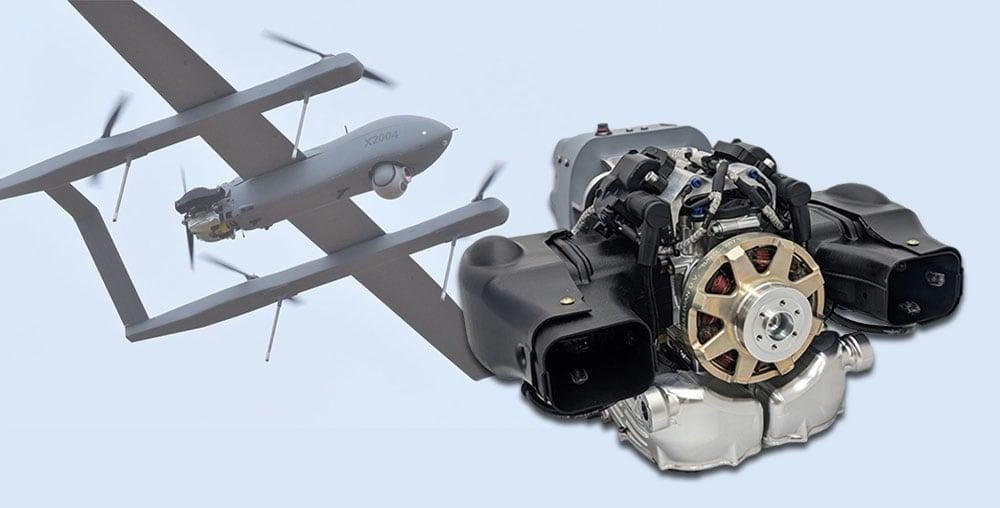
Orbital Engines Selected for MightyFly Cargo Aircraft Flight Test Program
Orbital Corporation has entered into a commercial agreement with US-based autonomous cargo aircraft developer MightyFly to supply three of its Heavy Fuel Engine propulsion systems. Scheduled for delivery in September 2026, these engines will support MightyFly’s ongoing platform development and flight testing as the company advances its autonomous cargo aircraft toward commercial deployment.
Strategic Expansion into Autonomous Logistics
This agreement represents a significant milestone for Orbital as it seeks to expand its footprint in the rapidly growing autonomous middle-mile logistics sector. This emerging market increasingly relies on uncrewed aerial systems to transport high-value, time-sensitive freight, offering both operational efficiencies and economic benefits for commercial supply chains. The three propulsion systems will be central to MightyFly’s next phase of aircraft validation, potentially paving the way for subsequent production orders as the platform matures.
Stephen Pearce, CEO of Orbital Corporation Limited, highlighted the strategic importance of the partnership, stating, “MightyFly is exactly the type of commercial customer Orbital is targeting. The company is developing an innovative autonomous cargo aircraft platform addressing a rapidly emerging logistics market where autonomous aviation can deliver significant operational and economic advantages for customers transporting high-value, time-critical freight.” He further noted that the initial order is a crucial first step toward a broader commercial relationship, emphasizing the accelerated transition from development to production typical of commercial autonomous aviation programs compared to traditional defense procurement.
Challenges and Industry Implications
Despite the promising outlook, integrating Orbital’s engines into MightyFly’s autonomous aircraft presents technical and regulatory challenges. Adapting the propulsion systems to the aircraft’s unique specifications may encounter integration difficulties, while ensuring compliance with stringent aviation safety standards will be essential throughout the flight test program. Additionally, coordinating the logistical complexities of flight testing and system validation will require close collaboration between both companies.
The market has responded with increased interest in advanced propulsion technologies, as investors recognize the growth potential within autonomous logistics. This dynamic is likely to spur competitors to accelerate their own engine development efforts, fostering heightened innovation and investment across the sector.
As Orbital and MightyFly progress with the flight test program, their partnership is positioned to influence the future of autonomous cargo aviation significantly, with broader implications for supply chain efficiency and the evolution of commercial logistics.

Etihad Airways Suspends Airbus A380 Flights on Key Route

Aditya Birla Group Seeks Approval for Aircraft Leasing in GIFT City

Qatar Airways Highlights Innovation and Connectivity at Arabian Travel Market 2026

Hong Kong's Five-Year Plan Includes Andrew Fan's Aircraft Parts Processing Hub Proposal

ACIA Aero Leasing Delivers ATR72-600 to Air Nostrum

RTX Appoints Jill Albertelli as Head of Pratt & Whitney

TAT Technologies Joins Beyond Aero Hydrogen Aircraft Program

AURAK Study Highlights Barriers to Air Taxi Adoption in Emerging Economies

Xiamen Air Selects Altitude for 787 Maintenance at Heathrow

Etihad and Swissport Extend Global Partnership
