
AIによるインサイトを行動へとつなげる

現在のトレンド
Categories
Over One-Third of Loyal Travelers Would Allow AI to Change Their Hotel or Airline Choice, Report Finds
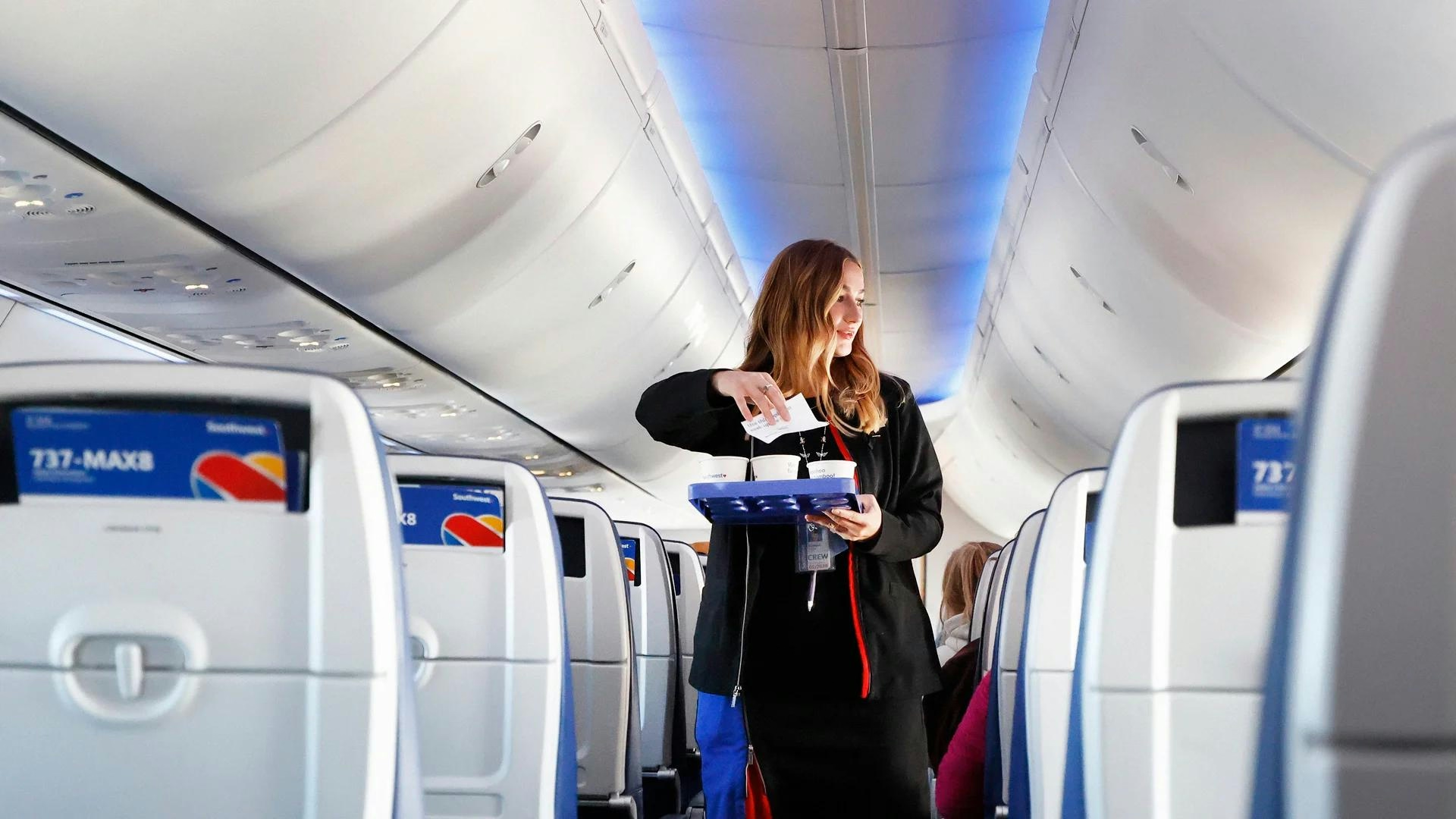
Over One-Third of Loyal Travelers Open to AI Changing Their Hotel or Airline Choice
A recent report by Accenture, titled “Talk to My AI Agent,” reveals a significant shift in consumer attitudes toward artificial intelligence in travel planning. More than one-third (36%) of loyal travelers—those who typically restrict their choices to one to three preferred brands—are willing to allow AI agents to switch their hotel or airline selections if it results in a better fit. This finding underscores a growing willingness among travelers to prioritize convenience and personalization over traditional brand loyalty.
AI’s Expanding Role in Travel Decisions
The report highlights several notable trends that illustrate the increasing influence of AI on travel commerce. A substantial 74% of respondents expressed greater trust in AI agents than in friends when making purchase decisions. Furthermore, 71% anticipate that AI will impact at least half of their travel spending within the next year, while 87% are open to collaborating with AI to identify optimal travel options.
Despite this openness, more than half of travelers (55%) still prefer to guide their AI agents by specifying which brands to consider. At the same time, 44% wish to remain actively involved in at least one aspect of their travel planning, often citing enjoyment in browsing or an emotional connection to certain travel brands.
Emily Weiss, Accenture’s global travel lead, emphasized that travelers are moving beyond using AI solely for inspiration. “Travelers are now not just using AI for ideas; they are ready to let AI agents take action,” Weiss explained. She described a process where travelers set preferences and boundaries, allowing AI to compare options, suggest choices, and occasionally complete bookings on their behalf. This evolution is reshaping brand loyalty, with decisions increasingly made in real time based on price, relevance, and alignment with traveler needs rather than longstanding allegiance.
Challenges and Industry Responses
Despite the growing reliance on AI, skepticism remains regarding the accuracy and transparency of AI-generated recommendations. A separate survey by WordPress VIP found that 86% of respondents do not fully trust AI, reflecting persistent concerns about the reliability of AI-driven information. Such doubts may slow the adoption of AI for major travel purchases like flights and hotels.
In response to these dynamics, travel managers are reevaluating their strategies to balance cost efficiency with traveler experience amid rising AI integration. Industry competitors are enhancing their AI capabilities to better align with consumer preferences and to address transparency and accuracy concerns. Providing clear, trustworthy information through AI tools is emerging as a critical competitive advantage.
Weiss advises travel companies to ensure their presence where AI agents make decisions, to simplify offer comparisons, and to clearly demonstrate value. At the same time, she underscores the continued importance of investing in human-centered experiences that foster trust and emotional connections, which remain vital in an increasingly AI-driven travel marketplace.

Etihad and Swissport Extend Global Partnership

Sepehran Airlines B737 Returns to Mashhad After Tyre and Engine Issues

Etihad Deploys Widebody Fleet to Meet Strong Demand

Korean Air Finalizes $36.2 Billion Deal with Boeing

Australia’s RFDS Queensland Section Orders Six King Air 260Cs

Korean Air Finalizes Order for 103 Boeing Jets and Engines

Embraer E195-E2 Features Distinctive Engine Placement Among Regional Jets

What Passengers Can Expect on Boeing’s New 777X Jet

How Ethiopian Airlines Became Africa’s Leading Carrier Amid Gulf Competition

Joby Aviation Extends Autonomous Flight Capabilities with Cross-Country Tour
