
画像

AIによるインサイトを行動へとつなげる

今すぐAeroGenieのウェイティングリストに登録しよう!

現在のトレンド

Categories

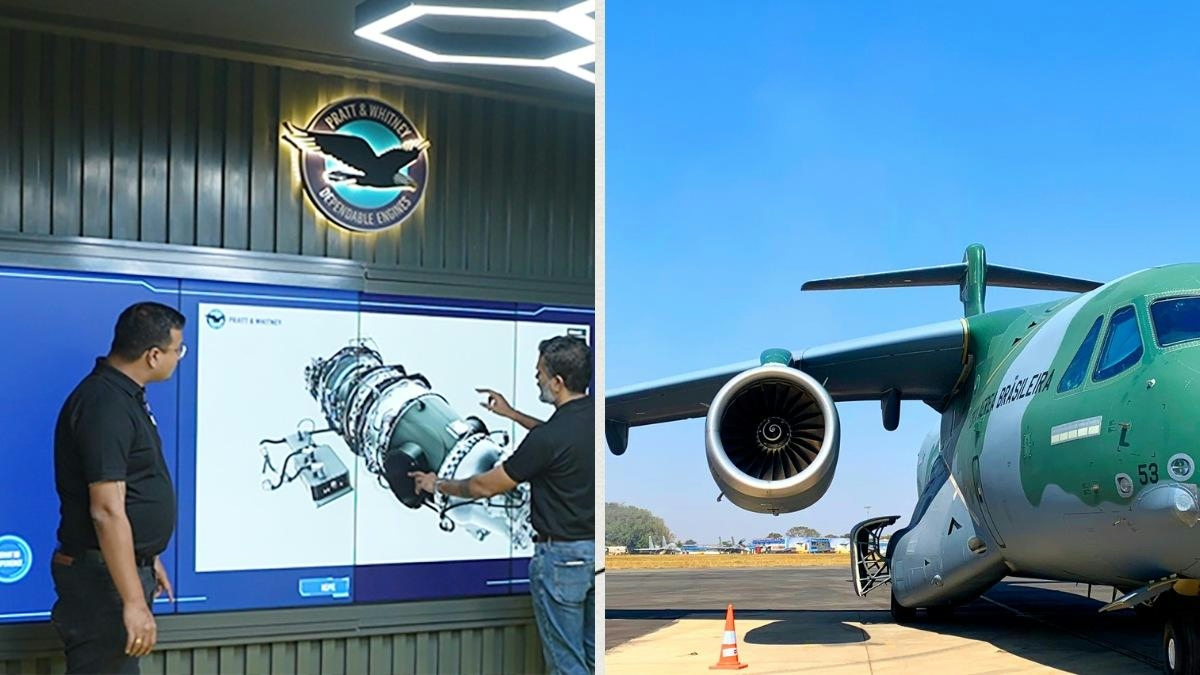
Pratt & Whitney Celebrates 100 Years in New Delhi, Highlights India Partnership and Future Aviation Innovations
January 15, 2026By ePlane AI
Pratt & Whitney Celebrates 100 Years in New Delhi, Highlights India Partnership and Future Aviation Innovations
0
0
Pratt & Whitney
India Aviation Market
Aviation Innovation

Pratt & Whitney Celebrates 100 Years in New Delhi, Emphasizes India Partnership and Future Innovations

In December 2025, Pratt & Whitney, a business unit of RTX, commemorated its centennial anniversary in New Delhi, marking a century since Frederick Rentschler revolutionized aviation with the introduction of the air-cooled R-1340 Wasp radial engine. This 1925 innovation shifted the industry away from liquid-cooled engines and established foundational engineering principles that continue to guide the company’s operations today.

Strengthening Ties with India’s Expanding Aviation Market

At the centennial event, Pratt & Whitney President Shane Eddy highlighted the company’s enduring partnership with India, which has spanned over seventy years. Eddy emphasized the company’s philosophy that “the best airplanes are designed around the best engines,” linking this approach to broader themes of economic growth and national security. He noted that Pratt & Whitney’s customers play a vital role in connecting people, fostering economic development, and defending freedom.

India’s aviation sector has emerged as the world’s third largest by passenger traffic, experiencing annual growth rates between 7 and 10 percent. The domestic market is dominated by single-aisle aircraft, while government initiatives aimed at enhancing regional connectivity have increased demand for turboprops and smaller planes. In response to this growth, Pratt & Whitney and its parent company RTX have significantly expanded their footprint in India, employing over 8,000 people across engineering, supply chain, manufacturing, digital capabilities, and training functions. Approximately 900 of these employees work directly for Pratt & Whitney.

RTX currently sources more than half a billion dollars annually from Indian suppliers, a figure expected to increase in the coming years. Over the past five years, the company has invested around $250 million in developing training, engineering, operations, and digital centers throughout India. Notable facilities include the Collins India Operations Center in Bengaluru and a Customer Training Center in Hyderabad, which serves clients across Asia and the Middle East. Engineering and digital teams distributed across the country support Pratt & Whitney’s global engine programs.

Eddy also praised the maturity of India’s aerospace supply base, describing it as a self-sustaining engine of growth. He pointed to collaborations with Indian startups that have enhanced Pratt & Whitney’s digital capabilities, citing the co-development of “Percept,” an AI-based tool that supports operational efficiency.

Navigating Industry Challenges Amidst Global Competition

Pratt & Whitney’s centennial celebration coincides with a period of intensified competition and evolving market dynamics. Airbus, a major competitor, has raised concerns regarding the availability of Pratt & Whitney engines for future aircraft, highlighting potential supply chain constraints. These challenges are compounded by forecasts in the global business aviation engine market, where significant deliveries are expected from the Williams FJ44, Honeywell HTF7000, and Pratt & Whitney Canada PT6 series. Such trends may impact Pratt & Whitney’s market position and influence its strategic partnerships both within India and internationally.

Despite these headwinds, Pratt & Whitney remains steadfast in its commitment to innovation and collaboration in India. Eddy underscored the importance of the company’s highly skilled technical teams in the country, which provide a strong foundation for expanding its presence and strengthening the supply chain.

Looking ahead, Pratt & Whitney aims to leverage its deep-rooted partnerships in India and ongoing technological advancements to navigate the rapidly evolving global aviation landscape as it embarks on its next century.

More news
This Week in Aviation: New Routes and Industry Updates

This Week in Aviation: New Routes and Industry Updates

This Week in Aviation: New Routes and Industry Updates The global aviation landscape is undergoing significant transformation as airlines announce new international routes, introduce next-generation aircraft, and enhance passenger experiences. As the industry prepares for its next phase of growth, carriers are balancing opportunities for expansion with the challenges posed by rising costs of clean technology and increasing sustainability requirements. Expansion of Long-Range Narrowbody Fleets The final week of August 2026 witnessed major developments from leading airlines, highlighting three key trends: the rapid growth of long-range narrowbody fleets, the expansion into secondary international markets, and continued investment in passenger comfort and inflight connectivity. United Airlines spearheaded this movement with the largest international network expansion in its history. For 2027, the carrier plans to add ten new international destinations, including Okinawa, Toulouse, Luxembourg, Marseille, Ibiza, Valencia, Terceira, Ljubljana, Olbia, and Catania, alongside additional routes across Europe and Asia. Many of these destinations align with the capabilities of the Airbus A321XLR, an aircraft designed to serve thinner long-haul markets efficiently. United intends to deploy the A321XLR on routes such as Newark to Luxembourg, Marseille, Ibiza, and Valencia, as well as Washington Dulles to Toulouse. International service from Washington Dulles to Amsterdam and Dublin is scheduled to commence on December 1, 2026. American Airlines also announced an expansion with seven new international routes for summer 2027. These include Philadelphia to Vienna, Porto, and Reykjavik; New York JFK to Amsterdam and Nice; Charlotte to Barcelona; and Chicago to Tokyo Narita. The A321XLR will operate several of these routes, enabling American to serve markets that previously lacked sufficient demand for larger widebody aircraft. Notably, American will become the only U.S. airline flying to Vienna. The significance of the A321XLR extends beyond the addition of new destinations. Its extended range and operational efficiency allow airlines to explore long-haul markets that would be unviable for larger aircraft, while still offering premium cabins and nonstop service. This development is expected to increase accessibility to smaller European cities from major North American hubs. Enhancing Passenger Experience with Premium Cabins The A321XLR is also reshaping passenger expectations for comfort. Qantas unveiled its next-generation Business Suite for the aircraft, featuring fully lie-flat beds on a single-aisle jet for the first time. This innovation narrows the gap between traditional short-haul narrowbodies and long-haul widebodies, as airlines such as United, American, and Qantas invest in premium cabin configurations to attract discerning travelers. Industry Challenges and Sustainability Efforts Despite the focus on network growth and product enhancements, airlines face significant challenges. The drive to adopt sustainable aviation fuel (SAF) as part of efforts to achieve net zero emissions by 2050 is increasing the costs associated with clean technology. Additionally, geopolitical disruptions and trade tensions add complexity to operational planning. Market responses to new routes are increasingly influenced by these factors, alongside competitor investments in sustainability and operational efficiency. Airlines must carefully balance expansion ambitions with regulatory requirements and evolving traveler expectations for greener, more connected journeys. Gulf Carriers Strengthen Global Presence Gulf carriers continue to expand their influence across Europe and Asia by leveraging new-generation aircraft and strategic partnerships. As the aviation industry adapts to shifting market dynamics, the coming years will test airlines’ capacity to innovate while addressing the dual imperatives of growth and sustainability.
Airbus Navigates Labor Tensions Amid Strong 2026 Orders and Deliveries

Airbus Navigates Labor Tensions Amid Strong 2026 Orders and Deliveries

Airbus Navigates Labor Tensions Amid Strong 2026 Orders and Deliveries Robust Order Growth Highlights Market Leadership Airbus continues to assert its dominance in the commercial aerospace sector, securing 821 net aircraft orders in the first half of 2026—more than double the 408 orders reported by its principal U.S. competitor, Boeing. This significant surge in demand reflects airlines’ growing preference for Airbus’s broad portfolio of narrowbody and widebody aircraft. The widening gap between Airbus and Boeing underscores the European manufacturer’s strengthened market position, particularly as Boeing’s delivery pace has decelerated, intensifying competitive pressures. Delivery Challenges and Operational Pressures Despite the strong order momentum, Airbus faces considerable operational challenges in meeting its ambitious delivery target of 870 aircraft for the year. Achieving this goal necessitates an average monthly delivery rate of approximately 90 aircraft for the remainder of 2026. However, recent delivery figures reveal a shortfall, with 67 aircraft delivered in July and 47 in August to 31 customers. This pace falls significantly below the required average, highlighting the difficulties Airbus encounters in scaling production. The disparity between the robust order intake and the current delivery cadence presents a critical concern for investors and industry analysts. The company’s ability to bridge this gap will depend heavily on resolving ongoing labor disputes, ensuring supplier reliability, and effectively managing the ramp-up of key production programs. Labor Unrest and Broader Market Context Labor tensions have emerged as a significant risk factor, with strikes and workforce unrest threatening to disrupt production schedules and delay deliveries. These challenges come at a pivotal moment as Airbus strives to capitalize on favorable market conditions. The broader European equity environment remains supportive, exemplified by the CAC 40 index’s 0.98 percent rise to 8,401.18 points on August 28, 2026. Nonetheless, company-specific issues related to labor and production continue to influence Airbus’s stock performance on a daily basis. External Variables Impacting Deliveries In addition to internal operational hurdles, Airbus must navigate external factors that affect delivery timelines. For major customers such as Air New Zealand, ongoing supply chain disruptions and the financial stability of airlines introduce further complexity. These elements compound the challenges Airbus faces in meeting its delivery commitments and sustaining its competitive advantage. As Airbus endeavors to resolve labor disputes and enhance production output, the coming months will be crucial in determining whether the company can convert its strong order book into consistent delivery performance, thereby maintaining its leadership in the global aerospace industry.
FAA Issues Emergency Directive for 957 Lycoming Engines Over Cracked Piston Pins

FAA Issues Emergency Directive for 957 Lycoming Engines Over Cracked Piston Pins

FAA Issues Emergency Directive for 957 Lycoming Engines Over Cracked Piston Pins The Federal Aviation Administration (FAA) has issued an emergency airworthiness directive addressing a critical safety concern involving 957 Lycoming piston engines. The directive, AD 2026-17-10, published in the Federal Register (91 FR 55451), targets three prominent Lycoming engine families: the O-235, O-540, and IO-540 series. These engines power a broad spectrum of general aviation aircraft, including models such as the Cessna 152, Cessna 182 Skylane, Cessna 206 Stationair, Piper PA-32 Cherokee Six, Piper Saratoga, and the Britten-Norman Islander. Immediate Inspections and Operational Restrictions Effective September 14, 2026, the FAA mandates that operators conduct thorough inspections of a specific internal engine component and replace it if necessary before any further flight. In cases where metal particulates are detected during oil inspections, aircraft must be grounded immediately until the required repairs are completed. This directive represents one of the most stringent safety measures imposed in the general aviation sector, carrying significant operational and financial consequences for aircraft owners and operators. Technical Details: The Cracked Piston Pin Central to the directive is piston pin part number LW-13445, a thin-walled steel cylinder that connects each piston to its connecting rod. This component is subjected to intense mechanical stresses during engine operation, and its lightweight design offers minimal tolerance for manufacturing defects. Lycoming’s investigation, outlined in a mandatory service bulletin, identified the root cause as changes implemented by a third-party supplier in honing and tooling processes. These alterations introduced microcracks and inclusions into the base metal, defects that evade detection during standard inspections but become critical under the repeated stresses experienced in flight. Failure of a compromised piston pin can release metal debris throughout the engine, causing damage to bearings, cylinders, and oil passages. Such damage can rapidly lead to oil starvation, engine failure, and potentially catastrophic loss of control. The FAA has already documented two instances of sudden, non-detectable engine failures in the affected models, highlighting the urgency of the directive. Industry Impact and Broader Implications The emergency directive poses immediate challenges for the aviation industry. Operators must contend with unplanned inspections, potential aircraft groundings, and increased maintenance expenditures. The surge in demand for replacement parts and repairs may also induce volatility in the aviation components market, potentially affecting prices and availability. This development may prompt competitors in the engine manufacturing sector to capitalize on the situation by promoting alternative products or solutions, thereby intensifying market competition. Moreover, the issue has ignited broader discussions within the aviation community regarding engine reliability, supply chain oversight, and manufacturer accountability. As the FAA and Lycoming collaborate to resolve the problem, the directive underscores the paramount importance of rigorous quality control in aviation manufacturing and the extensive consequences that can arise from the failure of a single critical component.
Duncan Aviation Tests Gogo 5G on Citation Excel

Duncan Aviation Tests Gogo 5G on Citation Excel

Duncan Aviation Successfully Tests Gogo 5G Connectivity on Citation Excel Duncan Aviation has completed the installation and in-flight testing of the Gogo 5G connectivity system aboard its Citation Excel (N1KD), demonstrating strong performance and reliability under real-world conditions. The company conducted a thorough evaluation involving a variety of demanding applications, including video calls, VPN access, large document downloads, and streaming services, while flying across the contiguous United States and parts of Canada. Rigorous In-Flight Evaluation The Citation Excel, which Duncan Aviation uses to transport executives and staff between company facilities, served as the platform for testing the new connectivity system. During a recent flight from Lincoln, Nebraska, to Houston, Texas, multiple team members assessed the Gogo 5G system’s capabilities before formulating recommendations for customers. Kramer Lyons, vice president and general counsel at Duncan Aviation, reported seamless connectivity throughout the journey. He described logging into the company’s Virtual Private Network (VPN), downloading documents, sending and receiving emails, and listening to an audiobook without interruption. Lyons emphasized that the Wi-Fi connection allowed him to remain fully engaged with his team while managing several projects in flight. Bruno Mazzani, business development manager for Duncan Aviation satellites, tested the system on an Android device. He noted that streaming platforms such as YouTube, Instagram, and Netflix operated smoothly without glitches. Additionally, voice and video calls on WhatsApp were clear, and he was able to share large PDF files via WhatsApp and email without any issues. To further challenge the system, Nate Klenke, manager of Lincoln completions and modifications service sales, connected 16 devices simultaneously during the flight. Klenke conducted multiple FaceTime calls and reported that both his experience and that of other passengers yielded satisfactory results. He stated that the Gogo 5G connectivity system met and, in many cases, exceeded expectations under heavy usage. PK Duncan, fleet programme manager, utilized the system during both legs of a two-hour commute. He managed emails, updated schedules, and handled Microsoft To-Do applications through Outlook. Duncan praised the stable speed and connection throughout the flight, noting that the system exceeded his already high expectations. He remarked that the reliable connectivity transformed his travel day into a productive workday rather than a disruption. Market Impact and Industry Implications Duncan Aviation’s comprehensive testing addressed potential challenges in ensuring the system’s reliability and performance in operational environments. The positive results have elicited strong market interest, with company leadership expressing high satisfaction. As advanced connectivity becomes increasingly essential in private aviation, competitors are expected to accelerate efforts to integrate similar solutions to maintain competitiveness. Gogo’s 5G air-to-ground network currently provides coverage across the contiguous United States and parts of Canada, positioning Duncan Aviation at the forefront of in-flight connectivity advancements.
Concorde’s Heir Prepares for First Engine Test

Concorde’s Heir Prepares for First Engine Test

Concorde’s Successor Approaches First Engine Test Amid Industry Hurdles Boom Supersonic, a Colorado-based aerospace firm, is on the verge of testing the first engine for its Overture passenger jet, marking a significant milestone in the revival of commercial supersonic travel. The Overture is designed to connect New York and London in approximately three and a half hours, reminiscent of the iconic Concorde’s speed. Several major airlines, including American Airlines, United Airlines, and Japan Airlines, have already placed orders or options for the aircraft. Ambitious Goals Amid Technical and Industry Challenges Boom Supersonic aims to begin carrying passengers by 2030, but the company faces a complex array of technical, regulatory, and industry-wide obstacles. Developing a new supersonic jet involves overcoming significant engineering challenges, while the broader aviation sector is grappling with production delays, quality control issues, and concerns over the obsolescence of jet engine manufacturing. These difficulties have been highlighted by recent setbacks experienced by the U.S. Air Force with current engine suppliers, as well as cost overruns and delays in projects such as the B-52 bomber upgrade. The Overture’s development is a direct response to the void left by the Concorde, which first flew in 1969 and became a symbol of luxury and speed by connecting London and Paris to New York in record time. The Concorde’s fastest transatlantic crossing was just under three hours, but its era ended following a fatal crash in 2000 and its retirement in 2003. The Overture and the Symphony Engine Boom Supersonic’s CEO, Blake Scholl, recently confirmed that assembly of the first Symphony engine is underway. This medium-bypass turbofan is engineered for sustained supersonic flight without the use of afterburners, a critical innovation for efficiency and environmental considerations. Scholl expressed confidence in overcoming the technical challenges, stating, “We’ll work through the issues, we’ll make it happen.” If development proceeds as planned, the Overture will accommodate 60 to 80 passengers and cruise at Mach 1.7, effectively halving transatlantic travel times. The aircraft is also being designed to minimize the sonic boom, a factor that historically restricted supersonic flights over land. Unlike the Concorde, which primarily served affluent travelers, Boom Supersonic aims to target a broader market. The company envisions ticket prices comparable to current business-class fares, approximately $5,000 one-way between New York and London, significantly lower than the Concorde’s fares, which could reach $20,000 in today’s currency. Industry Outlook and Competitive Landscape The current aviation environment adds further uncertainty to Boom’s ambitious plans. Market observers are closely monitoring the company’s progress, with heightened scrutiny on reliability and delivery timelines. Competition is expected to intensify, particularly in the engine sector, where firms such as IAG Engine Tech are emerging as prominent independent maintenance providers. The forthcoming Symphony engine test represents a pivotal moment for Boom Supersonic. However, the transition from technological promise to a commercially viable supersonic travel option remains a formidable challenge that extends well beyond the initial test flights.
Airbus Shares Navigate Between Labor Strikes and Strong Order Book

Airbus Shares Navigate Between Labor Strikes and Strong Order Book

Airbus Shares Navigate Labor Strikes Amid Robust Order Book Airbus finds itself at a critical juncture as it contends with renewed labor unrest in Spain while managing a record-breaking order backlog. The European aerospace giant, which secured 821 net orders in the first half of 2026—nearly double Boeing’s 408—now faces operational challenges that could undermine its ambitious delivery targets for the year. Labor Unrest in Spain Raises Production Concerns On Tuesday, Spanish trade unions CGT, UGT, and UTIL resumed industrial action at Airbus’s local facilities after rejecting the company’s latest proposals regarding pay and remote work arrangements. This wave of strikes follows a brief pause after management eased its office attendance policies, permitting an average of two days of homeworking per week. Despite these concessions, union representatives remain dissatisfied, and the dispute appears poised to intensify. Research firm AlphaValue has highlighted a “significant execution risk” to Airbus’s annual delivery schedule, cautioning that the unrest could extend to the company’s French plants. The firm maintained its “Reduce” rating and a €215 price target, citing production risks stemming from the strikes. Previous walkouts involved approximately 40% of Airbus’s 14,000 Spanish employees, according to Bloomberg. To date, disruptions have primarily affected administrative and support staff, sparing the assembly lines crucial to meeting delivery commitments. Delivery Targets Under Increasing Pressure Despite leading the market in orders, Airbus faces mounting pressure to translate its strong backlog into actual deliveries. The company aims to deliver 870 aircraft in 2026, necessitating an average monthly delivery rate of 90 planes for the remainder of the year—a substantial increase from recent months. In August, Airbus delivered 47 jets to 31 customers, following 67 aircraft delivered in July. Prolonged labor disruptions could jeopardize this delivery pace, putting the annual target at risk. Divergent Market Sentiment and Competitive Challenges Market analysts remain divided in their outlook for Airbus. On August 14, Morgan Stanley reaffirmed its “Overweight” rating and raised its price target from €227 to €255, citing management’s confidence and consistent operational execution. However, this upgrade preceded the latest escalation of strikes in Spain, underscoring a divergence in analyst perspectives. Beyond labor issues, Airbus faces intensifying competition and network planning challenges. A recent report from Air New Zealand highlights growing competitive pressures within the commercial aviation sector, which could affect Airbus’s market share and profitability. These factors add complexity as the company strives to convert its robust order book into sustained financial performance. Outlook: Navigating Growth Amid Operational Risks In the coming quarters, Airbus’s ability to maintain delivery momentum amid labor unrest and competitive headwinds will be closely watched by investors. While the company’s core business remains intact as long as production lines continue operating and deliveries proceed, the risk of further disruptions—and their potential spread to other markets—places operational resilience at the forefront of sustaining shareholder confidence.
PD-35 Gas Generator Demonstrates Cooler Operation Than GE9X

PD-35 Gas Generator Demonstrates Cooler Operation Than GE9X

PD-35 Gas Generator Demonstrates Cooler Operation Than GE9X The Russian-designed PD-35 engine operates with a gas temperature before the turbine of approximately 2000 K (around 1727 °C), establishing it as a formidable contender in the large turbofan market. In contrast, General Electric’s latest flagship engine, the GE9X—developed for the Boeing 777X—runs at even higher hot section temperatures, though precise figures have not been publicly disclosed. This disparity in operating temperatures reflects not only differing engineering philosophies but also carries broader implications for engine efficiency, durability, and competitive positioning within the aerospace industry. Engineering Choices and Performance Margins The PD-35 is designed to deliver 35,000 kgf of thrust, featuring a 3.1-meter fan diameter, a compression ratio of 53:1, and an 11:1 bypass ratio. United Engine Corporation (ODK) aims for the PD-35 to achieve cruise fuel consumption 10 to 15 percent lower than earlier Russian engines such as the PS-90A, targeting performance on par with Western engines from the 2010s. Typically, attaining higher efficiency necessitates increasing the temperature before the turbine, which in turn imposes greater thermal stress on engine components. Each incremental rise in temperature demands advancements in heat-resistant alloys, protective coatings, and sophisticated cooling systems to maintain reliability. By comparison, the GE9X pushes the boundaries with a thrust rating of 47.6 tons and a larger 3.4-meter fan. Its 11-stage high-pressure compressor achieves a pressure ratio of 27:1, contributing to a total pressure ratio near 60:1. A distinguishing feature of the GE9X is its use of ceramic matrix composites (CMC) in critical areas such as the combustion chamber, casing, and turbine vanes. These materials are approximately three times lighter than traditional metal alloys and can endure higher temperatures with reduced cooling requirements, enabling the GE9X to operate under hotter conditions while maintaining component integrity. Market Implications and Competitive Dynamics The PD-35’s comparatively cooler operation relative to the GE9X could have significant ramifications across the commercial aircraft engine sector. Boeing’s substantial investment in the GE9X for the 777X program means that any demonstration of superior efficiency or reliability by the PD-35 may pose long-term challenges for both Boeing and General Electric. This development could prompt airframe manufacturers to reevaluate their engine partnerships, particularly as airlines and leasing companies increasingly emphasize fuel efficiency and lifecycle costs in their procurement decisions. Furthermore, competitors such as CFM International and Rolls-Royce may find new opportunities to capture market share should the PD-35’s performance shift industry expectations. The aftermarket segment, where engine manufacturers typically secure higher profit margins through parts and maintenance services, could also experience disruption. If the PD-35’s design enables its intellectual property holder to retain a greater share of aftermarket revenues, it may alter the competitive landscape and influence future strategies in engine development and support. A Broader Shift in Engine Technology The contrast between the PD-35 and GE9X underscores a broader trend in gas turbine engine technology: achieving higher turbine inlet temperatures is increasingly reliant on the integration of advanced alloys, coatings, cooling techniques, and aerodynamic refinements rather than a single material breakthrough. As the commercial aircraft engine market continues to demand greater efficiency, the emergence of engines like the PD-35 may accelerate the adoption of innovative technologies and reshape strategic approaches among both engine manufacturers and airframe builders.
Helsinki Considers Air Taxi Connection to Tallinn

Helsinki Considers Air Taxi Connection to Tallinn

Helsinki Explores Air Taxi Link to Tallinn Amid Urban Mobility Expansion Helsinki is actively investigating the feasibility of establishing an air taxi service to Tallinn, Estonia, which could reduce the current travel time between the two capitals to under an hour door-to-door. This initiative follows the signing of a Memorandum of Understanding between the City of Helsinki, US-based hybrid-electric aircraft developer Electra, and Haaga-Helia University of Applied Sciences. The collaboration aims to assess the potential for a direct air connection across the Gulf of Finland, offering a faster and more convenient alternative to existing transport options. Advancing Direct Aviation Across the Gulf of Finland At present, the 80-kilometre journey between Helsinki and Tallinn requires at least two and a half hours, relying on ferry services or traditional airport transfers. Electra’s Vice President of Commercial Programmes, Diana Siegel, explained that the company’s objective is to evaluate whether its “direct aviation” model can significantly improve travel efficiency. Electra’s nine-seat EL9 aircraft, designed to operate from compact sites as small as 45 metres, could enable departures and arrivals much closer to city centres, thereby reducing lengthy ground transfers. Potential access points in Helsinki under consideration include the Hernesaari waterfront, floating platforms near Lauttasaari, Hernesaari and Jätkäsaari districts, as well as the Pasila transport hub. The aircraft’s ability to utilize unconventional locations such as barges, parking lots, and sports fields could minimize the need for traditional runways and simplify infrastructure demands. The feasibility study will also examine market demand, given that approximately 7.5 million passenger journeys occur annually between Helsinki and Tallinn. While this indicates a substantial market, the key question remains how much of this demand could be captured by a faster, more convenient air taxi service. The analysis will consider factors such as ticket pricing, operating costs, aircraft utilisation, and infrastructure expenses, without establishing fixed targets for passenger numbers or fares at this stage. Challenges and Market Context Despite the promising prospects, Helsinki’s air taxi ambitions face significant challenges. Regulatory complexities, high operational costs, and the necessity for extensive infrastructure—including vertiports, maintenance facilities, and trained personnel—pose considerable obstacles. The European air taxi market is experiencing rapid growth, with a projected compound annual growth rate of 18.79% and an estimated valuation of USD 10.56 billion by 2031. This expansion is attracting established companies such as Volocopter and Lilium, which are intensifying efforts to secure regulatory approvals and infrastructure funding, while new entrants seek to capitalize on the increasing demand for efficient urban mobility solutions. Initial infrastructure planning will focus primarily on Helsinki, where candidate locations have been identified and Electra is evaluating the requirements and costs associated with “Ultra Short” access points. On the Tallinn side, the study will include a broader assessment of potential connections, although no specific sites or infrastructure commitments have been made under the current agreement. The partners aim to complete the feasibility study by the end of 2026. While no demonstration flight is currently planned, Electra may consider showcasing its two-seat EL2 technology demonstrator in the future, contingent on regulatory approvals and further agreements.
ExecuJet Malaysia Completes Falcon 8X C-Check

ExecuJet Malaysia Completes Falcon 8X C-Check

ExecuJet Malaysia Completes Falcon 8X C-Check, Reflecting Rising Regional Demand ExecuJet MRO Services Malaysia, a wholly owned subsidiary of Dassault Aviation, has successfully completed its first C-check on a Falcon 8X aircraft. This milestone represents the facility’s inaugural heavy maintenance inspection for the Falcon 8X model and highlights its expanding technical capabilities at Subang Airport in Kuala Lumpur. Expanding Maintenance Capabilities in Asia-Pacific The C-check, a thorough inspection of an aircraft’s structures and systems typically conducted after eight years of service, was carried out at ExecuJet’s heavy maintenance facility. This site is equipped to support major inspections on all in-production Falcon models. The Falcon 8X serviced is based in Asia, underscoring the region’s growing fleet of Dassault business jets and the increasing need for advanced maintenance, repair, and overhaul (MRO) services. Falcon aircraft currently represent 60 to 65 percent of ExecuJet MRO Services Malaysia’s total maintenance workload. The facility plans to conduct additional Falcon 8X C-checks throughout the year, with aircraft arriving from across Asia. This trend reflects a rising demand for high-quality MRO support within the region. Strategic Positioning and Market Response Ivan Lim, regional vice president for Asia at ExecuJet MRO Services, emphasized the importance of this achievement, stating that completing the first Falcon 8X C-check demonstrates growing confidence among Falcon operators in the facility’s technical expertise. He noted that as the number of Falcon aircraft increases in the Asia-Pacific region, operators are seeking reliable, high-standard maintenance services closer to home. Lim highlighted ExecuJet Malaysia’s strengths, including its experienced workforce, purpose-built infrastructure, and integration with the broader Dassault MRO network. The presence of a Dassault Aviation customer support team on site further enhances the overall customer experience. Market response to ExecuJet’s accomplishment has been positive, with Falcon operators expressing trust in the facility’s technical proficiency and service quality. Nonetheless, the company faces challenges in maintaining rigorous maintenance standards, accommodating future growth in Falcon 8X traffic, and remaining competitive amid other MRO providers in Asia. Industry analysts anticipate that competitors may upgrade their own maintenance capabilities to capture a share of the expanding business jet support market. As the Asia-Pacific business aviation sector continues to grow, ExecuJet Malaysia’s successful completion of the Falcon 8X C-check positions it as a significant player in the region’s evolving MRO landscape.
LATAM Airlines Obtains $505 Million Financing for 2026 Aircraft Deliveries

LATAM Airlines Obtains $505 Million Financing for 2026 Aircraft Deliveries

LATAM Airlines Secures $505 Million Financing for 2026 Fleet Expansion LATAM Airlines Group has obtained approximately $505 million (€433 million) in long-term financing to facilitate the delivery of 11 new-generation aircraft scheduled for the second half of 2026. This financing marks a pivotal advancement in the airline’s ongoing fleet renewal strategy. The package, led by BNP Paribas, encompasses one Airbus A320neo, four Airbus A321neos, and six Embraer E195-E2s. A significant aspect of the agreement is that around $400 million of the financing is structured as sustainability-linked funding. This innovative approach ties LATAM’s borrowing costs to its progress on emissions intensity and other environmental targets. Notably, this is the first instance in which LATAM has employed a sustainability-linked structure to finance Embraer aircraft, thereby expanding its funding options and reinforcing its commitment to environmental performance. Strategic Fleet Renewal and Sustainability Commitments The introduction of these new aircraft is expected to enhance LATAM’s operational efficiency and network flexibility. The Embraer E195-E2s are designed to serve thinner, lower-demand routes, while the Airbus A320neo and A321neo models will cater to higher-capacity markets. Both aircraft families offer substantial fuel-efficiency improvements compared to previous generations, aligning with LATAM’s objective to reduce its carbon footprint. According to Airbus, the A320neo achieves at least a 20% reduction in fuel burn and CO₂ emissions per seat, while the A321neo provides increased capacity and range alongside similar efficiency gains. Operational Challenges and Market Impact The integration of 11 new aircraft by late 2026 presents several operational challenges for LATAM, including ensuring seamless fleet integration, maintaining high utilization rates, and meeting the sustainability targets linked to its financing. Additionally, the airline must navigate market volatility and elevated fuel costs, factors that have influenced its decision to diversify funding sources and invest in more efficient aircraft. This strategic move is anticipated to intensify competition within the South American aviation sector. LATAM’s aggressive fleet renewal may prompt rival carriers to accelerate their own modernization efforts or pursue similar sustainability-linked financing arrangements to remain competitive in terms of capacity and efficiency. Andrés del Valle, LATAM’s Director of Corporate Finance, highlighted that the transaction effectively combines fleet renewal, financing diversification, and sustainability-linked conditions. He stated, “This structure allows us to finance Embraer aircraft through this mechanism for the first time while retaining access to long-term international financing.” The 11-aircraft order reflects LATAM’s commitment to modernizing its fleet, enhancing operational efficiency, and advancing its sustainability agenda amid a rapidly evolving aviation landscape.
line









