
画像

AIによるインサイトを行動へとつなげる

今すぐAeroGenieのウェイティングリストに登録しよう!

現在のトレンド

Categories

Prime Minister Carney Welcomes Largest Commercial Aircraft Order in Canadian History
May 6, 2026By ePlane AI
Prime Minister Carney Welcomes Largest Commercial Aircraft Order in Canadian History
0
0
Airbus A220-300
AirAsia
Aircraft Orders

Prime Minister Carney Hails Historic Commercial Aircraft Order

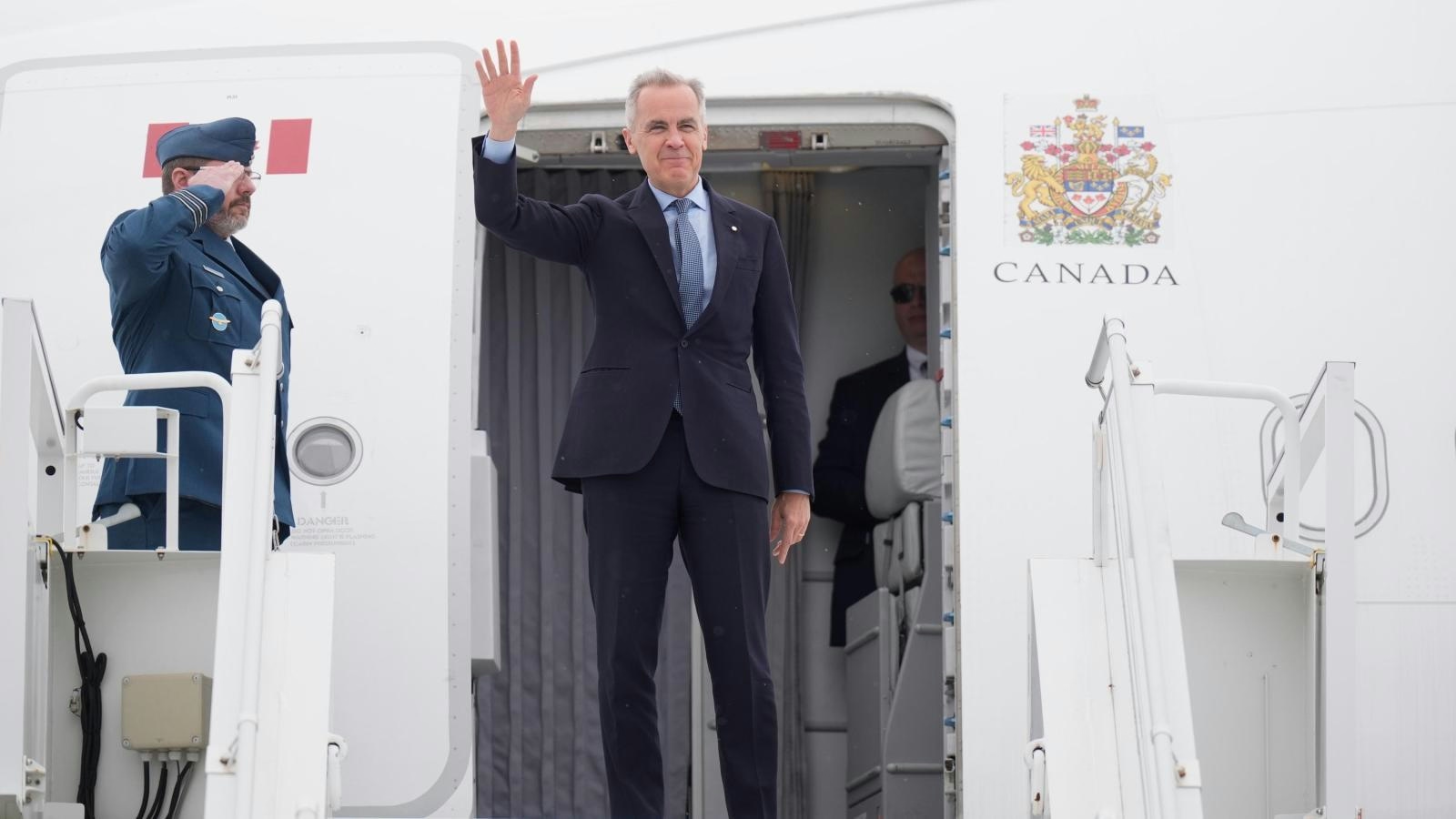
Prime Minister Mark Carney has announced a landmark agreement between Airbus and AirAsia for the purchase of 150 Airbus A220-300 aircraft, representing the largest commercial aircraft order for a Canadian-designed and produced plane in history. Each aircraft will be assembled at Airbus Canada’s facility in Mirabel, Québec, a move expected to significantly strengthen the province’s aerospace sector and sustain thousands of jobs nationwide.

Economic Ambitions and Strategic Partnerships

This announcement aligns with Canada’s broader economic agenda under the new government, which aims to stimulate $1 trillion in total investment over the next five years. Over the past year, Canada has forged 20 new economic and defence partnerships, secured nearly $100 billion in foreign investment commitments, and expanded trade relations across Europe and the Indo-Pacific region. Central to Prime Minister Carney’s strategy is the diversification of economic ties beyond the United States and the attraction of new investment, despite ongoing challenges posed by global economic uncertainties, trade barriers, and geopolitical tensions.

Boost to Canadian Aerospace Manufacturing

The Airbus-AirAsia agreement represents a significant boost for Canadian manufacturing. The Mirabel facility, Airbus’s most comprehensive commercial aircraft manufacturing site outside Europe, employs over 4,600 workers and supports a wider network of Canadian welders, technicians, and small businesses. The A220-300, developed entirely by Canadian engineers, incorporates advanced propulsion systems, lightweight materials, and aerodynamic design, resulting in lower fuel consumption, reduced emissions, and a smaller noise footprint.

Political and Economic Context

The deal comes amid a shifting political and economic landscape. The Liberal Party, led by Carney, is positioned to secure a slim majority, a development that may influence market dynamics and the future direction of Canada’s airline industry. Carney’s broader initiatives to establish Canada as an “energy superpower” and to reduce the public sector workforce could face resistance, necessitating careful management to maintain economic growth and stability.

Prime Minister Carney emphasized the significance of the agreement, stating, “The agreement between Airbus and AirAsia is the largest order of Canadian aircraft in history. The 150 aircraft will be built by Canadian workers on Canadian factory floors. For thousands of engineers, electricians, steel welders, and IT specialists, it will mean high-paying and exciting work to build a remarkable aircraft that connects millions of people around the world to more opportunities, more destinations, or more time with friends and loved ones.”

He further added, “Canada is a world leader in aviation and aerospace technologies. This agreement will further strengthen the aerospace industry in Québec and across Canada and support thousands of Canadian jobs in aerospace manufacturing for years to come. We are delivering on our government’s plan to build a strong and resilient Canadian economy.”

Airbus in Canada: A Longstanding Presence

Airbus has maintained operations in Canada for over 40 years, with 10 major sites nationwide. The company and its subsidiaries employ more than 5,300 people across the country, including over 4,600 at the Mirabel A220 facility. Canada remains the only non-European nation to host a major Airbus program, the A220 family of single-aisle aircraft. Overall, Airbus supports more than 27,000 Canadian careers.

As Canada contends with global economic headwinds and domestic political changes, the Airbus-AirAsia deal underscores the country’s enduring strength in aerospace and its commitment to fostering a resilient and diversified economy.

More news
Jetstream Delivers First Saab 340B(F) Cargo Plane to Alaska Operator Ryan Air

Jetstream Delivers First Saab 340B(F) Cargo Plane to Alaska Operator Ryan Air

Jetstream Delivers First Saab 340B(F) Cargo Aircraft to Alaska Operator Ryan Air Ryan Air, an Anchorage-based carrier owned by Saltchuk Aviation, has taken delivery of its first Saab 340B(F) cargo aircraft from Jetstream Aviation Capital. The aircraft, bearing serial number 340B-329, was officially handed over on August 4 and will be deployed to support both scheduled and charter cargo operations across more than 80 communities in western Alaska. This acquisition marks a significant expansion of Ryan Air’s fleet and operational capabilities in the region. Strategic Importance and Operational Challenges Jetstream Aviation Capital, a Florida-based aircraft lessor, emphasized the broader significance of the delivery in a recent statement. The company described the addition as more than a mere expansion of Ryan Air’s fleet, highlighting it as a shared commitment to facilitating the vital transport of cargo and supplies throughout western Alaska. The Saab 340B(F) will play a crucial role in sustaining the connectivity and supply chains essential to these remote communities. The integration of the Saab 340B(F) introduces several operational challenges. Both Jetstream and Ryan Air are prioritizing compliance with Federal Aviation Administration (FAA) regulations, particularly concerning the aircraft’s hybrid-electric engine. Safety considerations related to this relatively new propulsion technology remain paramount. Furthermore, the logistical complexities of operating in Alaska’s remote and often harsh environment add layers of difficulty in transporting, maintaining, and deploying the aircraft effectively. Industry Implications and Fleet Enhancement The performance and efficiency of the Saab 340B(F)’s hybrid-electric engine are being closely monitored by industry observers. Its successful adoption could herald a broader shift toward hybrid-electric technologies in regional cargo aviation, prompting competitors to explore similar innovations or consider fleet upgrades to remain competitive. Ryan Air operates under FAA Part 135 certification, offering both cargo and passenger services with a diverse fleet that includes Cessna, CASA, Pilatus, and Saab aircraft. The introduction of the Saab 340B(F) is expected to significantly enhance the airline’s capacity and reliability, ensuring the continued delivery of essential goods to some of Alaska’s most isolated communities.
Azorra Expands Fleet with Addition of A330-200 Aircraft

Azorra Expands Fleet with Addition of A330-200 Aircraft

Azorra Expands Fleet with Addition of A330-200 Aircraft Azorra has broadened its wide-body aircraft portfolio through the acquisition of an Airbus A330-200 (MSN 1161) from TrueNoord. Currently leased to Maldivian Airlines, the national carrier of the Maldives, this transaction introduces a new airline customer and operating jurisdiction to Azorra’s expanding global network. Strategic Growth in Wide-Body Segment This acquisition follows Azorra’s recent expansion into the wide-body market, marked by earlier purchases of Airbus A330s and Boeing 777-300ERs throughout 2023. Over the past three years, the lessor has actively managed its fleet by extending leases and transitioning aircraft to new operators, demonstrating a deliberate strategy aimed at sustainable portfolio growth. With the addition of the A330-200, Azorra’s portfolio now includes 194 owned and managed aircraft, six of which are wide-body models. The company has emphasized its ongoing focus on identifying opportunities that deliver strong long-term value and robust demand, while maintaining a disciplined approach to fleet management. Market Implications and Operational Considerations Integrating the newly acquired A330-200 into Azorra’s existing fleet presents potential challenges, including ensuring regulatory compliance across jurisdictions and managing associated operational costs. This move coincides with heightened demand for A330 aircraft, positioning Azorra in alignment with a broader industry trend favoring wide-body models. Market analysts suggest that this expansion may intensify competition among wide-body operators, compelling rivals to reevaluate their fleet strategies or enhance service offerings to maintain market share. Azorra’s continued investment in wide-body aircraft highlights its commitment to adapting to shifting market dynamics and addressing the diverse needs of its global customer base.
Lufthansa and Boeing Discuss Future of Delayed 777X Deliveries

Lufthansa and Boeing Discuss Future of Delayed 777X Deliveries

Lufthansa and Boeing in Dispute Over Delayed 777X Deliveries Intensifying Negotiations Amid Certification Setbacks Lufthansa, the German flag carrier and launch customer of Boeing’s 777X, is escalating discussions with the American aircraft manufacturer regarding the delivery and acceptance of several early-built 777X aircraft. Persistent certification delays have cast uncertainty over the airline’s extensive fleet renewal strategy, prompting Lufthansa to consider rejecting some of the earliest produced 777-9 jets. The airline is also demanding significant upgrades to other units before they can be integrated into commercial operations. During a recent analyst call, Lufthansa Group CEO Carsten Spohr expressed serious reservations about the suitability of these early production aircraft, concerns that mirror those previously voiced by Emirates. Spohr revealed that Lufthansa is assessing which of the stored 777X airframes can be modernized—potentially with Boeing’s financial assistance—and which should be refused outright due to the extensive modifications required. The airline’s position underscores the operational and financial challenges posed by accepting unmodified aircraft that may compromise efficiency and increase costs. Challenges Facing the 777X Program The Boeing 777X, designed as the world’s largest twin-engine jet featuring fuel-efficient GE9X engines and innovative folding wingtips, has experienced one of the most protracted development delays in recent commercial aviation history. Years of certification setbacks have resulted in multiple test and early production aircraft being placed in storage. These airframes now require substantial structural alterations, flight-control system updates, and intensive maintenance before they can enter passenger service. For Lufthansa, accepting these aircraft without modification would entail higher operating costs and weight penalties, undermining the anticipated efficiency gains of the new model. Spohr emphasized the airline’s willingness to take delivery of modernized aircraft, provided Boeing offers financial support to offset the costs associated with necessary upgrades. Lufthansa is also seeking compensation or revised delivery schedules to mitigate the operational disruptions caused by the delays. Impact on Lufthansa’s Fleet Strategy and Industry Implications The ongoing 777X delays have compelled Lufthansa to adjust its long-term fleet strategy amid the largest renewal program in its history. To bridge capacity gaps, the airline has increased orders for Airbus A350-900s and Boeing 787-9 Dreamliners. Additionally, Lufthansa is reportedly initiating a competitive evaluation among manufacturers for new widebody aircraft, with potential orders for Airbus A350-1000s or Boeing 777-9s slated for delivery from 2033. This dispute highlights broader challenges confronting Boeing as it seeks to bring the 777X to market. Certification delays and the extensive rework required on early-built aircraft have raised questions about the jet’s performance, particularly as some U.S. carriers pivot toward point-to-point routes rather than traditional hub-and-spoke networks. The resolution of Lufthansa’s negotiations will be closely monitored by the global aviation industry, as it may establish a precedent for how Boeing manages early fleet commitments amid ongoing certification difficulties. Should a financial agreement prove elusive, Lufthansa may further pivot its long-haul orders toward alternative widebody platforms, presenting additional risks to Boeing’s flagship program. Successfully resolving these issues is critical to restoring confidence in the 777X and ensuring its eventual commercial success.
Abu Dhabi Aviation Reports 28% Revenue Increase to Dh4.66 Billion, Plans Dh674 Million Asset Sale

Abu Dhabi Aviation Reports 28% Revenue Increase to Dh4.66 Billion, Plans Dh674 Million Asset Sale

Abu Dhabi Aviation Reports 28% Revenue Increase to Dh4.66 Billion Abu Dhabi Aviation (ADA), a prominent aviation services group listed on the Abu Dhabi Securities Exchange, has announced a significant 28% rise in revenue, reaching Dh4.66 billion for the first half of 2026. This robust financial performance underscores the company’s strong market position amid a dynamic and competitive regional aviation sector. Alongside this growth, ADA’s board has approved the sale of Dh674 million worth of non-core real estate and financial assets. This strategic divestment is intended to streamline the company’s portfolio and sharpen its focus on core aviation activities, particularly maintenance, repair, and overhaul (MRO) operations. The assets earmarked for sale were classified as held for sale as of June 30, reflecting ADA’s commitment to concentrating resources on its primary business segments. The group concluded the reporting period with a net cash position of Dh900 million, providing a solid financial foundation to support future investments and operational resilience. Strategic Focus Amid Industry Challenges Despite the encouraging revenue growth, ADA faces several challenges common to the global aviation industry. The company must navigate ongoing fuel price volatility and labor shortages, which continue to affect operational costs and capacity. The Middle East aviation market is expanding rapidly, driven by increased demand for operational digitization and next-generation infrastructure. However, this growth has intensified competition among regional carriers and service providers, placing additional pressure on market share. ADA’s decision to divest non-core assets aligns with a broader regional trend of aviation firms optimizing operations and investing in advanced technologies. Competitors are expected to respond by enhancing their own core aviation services, potentially heightening competitive pressures. Furthermore, the persistent shortage of skilled pilots and technicians in the region poses a significant challenge to sustaining growth and maintaining service quality, as companies vie for limited talent pools. ADA’s leadership has emphasized its intent to capitalize on emerging opportunities in operational efficiency and digital transformation. The company aims to navigate the evolving regulatory and economic landscape while leveraging its strong financial position to maintain momentum in a rapidly changing environment. Market observers will be closely monitoring how ADA adapts to these sector challenges and executes its strategic refocus in the coming months.
Aircraft and Engine Shortages Disrupt Aviation Supply Chain

Aircraft and Engine Shortages Disrupt Aviation Supply Chain

Aircraft and Engine Shortages Disrupt Aviation Supply Chain A comprehensive report from aviation investment banking firm Cassel Salpeter & Co. reveals that a global shortage of aircraft, engines, and spare parts is profoundly impacting the aviation industry. Commercial aircraft backlogs have now exceeded 17,000 units, representing approximately 12 years of production at current manufacturing rates. Among these challenges, engine supply has emerged as the most critical bottleneck, significantly constraining industry growth and operational capacity. Supply Chain Pressures and Economic Impact The aviation sector is grappling with intense demand driven by fleet expansion, recovering passenger traffic, and robust cargo markets. Manufacturers and suppliers are struggling to meet these needs, resulting in substantial cost increases for airlines. The report projects that supply chain-related expenses will surpass $11 billion in 2025 alone, encompassing higher maintenance costs, increased engine leasing, and the need for greater spare parts inventory. Engine shortages are particularly severe, especially for next-generation GTF and LEAP engines, which require more frequent maintenance due to durability concerns. Engine overhaul turnaround times have dramatically lengthened, rising from 60–90 days in 2019 to between 180 and 240 days today. This delay has left approximately 60 completed Airbus aircraft grounded without engines in 2025, while over 3,500 commercial engines await critical components such as castings and forgings. These constraints are compelling airlines to extend the operational life of older aircraft beyond their planned retirement dates. This extension increases demand for engine leasing, spare parts, and maintenance services, while simultaneously reducing operational flexibility. Global spending on maintenance, repair, and overhaul (MRO) is expected to grow from $136 billion in 2025 to $193 billion by 2036, with engine-related MRO costs alone projected to reach $103 billion. Broader Supply Chain Fragility and Industry Adaptation The supply chain challenges extend beyond engines and airframes. A persistent shortage of aircraft windows, affecting both commercial airliners and business jets, has further exposed vulnerabilities within the aerospace supply chain. Melrose Industries, the owner of the primary manufacturer of these windows, aims to restore full production capacity by the end of 2026. Meanwhile, airlines and repair facilities are implementing conservation measures to manage the shortage, highlighting the need for sustained industry efforts to resolve ongoing disruptions. In response to limited aircraft and engine availability, airlines are increasingly turning to aftermarket solutions. The market for Used Serviceable Material (USM) is anticipated to grow from $8 billion in 2025 to over $10.8 billion by 2033. Similarly, the Parts Manufacturer Approval (PMA) market is projected to expand from $11.8 billion to more than $16.1 billion by 2034. Demand for Designated Engineering Representative (DER) repairs is also rising, as operators seek to extend component life and reduce dependence on original equipment manufacturers. To mitigate these challenges, airlines are adopting strategies such as extending fleet life, increasing spare engine inventories, diversifying suppliers, and securing long-term maintenance agreements. Despite these efforts, supply chain constraints are expected to persist for several years, placing ongoing pressure on the industry to innovate and adapt in order to maintain operational resilience.
EasyJet to Be Acquired by US Private Equity Firm Apollo for £5.7 Billion

EasyJet to Be Acquired by US Private Equity Firm Apollo for £5.7 Billion

EasyJet to Be Acquired by Apollo Global Management for £5.7 Billion EasyJet has reached an agreement to be acquired by the US private equity firm Apollo Global Management in a deal valued at £5.7 billion. The airline confirmed the transaction on Thursday, with Apollo’s offer pricing EasyJet shares at £7.15 each. This development follows the withdrawal of rival bidder Castlelake, which had previously proposed a £5 billion offer, effectively ending the prospect of a bidding war just before the final offer deadline. Details of the Acquisition and Shareholder Arrangements Apollo’s bid, submitted last month, exceeded Castlelake’s earlier proposal, prompting EasyJet’s board to recommend acceptance of the higher offer after Castlelake chose not to increase its bid. Under the terms of the agreement, EasyJet’s founder Stelios Haji-Ioannou and his family will retain their stake in the company. Other shareholders will be given the option to sell or transfer their holdings, subject to a cap of 49.9%. Additionally, an “EU Trust” shareholder group will hold up to a 5% stake, a structure designed to ensure compliance with European Union regulations on foreign ownership. Apollo’s own stake will also be limited to 49.9%. The acquisition is expected to conclude by the end of March 2027, pending regulatory approvals. Apollo has committed to maintaining EasyJet’s UK and EU headquarters and supporting the airline’s current strategic plans, which include long-term sustainable growth alongside ongoing fleet and business expansion. Regulatory and Market Challenges Ahead Despite board support, the deal faces potential hurdles, particularly regulatory scrutiny under the EU’s Foreign Subsidies Regulation, which could complicate the approval process. Market reactions have reflected some uncertainty, with EasyJet’s shares trading below Apollo’s offer price, indicating investor concerns about the likelihood of the deal’s completion. Industry analysts have observed that the acquisition could significantly impact the competitive dynamics within the European aviation sector, although responses from competitors remain uncertain. Apollo’s pledge to uphold EasyJet’s existing strategy and invest in its future growth will be closely monitored by regulators and market participants as the transaction advances. If finalized, this takeover would represent one of the largest private equity acquisitions in the European airline industry in recent years, potentially reshaping EasyJet’s trajectory amid a rapidly changing market environment.
Kazakhstan Conducts First Passenger eVTOL Flight

Kazakhstan Conducts First Passenger eVTOL Flight

Kazakhstan Conducts First Passenger eVTOL Flight A Milestone in Urban Air Mobility Astana has witnessed a landmark event in the development of urban air mobility with Kazakhstan’s first passenger flight aboard an autonomous electric vertical takeoff and landing (eVTOL) aircraft. The Committee of Civil Aviation (CCA) announced that on August 6, a passenger was successfully transported in an EH216-S, a two-seat autonomous eVTOL developed by Chinese manufacturer EHang. The demonstration flight took place over a designated area in Astana as part of the Games of the Future 2026, marking Kazakhstan’s initial foray into real-world testing of air taxi technology. The EH216-S is engineered for short-distance passenger transport, capable of traveling up to 35 kilometers at speeds of 130 kilometers per hour without a pilot onboard. This demonstration follows a series of government initiatives aimed at fostering an urban air mobility ecosystem. In May, Kazakh authorities unveiled plans to establish regulations governing eVTOL aircraft, vertiports, and unmanned air traffic management. Pilot air taxi routes connecting Alatau, Almaty, and Konayev are targeted for launch as early as 2027. Developing Infrastructure and Expanding Applications Initial operations are expected to include demonstration and sightseeing flights ranging from five to thirty minutes over Kazakhstan’s natural and cultural landmarks. Looking ahead, officials envision autonomous aircraft playing a vital role in emergency medical response, medicine delivery, firefighting, logistics, and passenger transport—sectors where rapid deployment and speed are essential. Kazakhstan’s ambitions extend beyond operational deployment. The government aims to localize eVTOL production through international partnerships, positioning the country as both an early adopter and a regional manufacturing hub for advanced air mobility technologies. The Ministry of Transport, in collaboration with other agencies, is actively developing the legal and infrastructural framework necessary for urban air mobility. Legislative amendments have already been enacted to regulate eVTOL operations, vertiports, and unmanned air traffic management, establishing a foundation for the safe integration of these aircraft into the national transport network. Context and Challenges in the Emerging eVTOL Market Unlike traditional helicopters, eVTOL aircraft utilize electric propulsion, which offers quieter operation and potentially lower costs for short-distance travel. Industry experts view eVTOLs as a component of the broader Advanced Air Mobility (AAM) movement, a new transportation paradigm designed to complement existing road and air networks. Globally, countries including the United Arab Emirates, China, and the United States are piloting or preparing commercial eVTOL services, initially focusing on airport transfers, tourism, emergency medical services, and connecting remote communities. Despite the promising outlook, Kazakhstan’s eVTOL market faces significant challenges. Regulatory complexities, high development costs, battery technology limitations, airspace integration, and public acceptance remain critical hurdles that could influence the pace of adoption. The recent demonstration flight has heightened interest in advanced air mobility, encouraging competitors to advance their eVTOL technologies and expand their market presence. Strategic partnerships and regional collaborations are anticipated as industry stakeholders seek to accelerate commercial deployment and enhance connectivity. While commercial passenger services are still several years away and contingent upon further testing and regulatory progress, Kazakhstan’s inaugural passenger eVTOL flight represents a pivotal shift from conceptual planning to practical experimentation, potentially transforming short-distance transportation in the near future.
Alliance to Cut E190 Fleet in Revised Qantas Wet-Lease Agreement

Alliance to Cut E190 Fleet in Revised Qantas Wet-Lease Agreement

Alliance to Reduce Embraer E190 Fleet in Revised Qantas Wet-Lease Agreement Alliance Aviation will reduce the number of Embraer E190 aircraft it operates for Qantas from 30 to 23 under a newly revised wet-lease agreement. This adjustment reflects both carriers’ responses to evolving market conditions and escalating operational expenses. The reduction will be implemented gradually through fiscal year 2027, with the seven aircraft released from the Qantas contract to be redeployed for other ACMI (Aircraft, Crew, Maintenance, and Insurance) and charter operations. The updated agreement incorporates increased lease rates alongside a new annual escalation mechanism. These changes address rising costs related to aircraft acquisition, maintenance, and logistics, which have exerted pressure on profitability across the aviation sector. The revisions are designed to maintain the commercial viability of the contract amid a challenging cost environment. Context and Operational Adjustments Qantas initially began wet-leasing Embraer E190s from Alliance in 2021 to strengthen its QantasLink regional network. The airline is currently in the process of modernizing its regional fleet, progressively introducing Airbus A220-300 aircraft to replace older models. QantasLink’s current fleet is diverse, comprising Boeing 717s, Airbus A220s, Embraer E190s, Fokker 100s, Dash 8 turboprops, and Airbus A319s. As one of the world’s largest operators of Embraer E190s, with a total fleet of 51 aircraft, Alliance Aviation will adjust its workforce and operational model to align with the reduced flying activity. Employee consultations are planned over the coming months to manage this transition. In addition to the E190s, Alliance operates 22 Fokker 100s and 12 Fokker 70s, primarily serving ACMI, charter, and regional markets throughout Australia. The financial implications of the revised agreement are expected to be disclosed when Alliance reports its annual results on August 25. Investors will closely examine how the updated contract affects the underlying profit guidance for both Alliance and Qantas, given that higher lease rates and cost escalations may impact earnings. This development occurs amid intensifying competition and rising costs within the regional airline sector, prompting some operators to reconsider their wet-lease arrangements or explore alternative aircraft types. Market analysts will be monitoring how these changes influence the broader regional aviation landscape in Australia.
Hill Helicopters Tests First New British Turbine Engine in Six Decades

Hill Helicopters Tests First New British Turbine Engine in Six Decades

Hill Helicopters Tests First New British Turbine Engine in Six Decades Hill Helicopters has marked a significant milestone with the successful initial run of its GT50 turboshaft engine, the first clean-sheet helicopter turbine engine developed and tested by a British company in 60 years. The Staffordshire-based manufacturer announced this breakthrough as a crucial step toward the certification of its HX50 private helicopter and the commercial HC50 variant. A Rare Domestic Innovation in Turbine Engine Development In an industry where most rotorcraft manufacturers source engines from established suppliers such as Rolls-Royce, Safran, or Pratt & Whitney Canada, Hill Helicopters has taken the uncommon route of designing the GT50 entirely in-house. This approach highlights the company’s ambition to innovate and maintain control over its core technology. Founder and CEO Jason Hill attributed the achievement to years of dedicated engineering, noting that the engine performed as expected during initial tests at the company’s facility, successfully starting, running, and shutting down. The GT50 is rated at 500 shaft horsepower and is designed to operate on multiple fuel types, including Jet A, diesel, and sustainable aviation fuel. It incorporates a full authority digital engine control system (FADEC), which automates startup, power management, and shutdown processes. This technology aims to reduce pilot workload and facilitate a smoother transition for owners accustomed to piston-engine helicopters or fixed-wing aircraft. The HX50 and HC50: Expanding British Helicopter Offerings The GT50 engine is central to the HX50, a five-seat, single-engine helicopter targeted at private owners. Its commercial counterpart, the HC50, is intended for training, charter, and utility operations. Both models share the same airframe and powerplant, differing primarily in avionics, interior configuration, and certification requirements. Hill Helicopters’ accomplishment arrives at a time when the helicopter industry is poised for growth, with market analysts forecasting a compound annual growth rate (CAGR) of 5.54% through 2031. The successful testing of the GT50 is expected to generate positive market sentiment by demonstrating a revival of British capability in turbine engine development—a sector that has seen little domestic innovation since the 1960s. Since that time, British rotorcraft have largely relied on foreign engines or derivatives of older designs, with Rolls-Royce having withdrawn from much of the small turbine market decades ago. Challenges and Market Implications Despite this progress, Hill Helicopters faces considerable challenges ahead. Developing a new turbine engine entails significant technical and financial risks, with costs often reaching hundreds of millions of dollars. The company must also secure rigorous regulatory approvals from bodies such as the UK Civil Aviation Authority and the European Union Aviation Safety Agency. Additionally, integrating the engine with existing helicopter models and competing against established industry players like GE Aerospace and Leonardo adds further complexity. Hill’s advancement may prompt competitors to accelerate their own turbine engine development programs to preserve market share. Hill Helicopters has financed much of its development through customer deposits and reports having received over 1,000 orders for its aircraft. As the GT50 progresses toward certification, its success could herald a new era for British aerospace innovation and enhance the nation’s competitiveness in the global helicopter market.
Dubai Aerospace Enterprise CEO Discusses Strategy and Acquisitions

Dubai Aerospace Enterprise CEO Discusses Strategy and Acquisitions

Dubai Aerospace Enterprise CEO Discusses Strategy and Acquisitions Expansion Amid Industry Transformation Over the past twenty years, the Middle East, with Dubai at its core, has emerged as a significant hub in the global aviation industry. Dubai Aerospace Enterprise (DAE), owned by the Investment Corporation of Dubai, exemplifies this rise. The company has quietly grown into one of the world’s largest aircraft lessors, particularly following its recent acquisitions of Nordic Aviation Capital (NAC) in 2025 and Macquarie AirFinance (MAF) in 2026. These strategic moves come at a time when the aerospace and defense sector is witnessing a surge in mergers and acquisitions, with the market expected to reach $243.48 billion by 2026. Industry giants such as Boeing, Airbus, and Safran SA are pursuing similar expansion strategies, although these efforts often encounter complex regulatory challenges. For instance, DAE’s acquisition of Macquarie AirFinance is currently under antitrust review, underscoring the intricate compliance landscape companies must navigate. Strategic Focus and Business Model In an exclusive interview at the 82nd Annual General Meeting of the International Air Transport Association (IATA) in Rio de Janeiro, DAE CEO and board member Firoz Tarapore elaborated on the company’s dual business model and strategic priorities. He explained that DAE operates two main business lines: aircraft leasing and airframe maintenance, repair, and overhaul (MRO). Leasing accounts for approximately 85% of the company’s operations, with engineering services comprising the remainder. Tarapore highlighted that DAE’s fleet currently includes around 700 aircraft, a figure set to surpass 1,000 with the completion of the Macquarie acquisition. This expanded fleet serves customers across 80 to 85 countries, positioning DAE among the world’s top aircraft lessors. However, Tarapore emphasized that the company prioritizes relevance to customers, original equipment manufacturers (OEMs), and suppliers over rankings. “If you look at the number of aircraft, we will be the third largest out there, but for us it’s not that relevant,” he stated. DAE’s strategy centers on focusing on select market niches rather than the entire aircraft spectrum. The company concentrates on narrowbody aircraft and one widebody model from both Boeing and Airbus, alongside two distinctive aircraft types: the ATR72-600 and the factory-fresh Boeing 777 freighter. Tarapore noted that DAE is among the few of its size to specialize in these unique products, which offer attractive profitability and differentiate the company from larger competitors. Navigating Challenges and Market Volatility Despite its robust growth, DAE faces several industry-wide challenges, including delays in aircraft deliveries, fluctuating fuel prices, and concerns over profitability. Competitors are also adjusting their strategies in response to evolving market conditions; for example, Qatar Airways recently postponed a planned route to better align with shifting dynamics. As DAE pursues further expansion through targeted acquisitions and a focused fleet approach, its capacity to manage regulatory complexities and adapt to market volatility will be crucial in sustaining its position as a global leader in aviation.
line









