
AIによるインサイトを行動へとつなげる

現在のトレンド
Categories
Range Comparison Between Boeing 787-9 and 787-10 Dreamliner
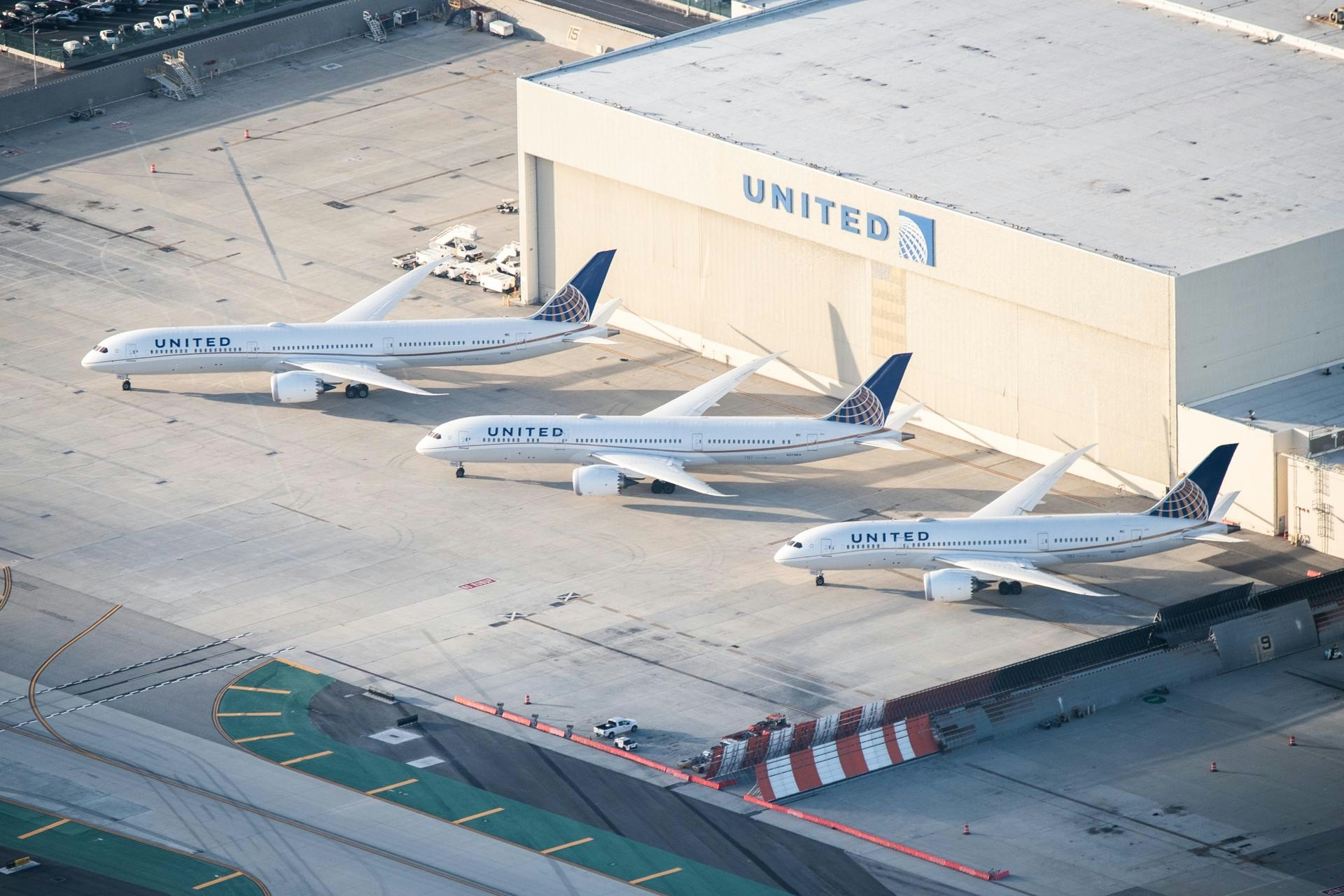
Range Comparison Between Boeing 787-9 and 787-10 Dreamliner
When Boeing introduced the 787 Dreamliner family, the objective was to develop a versatile aircraft platform capable of addressing a wide range of airline requirements across global networks. This vision materialized in three main variants: the 787-8, 787-9, and 787-10. While all models share advanced composite materials, next-generation engines, and similar wing designs, the 787-9 and 787-10 are frequently compared due to their comparable size and common deployment on long-haul routes.
Key Differences in Range and Capacity
At first glance, the 787-9 and 787-10 appear nearly identical, offering airlines operational commonality in pilot training and maintenance. However, a significant difference lies in their range capabilities. The 787-9 can fly approximately 1,200 nautical miles (2,220 kilometers) farther than the 787-10, a distinction that profoundly influences route planning and operational flexibility. This extended range enables the 787-9 to serve ultra-long-haul flights, including transpacific and intercontinental routes, which the 787-10 cannot operate without imposing payload or fuel restrictions.
This disparity is not solely due to size. The 787-10 features a stretched fuselage designed to accommodate more passengers, making it the highest-capacity model in the Dreamliner family. Despite this, it retains much of the same wing and fuel system as its shorter counterparts. The increased weight and passenger load reduce its maximum range, positioning the 787-10 as more suitable for high-density, medium- to long-haul routes rather than the longest intercontinental services. Conversely, the 787-9 balances passenger capacity, cargo capability, and range, establishing it as the most versatile and widely adopted variant within the family.
Boeing’s Strategic Approach and Market Outlook
Boeing’s strategy was not to replace one variant with another but to provide airlines with a suite of aircraft optimized for specific operational missions. The 787-10 complements the 787-9 by focusing on routes where efficiency and passenger volume take precedence over maximum range. This approach has resonated with carriers aiming to tailor their fleets to diverse market demands.
Looking ahead, Boeing plans to deliver upgraded versions of both the 787-9 and 787-10 in the first half of 2026, promising enhancements such as extended flight range or increased cargo capacity. This development coincides with continued investment in the Dreamliner family by airlines in the Asia-Pacific region. Notably, Vietnam’s Sun PhuQuoc Airways recently signed a $22.5 billion agreement for 40 Dreamliner jets, underscoring the aircraft’s appeal for intercontinental services and reflecting the region’s confidence in long-term growth despite industry challenges such as delivery delays.
As Boeing prepares to introduce these improved variants, competitors and market analysts are closely monitoring how the new Dreamliners will influence airline strategies and global fleet compositions. The ongoing evolution of the 787 family underscores Boeing’s commitment to addressing diverse airline needs through targeted innovation rather than a uniform solution.

Etihad Airways Suspends Airbus A380 Flights on Key Route

Aditya Birla Group Seeks Approval for Aircraft Leasing in GIFT City

Qatar Airways Highlights Innovation and Connectivity at Arabian Travel Market 2026

Hong Kong's Five-Year Plan Includes Andrew Fan's Aircraft Parts Processing Hub Proposal

ACIA Aero Leasing Delivers ATR72-600 to Air Nostrum

RTX Appoints Jill Albertelli as Head of Pratt & Whitney

TAT Technologies Joins Beyond Aero Hydrogen Aircraft Program

AURAK Study Highlights Barriers to Air Taxi Adoption in Emerging Economies

Xiamen Air Selects Altitude for 787 Maintenance at Heathrow

Etihad and Swissport Extend Global Partnership
