
AIによるインサイトを行動へとつなげる

現在のトレンド
Categories
Regulation Grounds United Airlines’ Boeing 777-200 Fleet
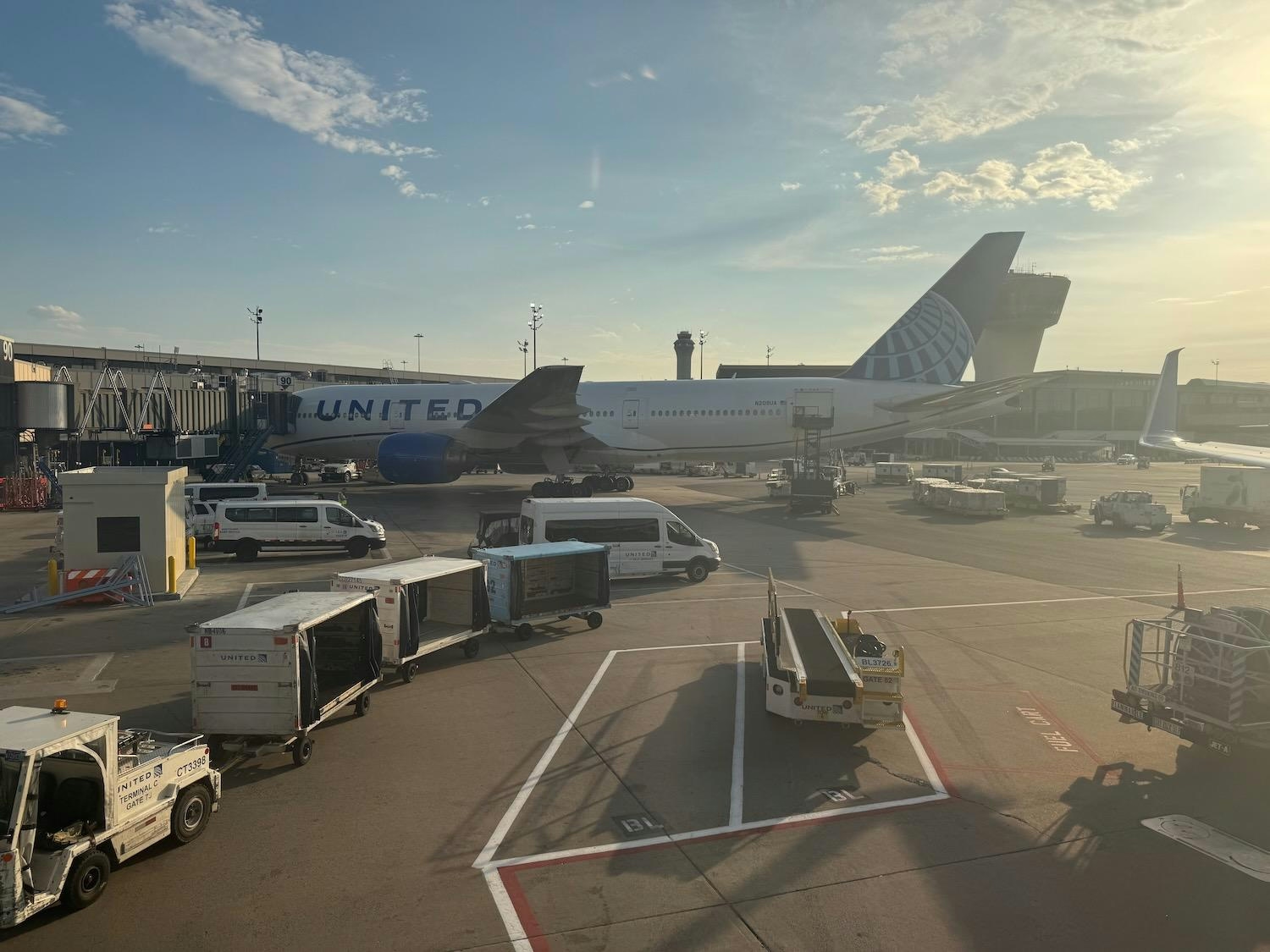
Regulation Grounds United Airlines’ Boeing 777-200 Fleet
European Carbon Regulations and Industry Impact
Europe’s evolving carbon regulations are significantly altering the economics of transatlantic aviation, compelling carriers such as United Airlines to expedite the retirement of older, less fuel-efficient aircraft like its nearly 29-year-old Boeing 777-200s. Although the European Union’s new environmental policies do not explicitly ban aging aircraft or impose direct taxes on jet fuel, 2026 represents a critical juncture as these regulations begin to influence the viability of widebody aircraft on long-haul routes.
United Airlines has long intended to phase out its oldest 777-200s, replacing them with more fuel-efficient models such as the Boeing 787 Dreamliner and, eventually, the Airbus A350-900. This transition is driven not by any single regulatory mandate but by broader shifts in industry economics that increasingly favor aircraft with lower fuel consumption and reduced emissions.
The Role of the Carbon Border Adjustment Mechanism
A central factor in this shift is the European Union’s Carbon Border Adjustment Mechanism (CBAM), which will enter its definitive phase in 2026. While CBAM does not currently apply to aviation fuel, its implications for the aviation sector are substantial. The mechanism targets imports of carbon-intensive materials, including steel and aluminum, which are essential components in aircraft manufacturing, engine parts, and airport infrastructure. As suppliers incorporate the costs of embedded carbon pricing, airlines face increased expenses across their supply chains, affecting everything from new aircraft deliveries to maintenance and infrastructure projects.
CBAM also reflects a broader regulatory trajectory in Europe. Industry experts, including those from the Florence School of Regulation and aviation consultancy Ishka, highlight ongoing discussions about extending carbon pricing to aviation and ensuring that non-European carriers adhere to comparable environmental standards. Although CBAM’s direct impact on airlines remains limited at present, it signals the growing acceptance of carbon costs as a permanent element in airline economics.
Immediate Pressures from the EU Emissions Trading System and Operational Challenges
The most immediate regulatory pressure on airlines arises from the EU Emissions Trading System (EU ETS), which already mandates that carriers operating on covered routes account for their carbon emissions. The gradual phaseout of free aviation allowances, coupled with stricter Sustainable Aviation Fuel (SAF) requirements, is intensifying the financial burden on airlines, rendering older, less efficient aircraft increasingly expensive to operate.
In addition to regulatory challenges, United’s 777-200 fleet faces operational constraints. For instance, in Canada, concerns over potential interference from 5G networks have led to restrictions on the deployment of these aircraft in certain regions. These limitations reduce fleet flexibility and raise concerns about reliability and service continuity.
Market Implications and Fleet Modernization
These regulatory and operational pressures are reshaping market dynamics. Passengers may gravitate toward airlines operating newer, more reliable fleets, while competitors are likely to intensify marketing efforts to attract travelers wary of potential disruptions. For United Airlines, the convergence of regulatory, operational, and market factors is accelerating the transition to a modern, sustainable long-haul fleet, positioning 2026 as a pivotal year in its fleet renewal strategy.

Etihad Airways Suspends Airbus A380 Flights on Key Route

Aditya Birla Group Seeks Approval for Aircraft Leasing in GIFT City

Qatar Airways Highlights Innovation and Connectivity at Arabian Travel Market 2026

Hong Kong's Five-Year Plan Includes Andrew Fan's Aircraft Parts Processing Hub Proposal

ACIA Aero Leasing Delivers ATR72-600 to Air Nostrum

RTX Appoints Jill Albertelli as Head of Pratt & Whitney

TAT Technologies Joins Beyond Aero Hydrogen Aircraft Program

AURAK Study Highlights Barriers to Air Taxi Adoption in Emerging Economies

Xiamen Air Selects Altitude for 787 Maintenance at Heathrow

Etihad and Swissport Extend Global Partnership
