
AIによるインサイトを行動へとつなげる

現在のトレンド
Categories
Remembering the Copilot of Air India Flight 171
Remembering the Copilot of Air India Flight 171
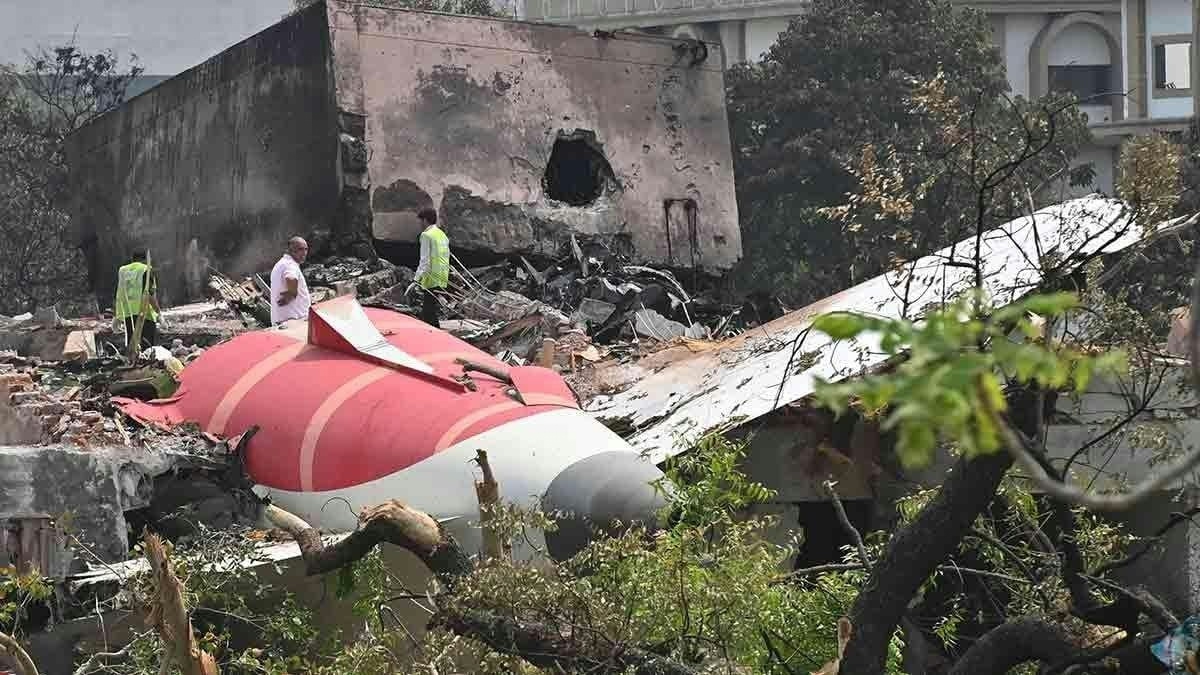
A year has elapsed since the devastating crash of Air India Flight 171 on June 12, 2025, which resulted in the loss of 260 lives. Despite assurances from the Ministry of Civil Aviation (MoCA) and the Aircraft Accident Investigation Bureau (AAIB) of a “transparent and factual” inquiry, the investigation remains incomplete. The only official document available to the public is the Preliminary Report released in July 2025, while the final report is still awaited, expected to be published in the coming weeks.
The Aftermath and Ongoing Challenges
The tragedy unfolded shortly after the aircraft took off from Ahmedabad, casting a long and somber shadow over Air India. The airline has since been subjected to intense scrutiny over alleged operational lapses and safety violations. These issues have been exacerbated by broader economic pressures, notably the depreciation of the Indian rupee against the US dollar, which has significantly impacted the airline’s dollar-denominated expenses, particularly fuel costs. Such financial strains have further complicated Air India’s efforts to restore confidence in its brand and operations. Meanwhile, the investigation itself has become a source of controversy, with concerns raised about its impartiality and potential conflicts of interest.
Insights from the Preliminary Report
Although the Preliminary Report offers limited detail, it contains critical information that has sparked debate. Notably, it confirms the recovery of the forward Enhanced Airborne Flight Recorder (EAFR) from the wreckage on June 16, 2025. This device captures both digital flight data and cockpit voice recordings, indicating that investigators have reviewed the cockpit voice recorder (CVR). Following this, the MoCA informed the Ministry of Home Affairs (MHA), which, citing intelligence inputs and perceived security threats, ordered X-category commando protection for the head of the AAIB. This security measure remains in place, funded by taxpayers, even as families of the victims and the public continue to await comprehensive answers.
Controversies and Speculation Surrounding the Crash
Public and media discourse has largely centered on the report’s reference to the fuel control switches (FCS) moving from “run” to “cutoff” and back again. Some interpretations have suggested foreign interference, but technical experts clarify that the FCS is a spring-loaded mechanism requiring deliberate manual operation; it cannot be altered by software malfunction or power failure. The only CVR excerpt included in the report captures a brief exchange between the pilots, with one asking why the fuel was cut off and the other denying having done so. The remaining CVR recordings have reportedly been withheld from the public and shared only with the MoCA and MHA due to security concerns.
As speculation and misinformation continue to circulate, the absence of a final investigative report has left victims’ families and the wider public in a state of uncertainty. The forthcoming AAIB report is expected to shed light on the precise circumstances of the crash and address the operational and regulatory challenges that have burdened Air India in the tragedy’s aftermath.

Etihad Airways Suspends Airbus A380 Flights on Key Route

Aditya Birla Group Seeks Approval for Aircraft Leasing in GIFT City

Qatar Airways Highlights Innovation and Connectivity at Arabian Travel Market 2026

Hong Kong's Five-Year Plan Includes Andrew Fan's Aircraft Parts Processing Hub Proposal

ACIA Aero Leasing Delivers ATR72-600 to Air Nostrum

RTX Appoints Jill Albertelli as Head of Pratt & Whitney

TAT Technologies Joins Beyond Aero Hydrogen Aircraft Program

AURAK Study Highlights Barriers to Air Taxi Adoption in Emerging Economies

Xiamen Air Selects Altitude for 787 Maintenance at Heathrow

Etihad and Swissport Extend Global Partnership
