
AIによるインサイトを行動へとつなげる

現在のトレンド
Categories
Report Predicts Widebody Aircraft Shortage Through the 2030s
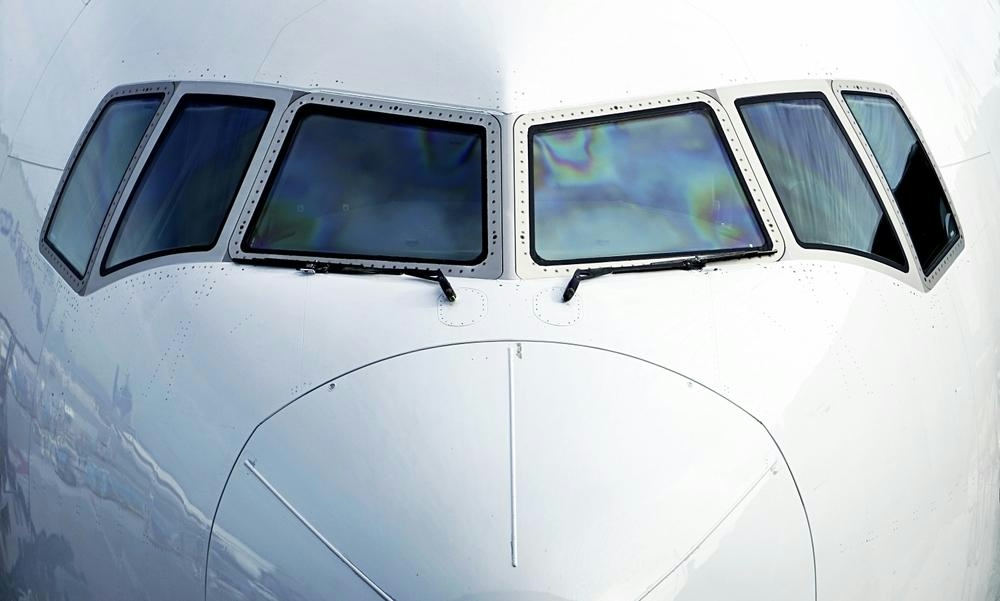
Prolonged Widebody Aircraft Shortage Forecast Through the 2030s
Aircraft lessor Avolon has projected a sustained shortage of widebody aircraft extending well into the 2030s, driven by persistent delivery constraints and rising international travel demand, according to its UPNEXT 2026 Outlook. The report underscores that widebody production remains significantly below pre-pandemic levels, while availability of narrowbody aircraft, though somewhat less restricted, is also expected to remain tight through the end of the decade.
Avolon Chief Risk Officer Jim Morrison emphasized in an interview with Reuters that the narrowbody market is forecasted to be undersupplied through the 2030s, with the widebody segment potentially facing an even longer period of scarcity. The company estimates that the aviation industry will produce approximately 4,000 fewer aircraft this decade than initially planned, attributing the shortfall to pandemic-related disruptions and ongoing manufacturing challenges. Although narrowbody deliveries have nearly rebounded to previous highs, widebody output continues to lag, limiting capacity as international air travel recovers and expands.
Shifting Demand and Industry Response
The report highlights a notable shift in long-haul demand growth, increasingly concentrated outside the United States. Countries such as India, the United Arab Emirates, and Saudi Arabia are expected to drive future fleet requirements, even as airlines worldwide contend with extended waiting times for new aircraft deliveries. This dynamic complicates fleet renewal strategies and operational planning across the industry.
In response to the supply crunch, major manufacturers have announced ambitious production plans. Boeing is increasing output of its 737 Max and 787 Dreamliner models to satisfy strong demand from carriers including United, Delta, and Alaska Airlines, all of which have placed substantial orders. However, Boeing’s efforts face challenges from ongoing production issues and recent incidents, such as the midair door plug event, which threaten to delay deliveries further. Airbus is similarly ramping up production of its widebody aircraft, intensifying competition as both manufacturers strive to address the backlog.
The constrained supply environment coincides with a period of improving airline financial performance, supported by lower fuel prices and high load factors. Avolon’s outlook indicates that airlines are entering 2026 with stronger balance sheets after several consecutive profitable years, positioning them to better withstand potential economic downturns. Avolon CEO Andy Cronin remarked to Reuters that, even in the event of slower economic growth, the industry is well positioned to endure such challenges.
Despite the optimism driven by robust demand, the market remains cautious due to persistent production delays and uncertainties. As airlines and manufacturers navigate these obstacles, the widebody aircraft shortage is expected to remain a defining characteristic of the aviation industry well into the next decade.

Etihad Airways Suspends Airbus A380 Flights on Key Route

Aditya Birla Group Seeks Approval for Aircraft Leasing in GIFT City

Qatar Airways Highlights Innovation and Connectivity at Arabian Travel Market 2026

Hong Kong's Five-Year Plan Includes Andrew Fan's Aircraft Parts Processing Hub Proposal

ACIA Aero Leasing Delivers ATR72-600 to Air Nostrum

RTX Appoints Jill Albertelli as Head of Pratt & Whitney

TAT Technologies Joins Beyond Aero Hydrogen Aircraft Program

AURAK Study Highlights Barriers to Air Taxi Adoption in Emerging Economies

Xiamen Air Selects Altitude for 787 Maintenance at Heathrow

Etihad and Swissport Extend Global Partnership
