
AIによるインサイトを行動へとつなげる

現在のトレンド
Categories
Safran Considers Expanding Operations in India Amid Growing Aviation Demand
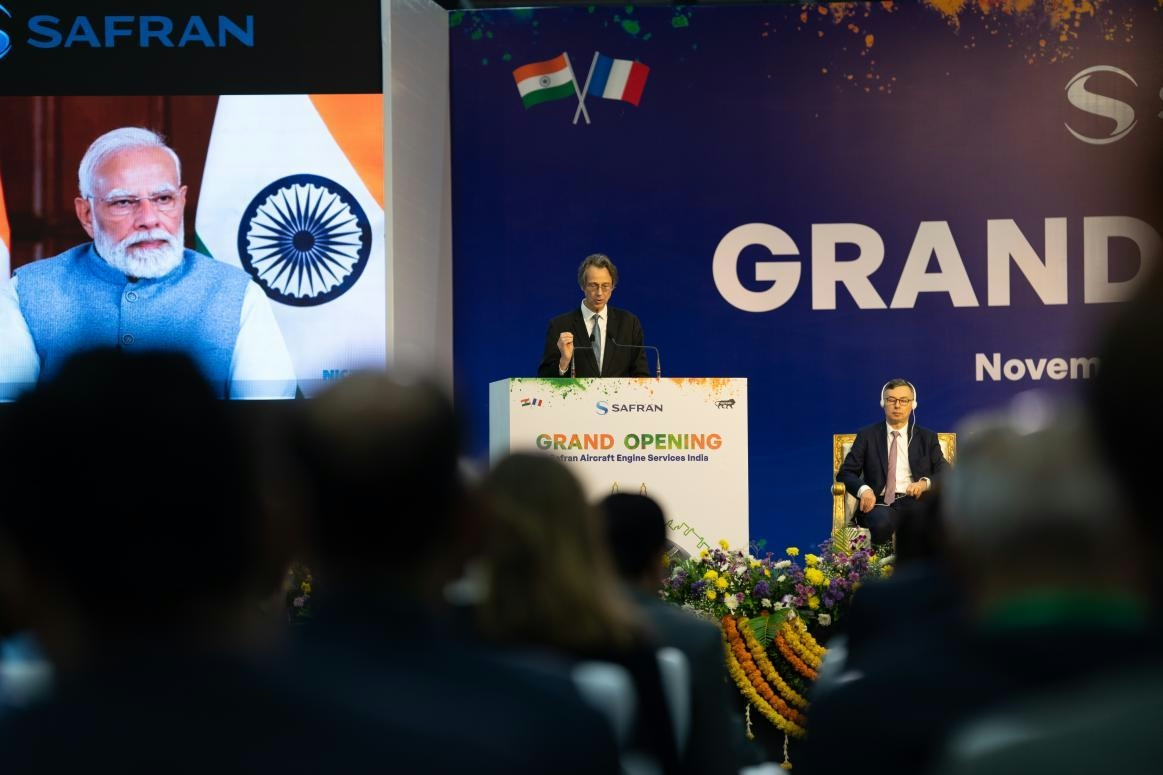
Safran Considers Expanding Operations in India Amid Growing Aviation Demand
Strategic Expansion in a Booming Market
French aerospace conglomerate Safran is contemplating a substantial expansion of its footprint in India, aiming to extend its activities beyond its established focus on aircraft engines. The company intends to capitalize on the country’s rapidly expanding aviation sector, which has seen Indian airlines place unprecedented orders for new aircraft. Safran now regards India as a strategic priority across multiple business segments, including propulsion systems, aerospace equipment, and cabin interiors.
JS Gavankar, CEO and Country Head of Safran India, emphasized the significance of the Indian market, stating that the country’s aviation growth is compelling enough to engage every division within Safran. Indian carriers have collectively ordered more than 2,000 aircraft, generating sustained demand for aeroengines, aviation components, cabin solutions, and maintenance services.
Broadening the Scope of Operations
Currently, Safran’s operations in India primarily focus on aircraft engines and aerospace equipment. However, the company is actively exploring opportunities to deepen its involvement across the entire aviation value chain. Particular attention is being given to aviation interior solutions and maintenance, repair, and overhaul (MRO) services. Gavankar highlighted the enormous demand for these services, driven by the expanding passenger base and the volume of aircraft orders.
Although Safran has not revealed specific timelines or investment amounts related to this expansion, it has set ambitious growth targets. The company aims to triple its global revenue to over €3 billion by 2030, with half of this growth expected to originate from its Indian operations. Additionally, Safran plans to double its supplier network within India and increase sourcing from Indian aerospace suppliers fivefold by 2030, thereby integrating them more deeply into its global supply chain.
Aligning with India’s Aviation Ambitions
India’s efforts to boost domestic aircraft manufacturing and related services align closely with Safran’s strategic objectives. The expansion of local airlines is anticipated to drive demand not only for aircraft but also for interiors, seating systems, cabin equipment, and other aviation products. This synergy presents a significant opportunity for Safran to strengthen its presence in the region.
Market response to Safran’s India strategy has been encouraging. The company recently signed a memorandum of understanding with IndiGo for over 1,000 LEAP-1A engines and secured an order from BOC Aviation for up to 300 LEAP engines, underscoring robust demand for its products. Nonetheless, Safran’s expansion faces challenges common to the aerospace industry, including supply chain pressures, parts shortages, labor constraints, and rising input costs.
Competitors such as Boeing and Airbus are also intensifying their activities in India, confronting similar regulatory complexities and operational challenges. Despite these obstacles, Safran maintains a positive outlook, supported by increased European defense spending and growing demand in the Middle East and Asia, which bolster its broader aerospace and defense strategy.
By deepening its commitment to India, Safran is positioning itself to play a pivotal role in the country’s evolving aviation landscape, leveraging both local growth prospects and global market dynamics.

Etihad Airways Suspends Airbus A380 Flights on Key Route

Aditya Birla Group Seeks Approval for Aircraft Leasing in GIFT City

Qatar Airways Highlights Innovation and Connectivity at Arabian Travel Market 2026

Hong Kong's Five-Year Plan Includes Andrew Fan's Aircraft Parts Processing Hub Proposal

ACIA Aero Leasing Delivers ATR72-600 to Air Nostrum

RTX Appoints Jill Albertelli as Head of Pratt & Whitney

TAT Technologies Joins Beyond Aero Hydrogen Aircraft Program

AURAK Study Highlights Barriers to Air Taxi Adoption in Emerging Economies

Xiamen Air Selects Altitude for 787 Maintenance at Heathrow

Etihad and Swissport Extend Global Partnership
