
AIによるインサイトを行動へとつなげる

現在のトレンド
Categories
Signs Point to Easing of Aerospace M&A Backlog by 2026
Signs Point to Easing of Aerospace M&A Backlog by 2026
The commercial aerospace mergers and acquisitions (M&A) landscape is expected to undergo a significant transformation by 2026, following a turbulent period marked by aggressive U.S. tariffs, shifting regulatory policies, and evolving market dynamics. According to Ryan Kirby, junior partner, and Joseph Lakaj, analyst at Alderman & Company, the sector experienced a fundamental shift in 2025 as protectionist policies under a new U.S. administration redirected capital inward and encouraged domestic consolidation. Concurrently, a more permissive U.S. Federal Trade Commission (FTC) began approving historic megadeals, including Union Pacific’s $85 billion acquisition of Norfolk Southern and Netflix’s $83 billion purchase of Warner Bros—transactions that would have been unimaginable just a few years earlier.
Market Dynamics and Sector Performance in 2025
The Aerospace and Defense sector in 2025 exhibited a “K-shaped” recovery. Smaller financial buyers encountered liquidity constraints and extended holding periods, while well-capitalized strategic buyers advanced aggressively, driving premiums higher in the U.S. aviation market. This trend was exemplified by notable acquisitions from companies such as TransDigm, VSE, and HEICO. Despite a challenging start to the year, overall M&A activity reached record highs in both deal count and aggregate value.
Within the commercial aviation segment, however, the situation was more complex. Although 398 transactions were completed across the broader aerospace and defense sector in 2025, this represented a 14% decline from 2024 and a 37% decrease from the 2021 peak. The annual total concealed a significant shift: the first half of 2025 was subdued due to tariff-related uncertainty, but the second half experienced a marked increase in deal volume compared to the same period in 2024. By late 2025, aerospace accounted for approximately 38% of all M&A activity, driven largely by industry-wide efforts to address aging fleets and persistent original equipment manufacturer (OEM) backlogs.
Strategic Responses and Emerging Opportunities
Market conditions for major aerospace players remain uneven. Airbus continues to dominate single-aisle aircraft sales, while Boeing struggles to regain its narrowbody market share. These disparities are prompting strategic decisions regarding production rates and backlog management, with consequential effects throughout the supply chain. Meanwhile, companies such as Honeywell report strong demand momentum and record backlogs, contributing to a cautiously optimistic outlook for the sector.
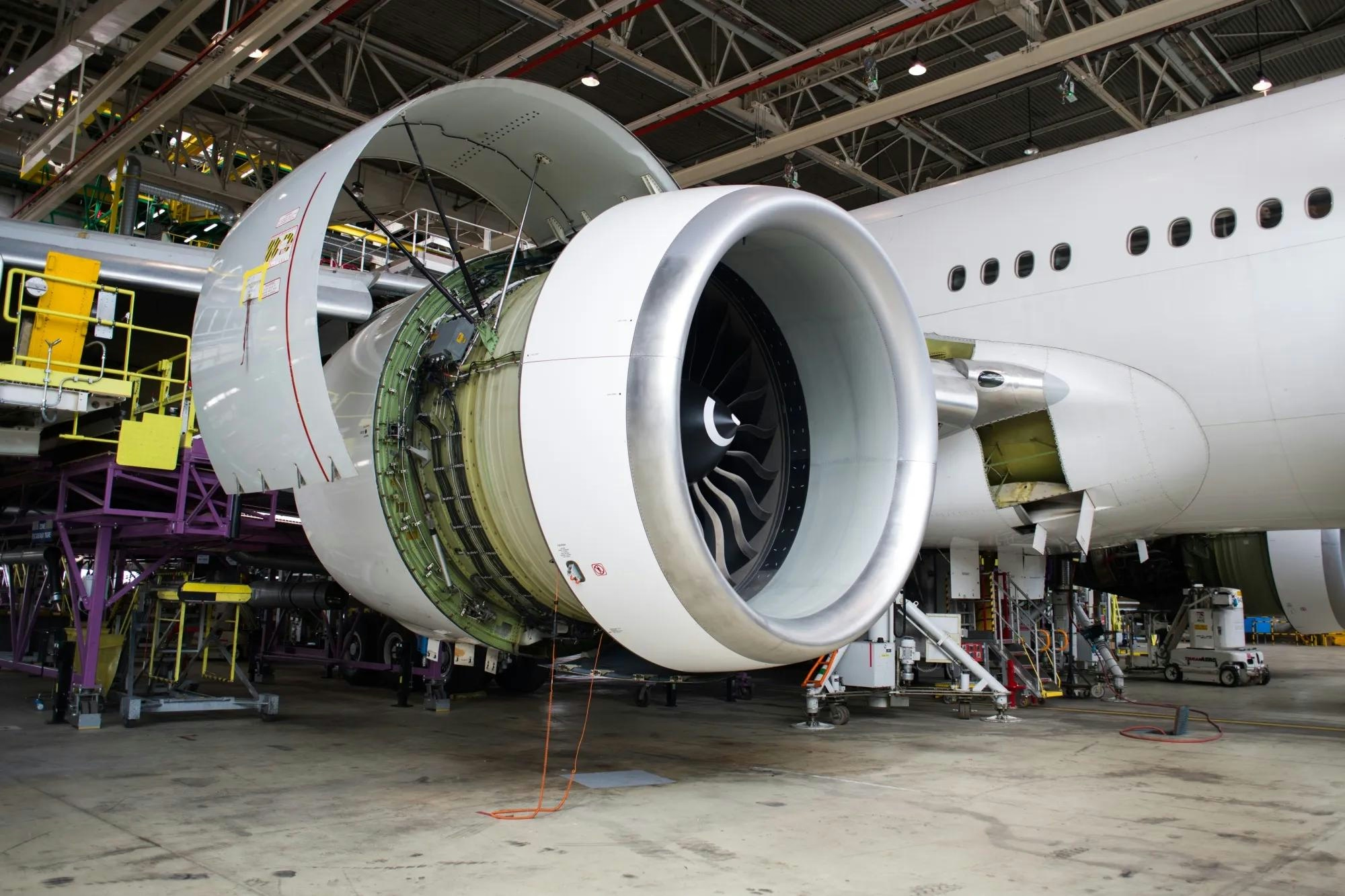
The aftermarket and Maintenance, Repair, and Overhaul (MRO) segments are attracting growing interest from both financial and strategic buyers, as OEM backlogs extend for several years. This shift in focus is fueling a surge in the M&A platforms market, suggesting that the backlog of aerospace M&A deals may begin to ease by 2026.
Despite ongoing challenges—including uneven recovery among buyers, evolving regulatory frameworks, and competitive pressures—the outlook for aerospace M&A is improving. As market participants adapt to new realities and seize emerging opportunities, indicators point toward a more active and balanced deal environment in the near future.

Etihad Airways Suspends Airbus A380 Flights on Key Route

Aditya Birla Group Seeks Approval for Aircraft Leasing in GIFT City

Qatar Airways Highlights Innovation and Connectivity at Arabian Travel Market 2026

Hong Kong's Five-Year Plan Includes Andrew Fan's Aircraft Parts Processing Hub Proposal

ACIA Aero Leasing Delivers ATR72-600 to Air Nostrum

RTX Appoints Jill Albertelli as Head of Pratt & Whitney

TAT Technologies Joins Beyond Aero Hydrogen Aircraft Program

AURAK Study Highlights Barriers to Air Taxi Adoption in Emerging Economies

Xiamen Air Selects Altitude for 787 Maintenance at Heathrow

Etihad and Swissport Extend Global Partnership
