
AIによるインサイトを行動へとつなげる

現在のトレンド
Categories
Singapore Airshow Highlights Airlines’ Struggle Amid Aircraft Supply Shortage
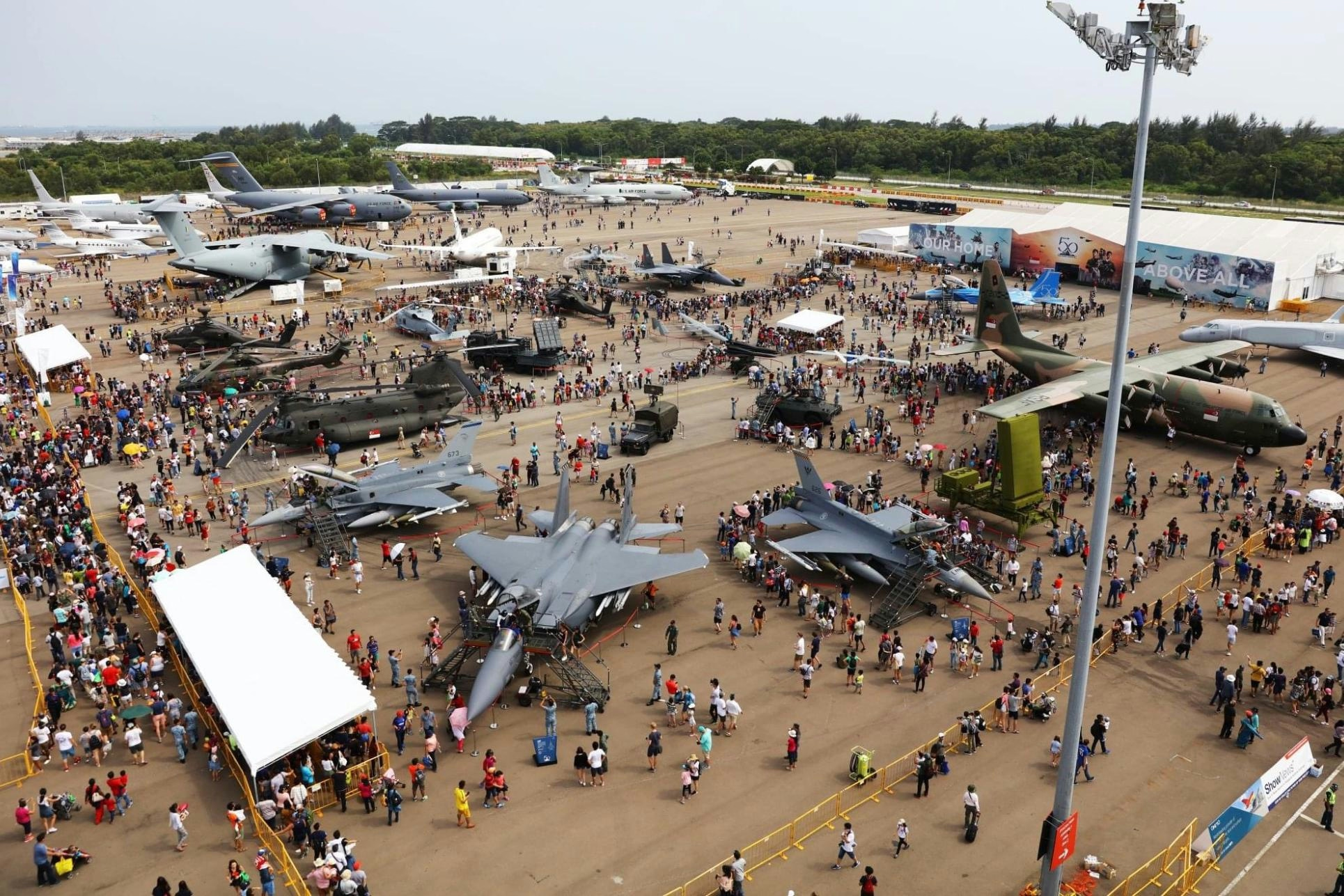
Singapore Airshow Highlights Airlines’ Struggle Amid Aircraft Supply Shortage
Asia-Pacific Aviation Growth Meets Supply Chain Challenges
As the biennial Singapore Airshow convenes this week, the commercial aviation sector is grappling with a critical supply shortage amid rapid growth in the Asia-Pacific region. Industry leaders and analysts attending the event have underscored the persistent bottlenecks affecting major manufacturers Boeing and Airbus, which are struggling to meet the surging demand from regional airlines eager to expand their fleets.
The Asia-Pacific market, propelled by robust growth in China and India, remains the fastest-growing region globally for air travel. Passenger traffic is expected to increase by 7.3 percent in 2026, according to Reuters. Data from the Association of Asia Pacific Airlines (AAPA) reveals that regional carriers transported 390.5 million international passengers last year, representing a 9.4 percent rise compared to 2024. Despite this strong demand, aircraft manufacturers and engine suppliers are finding it difficult to keep pace with airlines’ expansion plans due to ongoing supply chain disruptions.
Industry Response and Market Dynamics
Subhas Menon, Director General of the AAPA, highlighted the urgent need for additional suppliers in a market long dominated by Boeing and Airbus. He described the current situation as a “supply chain crisis,” noting that while occasional disruptions are common, the severity of the present challenges is unprecedented. Although China’s state-owned Commercial Aircraft Corporation (Comac) has started to provide some relief, it has yet to significantly alleviate the pressure on the supply chain.
Both Airbus and Boeing are under considerable strain as they attempt to increase production rates and make strategic decisions regarding future aircraft models. Boeing faces particular challenges in the narrowbody segment, where Airbus currently holds a dominant position in single-aisle jet sales. This intensifying competition is closely monitored by airlines, which are eager to see how manufacturers will address the supply constraints.
Other manufacturers are adapting their strategies in response to the market conditions. Brazilian company Embraer is prioritizing sales of its E2 regional jets rather than launching new aircraft programs, aiming to meet current demand efficiently. Meanwhile, Textron Aviation has reported strong demand for business aircraft in Asia, reflecting a growing interest among airlines and private operators seeking alternatives amid the shortage of commercial aircraft.
As the Singapore Airshow progresses, the industry’s focus remains on how manufacturers and airlines will navigate these unprecedented supply chain challenges. The decisions made in the coming months are expected to influence not only the aviation landscape in Asia but also the global competitive dynamics among aircraft producers.

Etihad Airways Suspends Airbus A380 Flights on Key Route

Aditya Birla Group Seeks Approval for Aircraft Leasing in GIFT City

Qatar Airways Highlights Innovation and Connectivity at Arabian Travel Market 2026

Hong Kong's Five-Year Plan Includes Andrew Fan's Aircraft Parts Processing Hub Proposal

ACIA Aero Leasing Delivers ATR72-600 to Air Nostrum

RTX Appoints Jill Albertelli as Head of Pratt & Whitney

TAT Technologies Joins Beyond Aero Hydrogen Aircraft Program

AURAK Study Highlights Barriers to Air Taxi Adoption in Emerging Economies

Xiamen Air Selects Altitude for 787 Maintenance at Heathrow

Etihad and Swissport Extend Global Partnership
